
Agras T50 in Coastal Wildlife Work: What a Maritime Funding
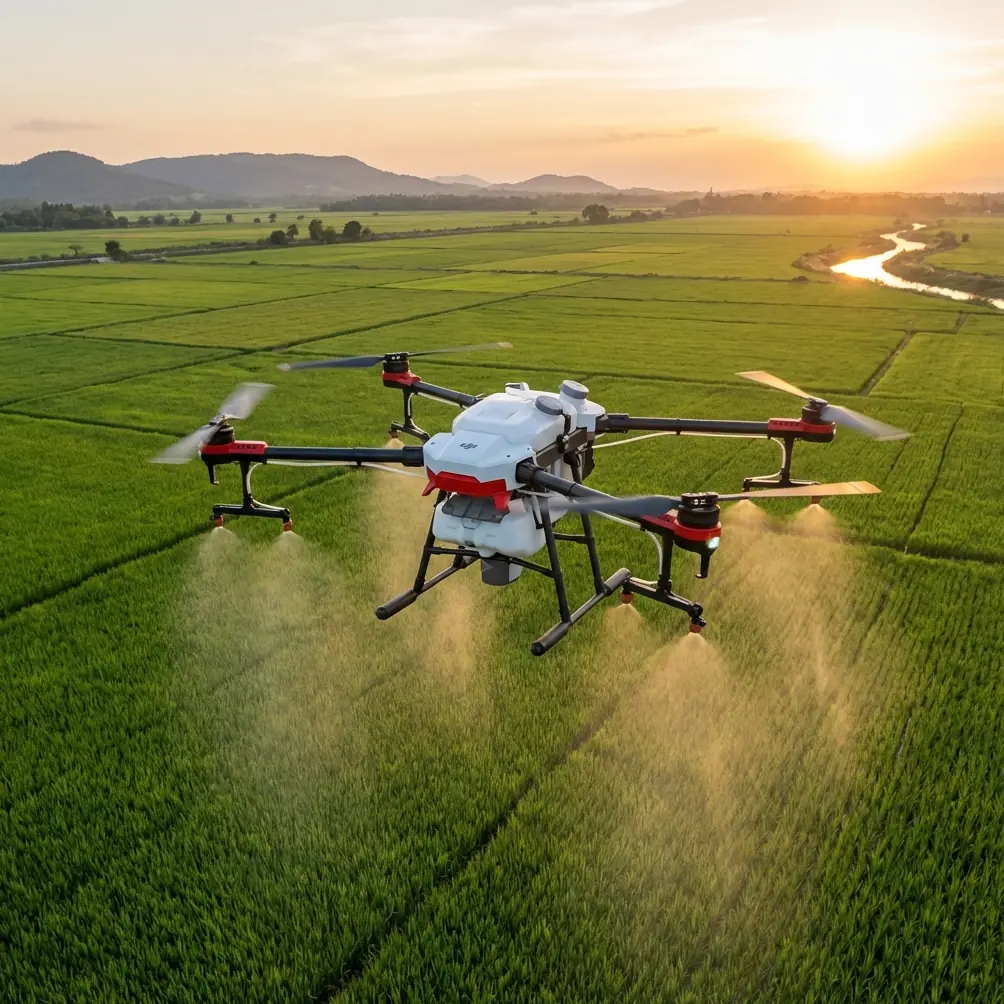
Agras T50 in Coastal Wildlife Work: What a Maritime Funding Surge Really Means on the Ground
META: A field-focused case study on how the Agras T50 fits coastal wildlife operations, from pre-flight cleaning and RTK stability to spray drift control, swath width, and maritime working conditions.
By Marcus Rodriguez, Consultant
The most interesting detail in the latest maritime drone news is not just the headline number. Yes, the sector is due for a £50 million investment boost, and that kind of signal matters. But the sharper point came from the response around it: support was welcomed, while at the same time there was a warning that more still needs to be done for the industry to stay viable.
For anyone working around coasts, estuaries, salt marshes, and island edges, that tension is familiar. Coastal drone operations have never depended on hardware alone. They depend on repeatable workflows, practical maintenance, environmental discipline, and equipment that can survive long enough to deliver usable data day after day.
That is why the Agras T50 deserves a closer look in a coastal wildlife context.
This is not the usual conversation people have about the T50. Most readers know it through agriculture. Fair enough. That is its home market. But in real operations, the value of a platform often shows up when it is adapted to adjacent jobs that share the same environmental pressures: corrosive moisture, changing wind, tight timing windows, and the need for precise low-altitude work. Coastal wildlife programs check every one of those boxes.
What follows is a case-study-style look at how an Agras T50 can fit wildlife tracking and habitat support work along the coast, and why recent maritime investment news should matter to teams thinking beyond simple crop application.
A coastal use case that actually fits the T50
Let’s ground this in a realistic scenario.
A conservation contractor is supporting a wildlife monitoring project along a tidal wetland. The team is not doing anything exotic. Their mission set is civilian and practical:
- documenting vegetation zones that support bird nesting activity
- moving along predefined corridors over muddy and uneven ground
- checking habitat edges after tidal shifts
- carrying out tightly controlled application work in selected vegetation areas where habitat management has been approved
- keeping disturbance low while maintaining consistent coverage
This is exactly the kind of environment where drone theory gets stress-tested.
A coastal job site is rarely stable. Wind direction changes faster. Ground access can disappear with the tide. Salt residue reaches everything. GNSS conditions can be inconsistent near cliffs, cranes, marinas, or built shoreline infrastructure. Wildlife windows can be narrow, especially if a site manager only allows flights at very specific times to reduce disturbance.
In that setting, the Agras T50 becomes interesting not because it is trendy, but because several of its known operating strengths map well to these pressures: high-capacity work output, controlled swath performance, precise route consistency, and a build approach that can handle punishing field conditions.
Why maritime investment matters even if you fly an agricultural platform
The £50 million boost to the maritime drone sector signals that coastal and marine-adjacent operations are no longer being treated as niche experiments. Money moves where people see infrastructure demand, operational need, and long-term utility. Even though the T50 is not a purpose-built maritime surveillance aircraft, coastal operators benefit when the wider maritime drone ecosystem grows.
Why? Because funding tends to improve the things that make field deployment easier for everyone:
- better support networks in port and coastal regions
- more trained operators comfortable with salt-air environments
- stronger maintenance habits around corrosion and ingress protection
- broader acceptance of drones as routine tools for shoreline work
- more cross-pollination between agriculture, maritime inspection, ecology, and coastal logistics teams
That second detail in the BBC report matters just as much as the funding itself: an MP said additional support is still needed for the industry to remain viable. Operationally, that reads like a warning against assuming a drone platform alone solves the problem. It does not. Viability in coastal work comes from maintenance planning, pilot training, battery management, weather discipline, and mission design that respects sensitive habitats.
The T50 can be effective here, but only if it is folded into a serious operating system.
The pre-flight cleaning step many teams skip
If I had to point to one habit that separates resilient coastal drone teams from frustrated ones, it would be this: they treat pre-flight cleaning as part of flight safety, not housekeeping.
With a platform used near salt spray, tidal flats, sandy access roads, and damp vegetation, that matters. Operators often focus on batteries, route plans, and payload setup. They should. But coastal grime quietly attacks reliability.
Before each sortie, I recommend a short, deliberate cleaning check that includes:
External surface wipe-down
Remove salt film, fine grit, and moisture residue from folding arms, landing gear contact areas, tank exterior, and exposed body surfaces.Nozzle inspection and cleaning
If the mission includes application work, nozzle calibration is pointless if salt residue or particulate contamination is already changing the spray pattern. A visually clean nozzle is not always a calibrated nozzle.Sensor area check
Any vision, positioning, or guidance-related surfaces should be inspected for haze, residue, or micro-droplets. Coastal humidity creates thin films that pilots may not notice at first glance.Seal and port review
A platform associated with robust ingress protection such as IPX6K can tolerate demanding conditions better than lighter-duty systems, but that rating is not a permission slip for neglect. Contaminants around seals and connection points still create avoidable risk over time.Prop and motor area debris removal
Dried marsh grass, sand, and plant fibers can collect surprisingly fast when launching from improvised shoreline points.
That “simple” pre-flight step has direct safety value. It protects spray consistency, supports accurate sensing, reduces corrosion exposure, and helps the aircraft keep performing like the same machine from one week to the next. In wildlife-related work, where flight windows can be brief and site access difficult, losing a sortie to preventable contamination is more than annoying. It can collapse an entire day’s objective.
RTK fix rate is not just a spec-sheet talking point
Coastal tracking and habitat management often live or die on repeatability.
If a team is comparing habitat edge changes across multiple visits, or treating a narrow management zone while leaving nearby sensitive vegetation untouched, route consistency matters more than broad productivity claims. This is where centimeter precision and a stable RTK fix rate become operational, not theoretical.
A strong RTK workflow helps in three ways.
First, it allows the aircraft to return to the same corridor with minimal positional drift from mission to mission. That is valuable when tracking changes in marsh vegetation or shoreline transition areas.
Second, it reduces unnecessary overlap or missed strips during application tasks. In coastal environments, where wind can already compromise precision, accurate positioning is one of the few variables you can actively control.
Third, it supports better documentation. If conservation partners, land managers, or environmental consultants want evidence of where work was conducted, precise route records are easier to trust when the aircraft is maintaining consistent high-quality positioning.
People often discuss RTK like it exists in isolation. It does not. A healthy fix rate depends on site conditions, setup discipline, and operator awareness. Metal structures, nearby vessels, uneven terrain, and temporary shoreline infrastructure can all affect field performance. In other words, buying a precise platform is only step one. Verifying that precision at the site is the real job.
Spray drift along the coast is the issue that decides whether a mission should happen
Any operation involving liquid application near wildlife habitat needs to start with one hard truth: the coast amplifies consequences.
Spray drift that might be manageable inland can become unacceptable near open water, tidal channels, nesting areas, or ecologically sensitive margins. This is where the Agras T50’s practical strengths must be matched by restraint.
A wide swath width can improve efficiency, but only when conditions support it. Coastal operators should think of swath width as an adjustable risk factor, not a bragging right. Wider coverage sounds productive until crosswind behavior turns edge control into guesswork.
The right move is often the less dramatic one:
- tighten the treatment corridor
- reduce exposure at the boundary edges
- verify nozzle calibration before launch
- fly within conservative weather limits
- prioritize downwind buffer awareness
- stop if the local wind picture becomes unstable
That is not timidity. That is competence.
The T50 can cover ground efficiently, but coastal wildlife work rewards operators who understand when not to use full-output settings. Protecting adjacent habitat is usually more valuable than finishing a block a few minutes faster.
Multispectral thinking belongs in this conversation, even when the aircraft role is different
The T50 is not usually the first platform people mention when they start talking about multispectral analysis. Still, multispectral thinking absolutely belongs in a coastal wildlife workflow built around this aircraft.
Why? Because operations in sensitive habitat are stronger when application and observation are connected.
A common field model is to pair a workhorse platform like the T50 with a separate survey workflow that identifies vegetation stress, salinity effects, habitat density changes, or invasive spread. The T50 then executes a tightly bounded field action based on that evidence. In practice, that creates a smarter sequence:
- map and assess conditions
- identify only the areas that require intervention
- validate boundaries with high positional confidence
- execute targeted work with the T50
- revisit and compare change over time
This matters because coastal wildlife support should be selective. Broad intervention usually creates more ecological risk than benefit. When teams tie mapping intelligence to precise aircraft execution, the T50 becomes less of a blunt instrument and more of a field implementation tool.
Durability is not glamorous, but it is what keeps projects alive
The BBC item included a revealing line: even with investment, people in the sector are saying more support is needed to keep the industry viable. Coastal operators understand exactly why.
Projects survive when equipment downtime stays manageable.
A platform suitable for dirty, wet, repetitive work has an advantage in this environment. An IPX6K-class durability discussion is relevant not because it sounds rugged, but because coastal jobs punish every shortcut. Salt mist, wet grass, muddy setup zones, and repeated cleaning cycles wear on a system. If your aircraft cannot handle regular decontamination and field mess, your scheduling model eventually breaks.
This is one reason the T50 continues to attract attention beyond its most obvious role. For teams that need a drone to behave like field equipment rather than a fragile lab instrument, survivability is part of mission economics, even when nobody wants to talk about it.
Where the T50 fits best in coastal wildlife tracking
Let’s be precise with the wording. The Agras T50 is not a dedicated wildlife observation drone in the same sense as a light, long-endurance mapping platform. But it can still play a valuable role in a wildlife-related coastal program when the mission includes habitat intervention, route-repeatable low-altitude operations, and controlled treatment over difficult terrain.
Its best fit is where four needs overlap:
- access is hard on foot
- precision matters at the edge of sensitive zones
- the environment is rough on equipment
- work must be repeatable across multiple site visits
That overlap is more common than people think in marsh restoration, invasive plant management, shoreline buffer maintenance, and habitat corridor support.
If your team is building that kind of workflow and wants to compare setup choices for coastal conditions, it may help to message a field specialist here.
The bigger lesson from the maritime funding story
The latest maritime funding headline is easy to read as a victory lap. I read it differently.
A £50 million boost tells us that drone work around coasts and marine environments is becoming structurally significant. The accompanying warning that the industry still needs more support tells us the hard part is ahead: turning interest into durable operations.
That is exactly the lens through which the Agras T50 should be evaluated for coastal wildlife work.
Not as a generic “best drone.” Not as a one-aircraft answer to every mission. And not as a piece of technology that somehow erases weather, ecology, or maintenance realities.
Its value shows up when a disciplined team uses it well: clean before flight, verify nozzle calibration, watch spray drift like it is the whole mission, treat RTK fix rate as a live operational metric, and use centimeter-level repeatability to keep work inside approved boundaries.
That is how a platform earns trust in the field.
The coastal drone sector is getting attention, and that is overdue. The teams that benefit most will be the ones that combine that momentum with careful execution. In habitat-sensitive operations, professionalism is not measured by how much aircraft you bought. It is measured by how consistently you can deliver useful work without creating new problems.
The Agras T50 can absolutely have a place in that future. But only in the hands of operators who understand the coast is not just another job site. It is a stress test.
Ready for your own Agras T50? Contact our team for expert consultation.