
Agras T50 for Coastal Vineyards: A Practical Field Guide
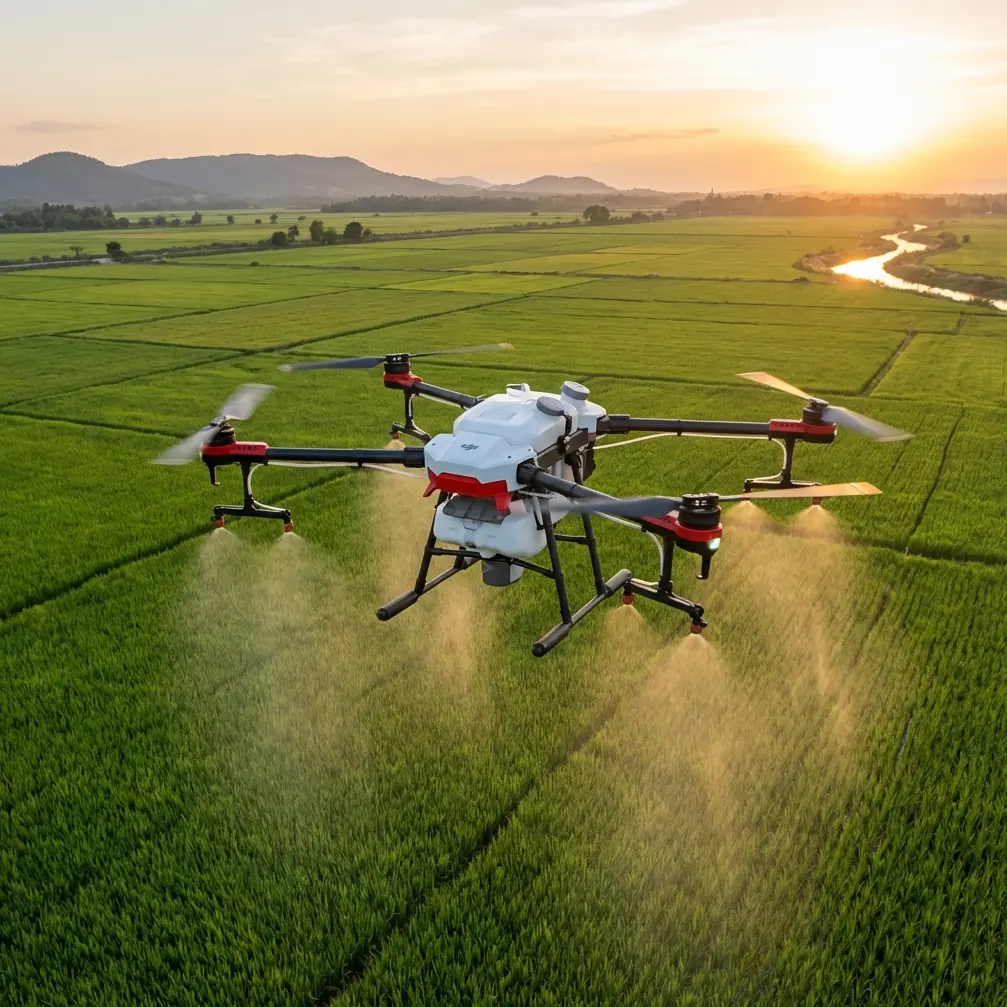
Agras T50 for Coastal Vineyards: A Practical Field Guide to Range, Precision, and Real Delivery Expectations
META: Expert how-to guide for using the Agras T50 in coastal vineyards, with practical advice on antenna positioning, RTK stability, spray drift control, nozzle calibration, and what real-world drone logistics can teach growers.
Coastal vineyards expose every weakness in a drone operation. Wind shifts fast. Salt-laden air punishes equipment. Sloped rows break line of sight. And when disease pressure builds, the difference between a smooth sortie and a wasted weather window comes down to setup discipline, not brochure claims.
That is exactly why the Agras T50 deserves to be discussed in operational terms rather than abstract hype. Vineyard managers tracking blocks near the coast do not need fantasy. They need repeatable coverage, stable navigation, clean application boundaries, and enough communication range to work irregular terrain without losing confidence halfway through a pass.
I approach the T50 as an agricultural system, not just an aircraft. In vineyards, especially coastal ones, success depends on how propulsion, positioning, spraying hardware, and the operator’s field method interact. One weak link will show up quickly. Usually in the form of drift, overlap error, poor canopy penetration, or interrupted missions.
There is also a useful lesson from outside agriculture. A recent report on drone parcel delivery described a headline promise of 30-minute delivery within a 16-kilometer radius, using small unmanned aircraft for parcels up to about 2.27 kilograms. The striking detail was that this weight class represented 86% of the company’s package volume, which makes the concept sound operationally persuasive at first glance. Yet the same report stressed that legal, technical, safety, and social barriers still make wide deployment difficult in the near term.
That tension matters for anyone evaluating the Agras T50. Drone operations often look simple when reduced to range numbers and payload categories. Real work is different. A coastal vineyard is not a clean suburban map. It is a living environment with wind corridors, trellis infrastructure, variable canopy density, and terrain-induced signal shadows. The lesson is straightforward: the fact that a drone can theoretically cover a distance or carry a load does not mean the mission is practical unless the whole operating environment supports it.
Start With the Real Limiting Factor: Link Quality, Not Maximum Range
If you want maximum dependable range from an Agras T50 in vineyards, start with antenna positioning. Most range complaints I hear in the field are not actually caused by radio weakness. They come from poor station placement, blocked line of sight, or careless body orientation by the pilot.
In coastal vineyards, place the controller station where it can “see” the greatest proportion of the block. That usually means choosing a slight elevation above the working rows rather than standing at the edge of a low access road. Rows, posts, shelterbelts, and utility structures can all attenuate the signal path. The problem grows when the aircraft drops behind a ridge or into a lower terrace. Even if telemetry remains active, link stability can become inconsistent enough to degrade confidence and slow operations.
A practical approach:
- Stand on the up-slope side of the target block whenever possible.
- Face the aircraft with the controller antennas correctly oriented, not folded casually against the body.
- Keep your torso and vehicle away from the direct signal path.
- Avoid setting up beside metal structures, irrigation control cabinets, or parked equipment that can clutter the radio environment.
- Reposition between blocks instead of trying to force a single control point for the whole property.
This sounds basic, but it has a measurable effect on usable range. In coastal vineyards, “maximum range” is rarely determined by the published ceiling. It is determined by the amount of uninterrupted line of sight you preserve across the mission.
Why RTK Fix Rate Matters More Than People Admit
Growers often ask about centimeter precision as though it were simply a specification to tick off. In vineyards, it is operationally significant. A high RTK fix rate is what turns the T50 from a capable aircraft into a disciplined row-management tool.
On coastal ground, GNSS quality can fluctuate with terrain masking and the operator’s station location. When the fix is solid, you reduce misalignment between adjacent passes, limit over-application on row edges, and produce cleaner treatment records. On narrow or irregular blocks, this matters a great deal. You are not just trying to hit a coordinate. You are trying to keep a treatment envelope consistent across vine rows with different exposure, canopy thickness, and disease pressure.
Centimeter precision is especially valuable when you are tracking recurring issues in the same zones over time. If one corner of the vineyard repeatedly shows mildew pressure or weaker vigor, reliable positioning allows you to compare interventions more honestly. That is where a drone becomes more than a sprayer. It becomes part of a management record.
If your RTK performance feels inconsistent, do not immediately blame the aircraft. Check your base setup, confirm unobstructed sky view, and audit your station placement relative to nearby structures or elevated terrain. Poor fix behavior often begins with field setup choices.
Spray Drift on the Coast Is a Planning Problem Before It Becomes a Physics Problem
Coastal growers know the trap. Wind can feel acceptable at the road and completely different halfway up the vines. That is why spray drift control with the T50 starts before the tanks are filled.
The first control point is timing. Work the calmest part of the day that still fits the agronomic objective. The second is route design. Plan passes so the aircraft does not repeatedly expose the spray plume to the strongest crosswind edge. The third is nozzle calibration. Too many operators treat calibration as a maintenance checkbox. In vineyards, it is part of crop protection quality control.
Nozzle calibration governs droplet behavior, flow consistency, and effective coverage pattern. On coastal sites, where air movement can shift quickly, a poorly calibrated system exaggerates drift risk and can leave uneven deposition through the canopy. That means you may end up with the worst combination possible: off-target movement in one area and insufficient treatment in another.
Swath width also deserves more respect than it gets. A wide swath may look efficient on paper, but in vineyards with variable canopy walls and wind-exposed edges, pushing width too far can compromise uniformity. Tighter, more conservative swath planning often delivers better real coverage, particularly where row spacing changes or terrain bends the airflow.
The operational principle is simple: if drift is your concern, do not rely on a single setting to solve it. Combine weather judgment, calibrated nozzles, altitude discipline, and realistic swath width.
IPX6K Matters More in Salt Air Than Many Buyers Expect
Inland users sometimes treat high ingress protection as a durability footnote. Coastal vineyards should not. Salt, fine moisture, and washdown cycles impose a very different stress pattern on agricultural equipment.
This is where an IPX6K-rated system becomes materially relevant. In practical terms, it means the machine is better prepared for harsh water exposure and demanding cleaning routines. For a vineyard operation near the sea, that matters because residue management is not optional. You want to remove chemical residues properly, and you also want to stay ahead of corrosive environmental exposure.
A protected platform does not eliminate maintenance. It buys you resilience. You still need disciplined post-operation cleaning, visual inspection of connectors and seals, and a routine for checking wear points before small issues become downtime. But for coastal users, robust environmental protection is not cosmetic. It supports longer-term reliability in exactly the kind of environment that tends to shorten equipment life.
Use Multispectral Intelligence Carefully, Not Fashionably
If you are pairing vineyard tracking with multispectral workflows, keep the objective specific. Do not collect imagery simply because the capability exists. In a coastal vineyard, the right multispectral task is usually one of three things: identifying stress patterns, prioritizing intervention zones, or validating whether prior applications changed canopy response.
That data becomes more useful when tied to T50 mission planning. If one section of the block consistently shows different vigor, moisture stress, or disease expression, you can use that intelligence to refine application timing and route priority. The value is not in making a colorful map. The value is in linking observed plant response with precise operational action.
Again, centimeter-level positioning helps. If the T50 can repeatedly work the same zones with high positional consistency, your comparison across dates becomes much more credible. That is how vineyard drone programs mature—from isolated flights into a decision system.
A Better Way to Think About Drone Logistics in Vineyards
The parcel-delivery example is instructive because it shows how attractive numbers can obscure practical deployment limits. A 30-minute promise sounds efficient. A 16-kilometer service radius sounds broad. A 2.27-kilogram payload threshold covering 86% of parcels sounds compelling. Yet the report still points out that broad real-world rollout remains constrained by legal, technical, safety, and social factors.
The same pattern appears in agricultural drone expectations. Operators often focus on top-line capacity and nominal range, then underestimate the friction introduced by regulation, terrain, weather, and workflow discipline. In coastal vineyards, those constraints are not theoretical. They determine daily productivity.
So when evaluating an Agras T50 setup, ask harder questions:
- Can your team maintain RTK reliability across fragmented blocks?
- Can you preserve line of sight without wasting time on awkward pilot positions?
- Can you calibrate nozzles consistently enough to control drift in variable coastal air?
- Can you clean and maintain the system properly in a salt-exposed environment?
- Can your data workflow translate multispectral observations into actionable treatment maps?
Those questions are less glamorous than headline range figures, but they are what make a T50 operation profitable and trustworthy.
Field Method: A Coastal Vineyard Checklist Before Every Mission
Here is the method I recommend for T50 work in this environment.
First, inspect the block physically. Do not rely only on prior maps. Confirm where line of sight will break, where wind accelerates through gaps, and where trellis geometry changes.
Second, choose the control position based on visibility, not convenience. The best place to stand is often not where the truck is parked.
Third, verify RTK status before committing to full treatment. If fix quality is unstable, solve that first.
Fourth, confirm nozzle calibration and review the intended swath width against current wind behavior. If the air has become less stable, tighten the plan rather than hoping for acceptable deposition.
Fifth, monitor edge rows closely. Coastal edges near open exposure often reveal drift issues before the rest of the block does.
Sixth, clean the system thoroughly after operations. On coastal sites, maintenance deferred is corrosion scheduled.
If you are setting up a vineyard-specific operating procedure and want a field discussion on antenna placement or block-by-block signal strategy, this direct WhatsApp line is a practical starting point: https://wa.me/85255379740
What the Agras T50 Does Well in This Scenario
For coastal vineyards, the T50’s value is not just that it can carry out aerial application. Its real advantage is that it can bring disciplined, repeatable treatment to terrain where ground access, timing, and canopy variability often complicate conventional work.
That only happens when the operator respects the system. The T50 performs best when range is treated as a line-of-sight management issue, RTK is treated as a coverage-quality issue, nozzle calibration is treated as a biological outcome issue, and IPX6K durability is treated as a maintenance advantage rather than an excuse for neglect.
This is the difference between owning a machine and running an aerial program.
A coastal vineyard rewards operators who think in systems. The T50 fits that mindset well. It can support precise row work, data-linked management, and efficient treatments under tight weather windows. But the results come from method, not mythology.
Ready for your own Agras T50? Contact our team for expert consultation.