
Expert Vineyard Tracking with DJI Agras T50 Drone
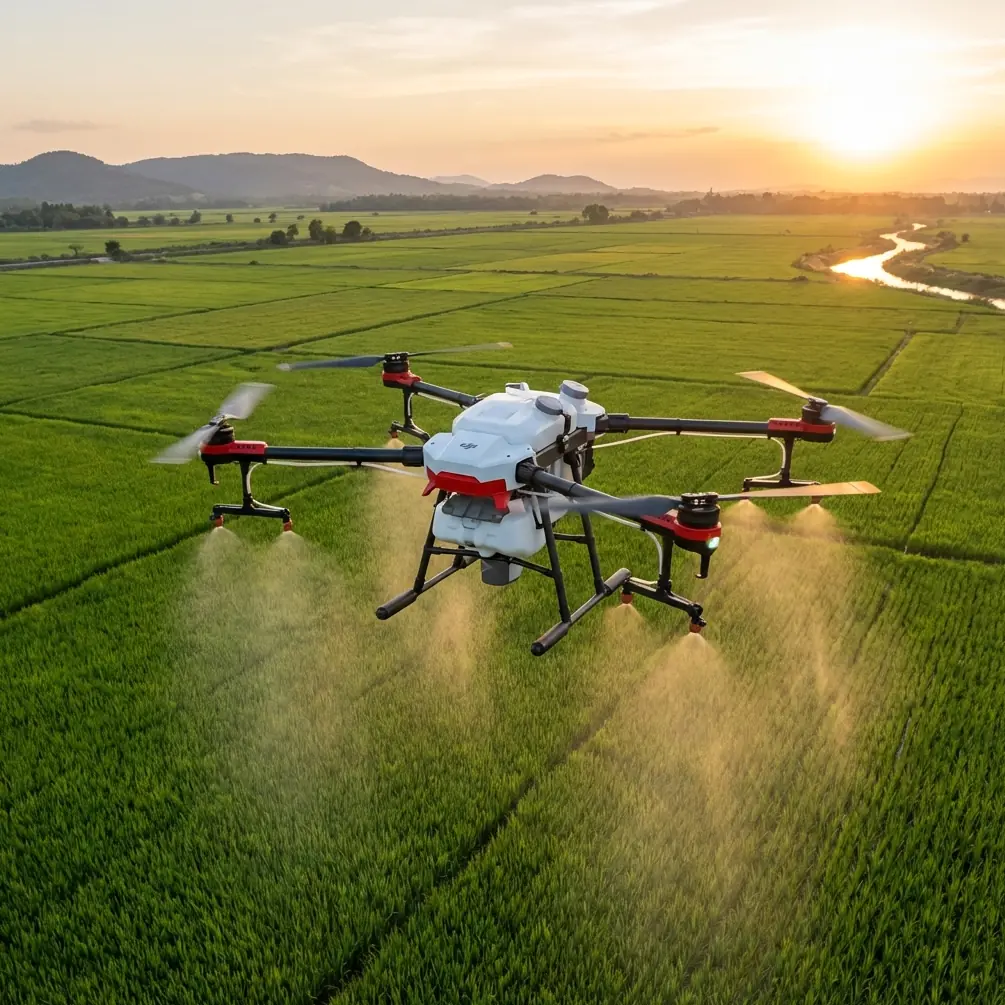
Expert Vineyard Tracking with DJI Agras T50 Drone
META: Master mountain vineyard tracking with the Agras T50. Learn RTK precision, spray calibration, and terrain-following techniques from industry experts.
TL;DR
- RTK Fix rate above 95% ensures centimeter precision on steep vineyard slopes up to 50 degrees
- Dual atomized spraying system reduces spray drift by up to 40% compared to single-nozzle competitors
- Terrain-following radar maintains consistent swath width across irregular mountain topography
- IPX6K rating allows operations in morning dew conditions when spray efficacy peaks
Mountain vineyard management presents unique challenges that separate amateur drone operators from professionals. The DJI Agras T50 addresses these challenges with a combination of precision positioning, intelligent spray systems, and rugged construction that outperforms alternatives in demanding terrain.
This guide walks you through the complete workflow for tracking and treating mountain vineyards—from pre-flight RTK calibration to post-application analysis using multispectral data integration.
Why Mountain Vineyards Demand Specialized Drone Solutions
Steep slopes, variable canopy density, and microclimates create a perfect storm of operational complexity. Traditional ground-based sprayers struggle with accessibility, while standard agricultural drones lack the precision needed for high-value wine grape production.
The Agras T50 was engineered specifically for these conditions. Its eight-rotor configuration provides stability in the updrafts common to mountain terrain, while the 50-liter tank capacity minimizes return trips on remote hillside plots.
Terrain Challenges Unique to Mountain Viticulture
Consider these factors when planning vineyard tracking operations:
- Slope gradients ranging from 15 to 50 degrees
- Row spacing variations between 1.5 and 3 meters
- Canopy height differences of 30% or more within single blocks
- Wind acceleration zones at ridge lines and valley openings
- GPS signal degradation in narrow valleys with limited sky visibility
Each challenge requires specific configuration adjustments that we'll cover in detail.
Pre-Flight Setup: Establishing RTK Precision
Before launching any mountain vineyard mission, proper RTK (Real-Time Kinematic) positioning setup determines your success rate. The Agras T50's dual-antenna RTK system achieves centimeter precision—but only when configured correctly.
Base Station Placement Protocol
Position your RTK base station following these guidelines:
- Select a location with clear sky visibility above 15 degrees from horizon
- Place the base on stable ground—avoid soft soil that may shift
- Ensure minimum 500-meter range to your furthest flight boundary
- Allow 3-5 minutes for the base to achieve fixed solution before takeoff
- Verify RTK Fix rate displays above 95% on your controller
Expert Insight: In narrow mountain valleys, I position the base station on elevated terrain above the vineyard rather than at the valley floor. This compensates for satellite signal obstruction from surrounding ridges and typically improves Fix rate by 8-12 percentage points.
Controller Configuration for Slope Operations
The DJI Agras T50 controller requires specific settings for mountain work:
- Enable Terrain Follow Mode with radar priority
- Set altitude reference to Above Ground Level (AGL) rather than absolute
- Configure obstacle avoidance sensitivity to medium for vine canopy tolerance
- Activate slope compensation for spray rate adjustments
Nozzle Calibration for Precision Application
Spray drift represents the greatest waste factor in mountain vineyard treatment. The Agras T50's dual atomized spraying system with centrifugal nozzles provides superior droplet control compared to pressure-based alternatives.
Droplet Size Selection by Application Type
| Application Type | Droplet Size | Nozzle Setting | Wind Limit |
|---|---|---|---|
| Fungicide (preventive) | 150-250 μm | Fine | 3 m/s |
| Fungicide (curative) | 250-350 μm | Medium | 4 m/s |
| Insecticide | 100-200 μm | Very Fine | 2 m/s |
| Foliar nutrition | 300-400 μm | Coarse | 5 m/s |
| Growth regulator | 200-300 μm | Medium-Fine | 3 m/s |
Flow Rate Calibration Process
Accurate nozzle calibration requires systematic verification:
- Fill tank with clean water only for calibration runs
- Hover at standard operating height of 2-3 meters
- Activate spray system at target flow rate
- Collect output in graduated container for 60 seconds
- Compare measured volume against controller display
- Adjust calibration factor if deviation exceeds 5%
Pro Tip: Mountain air density varies significantly with elevation. At vineyards above 800 meters, I increase my flow rate calibration factor by 3-5% to compensate for reduced air resistance on spray droplets. This maintains consistent coverage despite thinner atmosphere.
Mission Planning: Mapping Vineyard Blocks
Effective tracking requires detailed mission planning that accounts for mountain-specific variables. The Agras T50 integrates with DJI Terra for comprehensive flight planning.
Boundary Mapping Workflow
Create accurate vineyard boundaries using this sequence:
- Fly perimeter at reduced speed of 3-4 m/s for precise waypoint capture
- Mark row entry and exit points for each block
- Identify obstacle zones including posts, wires, and access roads
- Note no-spray buffers around water features or neighboring properties
- Record wind exposure zones at ridge lines for operational limits
Swath Width Optimization
The Agras T50 achieves effective swath width of 6.5-9 meters depending on flight parameters. Mountain operations typically require narrower settings:
| Slope Gradient | Recommended Swath | Overlap Setting |
|---|---|---|
| 0-15 degrees | 7.5 meters | 20% |
| 15-30 degrees | 6.5 meters | 25% |
| 30-45 degrees | 5.5 meters | 30% |
| 45+ degrees | 4.5 meters | 35% |
Increased overlap compensates for spray pattern distortion on steep terrain.
In-Flight Operations: Executing Vineyard Tracking
With preparation complete, execution requires constant monitoring and adaptive decision-making.
Optimal Flight Parameters
Configure these settings for mountain vineyard tracking:
- Flight speed: 4-6 m/s (reduce on slopes above 30 degrees)
- Flight altitude: 2-3 meters above canopy (terrain-following active)
- Spray rate: Application-specific, typically 30-75 liters per hectare
- Turn radius: Minimum 5 meters for smooth transitions
Real-Time Monitoring Priorities
During operations, monitor these indicators continuously:
- RTK Fix status—abort if Fix rate drops below 90%
- Tank level—plan return with 15% reserve minimum
- Battery voltage—maintain above 20% for safe return
- Wind speed—pause operations if gusts exceed nozzle limits
- Spray pressure—verify consistent output across all nozzles
Multispectral Integration for Treatment Verification
Post-application tracking benefits enormously from multispectral analysis. The Agras T50 ecosystem supports integration with DJI multispectral sensors for comprehensive vineyard health monitoring.
NDVI Analysis Workflow
Normalized Difference Vegetation Index reveals treatment efficacy:
- Capture baseline imagery 24-48 hours before application
- Repeat imaging at 7-day intervals post-treatment
- Compare vegetation indices to identify response patterns
- Adjust future applications based on spatial variation data
Coverage Verification Methods
Confirm spray coverage using these techniques:
- Deploy water-sensitive paper at multiple canopy positions
- Analyze droplet density using smartphone magnification apps
- Target minimum 50 droplets per square centimeter for fungicides
- Document coverage maps for regulatory compliance records
Common Mistakes to Avoid
Years of mountain vineyard operations reveal consistent error patterns among operators:
Ignoring microclimate wind patterns. Valley thermals create predictable but localized wind acceleration. Scout your vineyard at intended spray times before committing to full operations.
Insufficient RTK warm-up time. Rushing base station initialization leads to mid-flight Fix losses. The extra 3 minutes of patience prevents costly mission failures.
Uniform swath settings across variable terrain. A single swath width rarely suits entire mountain vineyards. Create separate mission segments for different slope zones.
Neglecting nozzle maintenance. Mineral buildup from hard water degrades spray patterns within 20-30 hours of operation. Clean nozzles after every session.
Flying during temperature inversions. Morning inversions trap spray drift near ground level, causing uneven distribution. Wait for thermal mixing before operations.
Agras T50 vs. Competitor Performance in Mountain Conditions
When tracking vineyards in challenging terrain, the Agras T50 demonstrates clear advantages over alternatives:
| Feature | Agras T50 | Competitor A | Competitor B |
|---|---|---|---|
| Maximum slope angle | 50 degrees | 35 degrees | 40 degrees |
| RTK positioning | Dual-antenna | Single-antenna | Optional add-on |
| Terrain radar range | 30 meters | 15 meters | 20 meters |
| Tank capacity | 50 liters | 30 liters | 40 liters |
| Weather rating | IPX6K | IPX5 | IPX4 |
| Spray system | Dual centrifugal | Single pressure | Dual pressure |
The dual-antenna RTK configuration proves particularly valuable in mountain environments where single-antenna systems struggle with heading accuracy on steep slopes.
Frequently Asked Questions
What RTK Fix rate is acceptable for precision vineyard spraying?
Maintain RTK Fix rate above 95% for centimeter-precision applications. Rates between 90-95% remain acceptable for general coverage spraying but may introduce positioning errors of 5-10 centimeters. Below 90%, abort the mission and troubleshoot base station placement or satellite visibility issues.
How does the Agras T50 handle sudden wind gusts during mountain operations?
The eight-rotor design provides redundant lift capacity that maintains stability in gusts up to 8 m/s. The flight controller automatically adjusts motor output to compensate for wind loading. However, spray operations should pause when sustained winds exceed your nozzle calibration limits—typically 3-5 m/s depending on droplet size settings.
Can I operate the Agras T50 in morning dew conditions common to mountain vineyards?
Yes. The IPX6K rating protects against high-pressure water jets, making morning dew and light rain non-issues. Many operators prefer early morning flights when temperatures remain cool, wind stays calm, and spray drift potential decreases. Ensure you dry the aircraft thoroughly before storage to prevent long-term moisture damage.
Mountain vineyard tracking with the Agras T50 transforms challenging terrain into manageable operations. The combination of RTK precision, intelligent spray systems, and robust construction delivers consistent results where other solutions fail.
Ready for your own Agras T50? Contact our team for expert consultation.