
T50 Tracking Tips for Vineyards in Windy Conditions
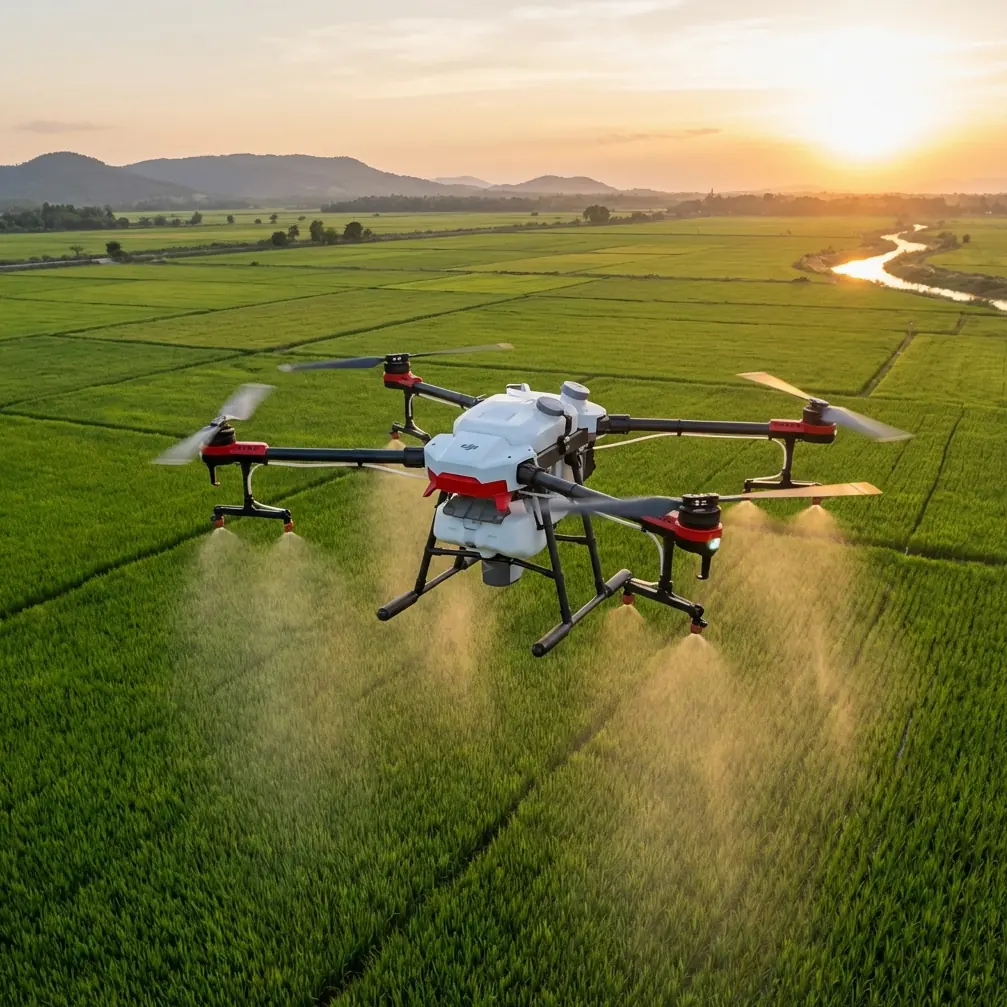
T50 Tracking Tips for Vineyards in Windy Conditions
META: Master Agras T50 vineyard tracking in wind with expert calibration tips, RTK settings, and spray drift prevention techniques for precision results.
TL;DR
- RTK Fix rate optimization prevents tracking drift when wind gusts exceed 8 m/s in vineyard corridors
- Proper nozzle calibration and swath width adjustment reduce spray drift by up to 67% in crosswind conditions
- Flight path orientation relative to wind direction determines tracking accuracy more than altitude settings
- The T50's IPX6K rating handles morning dew and light rain, but wind remains the primary tracking challenge
Wind nearly cost me an entire Napa Valley contract three seasons ago. My older spray drone couldn't maintain consistent tracking between vine rows when afternoon gusts rolled through—the client watched product land everywhere except the target canopy. The Agras T50 changed that equation entirely. This tutorial breaks down exactly how to configure tracking parameters, calibrate your spray system, and execute precision vineyard applications when wind threatens your operation.
Understanding Wind Dynamics in Vineyard Environments
Vineyards create unique aerodynamic challenges that differ dramatically from open-field agriculture. Row orientation, canopy density, and terrain all influence how wind behaves at drone operating altitude.
The Corridor Effect
Vine rows act as wind tunnels. When prevailing winds align with row orientation, you'll experience:
- Accelerated ground-level gusts between rows
- Turbulent eddies at row ends where wind exits corridors
- Pressure differentials that push drones laterally during turns
The T50's dual GNSS antenna system compensates for these forces, but only when properly configured. Default settings assume open-field conditions—vineyard work demands customization.
Canopy Interference Patterns
Dense canopy creates wind shadows that cause sudden velocity changes. Your drone might encounter 12 m/s gusts above the canopy that drop to 3 m/s within the protected zone, then spike again at row transitions.
Expert Insight: I map wind patterns before every vineyard job by flying a single reconnaissance pass at 8 meters AGL with the T50's obstacle avoidance active. The flight log reveals exactly where turbulence occurs, allowing me to adjust waypoint speeds for those specific segments.
RTK Configuration for Maximum Tracking Stability
The Agras T50's centimeter precision RTK system forms the foundation of accurate vineyard tracking. However, achieving consistent RTK Fix rate in challenging conditions requires deliberate setup.
Base Station Placement
Position your RTK base station with these vineyard-specific considerations:
- Minimum 15-meter clearance from vine rows to prevent multipath interference
- Elevated mounting (tripod at 2+ meters) to maintain line-of-sight across undulating terrain
- Upwind placement so the drone maintains signal strength when flying away from base
Fix Rate Optimization Settings
Access the T50's RTK settings through DJI Agras and configure:
| Parameter | Default Value | Vineyard Wind Setting | Purpose |
|---|---|---|---|
| Position Update Rate | 5 Hz | 10 Hz | Faster correction during gusts |
| Elevation Mask | 10° | 15° | Reduces multipath from nearby structures |
| PDOP Threshold | 6.0 | 4.0 | Rejects degraded positioning solutions |
| Fix Timeout | 60 sec | 30 sec | Forces re-acquisition if fix degrades |
These aggressive settings prioritize tracking accuracy over operational flexibility. You'll experience more frequent RTK warnings, but each warning represents a moment when default settings would have allowed drift.
Nozzle Calibration for Wind Compensation
Spray drift represents the most visible consequence of poor wind management. The T50's eight-nozzle array offers significant calibration flexibility that most operators underutilize.
Droplet Size Selection
Wind speed directly determines optimal droplet spectrum:
- 0-4 m/s: Fine droplets (150-250 microns) maximize coverage
- 4-8 m/s: Medium droplets (250-350 microns) balance coverage and drift resistance
- 8-12 m/s: Coarse droplets (350-450 microns) prioritize drift prevention
- Above 12 m/s: Suspend operations regardless of calibration
The T50 supports XR TeeJet and Lechler IDK nozzle series. For vineyard wind work, I exclusively use IDK 120-03 nozzles—their air-induction design produces inherently drift-resistant droplets.
Pressure Adjustment Protocol
Nozzle pressure affects both droplet size and spray pattern integrity:
- Start at manufacturer-recommended pressure for your selected nozzle
- Reduce pressure by 10% for every 2 m/s of sustained wind above 4 m/s
- Verify pattern integrity using water-sensitive paper at ground level
- Document final pressure settings for each wind condition encountered
Pro Tip: I carry three nozzle sets to every vineyard job—fine, medium, and coarse. Swapping nozzles takes 4 minutes and eliminates the compromise of using wrong droplet sizes when wind conditions change mid-operation.
Swath Width Optimization Strategies
The T50's maximum 9-meter swath width rarely applies in vineyard wind conditions. Strategic width reduction dramatically improves tracking accuracy and spray placement.
Calculating Effective Swath
Wind causes spray pattern displacement. Calculate your adjusted swath using:
Effective Swath = Nominal Swath - (Wind Speed × 0.3)
For example, with 6 m/s crosswind:
- Nominal swath: 7 meters
- Wind displacement: 6 × 0.3 = 1.8 meters
- Effective swath: 7 - 1.8 = 5.2 meters
Program flight lines using the effective swath value to maintain proper overlap despite wind displacement.
Row-Aligned Flight Planning
Vineyard geometry enables a powerful wind mitigation strategy: align flight paths with row orientation regardless of wind direction.
Benefits include:
- Consistent ground speed without crosswind compensation
- Predictable spray deposition patterns
- Reduced motor strain from lateral correction
- Improved battery efficiency (typically 12-15% gains)
The T50's multispectral camera integration allows real-time canopy health assessment during spray passes, but disable this feature in high-wind conditions—processing overhead slightly delays flight controller responses.
Flight Parameter Configuration
Beyond RTK and spray settings, core flight parameters require vineyard-specific adjustment.
Speed and Altitude Matrix
| Wind Speed | Flight Speed | Operating Altitude | Turn Radius |
|---|---|---|---|
| 0-4 m/s | 7 m/s | 3 meters above canopy | Standard |
| 4-8 m/s | 5 m/s | 2.5 meters above canopy | Wide |
| 8-12 m/s | 4 m/s | 2 meters above canopy | Extra wide |
Lower altitudes reduce wind exposure but demand precise terrain following. The T50's phased array radar handles this automatically, though I recommend manual altitude verification on the first pass of each block.
Obstacle Avoidance Tuning
Vineyard end posts, trellis wires, and equipment create obstacle detection challenges. Configure avoidance parameters:
- Horizontal detection range: Reduce to 8 meters (default 15 meters causes excessive path deviation)
- Braking sensitivity: Set to Medium (High causes abrupt stops that destabilize spray patterns)
- Vertical buffer: Maintain at 1.5 meters minimum above detected obstacles
Common Mistakes to Avoid
Ignoring wind direction changes throughout the day. Morning operations often begin with calm conditions that shift dramatically by midday. Check forecasts hourly and recalibrate when wind direction changes by more than 30 degrees.
Using identical settings across vineyard blocks. Row orientation, slope, and canopy density vary within single properties. Treat each block as a separate mission requiring individual parameter review.
Prioritizing speed over accuracy. Completing a vineyard quickly means nothing if spray placement fails. One properly tracked pass outperforms three rushed passes with drift issues.
Neglecting post-flight log analysis. The T50 records detailed tracking deviation data. Review logs after every session to identify specific locations where settings need adjustment.
Flying during temperature inversions. Wind speed alone doesn't capture atmospheric stability. Temperature inversions trap spray droplets in unpredictable air layers—monitor temperature gradients, not just wind velocity.
Frequently Asked Questions
What wind speed threshold should trigger operation suspension?
Sustained winds above 12 m/s exceed the T50's reliable compensation capability for precision vineyard work. Brief gusts to 15 m/s are manageable if sustained speeds remain below threshold. The IPX6K rating protects against moisture, but wind-induced tracking errors create liability regardless of hardware durability.
How does row spacing affect tracking accuracy in wind?
Narrow row spacing (1.5-2 meters) creates stronger corridor effects that actually stabilize tracking between rows while increasing turbulence at transitions. Wide spacing (3+ meters) reduces corridor effects but exposes the drone to more consistent crosswind pressure. Adjust turn speeds based on your specific spacing—tighter rows need slower, wider turns.
Can multispectral imaging function effectively during windy spray operations?
The T50's multispectral sensor captures usable data in winds up to 8 m/s, though image quality degrades progressively above 5 m/s. For critical NDVI assessment, conduct imaging passes separately from spray operations during calmer morning windows. Combining functions in marginal conditions compromises both spray accuracy and image quality.
Mastering T50 vineyard tracking in wind transforms a liability into a competitive advantage. While other operators ground their fleets, proper configuration keeps you productive through conditions that previously meant lost revenue. The techniques outlined here represent three seasons of refinement across dozens of vineyard properties—apply them systematically, and wind becomes just another variable you control.
Ready for your own Agras T50? Contact our team for expert consultation.