
Agras T50 for Coastal Venues: A Practical Field Method That
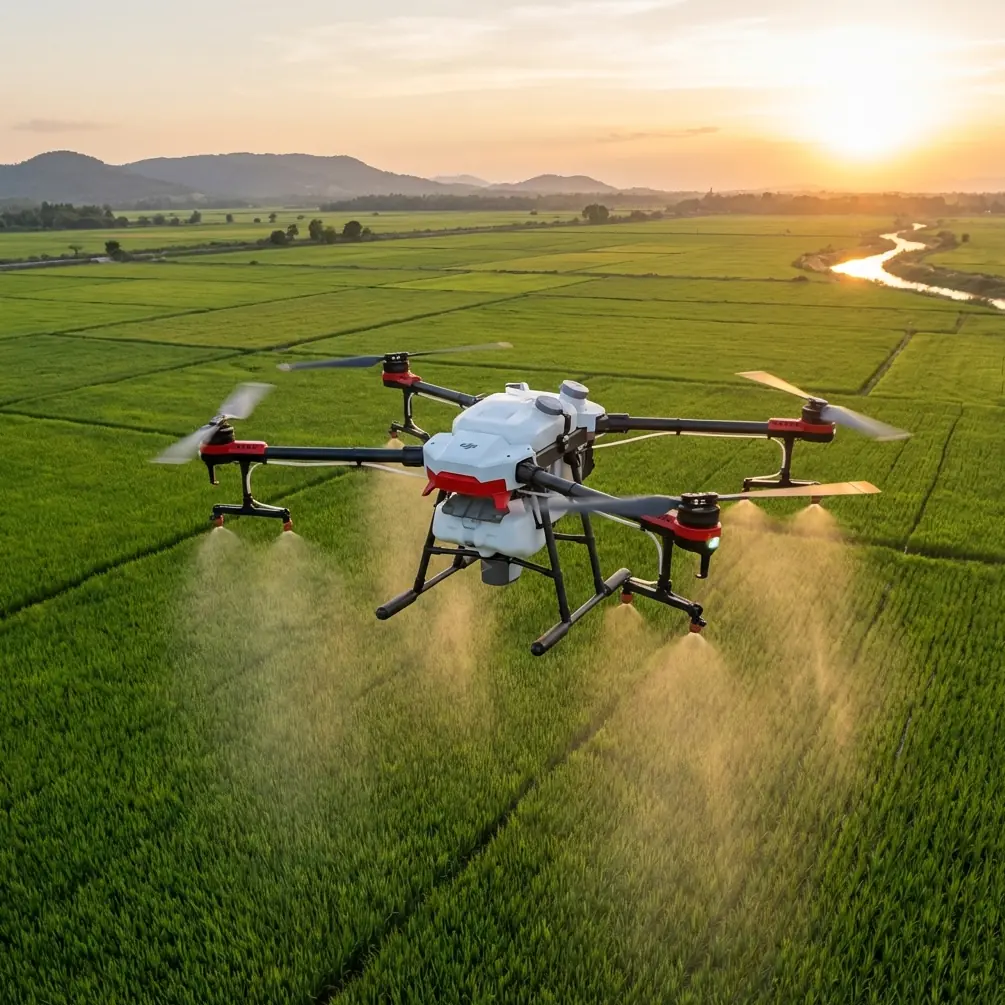
Agras T50 for Coastal Venues: A Practical Field Method That Actually Holds Up
META: A field-tested expert guide to using the DJI Agras T50 around coastal venues, with practical advice on spray drift, nozzle calibration, RTK precision, route planning, and safe data capture workflows.
Coastal venues are awkward places to work with an agricultural drone.
They look open on a map. On the ground, they rarely are. You get ornamental lawns, access roads, temporary structures, shelterbelts, salt-laden wind, bird activity, utility lines, and a timetable that does not care whether your RTK fix rate is stable. If the job involves turf care, grounds treatment, vegetation management, or landscape monitoring around a venue near the sea, the Agras T50 can be a strong platform—but only if the operation is built around site reality rather than brochure assumptions.
That is the real story with the T50 in coastal venue work. The aircraft matters, yes. The method matters more.
Why coastal venues punish sloppy drone workflows
Agras operators who come from broad-acre field work often underestimate how different a venue environment feels. The issue is not just wind. It is fragmentation.
One zone may be a clean rectangular lawn. The next is hemmed in by light poles, fencing, spectator pathways, low roofs, decorative trees, and parked service vehicles. Add sea breeze shifts and reflective surfaces, and even a capable aircraft can be pushed into inefficient patterns if the plan is weak.
This is where two details from established UAV field practice become surprisingly relevant.
First, one crop-survey workflow recommends moving at a safe transit height of about 40 meters, then descending only when directly over the target area to 15 to 20 meters for vertical image capture. That process was described as a “dragonfly touching water” pattern. The phrase is memorable, but the operational meaning is what matters: stay high for transit, go low only for task execution, then climb again before moving laterally.
For a coastal venue, that logic translates beautifully. You do not skim horizontally at low level across unknown landscaping features, temporary event hardware, or cable runs. You transit conservatively, drop into the working envelope only where needed, complete the spray or inspection segment, and then recover vertical separation before crossing to the next zone.
Second, that same workflow found that one battery could be consumed by automatic orthomosaic collection and at least another by manual sample-point collection, with two to three batteries of roughly 30 minutes each needed to finish one survey block under practiced conditions. That is not an Agras T50 spec, but it is an excellent reminder that mixed-mode work burns time and energy faster than managers expect. Around venues, you are rarely doing one pure mission type. You may spray one section, inspect drainage stress on another, and verify edge treatment near structures before the public returns. Battery planning must reflect those transitions.
The T50 advantage is not raw power alone
The Agras T50 gets attention because it is a serious application platform, and deservedly so. But for venue operators, the more useful question is this: can it maintain consistent work quality when the site is broken into many awkward micro-environments?
That is where the T50’s operational ecosystem matters.
You want stable route execution, predictable swath width, reliable atomization behavior, and positioning confidence that supports repeatable passes along edges. In a coastal venue, centimeter precision is not a luxury phrase. It is the difference between clean boundary work and treatment overlap near walkways, flower beds, or water features. If your RTK fix rate degrades, your route may still fly, but your confidence in exact placement should degrade with it.
That has direct implications for spray drift as well. People talk about drift as if it were only about wind speed. It is not. Drift risk is the combined result of wind, droplet size, nozzle condition, boom height, pass alignment, and how disciplined the operator is with route segmentation.
A T50 used carelessly can move product where it does not belong. A T50 used with coastal discipline can do the opposite: reduce unnecessary exposure by keeping application controlled, repeatable, and tightly bounded.
Start with a venue map, not with the aircraft
Before deploying at a coastal venue, I recommend dividing the site into three operational layers:
- Transit corridors
- Treatment cells
- No-fly or no-spray buffers
That sounds obvious. Most teams still blur them together.
Transit corridors should be the drone equivalent of a road network. One industry analysis put it bluntly: vehicles need roads, and large-scale drone operations also need a route network rather than “letting swarms fly everywhere.” The original context was logistics, but the principle is broader and useful. Once a data-based route network exists, drone groups have a path to follow. Around a venue, your route network may be informal and local rather than city-scale, yet the same idea applies. Build repeatable aerial lanes between work zones. Do not improvise every crossing.
This is especially valuable in coastal settings where wind direction shifts through the day. A defined route network lets you quickly re-sequence treatment cells without reinventing safe movement logic on each sortie.
Treatment cells should be small enough to manage drift and edge conditions. If one lawn area borders spectator seating, ornamental plantings, and a service road, do not treat it as one block just because the map polygon says so. Break it apart. Let nozzle calibration, swath width, and downwind exposure determine the cell boundaries.
Buffers should be ruthless. Public access areas, coastal water edges, decorative ponds, event infrastructure, and wildlife-sensitive margins all deserve operational separation.
A real coastal complication: birds do not respect your mission plan
One coastal venue manager once asked me what obstacle was most likely to disrupt a clean treatment run. He expected me to say wind gusts. My answer was terns.
During an early-morning vegetation management operation near a waterfront event lawn, a small group of shorebirds began diving low across the intended flight line, likely reacting to movement near a nesting edge beyond the landscaped zone. The drone’s sensing and the operator’s caution prevented a poor decision from becoming a dangerous one. The pass was aborted, the cell boundary was shortened, and the route was shifted inland until the birds moved off naturally.
That kind of wildlife encounter is not rare by the sea. It is one reason venue work with the T50 should never be treated as a blind automation exercise. Sensors help, but they do not replace judgment. If the site includes regular bird activity, route timing may matter as much as route geometry.
Nozzle calibration is where credibility begins
Most spraying mistakes are blamed on weather because weather is easy to blame.
In practice, nozzle calibration is often the quieter culprit. Around coastal venues, this becomes critical because the target surfaces can vary dramatically: dense turf, sparse wind-stressed grass, embankment vegetation, ornamental margins, or rough peripheral growth near service areas. If output is not verified, you can end up with visible inconsistency that venue staff notice immediately.
The T50 should be calibrated not just to “spray,” but to spray appropriately for the specific zone:
- Turf areas require consistency and edge discipline.
- Embankments may need route and droplet adjustments to avoid off-target movement.
- Irregular landscaped edges punish wide assumptions about swath width.
- Wind-exposed strips near the coast may require reduced aggressiveness or postponement.
Do not rely on a single setting package for the whole property. The venue may be one client, but it is not one environment.
Borrow a survey method to make T50 work smarter
This is where the ArcGIS-based crop survey reference becomes unexpectedly useful for T50 operators.
That document separates field collection into two result types: one set of images for orthomosaic generation, and another for interpretation sample points. It also stresses disciplined file organization, even down to avoiding Chinese characters or spaces in file paths because some processing software can fail when naming conventions are sloppy.
For coastal venue work, the lesson is bigger than software hygiene. Separate your data products by purpose.
If you are using the T50 operation alongside venue condition monitoring, create distinct folders and workflows for:
- treatment mission records
- pre-treatment overview imagery
- sample-point photos of problem patches
- drainage or salinity stress evidence
- follow-up verification captures
And do it cleanly. If your team dumps everything into one messy archive, post-mission analysis becomes guesswork. Orthomosaic-grade imagery and close interpretation samples are not interchangeable. The survey document was right to separate them, and venue operators should do the same.
When high-resolution mapping is required, a multispectral workflow may be brought in through a separate platform, but the same discipline applies: collect broad-area data for pattern recognition, then collect targeted visual evidence for operational decisions. One gives you context. The other gives you proof.
How I would run an Agras T50 mission at a coastal venue
Here is the field sequence I recommend.
1. Inspect the site before the first takeoff
Walk the launch area and at least one representative treatment edge. Identify temporary structures, irrigation overspray, standing water, low cables, and bird activity. Coastal venues change fast. Yesterday’s open corridor may contain staging hardware today.
2. Confirm positioning confidence early
Check your RTK fix rate before committing to precision edge work. If precision is unstable, start with lower-risk interior sections or delay the boundary-sensitive cells. Precision claims are only useful when the fix is actually there.
3. Use high transit, low task logic
Adopt the same basic logic as the 40-meter-to-15/20-meter survey method: stay conservatively high during movement, then descend into the operational envelope over the actual work zone. The exact numbers for T50 work will depend on the mission, but the principle is strong and transferable.
4. Segment by drift exposure, not just area
Split cells according to wind and adjacency. A 2-hectare lawn can contain three very different risk profiles if one side borders open coast, one side borders seating, and one side sits behind a windbreak.
5. Verify nozzle behavior before visible work begins
Run a short test in a low-consequence zone. Check distribution, droplet behavior, and route alignment. Tiny errors become embarrassingly visible on high-profile venue grounds.
6. Log battery use honestly
Do not schedule the day as if every pack is dedicated to pure spraying. Site checks, route edits, verification passes, and image capture all consume energy. That survey reference showing one battery for automated capture and another for manual collection is a useful mental model: hybrid work burns more than expected.
7. Preserve clean records
If the venue team later asks why one section was treated differently, your records should answer clearly. Folder structure, timestamps, route files, and sample imagery matter. If you need help setting up a practical communication channel for planning this kind of workflow, I usually suggest a simple direct line such as venue ops messaging.
Coastal durability and cleanup matter more than many teams admit
Agras work by the sea is not just about flying. Salt is relentless. Residue accumulates. Connectors, exposed surfaces, and spray hardware all deserve disciplined post-operation care. That is why protection standards such as IPX6K catch the attention of experienced operators. They matter less as a marketing badge and more as a sign that the platform is intended to tolerate punishing real-world service conditions.
But no ingress rating excuses neglect. Coastal deployment should always be followed by inspection and cleaning routines that assume salt contamination happened even if you cannot yet see it.
The deeper point: the best T50 operations feel boring
That may sound strange, but it is true.
The most effective coastal venue drone teams do not produce drama. They produce consistency. They build route networks instead of improvising. They treat battery planning as an operational constraint, not a footnote. They separate orthomosaic-scale evidence from close sample imagery. They calibrate nozzles before they trust them. They watch birds, not just telemetry.
And they understand that the drone is only one part of the system.
The Agras T50 is fully capable of serious work around coastal venues. What decides the outcome is whether the operation borrows the right habits from adjacent UAV disciplines: structured routes from logistics thinking, disciplined altitude transitions from survey fieldcraft, precise data handling from GIS workflows, and careful environmental judgment from agriculture itself.
That is the version of T50 work worth copying.
Ready for your own Agras T50? Contact our team for expert consultation.