
Agras T50 Guide for Dusty Venues: How I Track Coverage
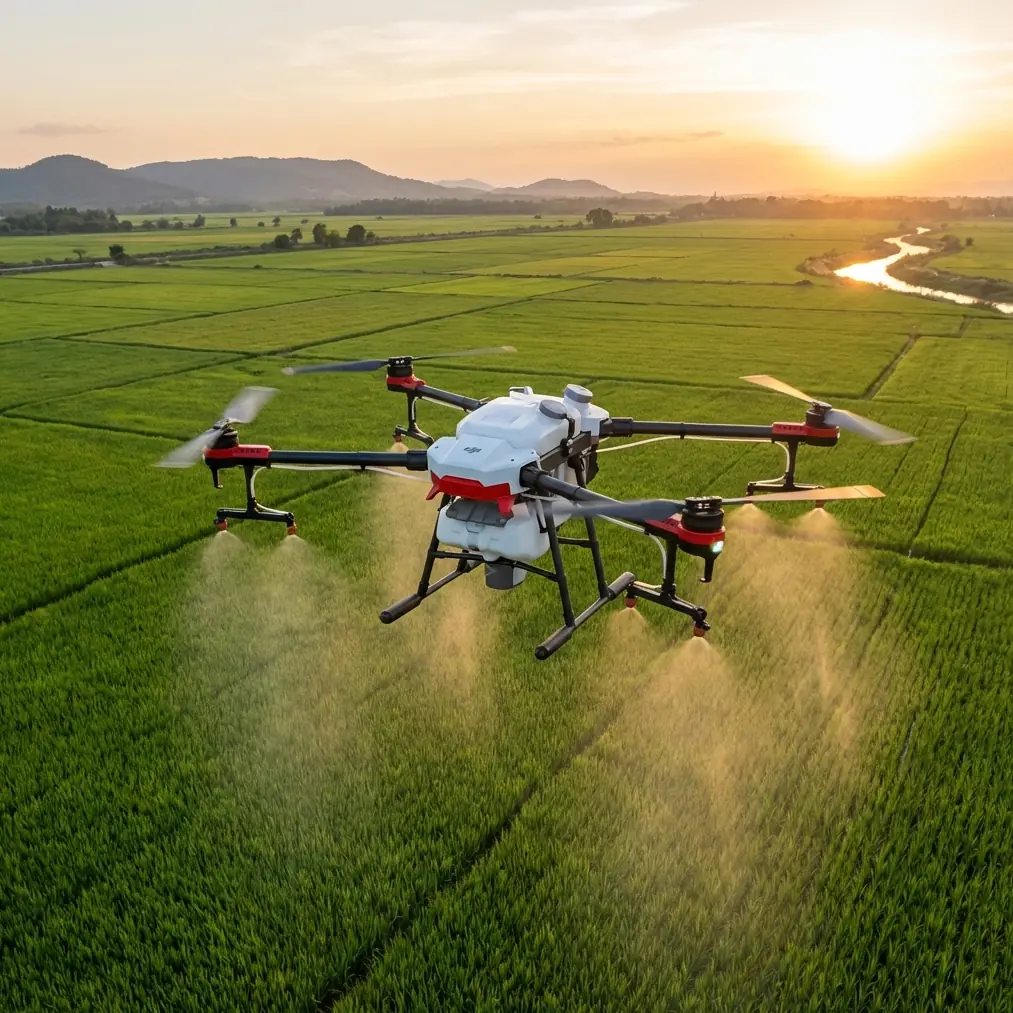
Agras T50 Guide for Dusty Venues: How I Track Coverage, Drift, and Accuracy Without Losing the Field
META: Practical Agras T50 guide for dusty venues covering spray drift control, nozzle calibration, RTK fix stability, swath width, and IPX6K-ready field workflow.
Dust changes everything.
It coats radar housings, softens contrast on camera lenses, hides tire marks, and turns simple verification into guesswork. If you are tracking work at a dusty venue—whether that means a seed trial block, a dry orchard edge, a sports turf complex, or a broad-acre site during a long hot stretch—the challenge is rarely just getting the Agras T50 airborne. The real challenge is proving where the aircraft worked, how consistently it applied, and whether your data still means anything after the wind and powder start moving.
I learned that the hard way on a venue where every pass looked clean from takeoff, but by the end of the day the field told a different story. Dust plumes were drifting across neighboring rows, visual markers had disappeared, and the operator’s confidence in the treatment map was stronger than the evidence on the ground. We did not have a hardware problem. We had a workflow problem.
The Agras T50 makes that problem easier to manage, but only if you use its strengths deliberately. This is not about generic drone spraying advice. It is about how to track work at dusty venues with the T50 in a way that holds up operationally when visibility is poor, surfaces are abrasive, and spray drift can turn a neat plan into a misleading record.
Start with the one metric that matters most in dust: repeatable position
In dusty environments, human observation degrades first. Ground crews lose line-of-sight references. Vehicle tracks vanish. Boundary markers blend into the soil. That is why I put RTK fix quality at the center of the workflow.
The Agras T50 is most valuable in these conditions when it is delivering centimeter precision consistently, not just occasionally. A strong RTK fix rate matters because dusty venues create exactly the kind of ambiguity that tempts teams to “eyeball” coverage. That is where overlap errors and missed strips begin. If the aircraft is holding precise positioning, you can trust lane placement even when the field itself becomes visually flat and messy.
Operationally, this changes two things.
First, it stabilizes your confidence in swath placement. If you are trying to maintain a uniform swath width across a venue with low visual contrast, centimeter-level repeatability helps keep successive passes where they belong rather than where they merely appear to belong from the ground.
Second, it gives you a better basis for post-job verification. In dust, memory becomes unreliable fast. Precise logged positioning gives the operation something harder than memory to stand on.
My rule is simple: if the RTK fix is not stable, do not compensate with speed and optimism. Slow down the workflow, verify correction quality, and only then continue. Dust already introduces enough uncertainty. There is no reason to add navigational uncertainty on top of it.
Swath width is not a set-and-forget number
A lot of teams talk about swath width as though it were a static specification. In dusty venues, it behaves more like a field variable.
The Agras T50 can cover serious ground efficiently, but that efficiency only means something if the effective swath is real under local conditions. Dusty air often pairs with low humidity and unstable crosswinds. That affects droplet behavior, edge consistency, and the visible plume. On paper, a wide swath looks efficient. In the field, a too-ambitious setting can leave underdosed bands that only show up later when the treatment response is uneven.
This is where spray drift and tracking accuracy intersect. If drift pulls the edge outward while the next pass is flown according to a theoretical width, the map can look complete while the biology says otherwise. I have seen operators blame nozzles, tank mix, or pressure when the actual issue was that the effective working width was narrower than the mission settings assumed.
With the T50, I treat swath width as something to validate at the venue, not inherit from another site. Dustier grounds tend to exaggerate weak assumptions. The practical fix is boring but effective: shorten the verification loop. Run a controlled test pass, inspect edge behavior, and adjust before the main operation. That single habit saves more rework than most people expect.
Nozzle calibration is where clean maps become real application
If you only remember one maintenance task before flying in dust, make it nozzle calibration.
The Agras T50 is built for serious work, but the machine cannot overcome a bad liquid delivery setup. Dusty venues create a double penalty. Fine particles can contaminate surfaces and fittings, while dry, windy conditions make any inconsistency in droplet size show up faster as drift or patchiness.
Nozzle calibration on the T50 is not just about hitting a target output figure. It is about preserving comparability from one pass to the next. When calibration is off, your tracking records may say the venue was covered correctly while the application rate quietly varied across the block. That is one of the most expensive forms of operational error because it hides behind what looks like tidy documentation.
I always tie nozzle checks to the day’s actual venue conditions. If the site is producing visible dust clouds under vehicle movement, I assume it is also hostile to application consistency. That means checking for partial blockage, uneven atomization, and wear-related drift in output sooner rather than later.
The significance is practical: accurate positioning without accurate liquid delivery is only half a job. The T50’s precision pays off when flight path accuracy and calibrated spray performance are working together.
Dusty venues punish weak hardware protection
People tend to discuss ingress protection like it is a spec sheet ornament. It is not. On the Agras T50, an IPX6K rating matters in dusty field work because these sites are rarely clean between sorties. Residue builds up on arms, landing gear, tanks, and connection points. Cleaning is not optional if you want reliable long-term operation.
That rating does not mean you can ignore contamination. It means the aircraft is better suited to survive a disciplined washdown and maintenance routine after exposure to harsh field conditions. In other words, the T50 is not merely a spraying platform; it is a machine designed for real agricultural abuse, provided the operator respects the maintenance side of the job.
This has direct relevance to tracking venues. Dust accumulation can degrade sensors and make visual inspections less reliable. If you are working repeated missions over several days, cleanliness becomes part of data integrity. A dirty aircraft is not just a cosmetic issue. It can become a measurement issue, a safety issue, and eventually a downtime issue.
I tell crews to think of IPX6K as operational headroom, not permission to get lazy. The T50 gives you resilience. Your workflow has to meet it halfway.
How I set up a dusty-venue workflow on the Agras T50
When conditions are dry and visibility is inconsistent, I use a tighter process than I would on a forgiving site. This is the method that has served me best.
1. Verify boundary confidence before treatment
Do not trust old assumptions about edges, access lanes, or exclusion zones. Dust makes landmarks disappear. Confirm the mission boundary while the site is still readable, and verify the positioning solution before you rely on it.
2. Check RTK behavior before judging aircraft behavior
If the aircraft appears to be tracking oddly, do not jump straight to mechanical conclusions. Look at RTK fix stability first. A shaky fix in a low-contrast, dusty venue can mimic other problems.
3. Calibrate nozzles with the day’s conditions in mind
Do not carry over yesterday’s confidence. Dust load, wind, and temperature all affect what “acceptable” looks like in practice. A quick calibration check is cheaper than a second application.
4. Validate effective swath width on-site
Even if the crop or venue is familiar, local dust and air movement can alter edge behavior. One verification pass can prevent a full block of hidden misses.
5. Inspect drift risk constantly, not once
Spray drift is dynamic. Dust gives you a clue because it makes airflow visible. If dust is shearing sideways across the venue, your droplets may be doing the same. Use that information.
6. Clean the aircraft as part of the job, not after the season
The T50’s IPX6K-ready design is useful because dusty venues are repetitive stress environments. Treat every cleanup as preventive maintenance.
That framework is not flashy. It works.
Where multispectral fits—and where it does not
Multispectral tools can add value around venue tracking, especially when you are comparing treatment response or isolating problem zones that the naked eye misses. In dusty environments, though, the timing matters. Heavy airborne dust can undermine the clarity you need for reliable interpretation, particularly if you are trying to make immediate decisions from compromised imagery.
So I do not treat multispectral as the first answer to dusty-venue tracking. I treat it as a secondary layer once the basic operational truths are secure: accurate boundaries, stable RTK, calibrated nozzles, and realistic swath assumptions. If those pieces are weak, adding spectral data can create the illusion of sophistication without solving the real field problem.
Used properly, however, multispectral follow-up can help confirm whether application uniformity translated into plant response. That becomes valuable in trial work, stress mapping, and post-treatment analysis. It is strongest as a verification tool, not a substitute for disciplined field execution.
The lesson most operators learn late
Dusty venues reward humility.
The Agras T50 is capable, rugged, and precise, but it does not eliminate the need for judgment. What it does do—very well—is reduce the number of variables that can derail a job when the site itself is trying to hide the truth. Centimeter precision helps keep passes honest. Strong nozzle discipline helps keep output honest. An IPX6K-ready platform helps keep the machine serviceable after harsh exposure. Together, those details matter because dusty work is usually not lost in one dramatic failure. It is lost in a series of small assumptions that nobody challenged soon enough.
If you are tracking venues in dust, that is the mindset shift to make. Stop asking whether the mission flew. Ask whether the record, the application, and the field reality still agree with each other after the dust settles.
That is where the Agras T50 earns its place.
And if you are trying to refine a site-specific workflow, share your field scenario through this quick WhatsApp note and compare it against your current setup. Sometimes a single adjustment to swath verification or calibration routine is enough to turn a frustrating venue into a repeatable one.
Ready for your own Agras T50? Contact our team for expert consultation.