
Tracking Power Lines in Extreme Temperatures With the Agras
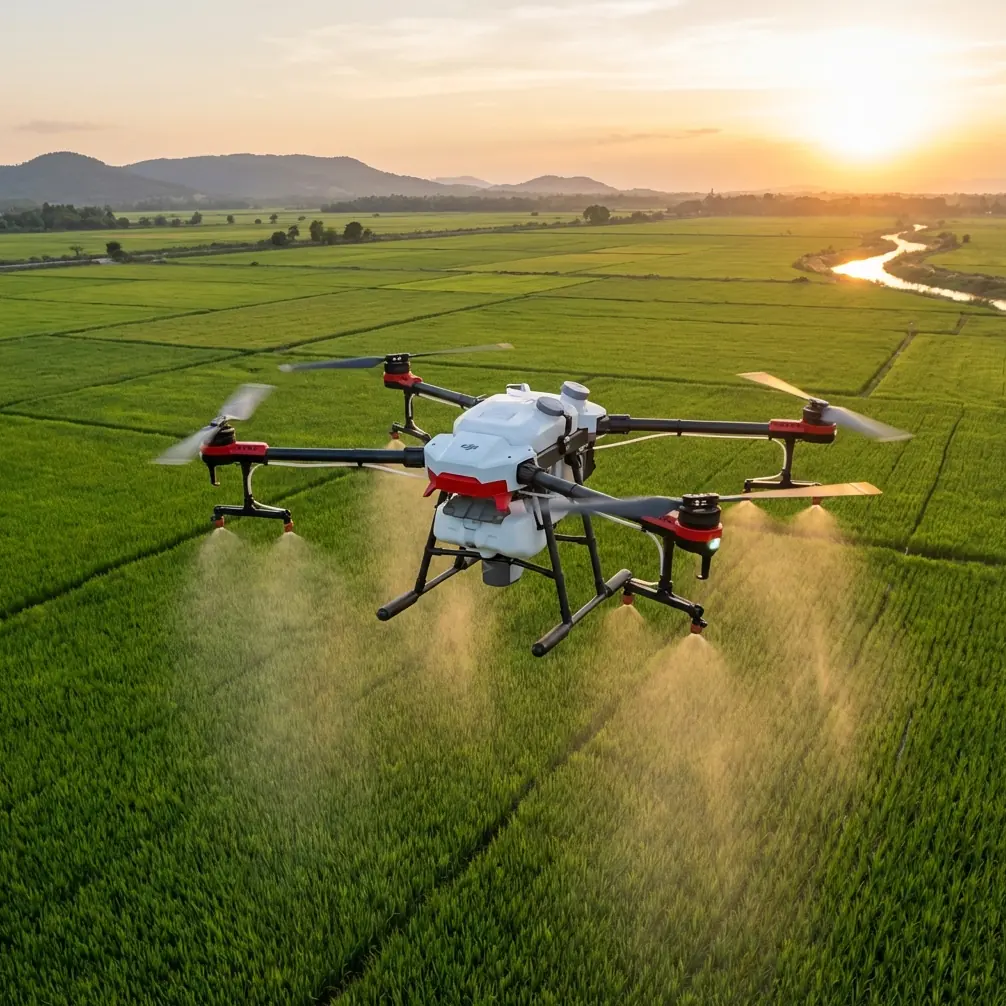
Tracking Power Lines in Extreme Temperatures With the Agras T50: A Practical Field Tutorial
META: A field-focused tutorial on using the Agras T50 for power line corridor work in extreme temperatures, with operational lessons on flight data monitoring, geofencing, image management, and weather-driven decision-making.
Power line work punishes weak workflows long before it punishes weak aircraft. Heat shimmer ruins visual confidence. Sudden wind shifts push a drone off a clean line. Cold mornings drain tempo from batteries and crews alike. If you are thinking about the Agras T50 for corridor tracking in difficult weather, the real question is not whether it can fly. The real question is whether your operation can stay precise, compliant, and organized when conditions stop behaving.
That is where the useful lessons begin.
I approach the T50 less as a simple aircraft and more as a field platform that has to hold together under pressure: pilot judgment, flight discipline, spatial data handling, and weather adaptation. The reference material behind this discussion is not a glossy brochure. It points instead to three issues that matter in actual operations: real-time flight data visibility through a drone cloud system, geofence awareness and alarms, and the often-overlooked burden of managing very large image sets after the mission. For line tracking teams, those are not side notes. They are the difference between an efficient inspection day and a messy one.
Why the T50 enters the conversation for corridor tracking
The Agras T50 is usually associated with agricultural work, so some readers might ask why it belongs in a power line discussion at all. The answer is practical. Corridor missions need stable low-altitude navigation, repeatable path control, and reliable operation in rough outdoor conditions. The same attributes that matter in precise field applications also matter when following utility routes through hot valleys, cold uplands, or mixed terrain.
That crossover becomes more meaningful when you think in terms of workflow instead of category labels. A power line patrol often borrows from agricultural discipline: route planning, environmental awareness, obstacle margins, and meticulous post-flight review. Even terms like swath width and centimeter precision have a place here, not because you are spraying crops, but because corridor coverage still depends on how consistently the aircraft holds its path and how well the operator understands what the sensor or camera actually captured on each pass.
Start with compliance, not takeoff
Before we get to weather, there is a more basic rule. The pilot in command carries direct responsibility for the operation and retains final decision authority. That is not just a legal formality from the civil drone operating rules. It matters acutely in utility environments where access roads, substations, restricted zones, and populated edge areas can compress your margin for error.
The same rules also require civil drone pilots to meet qualification standards tied to aircraft class, licensing, training, testing, and flight experience. If you plan to use a T50 around infrastructure in extreme conditions, skill is not optional. Wind correction near poles, visual interpretation of conductor spacing, and managing degraded situational awareness in heat shimmer all demand a trained crew.
One detail from the operating regulations deserves more attention than it usually gets: after consuming alcohol, a civil drone pilot must not operate within 8 hours, and must not fly while affected by alcohol or drugs in any way that impacts safe performance. In infrastructure work, this is not bureaucratic padding. Fatigue, dehydration, medication, and judgment degradation become more dangerous in extreme temperatures. A crew that is marginal at 22°C can become unsafe very quickly in bitter cold or oppressive heat.
The drone cloud matters more than most crews expect
One of the strongest operational details in the source material is the definition of the unmanned aircraft cloud system. It is described as a dynamic database for light civil UAV operations that provides services such as navigation and weather, while monitoring operating data in real time, including position, altitude, and speed. Aircraft connected to the system are expected to upload flight data immediately. The system can also trigger alarms when a drone intrudes into an electronic fence.
For power line tracking, this is a big deal.
A corridor flight is rarely just a pilot-and-screen exercise anymore. Real-time awareness of position, altitude, and speed becomes far more valuable when weather changes mid-mission. You may need to know not just that the T50 is drifting, but how much, how quickly, and whether the pattern is consistent with crosswind, thermals, or pilot correction. In extreme temperatures, weather can swing from manageable to operationally ugly with very little warning. If your drone cloud setup gives dispatch or field supervisors live visibility into the aircraft state, they can make better decisions about route continuation, pause points, or early recovery.
This is also where RTK fix rate becomes operationally meaningful. Corridor work benefits from centimeter precision because line-following errors compound over distance. If the T50 is operating with strong positioning performance and the crew is watching live telemetry instead of flying by feel alone, the result is tighter, more consistent coverage and better repeatability on re-flights. That matters when comparing inspections across time.
Geofencing is not a nuisance feature
Electronic fencing is often treated as something that just gets in the way. That is a mistake.
The source regulation defines an electronic fence as a hardware-software safety system that marks a protected geographic area and works with the flight control system to prevent an aircraft from entering. The cloud system can generate alarms when the drone approaches or enters those zones. On a power line route, that can save you from subtle airspace mistakes near substations, transport corridors, industrial compounds, or adjacent restricted parcels.
The T50 may be physically capable of continuing, but a disciplined operator knows capability and permission are not the same thing.
In practice, geofencing also improves crew behavior. It forces route planning to become spatially explicit. You stop thinking in vague terms like “we’ll stay near the right of way” and start planning exact operational envelopes. That matters especially when temperature extremes compress your cognitive margin. In bitter cold, crews rush. In heat, they cut corners because every extra minute feels expensive. A fence alarm catches that drift before it becomes a reportable problem.
The mid-flight weather turn: what actually happens
Let me describe a realistic scenario.
You launch early on a cold morning to inspect a line segment crossing open ground and scattered tree belts. The first few passes are clean. The T50 holds track well, the image feed is stable, and the route timing looks predictable. Then the sun rises enough to destabilize the local air. Wind begins to quarter across the line instead of flowing along it. A little later, the crosswind pulses harder and starts tugging at the aircraft during turns.
This is the moment when weak operations improvise and strong ones narrow the mission.
The T50’s value here is not that it magically defeats weather. No serious operator should frame it that way. The value is that a robust aircraft, flown with disciplined telemetry monitoring, lets the crew detect the shift early and decide intelligently. You reduce speed. You tighten your acceptable corridor deviation. You watch altitude and groundspeed trends in the live data. You assess whether the RTK fix remains stable. If your route was planned with geofenced boundaries and cloud-linked monitoring, the decision to continue or suspend becomes evidence-based rather than emotional.
That is how the drone “handled” the weather change: not through fantasy-level invincibility, but by giving the crew enough control and enough information to adapt before the mission unraveled.
Sensor and image workflow: where most inspection value is lost
Capturing imagery is easy. Finding and using it later is the hard part.
The ArcGIS-based crop survey reference may look agricultural on the surface, but its data management lessons transfer directly to utility inspection. It highlights that drone imagery can be stitched into high-definition orthomosaics using Envi OneButton, while ArcMap supports GIS data processing, map management, and custom reporting. ArcGIS Portal enables collaborative sharing across teams. Most importantly, the document notes that a city- or province-level survey can generate thousands upon thousands of orthophotos in a single campaign, and that long-term accumulation makes image management difficult without a proper system.
Replace “crop survey” with “power line corridor archive” and the problem is identical.
If you use the T50 to inspect line sections over months or seasons, the real asset is not one flight. It is the time series. You need to find imagery by date, route segment, weather window, resolution, and anomaly type. You may want to compare vegetation encroachment, storm damage, access-road changes, or conductor clearance indicators over time. Without a structured image management workflow, the aircraft becomes a data generator and little else.
This is why I recommend thinking beyond the flight app from day one. Orthomosaic creation, geotagged photo indexing, GIS-based layering, and portal-based sharing all matter. Even if your first use case is straightforward line tracking, your second use case is usually review, audit, or comparison. That is where the operation either matures or stalls.
A note on multispectral and non-standard payload thinking
Not every line-tracking mission needs multispectral data. But if your broader corridor program includes vegetation monitoring or heat-stress-related environmental assessment nearby, then a richer sensor strategy can pay off. The ArcGIS workflow described in the reference data is useful because it is designed for combining imagery with mapped features, sample points, and shared interpretation. That model fits utility vegetation programs surprisingly well.
The T50 discussion should therefore not stop at “can it fly this route.” Ask instead: can your platform support a map-centric workflow where imagery, field notes, and route intelligence live in one system? If the answer is yes, the aircraft becomes part of an inspection ecosystem rather than a standalone machine.
Calibration discipline still matters, even outside spraying
Because the T50 comes from an agricultural lineage, many operators already understand nozzle calibration and spray drift control. Even in non-spraying roles, that mindset is valuable. Why? Because calibration culture translates into better preflight culture. Crews who are trained to think carefully about drift, flow consistency, and equipment setup tend to be better at checking route geometry, mount stability, positioning quality, and environmental limits.
So while spray drift itself is not central to power line tracking, the discipline behind it is. The same operator who respects drift in a field is usually more alert to crosswind corridor error near a conductor line. That operational seriousness carries over.
Extreme temperature habits that actually help
A few habits consistently improve T50 corridor performance in rough weather:
- Shorten missions when temperatures are punishing rather than clinging to the original route plan.
- Verify positioning quality before you commit to long linear segments. Centimeter precision is only useful if it is actually stable.
- Treat image organization as part of the mission, not as office cleanup.
- Use geofences intentionally. Do not wait for them to surprise you.
- Build a weather decision point into the mission brief. Know in advance what telemetry or environmental changes will trigger a pause.
If your team is setting up that workflow and wants a field-practical checklist for route planning, data handling, or cloud-monitoring configuration, I usually suggest starting the conversation here: message our operations desk.
The larger lesson from outside agriculture
One of the reference items describes a very different aircraft: the “Jiutian” UAV, with a 25-meter wingspan and a maximum takeoff weight of 16 tons, built through a full-chain manufacturing system spanning process design, raw material supply, and final debugging, supported by PLM, CAXA, and DMPP digital systems. That aircraft is far removed from a T50 in mission and scale, and the sensitive aspects are irrelevant here. But one industrial lesson is worth borrowing: serious UAV operations increasingly depend on complete systems, not isolated hardware.
For T50 users tracking power lines, the equivalent is clear. Airframe capability matters, but so do digital coordination, maintenance discipline, route data, and traceable workflows. The teams that perform best in extreme temperatures are rarely the ones with the boldest claims about aircraft strength. They are the ones with the tightest system around the aircraft.
That is the right way to think about the Agras T50 in this role.
Not as a miracle machine. As a dependable node in a well-run corridor inspection method. When the weather turns mid-flight, that distinction becomes obvious very fast.
Ready for your own Agras T50? Contact our team for expert consultation.