
Agras T50 for Coastal Highway Tracking: A Practical
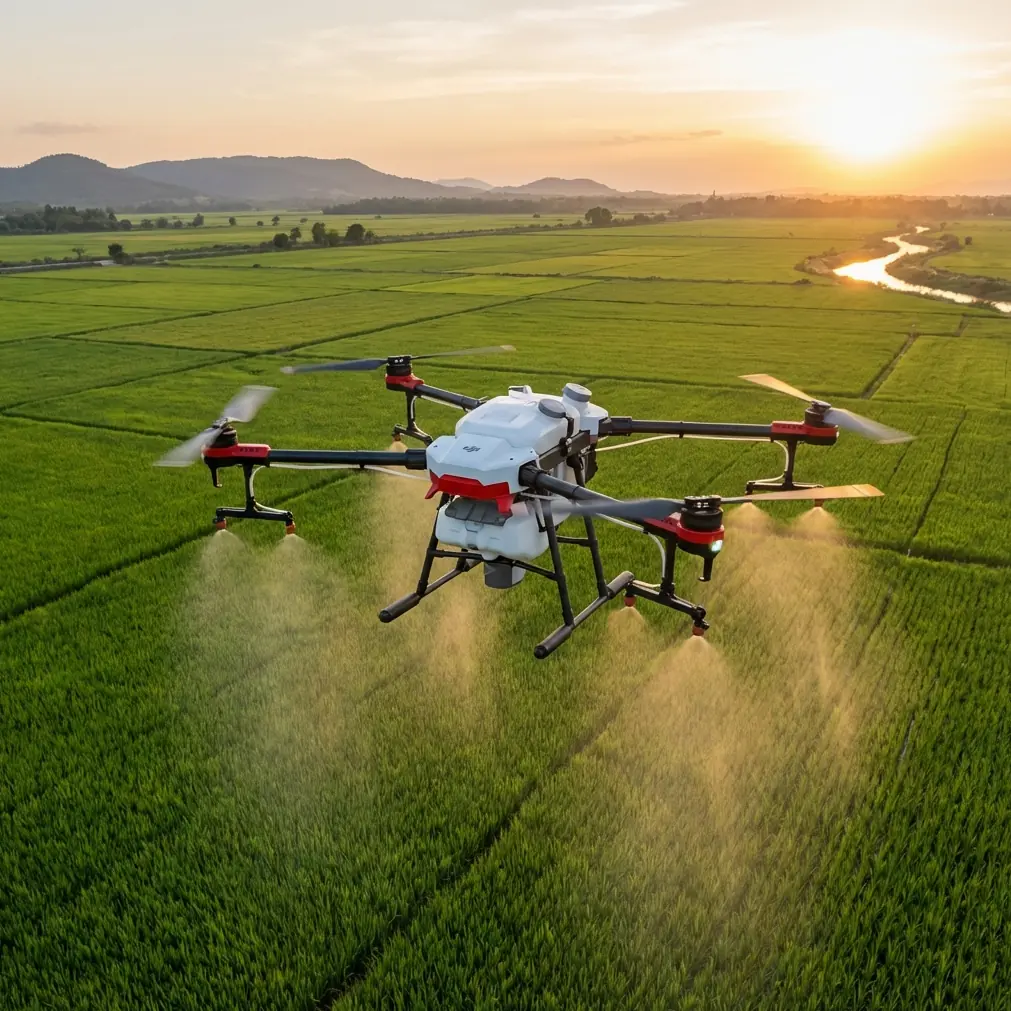
Agras T50 for Coastal Highway Tracking: A Practical Operating Guide Built Around Risk, Precision, and Pre-Flight Discipline
META: A field-focused Agras T50 guide for coastal highway corridor work, covering pre-flight cleaning, precision setup, drift control, training logic, and why operational risk protection matters.
Coastal highway work has a way of exposing every weak habit in a drone operation.
Salt hangs in the air. Fine grit settles where it should not. Wind shifts faster than inland crews expect. Long, linear routes push pilots into repetition, and repetition is where small lapses become expensive ones. For teams considering the Agras T50 for civilian corridor tasks such as vegetation treatment, right-of-way management, and infrastructure-adjacent spraying support, the real question is not whether the aircraft is capable. It is whether the operation around the aircraft is disciplined enough to protect precision, people, and equipment over many flights.
That is the frame that matters.
The Agras T50 is often discussed in terms of payload, output, and coverage. Those are valid metrics, but along a coastal highway, the stronger story is about control. Control of spray drift. Control of nozzle calibration. Control of route repeatability through RTK positioning. Control of equipment exposure through cleaning and inspection. And, just as seriously, control of financial and personnel risk when something still goes wrong.
One recent signal from the wider drone industry deserves attention here. At the 10th World Drone Congress, opened on May 21, 2026, a specialized drone protection service called 航影飞保 appeared at booth 1D114. The service was presented specifically for drone industry applications and addressed four loss categories that professional operators know all too well: airframe accidental damage, third-party liability, theft, and pilot personal accident coverage. That matters for Agras T50 users because corridor work near roads is not just an aviation exercise. It is an exposure-management exercise. If your mission profile puts a large agricultural aircraft near public infrastructure, passing vehicles, and contractor teams, those four categories are not abstract. They are the operating environment.
So instead of another broad overview, this guide focuses on how to prepare an Agras T50 for coastal highway tracking work the right way, starting with a step many crews rush through: pre-flight cleaning.
Start with cleaning, not powering on
In coastal conditions, pre-flight cleaning is a safety step before it is a maintenance step.
Salt residue and fine road dust do two dangerous things. First, they obscure what you need to see. Second, they slowly degrade what you need to trust. On an Agras T50, that means visual sensors, landing gear contact points, nozzle assemblies, connectors, and external surfaces that may seem rugged enough to ignore. An aircraft rated for harsh field use still depends on clear sensing surfaces and uncontaminated spray components.
A disciplined coastal workflow looks like this:
- Wipe down exterior surfaces before inspection, especially around sensing windows and spray hardware.
- Check nozzle tips for crystallized residue or partial blockage.
- Inspect hose routing and couplings for salt buildup, grit, or seepage.
- Confirm that the radar and vision-related surfaces are clean and unobstructed.
- Dry-contact areas that may have taken on mist during transport or the previous mission.
Why begin here? Because a dirty aircraft gives you false confidence. A blocked or uneven nozzle can distort output and worsen spray drift. A contaminated sensor surface can reduce the reliability of obstacle awareness or terrain response. A crusted connector may not fail on takeoff; it may fail halfway down a highway segment when the aircraft is already committed to the route.
For coastal corridor work, cleaning is part of flight safety, data consistency, and application quality.
Build every mission around drift, not just coverage
The temptation with a productive platform like the Agras T50 is to optimize swath width first. On highway-adjacent jobs, that is backwards. The first planning variable should be drift.
Road corridors create peculiar airflow. Open embankments, passing vehicles, cut slopes, sea breeze, and thermal changes across asphalt can all move droplets in ways that look minor at launch and become obvious only after the pass is complete. That is why nozzle calibration has to be treated as a route-control issue, not merely a maintenance checkbox.
If the nozzles are not delivering a uniform pattern, you get two problems at once: reduced treatment quality on target and increased risk of off-target deposition. Along a coastal highway, off-target deposition may affect guardrails, drainage edges, signage bases, adjacent landscape zones, or contractor staging areas. That is operationally messy and reputationally worse.
Before the first route of the day:
- Verify nozzle condition physically, not just visually.
- Confirm application rate against the planned speed and swath width.
- Recheck after the first short test segment.
- Adjust for coastal wind behavior, not just the forecast value.
Experienced crews know this, but it is worth saying plainly: a perfect route flown with poor nozzle performance is not a precise job.
RTK discipline matters more on linear jobs
Highway tracking work is repetitive by design. That repetition is where centimeter-level positioning earns its keep. With the Agras T50, RTK-backed flight planning is not just about pretty lines on a map. It is about repeatable placement over narrow working zones where overspray and gaps are both costly.
A strong RTK fix rate gives you confidence that the aircraft is staying where the mission planner expects it to stay, especially when running parallel passes along barriers, shoulders, drainage lines, or vegetated margins. On a broad farm block, minor deviation may be tolerable. On a roadside corridor, deviation tends to show up exactly where you do not want it.
The operational significance is simple:
- Better repeatability reduces overlap waste.
- Better path accuracy helps maintain a predictable spray edge.
- Better route fidelity lowers the chance of unintended treatment near road assets.
- Better alignment supports cleaner documentation for contractors and asset owners.
If your team uses multispectral or supplemental mapping data to identify vegetation stress or regrowth patterns along the corridor, RTK precision also helps you connect treatment decisions to exact ground locations. That turns the T50 from a blunt application tool into part of a measured maintenance workflow.
Do not let automation replace pilot discipline
One of the most useful references for this topic comes from an unlikely place: fixed-wing training. A technical training text on model aircraft aerobatics emphasizes that before a maneuver, level flight is essential, and that as speed increases, the action becomes easier and more controllable. It also warns against entering the maneuver with bad timing or mixed control inputs, because that leads to altitude loss and loss of directional consistency.
That lesson transfers surprisingly well to Agras T50 operations.
No, you are not rolling an agricultural multirotor down a highway corridor like an aerobatic plane. But the principle is the same: stable entry conditions produce consistent outcomes. If your T50 begins a pass with poor speed control, a sloppy altitude transition, or unresolved crosswind correction, the rest of the pass becomes a recovery exercise instead of a work segment.
For coastal highway missions, that means:
- Enter each lane or corridor segment from a settled, stable track.
- Avoid “chasing” the line after the spray pass begins.
- Use consistent speed bands that match your droplet strategy and nozzle setup.
- Do not confuse aggressive corrections with precision.
The training reference also makes a second point that matters here: if performance is inconsistent, the answer may be more energy and better setup, not more control input. In practical T50 terms, if the aircraft is struggling to hold application quality in changing wind, the fix is often mission redesign, pass timing, speed adjustment, or buffer-zone revision, rather than trying to salvage the segment through constant stick intervention.
Treat programming logic as an operations mindset
Another source, this time from a DJI educational programming document, explains a basic concept with the simple example 2+3=5. The result is stored in a variable called “结果,” converted into a string, and then displayed. It sounds elementary, but the underlying logic is highly relevant to Agras T50 field operations: compute, store, convert, display.
That sequence is exactly how mature drone teams should think.
For corridor spraying, you are continuously doing the operational equivalent:
- Compute: wind, route length, tank cycles, target area, drift exposure.
- Store: mission parameters, calibrated values, route versions, operator notes.
- Convert: field observations into decisions.
- Display: results in reports that crews and clients can actually use.
In other words, precision is not only what the aircraft does in the air. Precision is how the team handles information on the ground.
A coastal highway job often fails long before takeoff because crews skip this logic chain. They notice residue but do not log it. They see a nozzle pattern issue but do not convert that observation into a recalibration step. They detect a weak RTK environment but continue flying with assumptions rather than revising the plan. The aircraft may still complete the route, but the operation is no longer controlled.
A practical pre-flight sequence for Agras T50 highway corridor work
Here is a field-ready sequence tailored to coastal environments:
1. Clean first
Remove salt film, road grime, and spray residue from sensor windows, spray components, and exposed contact areas. This is the safety trigger for everything that follows.
2. Inspect the spray system
Check nozzle alignment, wear, and blockage. Confirm hoses and seals are dry and stable. Revisit nozzle calibration if there is any doubt. Along a highway edge, uneven output quickly becomes visible and problematic.
3. Confirm RTK status and route confidence
Do not rely on yesterday’s assumptions. Verify fix quality before launch and inspect route geometry for narrow shoulders, curves, and infrastructure pinch points.
4. Review wind behavior at working height
Not just at takeoff point. Coastal roads can have local flow changes near barriers, slopes, and open water exposure. Build your swath width around what the droplets will do, not around what the planner says they should do.
5. Validate entry conditions on a short test run
Fly a short segment to confirm speed, altitude behavior, pattern consistency, and drift response. Small corrections here prevent large downstream errors.
6. Reassess after the first load
The first route tells the truth. Check deposition pattern, edge control, and any sensor contamination from atomized mist or airborne grit.
Why risk protection deserves a place in the T50 workflow
This is where that 2026 drone congress reference comes back into focus.
When a service like 航影飞保 draws traffic at a major event and centers its message on airframe accidental damage, third-party liability, theft, and pilot personal accident exposure, it is responding to real operator pain. For Agras T50 users running highway-adjacent work, those categories map directly to common operational risks.
- Airframe damage: coastal contamination, transport knocks, hard landings on uneven roadside staging areas.
- Third-party liability: public infrastructure and civilian traffic increase consequence if something goes off-plan.
- Theft: mobile field setups along open corridors can create equipment vulnerability.
- Pilot personal accident exposure: repetitive loading, roadside setup, and fast-paced field days carry human risk even when the aircraft performs perfectly.
This is not a side issue. It is part of professionalizing the operation around the aircraft. If your team is building a repeatable T50 program for corridor maintenance, risk transfer and incident preparedness belong in the same conversation as spray maps and batteries. If you want to compare field workflows or discuss what a protected operating model should look like, you can message a corridor operations specialist here.
The real advantage of the Agras T50 in this scenario
For coastal highway tracking, the Agras T50’s value is not just output. It is the way the platform can anchor a disciplined, repeatable, documented process when the team around it is sharp.
That means:
- using centimeter precision to hold route integrity,
- matching swath width to real drift conditions,
- keeping nozzles calibrated for edge control,
- cleaning before flight so safety features stay trustworthy,
- and treating operational risk as a planning input rather than an afterthought.
The strongest T50 crews are rarely the ones talking the most about capacity. They are the ones who finish a long corridor day with consistent deposition, clean logs, no sensor surprises, and no ugly calls after the job is done.
That is what expert operation looks like on the coast. Not flashy. Not theoretical. Just controlled, precise, and resilient from the first wipe-down to the final report.
Ready for your own Agras T50? Contact our team for expert consultation.