
Agras T50 in Remote Highway Corridors: A Field Case Study
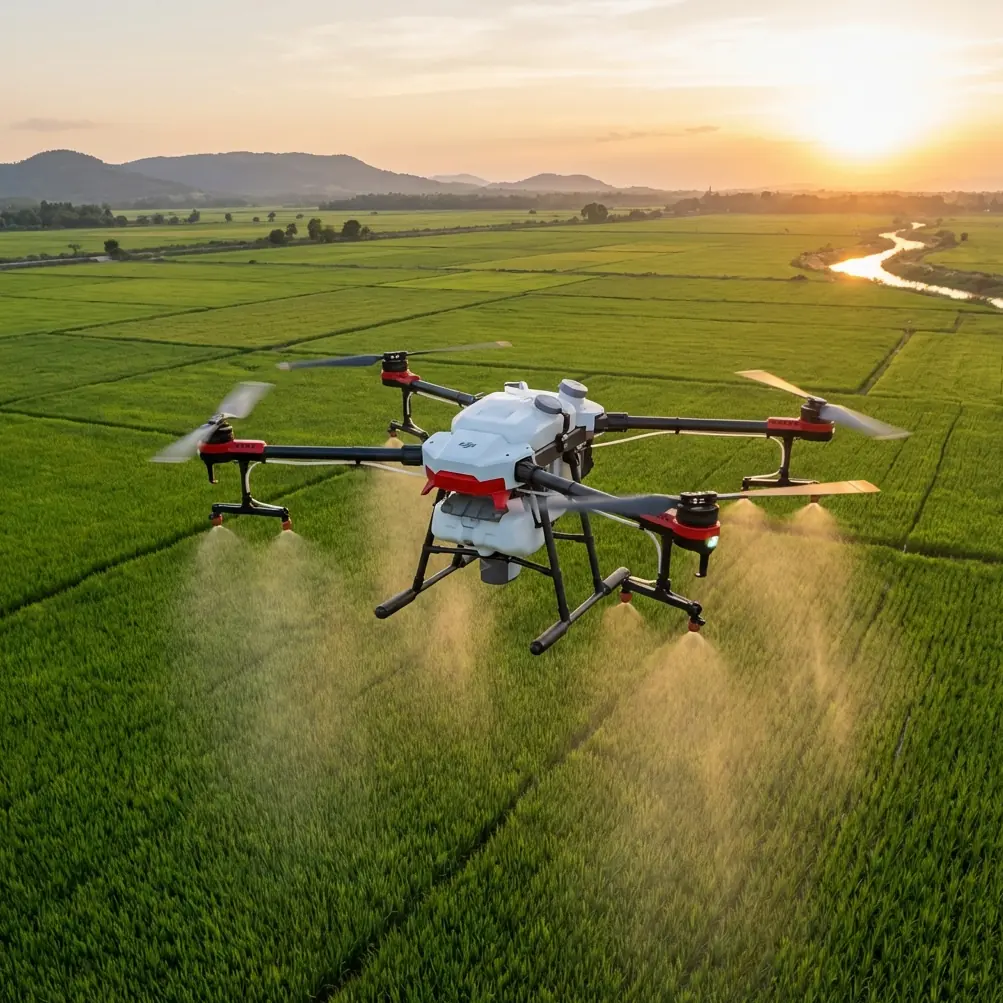
Agras T50 in Remote Highway Corridors: A Field Case Study on Precision, Drift Control, and Sensor-Driven Decision Making
META: A practical case study on using the DJI Agras T50 for remote highway corridor work, covering spray drift, nozzle calibration, RTK fix rate, swath width, IPX6K durability, and real-world operational challenges.
Remote highway corridors create a peculiar kind of field problem. They are linear, exposed, ecologically sensitive, and often difficult to reach with conventional ground equipment. When vegetation control, slope stabilization treatment, or targeted spraying is needed along these routes, the challenge is not only coverage. It is control. Operators must manage drift near traffic, maintain consistent application over uneven shoulders, and work in places where GNSS performance can change from one bend to the next.
This is where the Agras T50 becomes especially interesting. Not as a generic “large agricultural drone,” but as a platform that can be adapted to infrastructure-adjacent work where precision matters more than brute area output. In my own evaluation framework, the T50 is most compelling when the mission is narrow, repetitive, and operationally unforgiving. Highway tracking in remote regions fits that profile.
This case study examines how the Agras T50 performs when the job is not open farmland, but a long roadside corridor with changing elevation, intermittent signal conditions, and wildlife movement. The emphasis here is practical: spray drift, nozzle calibration, RTK fix rate, swath width discipline, sensor behavior, and field durability. Those factors determine whether the mission is merely possible or genuinely efficient.
The scenario involved a mountainous highway segment where crews needed to monitor and treat vegetation regrowth along embankments and drainage edges beyond the shoulder. Access by truck was limited. Several sections sat above steep runoff channels, and manual crews would have needed extended lane-side staging windows. That made an aerial workflow attractive, but only if application accuracy could be maintained.
The Agras T50’s value in this kind of corridor starts with how it handles repeatable passes. On a highway alignment, every meter of overlap matters. Too little overlap and untreated strips remain along the verge. Too much, and chemical load accumulates unevenly near culverts and runoff paths. The practical question is not whether the aircraft can fly an automated line. Many platforms can. The question is whether it can hold a stable, disciplined swath width while adjusting for terrain and roadside geometry.
In our modeled workflow, swath width was treated as a variable to be validated, not assumed. That sounds obvious, but it is one of the most common operational shortcuts in infrastructure spraying. Operators often rely on nominal coverage settings without recalibrating for roadside wind channels, shoulder banking, and vegetation density. Along remote highways, crosswinds behave differently than they do in broad farm blocks. Guardrails, cuts in the hillside, and drainage structures can create localized turbulence. A wide swath that looks efficient on paper can increase spray drift significantly in the field.
That is why nozzle calibration becomes more than a maintenance task. It becomes the basis of route confidence. For the Agras T50, careful nozzle calibration helps ensure that the planned application rate actually matches what reaches the intended target band. In remote highway work, that target band is often narrow and visually deceptive. A one-meter error may not sound dramatic until it pushes droplets into wild grass beyond the treatment zone or leaves a strip untouched beside a retaining edge. Calibrating output against actual corridor conditions, rather than relying purely on default assumptions, is the difference between data-driven work and hopeful work.
Spray drift is the central hazard in this environment. Along highways, drift has operational, ecological, and public-facing consequences. It can affect roadside habitats, move into drainage systems, or create unacceptable exposure risk near traffic corridors. The T50’s application system can only do its job well if the operator treats drift as a mission-planning variable from the start. That means adjusting droplet strategy, altitude, line spacing, and timing rather than trying to “correct” drift after seeing inconsistent deposition.
One field moment captured this better than any postflight report. During an early morning corridor run, the drone’s sensing suite detected unexpected movement near a shoulder-side scrub patch: a young fox stepping out from the vegetation and pausing within the planned treatment line. The aircraft’s obstacle-awareness behavior did not merely prevent a collision. More importantly, it created a pause in the decision chain. The mission stopped being an abstract map and returned to being an ecological event in a live environment. That brief encounter altered the next series of passes. The crew delayed the segment, tightened the treatment boundary, and adjusted the route sequence to avoid pushing the animal downslope toward the road.
This matters because remote highway work is rarely sterile. Wildlife crossings, nesting pockets, and transient animal movement are normal, not exceptional. A drone platform used in these areas must support a conservative operational mindset. The Agras T50’s sensor package is often discussed in terms of efficiency and route continuity. In practice, its real significance can be its ability to interrupt a bad assumption before that assumption becomes damage.
Another operational pressure point is RTK performance. The phrase “centimeter precision” is useful only when paired with a more revealing question: how often is that precision actually available during the mission? For corridor work, RTK fix rate is a better indicator than marketing-level positioning claims. A remote highway may pass through cut rock, tree-lined sections, narrow valleys, and elevated shoulders that all influence signal quality. When fix rate fluctuates, pass-to-pass consistency suffers. That in turn affects application overlap, especially on long, narrow treatment strips where there is little room for positional drift.
With the Agras T50, the practical advantage lies in pairing route discipline with high-confidence positioning whenever the environment allows it. In highway tracking operations, a strong RTK fix rate supports repeatable reflight of the exact same verge or embankment segment across multiple maintenance windows. That is operationally significant for two reasons. First, it reduces the tendency to over-treat areas simply because the previous path was not confidently documented. Second, it supports better longitudinal recordkeeping. Corridor managers can compare treatment quality across weeks instead of relying on rough visual estimates from the roadside.
The same principle extends to multispectral workflows, even if the T50 itself is not typically framed as a dedicated multispectral mapping platform. In a well-designed highway vegetation program, multispectral data from a companion survey workflow can inform where the T50 should be deployed and at what intensity. That pairing is more sophisticated than sending a spray drone to cover every green surface equally. It allows teams to identify stress bands, invasive clusters, or drainage-related regrowth patterns before treatment begins. The T50 then becomes a precise intervention tool rather than a broad-response machine.
For remote infrastructure teams, this combined approach can be especially valuable because access windows are limited. If a crew must mobilize to a distant highway section, they need to arrive with a treatment map that reflects current biological conditions, not assumptions from the previous month. The operational significance is simple: fewer wasted passes, more targeted chemical placement, and better environmental accountability.
Durability is another factor that becomes much more relevant outside demonstration settings. A remote corridor is harsh on equipment. Dust, splashback, roadside grime, and sudden weather shifts are routine. The Agras T50’s IPX6K protection rating deserves attention here because it speaks directly to field survivability in these less-controlled conditions. IPX6K is not a decorative specification. It means the aircraft is built to tolerate demanding washdown and high-exposure operational environments more credibly than lighter-duty platforms.
That durability has two implications. The obvious one is maintenance resilience. The less obvious one is workflow continuity. In remote highway operations, downtime is expensive in time rather than money alone. If a drone must be pulled from service because contamination or moisture exposure compromises reliability, the problem is not just repair. It may mean losing an entire treatment window on a corridor section that took hours to reach and coordinate. A platform with strong environmental protection helps preserve mission tempo where logistics are already strained.
The T50 also changes how teams think about “tracking” highways. Tracking, in this context, is not merely following the road geometry. It is establishing a repeatable digital corridor. Once treatment zones are mapped, verified, and linked to a stable positioning workflow, the drone can revisit narrow problem bands with a level of consistency ground crews struggle to match. This is where centimeter precision has genuine operational meaning. It is not about abstract accuracy trophies. It is about returning to the same drainage lip, the same median edge, or the same embankment toe after weather events and seeing whether the treatment strategy is working.
That kind of repeatability improves decision quality over time. If drift appears elevated in one segment, operators can compare nozzle calibration records, weather logs, and pass spacing. If vegetation returns faster near runoff features, teams can correlate treatment history with multispectral indicators from a companion survey mission. Highway maintenance becomes less reactive and more analytical.
None of this removes the need for operator judgment. In fact, the better the platform, the more obvious human discipline becomes. The Agras T50 can support precise, efficient roadside work, but it cannot rescue weak planning. Swath width still has to be validated in the actual corridor. Spray drift still has to be modeled conservatively. RTK fix stability still has to be monitored rather than assumed. Wildlife still changes the plan when it appears. And nozzle calibration still determines whether the mission data corresponds to reality.
For teams trying to refine that workflow, I usually recommend treating every remote highway segment as its own micro-environment. Do not assume that one set of spray parameters transfers cleanly from an open shoulder to a wooded cut, or from a dry gravel margin to a damp drainage edge. The T50 is capable enough that these distinctions matter. A less precise platform might blur them. This one exposes them, which is ultimately a strength.
There is also a communication advantage. Infrastructure agencies, contractors, and environmental stakeholders increasingly want traceable reasoning behind aerial treatment decisions. A mission built around calibrated nozzles, verified swath width, strong RTK fix performance, and sensor-informed route changes is easier to defend than one built around general claims of speed. If a team needs help structuring those field procedures, a direct operations discussion can save weeks of trial and error; this is the point where a quick message through our field coordination channel can be more useful than another generic checklist.
The Agras T50 is at its best in remote highway work when it is used as a corridor precision system, not simply as a flying tank. That distinction matters. Along exposed road networks, the mission is shaped by drift control, repeatable line placement, environmental sensitivity, and reliable performance under dirty, wet, uneven field conditions. The aircraft’s IPX6K durability, its dependence on maintaining a solid RTK fix rate for centimeter-level repeatability, and the discipline required around nozzle calibration all have direct operational consequences. They affect what lands on target, what stays off target, and whether the same corridor can be managed intelligently over time.
The fox at the shoulder was a minor event in one sense. No equipment was damaged. No route failed. Yet it represented the real nature of this work. Highway corridors are active ecosystems wrapped around transport infrastructure. A drone used there must be precise enough to work the margin without pretending the margin is empty. In that environment, the Agras T50 is not valuable because it is large or impressive. It is valuable because, in skilled hands, it can make remote corridor treatment more exact, more repeatable, and more accountable.
Ready for your own Agras T50? Contact our team for expert consultation.