
Agras T50 for High-Altitude Highway Tracking
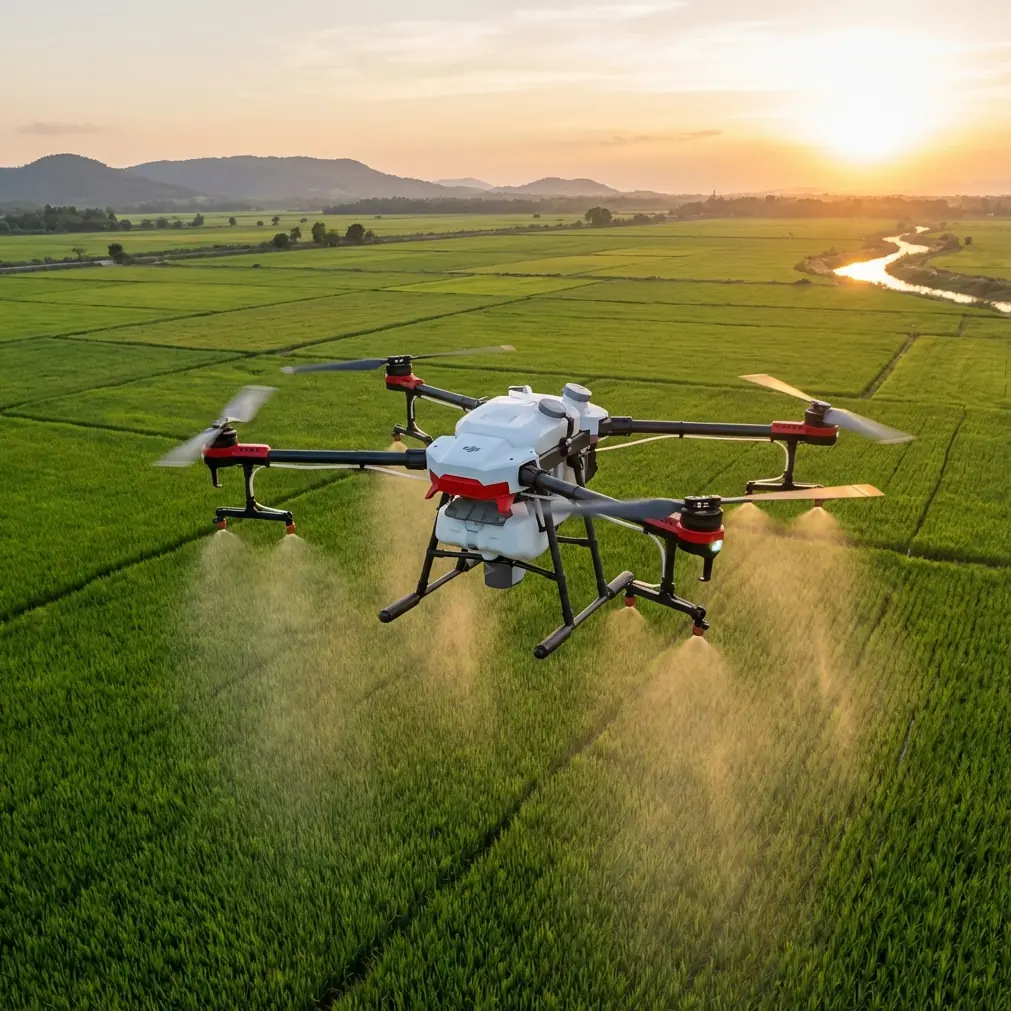
Agras T50 for High-Altitude Highway Tracking: A Practical Field Method That Holds Its Line
META: A field-focused guide to using the DJI Agras T50 for high-altitude highway tracking, with practical advice on RTK fix rate, spray drift control, nozzle calibration, swath width, and weatherproof operation.
High-altitude highway work punishes weak assumptions. Wind behaves differently along cut slopes and exposed ridgelines. GNSS conditions shift as the road bends through rock faces. Fine dust settles into everything. If you are using an Agras T50 near mountain corridors, the real question is not whether the aircraft can fly there. It is whether your workflow can stay stable when terrain, pressure, and airflow keep changing minute by minute.
That distinction matters.
I learned it the hard way during an academic field exercise tied to roadside vegetation management above 3,000 meters. The aircraft itself was not the main problem. The problem was consistency. We could fly a route in the morning, then watch our coverage pattern change by midday because wind rolled up from the valley and started pushing atomized droplets across the shoulder. The result was not dramatic enough to trigger an immediate stop, but it was enough to reduce confidence in the data and enough to create risk near guardrails, drainage channels, and traffic-facing edges.
The Agras T50 makes that job easier, but only if it is set up for the actual operating environment rather than a flat-field default. For highway tracking in high altitude, the machine’s value comes from precision under stress: keeping line discipline, holding predictable swath width, maintaining RTK integrity, and managing spray behavior when air density and crosswinds refuse to cooperate.
This guide focuses on exactly that.
Why the Agras T50 fits this specific job
The Agras T50 is usually discussed in broad agricultural terms, yet its strongest case in mountain highway work is operational control. Not generic power. Control.
On elevated road corridors, centimeter precision is not just a spec-sheet talking point. It determines whether repeated passes align with a shoulder treatment plan or drift toward roadside structures and sensitive runoff areas. A strong RTK fix rate becomes essential because the mission often follows narrow, linear geometry rather than wide open blocks. Highway tracking is unforgiving. A small lateral error repeated over a long route compounds quickly.
That is one reason the T50 stands out for this scenario. Its workflow can be tuned around route repeatability, especially where the terrain is constraining and visual references are inconsistent. In practice, that means fewer “good enough” passes and more usable, defensible work.
The other feature that becomes more valuable at altitude is environmental resilience. An IPX6K-rated airframe matters when fine mist, grime, and cold wet weather are part of the shift. Highway corridors generate splash, dust, and dirty runoff. The aircraft does not operate in a clean orchard. It operates near culverts, embankments, maintenance vehicles, and exposed weather. A robust ingress-protection rating translates into less downtime from contamination concerns and less anxiety during borderline field conditions.
Those two details alone, centimeter-level positioning and IPX6K durability, have direct operational significance. One protects placement accuracy. The other protects continuity of work.
Start with the route, not the aircraft
The biggest mistake I see is configuring the drone first and studying the road second.
For high-altitude highway tracking, begin by dividing the corridor into airflow zones rather than by simple distance. A six-kilometer stretch may look continuous on a map, but in practice it can contain four separate flight environments:
- exposed ridge sections with persistent lateral gusts
- cut-and-fill segments where air recirculates unpredictably
- valley-facing curves with sudden upslope thermals
- sheltered sections near retaining walls where drift behaves differently
The Agras T50 performs better when each zone has its own assumptions for height, speed, and swath width. If you force one profile across the entire route, the aircraft will still fly, but your treatment uniformity will suffer.
I typically advise teams to walk or slowly drive the corridor once before deployment and mark the points where wind direction changes relative to the road centerline. That pre-mission habit often saves more time than any in-app optimization.
RTK fix rate is the hidden priority
People often talk about battery planning first. For this use case, I would put RTK fix rate ahead of nearly everything except immediate safety.
Why? Because highway tracking depends on repeatable linear accuracy. When the road runs along steep rock faces or deep drop-offs, GNSS geometry can degrade or fluctuate. If your fix quality is unstable, the entire mission becomes harder to trust, especially if you are revisiting sections for phased treatment or progress verification.
With the Agras T50, the practical objective is not simply obtaining RTK. It is protecting RTK continuity through terrain transitions.
That means:
- verifying correction source stability before launch
- watching for segments where cliffs or infrastructure may interrupt signal quality
- slowing the aircraft before problematic turns rather than after
- avoiding route designs that force abrupt directional changes in weak-geometry zones
If your fix rate begins to wobble in a mountain bend, do not treat it as a temporary annoyance. Treat it as a route design issue. In repeated fieldwork, I have found that a stable pass at slightly reduced speed produces better overall results than an aggressive schedule built on marginal positioning confidence.
For teams coordinating remote support, I have occasionally shared field checklists through this direct planning channel so operators can confirm route segmentation and RTK assumptions before mobilizing.
Swath width should shrink before the mountain makes you shrink it
At lower elevations, operators often stretch swath width too far because the aircraft appears capable of covering it. In high-altitude corridors, that habit catches up quickly.
Swath width is not just a coverage metric. It is an exposure metric. The wider the planned pass, the more opportunity you create for uneven deposition at the margins, especially when wind funnels along the roadway. A broad pattern that looks efficient on paper can become inefficient the moment one edge of the swath starts drifting into a ditch while the opposite edge under-treats the shoulder.
For the Agras T50, the smarter approach is to reduce swath width proactively in exposed sections. This does three things:
First, it improves edge confidence near barriers and slopes.
Second, it reduces the practical effect of small crosswind changes.
Third, it makes overlap management more predictable when returning to the same corridor later.
This is one of those cases where smaller can be more efficient. Not because the aircraft covers less, but because fewer corrective passes are needed afterward.
Spray drift is the real high-altitude adversary
Spray drift is where many otherwise competent operations start to unravel.
At altitude, lower air density, changing gust structure, and roadway-induced airflow can produce drift behavior that feels inconsistent even within a single sortie. Along a highway, that matters more than in many farm blocks because the adjacent surfaces are often mixed: asphalt edge, gravel shoulder, drainage trench, guardrail base, scrub vegetation, and open drop.
The Agras T50 gives you the platform to manage this, but the platform does not replace judgment.
A few field rules have proven reliable:
Keep flight height disciplined. Excess height invites lateral movement before droplets reach the target zone.
Reduce speed in exposed sections. Fast transit across a windy shoulder turns controllable drift into cumulative loss.
Adjust nozzle calibration for actual conditions rather than relying on a previous day’s settings. Small calibration errors become obvious when the road corridor provides clear visual boundaries.
Treat crosswinds as route-shaping inputs. If the wind direction changes, your flight logic should change with it.
Nozzle calibration deserves special emphasis. I have seen crews lose more performance from sloppy calibration than from hardware limitations. On the T50, calibration is not a routine box to tick. It determines whether the aircraft’s output matches the physical reality of the site. If droplet behavior is already under pressure from altitude and wind, poor calibration amplifies every weakness.
Multispectral thinking helps even when the payload plan does not
Not every highway operation will deploy multispectral tools directly, but multispectral thinking still improves Agras T50 planning.
By that I mean looking at the corridor as a set of plant-response zones rather than a single uniform vegetation strip. Shoulder species near runoff channels behave differently from scrub on sun-exposed slopes. Stressed vegetation on rocky embankments may require a different treatment logic than denser growth near culverts. If you approach the route with that analytical mindset, the T50 becomes part of a precision workflow rather than a blunt application tool.
This is particularly useful for recurring highway maintenance programs. Even when the mission of the day is straightforward tracking and application, prior spectral analysis or vegetation classification can inform where you narrow the swath, where you slow down, and where you plan a second verification pass. The result is better route intelligence and less wasted effort.
Weatherproofing is not glamorous, but it changes deployment confidence
The IPX6K rating is easy to mention and easy to underrate.
In real mountain corridor work, it matters because deployment windows are often short and imperfect. You may launch into cold mist, finish in dust, then reposition through roadside grime. An airframe built for harsh washdown resistance and contaminated operating conditions gives crews more flexibility when the environment is ugly but still workable.
That does not mean ignoring standard maintenance. It means the aircraft is better matched to the reality of highway-side work, where moisture and debris are not exceptional events. They are part of the setting.
From an operational standpoint, that durability reduces hesitation. Crews can focus more attention on route accuracy, weather judgment, and application quality instead of treating every damp surface as a reason to stand down.
A field method that works
If I were briefing a team for high-altitude highway tracking with the Agras T50 tomorrow, I would keep the method simple.
Survey the corridor first and break it into airflow zones.
Confirm RTK correction stability and identify terrain segments likely to challenge fix continuity.
Set conservative swath widths in exposed sections from the start.
Perform fresh nozzle calibration on site, with altitude and weather in mind.
Fly the first pass as a measurement pass, not a productivity pass. Watch drift, edge behavior, and overlap.
Then adjust.
That last point is where experienced operations separate themselves from hurried ones. The first sortie tells you how the mountain is behaving that day. Use it. Once the T50 is tuned to the corridor instead of to a generic template, its strengths become very clear: repeatable line holding, controllable application behavior, and reliable operation in a dirty, wet, demanding environment.
What changed from the old way
The past challenge was always fragmentation. We had aircraft capable of lifting the workload, but too much of the mission depended on operator compensation. One pilot corrected for wind. Another compensated for terrain. A third knew from experience where GNSS became unreliable. Valuable knowledge stayed in people’s heads.
The Agras T50 does not eliminate field judgment, and no serious operator should pretend otherwise. What it does is make disciplined workflows easier to execute repeatedly. When paired with careful route segmentation, strong RTK management, precise nozzle calibration, and realistic swath planning, it turns high-altitude highway tracking from a reactive task into a controlled one.
That is the real advantage.
Not that the work becomes simple. It does not. Mountain corridors still test every decision you make.
But the T50 gives you a better margin for doing the hard parts well, and in this category of operation, that margin is where quality lives.
Ready for your own Agras T50? Contact our team for expert consultation.