
Agras T50 in Dusty Forest Work: The Flight
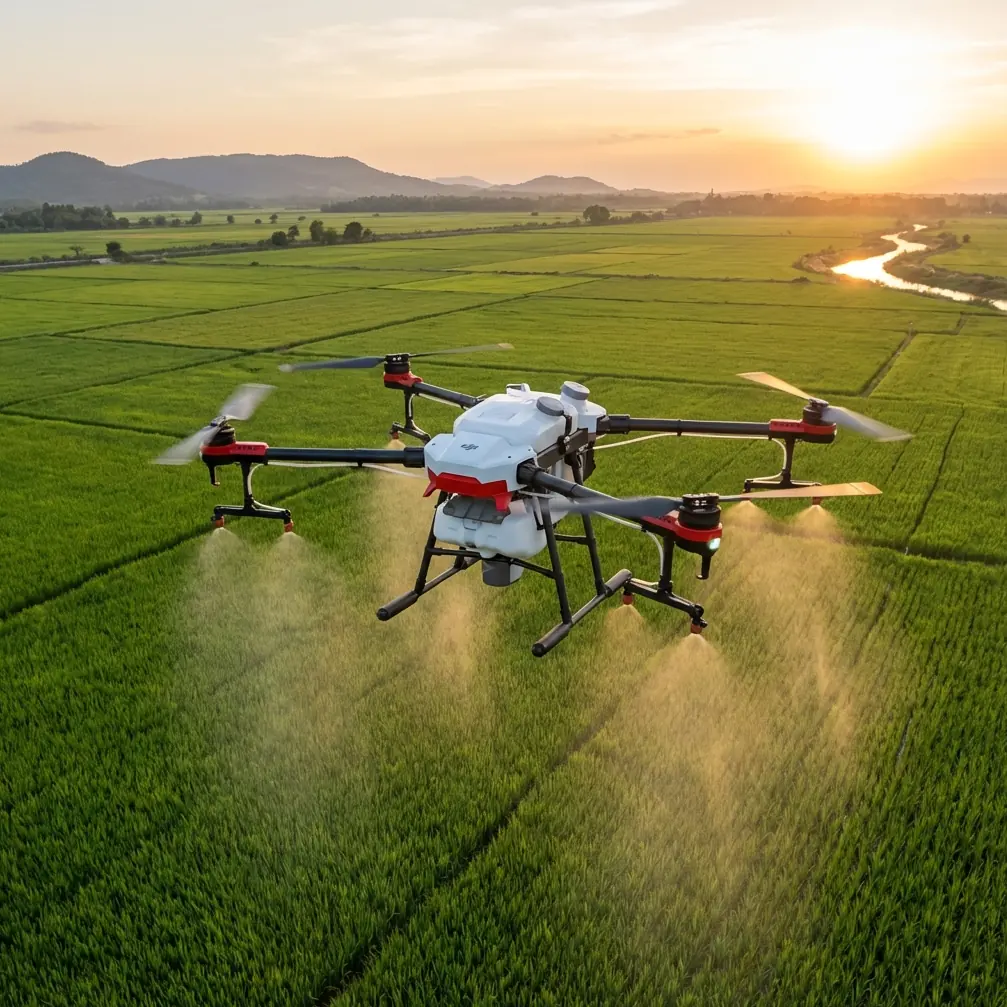
Agras T50 in Dusty Forest Work: The Flight-Height Rules That Matter Most
META: Practical Agras T50 tutorial for dusty forest tracking work, with field guidance on flight altitude, TOF sensing limits, RTK discipline, spray drift control, and stable low-visibility operations.
Dust changes everything.
In open cropland, an Agras T50 operator can often read the field with a quick glance: canopy height, wind pattern, turn space, even where drift will likely move. Forest work is different, especially when the job involves tracking tree health, edge treatment, corridor spraying, or repeated flights through dusty access roads and dry understory. Visibility gets flatter. The ground surface becomes inconsistent. Sensor confidence can drop at exactly the moment the pilot wants the aircraft to stay low and precise.
That is why flight altitude is not a minor setting in dusty forest operations with the Agras T50. It is the control point that affects coverage quality, drift behavior, obstacle risk, and whether the aircraft can hold a repeatable path when the environment stops being clean and predictable.
This article focuses on one practical question: what is the optimal flight altitude strategy for dusty forest work with the T50, and why?
Start with the real constraint: dusty forests are a sensing problem before they become a spraying problem
Operators often think first about nozzle calibration, tank turnarounds, swath width, or route planning. Those matter. But in a dusty forest scenario, the first issue is often measurement confidence.
A useful reference from DJI educational material explains the logic behind TOF sensing. A time-of-flight sensor calculates distance from the travel time of emitted light, expressed simply as s = vt, and because the light travels to the object and back, the actual sensor-to-object distance is half the total path. That sounds academic until you apply it in the field.
The operational takeaway is straightforward: TOF is only as helpful as the surface and geometry it is seeing.
The same source also makes two details that deserve more attention from agricultural drone operators:
- A forward-facing TOF sensor is single-point ranging. It detects obstacles only when they are directly in front of the sensor.
- A downward TOF sensor is used to measure height relative to the ground, and indoor testing often struggles to access nearly 10 meters of vertical space, which is why the material suggests turning the aircraft sideways and reading the sensor against a wall to understand its measurement behavior.
Those are not classroom curiosities. In dusty forest work, they explain why altitude discipline matters so much.
A single-point forward measurement is not the same as broad environmental awareness. In a forest edge or trail network, branches, trunks, uneven terrain, and dust plumes can create a scene where the operator assumes the aircraft “sees everything,” but the sensing model may be narrower and more conditional than that assumption suggests. The downward height sensor can help stabilize low-altitude flight, but only if the surface below is being read cleanly enough and the aircraft is not being pushed into abrupt transitions by terrain or poor planning.
The best altitude for dusty forest work is usually lower than operators want, but higher than they first think
There is no single magic number that fits every T50 forestry task. Anyone claiming that one altitude works for all forest tracking missions is skipping the hard part. Tree spacing, canopy density, understory height, target deposition, route width, and dust loading all change the answer.
Still, a reliable rule emerges in practice:
Fly low enough to preserve deposition accuracy and reduce drift, but high enough to keep sensor readings stable, maintain obstacle margin, and avoid operating in the worst of the dust rebound close to the surface.
That balance point is often missed because pilots tend to overcorrect in one of two directions.
Mistake 1: flying too high to feel safe
When the forest floor is dusty and visual cues are messy, climbing feels conservative. The problem is that extra altitude increases the time droplets or granules spend exposed to crossflow. Spray drift becomes harder to control, edge penetration becomes less predictable, and the effective swath width can become less honest than what was planned in the route file.
This is especially relevant if the mission involves border treatment, roadside vegetation management, or repeated strip work around young tree stands. A higher pass may look smooth in the app while delivering uneven real-world results.
Mistake 2: flying too low because “precision” sounds better
The other error is to drive the T50 as low as possible, assuming that lower always means more accurate. In dust, that can backfire. Near-surface turbulence, rotor wash interaction with loose soil, and suspended particles can create an unstable visual and sensing environment. If the downward system is trying to hold consistent height over irregular forest ground while the aircraft is also stirring up dust, the pilot may end up chasing stability instead of producing it.
The sweet spot is usually a moderate low altitude relative to the target surface, not an extreme one.
How to choose altitude in a dusty forest corridor
For practical T50 work, I suggest thinking about altitude in layers rather than a single number.
1. Reference the treatment surface, not just the terrain
In forestry, the target plane is often not the bare ground. It may be low canopy, brush height, a corridor shoulder, or juvenile tree crown level. If the operator builds altitude from the wrong reference, the aircraft may technically fly “consistently” while delivering inconsistent coverage.
A downward TOF-style logic helps here conceptually: the aircraft is always trying to understand distance to a surface. Your job is to define which surface matters operationally.
2. Add a dust buffer
In dusty conditions, leave enough vertical margin to reduce the direct impact of rotor wash on loose debris. This does two things at once: it limits re-entrained dust under the aircraft and preserves cleaner height-control behavior. A T50 working just above the point where dust starts to bloom aggressively is often more accurate than one hugging the terrain.
3. Keep the swath honest
A broader swath width is only useful if deposition remains uniform across it. If altitude increases enough that the edge of the pattern becomes unreliable, the nominal route efficiency is misleading. In other words, a “wider” pass may actually force rework.
4. Protect the RTK solution
The context here includes RTK fix rate and centimeter precision, and they belong in this conversation. In forest-adjacent work, altitude choice affects not just spray geometry but route repeatability. If you are flying under partial canopy influence, near tall trunks, or along narrow lanes, preserving a solid RTK state matters because centimeter-level consistency is what separates a clean repeat mission from creeping overlap errors. If the fix quality becomes unstable, do not use altitude to compensate for a positioning problem. Solve the positioning problem first.
Why smooth climb geometry matters more than people realize
An older RC aerobatic training document offers an unexpected lesson for professional UAV work. It emphasizes that a true 45° climb is steeper than many pilots initially imagine, and that pulling too fast or too aggressively can create unwanted disturbance because the aircraft must overcome inertia and change direction smoothly. The source is about manned-model aerobatics, not agricultural drones, but the handling principle translates well: fast is not the same as abrupt.
For T50 forest operations, this matters during:
- terrain transitions,
- exit climbs at the end of rows or corridors,
- obstacle avoidance around trunks or edge branches,
- and recovery when visual conditions worsen due to dust.
If the aircraft is commanded into sharp pitch or height changes, the result is often a chain reaction: flow pattern distortion, temporary height inconsistency, unstable speed, and a poorer spray footprint at the exact moments where precision matters most.
So when adjusting altitude in dusty woodland conditions, use decisive but smooth vertical transitions. Think less about “snapping” to a safer height and more about building a stable climb line. The old 45° training insight is useful because it reminds us that many pilots underestimate what a deliberate, well-shaped climb actually looks like.
A field method for finding your optimal T50 flight height
Here is a practical tutorial workflow I recommend for dusty forest tracking jobs.
Step 1: Walk the route before the aircraft ever lifts
Identify three surfaces:
- the true target surface,
- the highest routine obstacle intrusions,
- and the dustiest disturbance zones.
Do not treat the whole forest edge as one environment. Break it into segments.
Step 2: Establish a conservative first-pass altitude
Start with an altitude that gives obstacle margin and avoids the worst ground dust rebound. This is not your final production height. It is your diagnostic height.
Step 3: Watch drift behavior, not just aircraft behavior
A pass can look stable in the app while the spray pattern tells a different story. If drift tails visibly stretch, or deposition appears weak at the pattern edge, the aircraft is likely too high for the wind and canopy interaction present in that segment.
Step 4: Lower in small increments
Reduce altitude gradually until you hit the point where coverage improves without triggering excessive dust recirculation or height instability. This is usually where the mission should live.
Step 5: Check repeatability on a second pass
One clean run proves little. The right altitude is the one that remains stable on the return pass, with similar line holding, similar droplet behavior, and acceptable sensor confidence.
Step 6: Revisit nozzle calibration after altitude changes
Altitude and nozzle calibration are linked. If you adjust one and ignore the other, your assumptions about deposition may be wrong. A lower pass with poor calibration can still produce uneven results; a slightly higher pass with better calibration may outperform it.
What dusty forest operators should not overtrust
The T50 is a highly capable platform, but capability is not immunity.
Do not overtrust:
- a single sensor view in cluttered spaces,
- a route file that looked perfect in an undisturbed test area,
- a swath estimate that was validated in cleaner air,
- or RTK status that was solid in the open but degrades near tree structure.
The TOF reference is especially useful here because it reminds us that sensor measurement is physical, not magical. It depends on geometry, target position, and clean signal return. The note that the forward TOF is single-point is operationally significant in forests because branches and protrusions are rarely arranged as neat frontal obstacles. The note that the downward TOF measures height relative to the ground matters because dusty, irregular surfaces can make “low and precise” harder than it sounds.
Where IPX6K thinking fits into the picture
The context also points to IPX6K, which is relevant for operators working around spray, residue, and harsh field conditions. In forest missions, environmental sealing supports uptime, but it should not encourage sloppy procedures. A sealed aircraft still depends on clean optics, disciplined inspections, and sensible mission design. Dust on the machine and dust in the air are different problems. The first is a maintenance concern. The second can alter sensing confidence and application quality while you are flying.
My preferred altitude mindset for the Agras T50 in this scenario
If I were briefing a pilot team on dusty forest tracking with the T50, I would summarize the altitude question like this:
- Stay low enough that drift is controlled and the swath remains truthful.
- Stay high enough that rotor wash is not creating its own dust storm.
- Use smooth climb and descent geometry, not abrupt corrections.
- Protect RTK fix quality and route repeatability before chasing theoretical centimeter precision.
- Treat onboard distance sensing as a tool with limits, especially in clutter and dust.
If you want to compare route setups or altitude choices for your own forestry workflow, you can message our field team directly here: discuss your T50 forest scenario.
The Agras T50 performs best in forests when the operator respects how measurement, airflow, and terrain interact. Flight altitude is where those three realities meet. Get that one variable right, and most of the mission starts to behave. Get it wrong, and every other setting has to work harder to cover for it.
Ready for your own Agras T50? Contact our team for expert consultation.