
Agras T50 in Urban-Edge Field Tracking: Why Dual
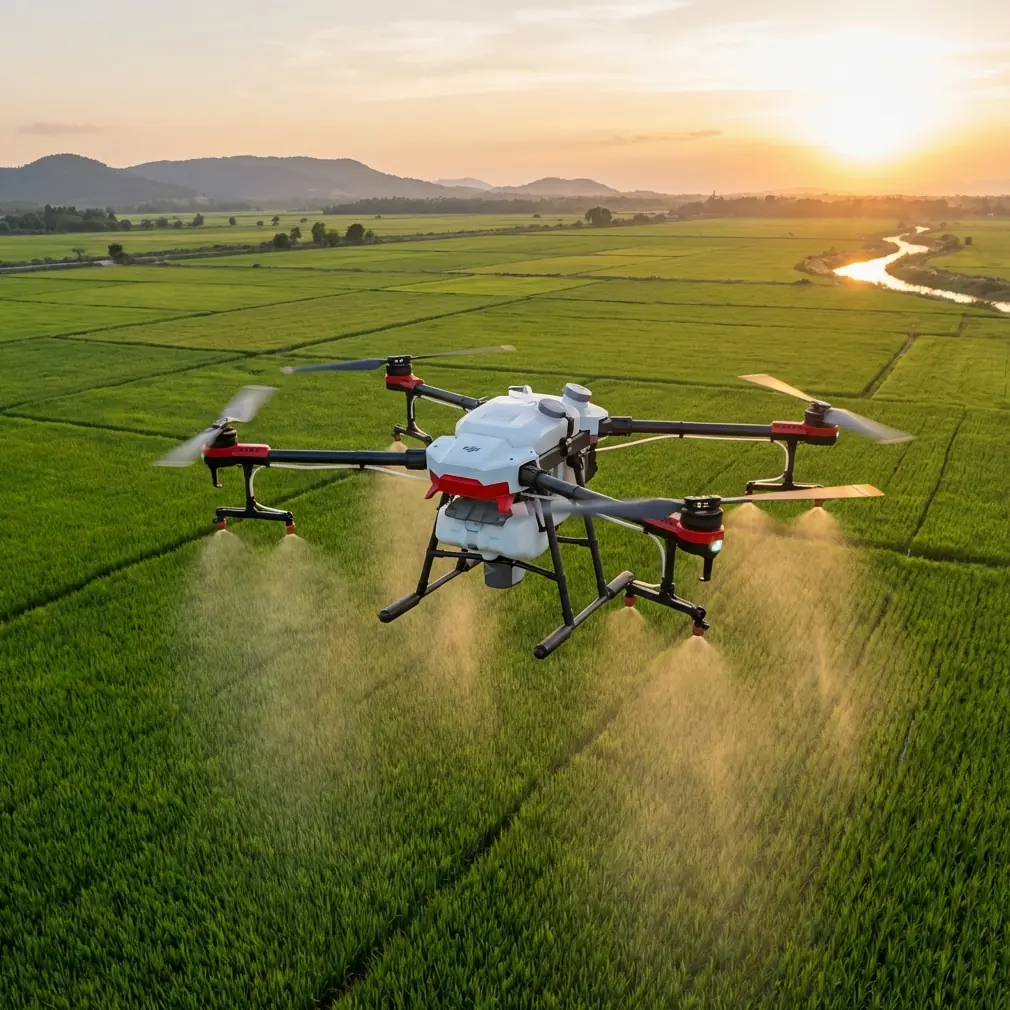
Agras T50 in Urban-Edge Field Tracking: Why Dual Registration Now Matters as Much as RTK Precision
META: A technical review of the DJI Agras T50 for urban-edge agricultural work, with a practical look at China’s 2026 dual drone registration rules, compliance workflow, and why they matter for safe, precise field operations.
Urban-edge agriculture has its own friction. The field may be productive, but it sits close to roads, housing, small industrial buildings, school zones, utility lines, and public footpaths. In that environment, the Agras T50 is not judged only by spray output, swath width, or route consistency. It is judged by whether the operator can run a mission that is technically precise, socially acceptable, and fully compliant.
That last point has become sharper in 2026.
A recent nationwide change in China introduced the Ministry of Public Security’s “Unmanned Aircraft Public Security Management Platform” as a WeChat mini program for real-name drone filing and safety management. The result is not a replacement of the old process. It creates a parallel, dual-registration model: operators must complete both the public security filing and the civil aviation registration. For anyone deploying an Agras T50 near urban perimeters, this is not administrative trivia. It changes the operating baseline.
I want to frame this from the perspective of field tracking and application work, because that is where readers considering the T50 often miss the bigger risk. They think about nozzle calibration. They think about drift. They think about maintaining centimeter precision along irregular field edges. All of that is right. But if the aircraft is not properly registered under both systems, the technical quality of the mission becomes irrelevant very quickly.
The Agras T50 Is Strongest Where Precision Meets Constraint
The Agras T50 is typically discussed as a high-throughput agricultural aircraft. That is fair, but incomplete. In urban-adjacent plots, its real value is not just capacity. It is controlled repeatability under constraints.
Field tracking in these zones is demanding because the boundary itself is unstable in operational terms. The legal field line is one thing; the safe treatment line can be another. You may need to offset from parked vehicles, foot traffic, drainage ditches, greenhouses, ornamental plantings, or roadside trees. In those cases, centimeter-level guidance and a strong RTK fix rate matter not as abstract performance claims, but as the basis for making narrow, repeatable passes without overextending the treatment area.
That matters especially when spray drift is the central concern. A wide swath is useful only if it remains disciplined. If nozzle calibration is off by a small margin, or if a route hugs an urban boundary too tightly, the margin for error collapses. On paper, the mission may look efficient; in practice, it becomes a liability.
The T50 is often attractive because it allows the operator to bring industrial discipline to a farm workflow. But urban-edge work exposes every weak link in the system: registration, route planning, payload setup, nozzle behavior, situational awareness, and public-facing legitimacy.
2026 Changed the Compliance Equation
The most significant external development in the reference material is straightforward: the Ministry of Public Security platform went live nationwide in 2026. This platform is specifically used for real-name filing and safety management of unmanned aircraft.
The operational significance is larger than many pilots first assume.
Before this change, many operators focused almost entirely on civil aviation procedures, especially the CAAC UOM platform, which is tied to aviation safety and airspace management. That system still matters, and according to the source, drones must be registered there and carry the required QR code label. What changed is that the UOM process no longer stands alone. The public security side now runs in parallel, with a separate emphasis: social public safety management.
That distinction matters for Agras T50 operations around urban fields. Civil aviation registration answers one set of questions: who is flying, what is the aircraft, and how does the operation fit into airspace oversight? The public security filing addresses another set: can the aircraft, pilot identity, and machine identity be linked clearly in a public safety context?
The source describes this as strengthening control through a form of person-and-aircraft identity integration. In practical terms, this means the compliance framework is no longer only about where the aircraft may fly. It is also about traceability in the social environment where it flies.
For a large agricultural platform operating near residents, roads, or mixed-use land, that traceability is not secondary. It is central.
Why This Especially Affects Agras T50 Operators
The source makes another point that has immediate relevance: the public security platform covers the full range of civilian drones, from micro and light aircraft to small, medium, and large civil unmanned aircraft, including self-built and modified drones.
That scope matters because an Agras T50 is not a casual leisure aircraft. It belongs to the class of machines that draw attention, carry serious operational intent, and are often used in environments where the public can see and hear them clearly. If you are tracking plots near urban infrastructure, there is little ambiguity about whether your operation falls into the category regulators care about. It does.
This broad coverage also closes a loophole mindset that still exists in parts of the market. Some operators assume agricultural missions are somehow outside the normal visibility of drone regulation because they occur “on farmland.” That assumption has always been weak near city edges, and under a dual-registration system it is weaker still.
The key takeaway is simple: for an Agras T50, compliance is no longer a single-platform checklist. It is a layered condition of operation.
Technical Excellence Does Not Offset Filing Gaps
I have seen operators spend enormous effort optimizing mission variables while treating paperwork as an afterthought. They refine swath width for the crop stage. They test nozzle calibration to tighten droplet consistency. They monitor wind windows to reduce drift. They tune route geometry to preserve RTK stability near obstacles. This is all correct. It is also insufficient if dual registration is incomplete.
In urban-edge field work, the operational chain is only as strong as its most visible failure. And filing gaps are very visible failures.
Think about a typical Agras T50 deployment on a peri-urban vegetable block. The crew arrives early. They check weather and confirm the application map. The aircraft holds line well, maintaining precise turns around narrow field edges. During one pass, the onboard sensing system detects unexpected movement near a drainage margin: a pheasant bursts from low vegetation and crosses the route corridor. The aircraft adjusts as the operator intervenes, the pass is paused, and the team resumes after reassessing the segment.
That moment tells you something about the T50’s role. Advanced sensing and disciplined route management help protect both the mission and the environment. But if a resident nearby questions the flight, or if the operation is reviewed after an incident report, the conversation does not begin and end with “the sensors worked.” It immediately expands to whether the aircraft was properly documented under both required systems.
That is why I consider the 2026 rule change an operational issue, not a bureaucratic one.
The Best Technical Review of the T50 Must Now Include Compliance Architecture
A serious review of the Agras T50 for urban field tracking should assess more than flight performance. It should evaluate the entire operating architecture.
1. Route fidelity near sensitive boundaries
The T50’s value rises when a field edge is irregular and unforgiving. Centimeter precision matters most when your buffer management must be exact. Urban-adjacent blocks are full of these situations.
2. Spray discipline under real-world crosswinds
Spray drift is a technical and reputational issue. In denser environments, a small mistake can affect landscaping, parked assets, or neighboring land uses. Nozzle calibration is not maintenance housekeeping; it is part of risk control.
3. Sensor-assisted interruption handling
Wildlife, pedestrians, and informal site activity appear more often near urban-fringe fields than in remote farmland. A bird flush, a dog entering a path, or a vehicle edging close to the work area can interrupt a route instantly. Sensor awareness and pilot judgment need to work together.
4. Durability and field practicality
In mixed operating conditions, an agricultural drone benefits from robust environmental protection. Features associated with weather and washdown resilience, such as IPX6K-level design language often discussed in this category, matter because these aircraft are not pampered. They work through residue, moisture, and frequent cleaning cycles.
5. Registration integrity
This is now non-negotiable. Under the reference facts, the operator must complete both registrations. The UOM platform remains necessary for aviation safety and airspace oversight, and the drone must have its QR code attached. The public security mini program, launched nationwide in 2026, adds the real-name filing layer for public safety management. One does not replace the other.
A review that ignores point five is no longer complete.
A Practical Workflow for T50 Operators in Urban Scenarios
If you are planning to use an Agras T50 to track and treat fields near urban areas, the smarter workflow starts before battery charging and route import.
First, confirm that the aircraft is properly entered in the civil aviation UOM system and that the required identification marking, including the QR code, is actually applied and legible. Second, complete the public security platform filing through the official WeChat mini program. Third, make sure your internal asset records match those registrations exactly. Serial mismatches, ownership ambiguities, and undocumented modifications create unnecessary exposure.
This is especially relevant because the source explicitly notes that the public security platform covers not only standard civilian drones but also self-assembled and modified aircraft. Even though the Agras T50 is generally a factory platform, agricultural operators often make practical changes to work setups, accessories, transport configurations, or site-specific components. Any ambiguity around machine identity is a bad fit for a framework built around traceability.
Once the compliance layer is solid, the technical mission planning becomes much cleaner:
- verify RTK quality before entering narrow-edge routes
- validate nozzle calibration against intended application parameters
- adjust swath width conservatively where urban boundaries tighten
- build pauses and observation points into routes near wildlife corridors or public access edges
- document the mission as if it may later need to be explained to a third party
That last habit is underrated. Professional operators should plan not only to fly safely, but to demonstrate that they flew safely.
Why This Matters for the Market Around the T50
The Agras T50 sits at the intersection of agricultural productivity and increasingly visible low-altitude governance. That is why the 2026 dual-registration model deserves attention from buyers, service providers, universities, farm managers, and training organizations alike.
A serious agricultural drone ecosystem cannot rely on pilot skill alone. It needs legal clarity, machine traceability, and operational discipline that holds up in public. Urban-edge agriculture is where those demands become obvious first.
If you are comparing deployment strategies, support pathways, or operator onboarding for the T50, I would prioritize partners who understand both the aircraft and the compliance environment. If you need help sorting out current registration expectations in a practical way, this direct channel may be useful: ask about Agras T50 operational setup and filing steps.
The reason is simple. For this class of aircraft, precision is no longer just a matter of where the drone flies. It is also a matter of whether the operation can be traced, justified, and sustained under the new rules.
The Agras T50 remains a powerful platform for demanding agricultural work. But in urban field tracking, power is not the story. Controlled precision is the story. And in 2026, controlled precision starts with two registrations, not one.
Ready for your own Agras T50? Contact our team for expert consultation.