
Agras T50 Tracking Tips for Urban Fields
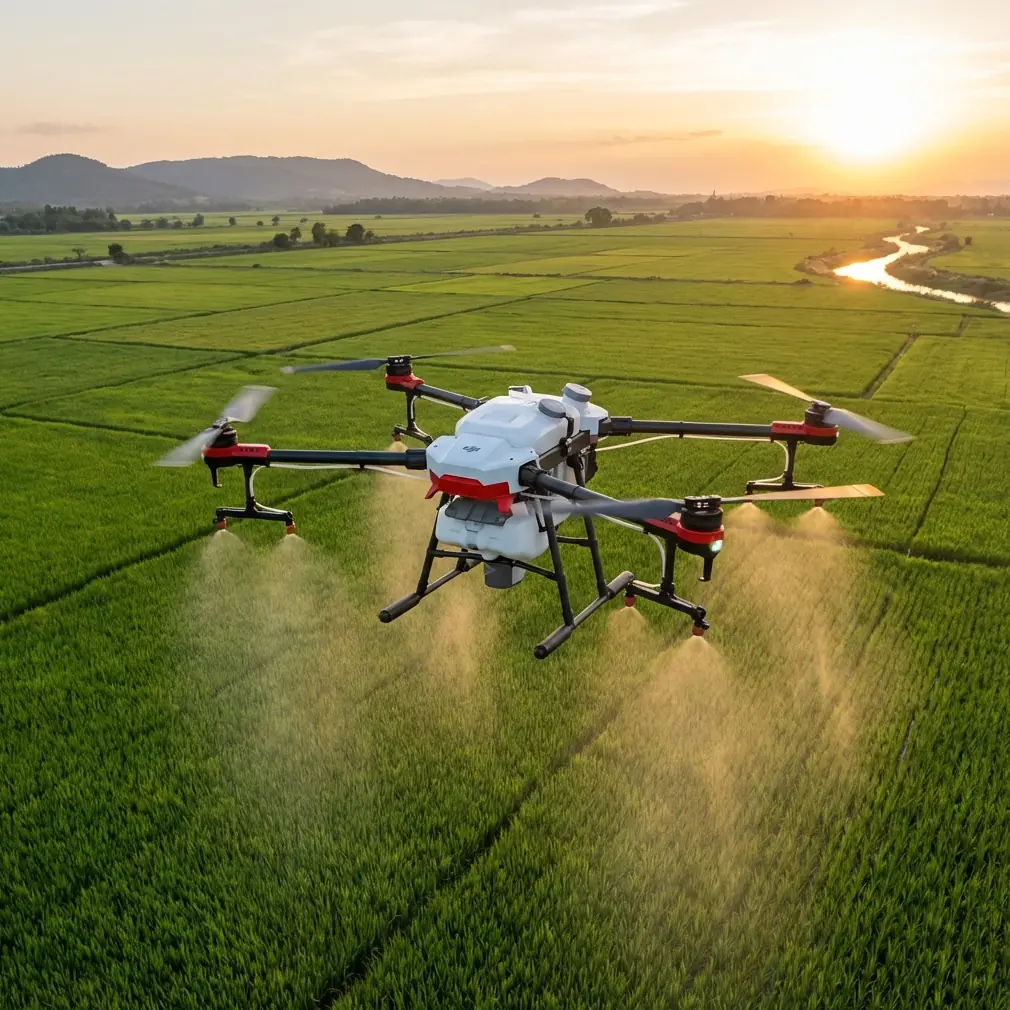
Agras T50 Tracking Tips for Urban Fields
META: Discover expert Agras T50 tracking tips for urban field operations. Learn antenna positioning, RTK setup, and calibration advice to maximize precision and coverage.
By Marcus Rodriguez, Agricultural Drone Consultant
TL;DR
- Antenna positioning on the Agras T50 directly impacts RTK Fix rate and signal reliability in urban environments cluttered with buildings and interference.
- Proper nozzle calibration and swath width configuration prevent spray drift in tight urban field layouts bordered by residential zones.
- The T50's centimeter precision RTK system requires specific base station placement strategies when operating near structures that cause multipath errors.
- A structured pre-flight tracking workflow eliminates the most common urban field mistakes and keeps operations compliant and efficient.
The Urban Field Challenge Most Operators Underestimate
Urban agriculture is expanding fast, but flying precision ag drones between buildings, power lines, and restricted airspace introduces problems that rural operators never face. This guide breaks down exactly how to configure, position, and operate your Agras T50 for reliable field tracking in urban environments—starting with the single most overlooked factor: antenna positioning.
Whether you're managing rooftop farms, urban greenhouses with adjacent outdoor plots, or peri-urban fields hemmed in by development, the difference between a productive spray run and a failed mission often comes down to setup decisions made before the rotors ever spin.
Why the Agras T50 Excels in Urban Field Tracking
The DJI Agras T50 was engineered for demanding operational environments, and several of its core specifications translate directly into urban advantages.
Its dual atomization spraying system delivers a maximum flow rate of 16 L/min across a configurable swath width of up to 11 meters, but in urban settings, you'll typically narrow that swath significantly to avoid spray drift onto non-target areas. The airframe's IPX6K ingress protection rating means early morning dew, unexpected drizzle, or irrigation overspray won't sideline your operation.
The onboard multispectral sensing capability allows operators to identify crop stress zones within fragmented urban plots, prioritizing treatment areas instead of blanket-spraying every square meter. This is not a luxury in urban fields—it's a necessity when neighbors, regulators, and environmental compliance are all within a few hundred meters.
Key specifications that matter for urban tracking:
- RTK positioning accuracy: centimeter precision (±1 cm + 1 ppm horizontal)
- Max payload: 40 kg spray tank capacity
- Obstacle avoidance: Dual binocular vision and radar systems covering 360°
- Operating frequency: Dual-band for reduced interference susceptibility
- Flight planning: Fully autonomous route tracking with real-time adjustments
Antenna Positioning: The Single Biggest Factor in Urban RTK Performance
Here's what most operators get wrong: they place their RTK base station on the ground next to their vehicle and expect centimeter precision in an environment surrounded by buildings that bounce and block satellite signals.
Urban structures cause multipath interference—satellite signals reflect off walls, metal roofs, and glass facades before reaching your antenna. The result is a degraded RTK Fix rate, which means your Agras T50 drifts off its planned tracking lines. In a rural field, you might not notice a few centimeters of error. In an urban plot bordered by a parking lot on one side and a community garden on the other, that drift can mean spray landing where it absolutely should not.
Base Station Antenna Placement Rules
Follow these guidelines to maximize your RTK Fix rate in urban settings:
- Elevate the base station antenna to at least 2 meters above the tallest nearby obstruction's roofline. Use a surveyor's tripod with an extendable mast or mount to a structure's highest accessible point.
- Maintain a minimum 15-degree elevation mask to reject low-angle satellite signals most susceptible to multipath.
- Position the antenna away from reflective surfaces by at least 3 meters horizontally—metal roofing, glass curtain walls, and even large vehicles create reflection zones.
- Use a ground plane beneath the antenna. The T50's D-RTK 2 base station includes one, but confirm it's properly attached. This rejects signals bouncing up from below.
- Survey your fix rate before flying. Spend 5 full minutes monitoring the RTK status on your controller. If the Fix rate drops below 95%, reposition the base station.
Expert Insight: In my consulting work across urban operations in three metro regions, I've found that simply elevating the base station antenna by an additional 1.5 meters typically improves RTK Fix rate from the mid-80s to above 98% in environments with moderate building density. It's the single highest-ROI adjustment you can make before any flight.
Drone Antenna Considerations
The Agras T50's onboard GNSS antennas are fixed, but their performance is influenced by your flight altitude. Flying too low between buildings creates a "canyon effect" that blocks satellite visibility. Plan your tracking altitude to maintain clear sky view above 20 degrees from the horizon in all directions.
Configuring Swath Width and Nozzle Calibration for Urban Precision
Spray drift is the fastest way to generate complaints, fines, or outright bans on urban drone operations. The Agras T50 gives you granular control over droplet size and spray patterns, but you must configure them intentionally for tight urban fields.
Swath Width Optimization
| Parameter | Rural Default | Urban Recommended | Why It Matters |
|---|---|---|---|
| Swath width | 7–11 m | 3–5.5 m | Reduces drift risk near boundaries |
| Flight speed | 7–10 m/s | 3–5 m/s | Slower speed = more controlled deposition |
| Flight altitude | 3–5 m | 2–3 m AGL | Lower altitude reduces airborne drift |
| Droplet size | 150–300 µm | 300–450 µm | Larger droplets resist wind displacement |
| Buffer zone | 1–3 m | 5–10 m | Mandatory offset from non-target areas |
| Wind threshold | < 6 m/s | < 3 m/s | Urban thermals are unpredictable |
Nozzle Calibration Protocol
Before every urban operation, run a full nozzle calibration sequence:
- Fill the tank with clean water and run each nozzle independently for 30 seconds, measuring output volume.
- Compare output across all nozzles. Variance should not exceed ±5%. Replace any nozzle outside tolerance.
- Inspect for partial clogs by examining spray patterns on a flat test surface—uneven fans indicate debris or wear.
- Document calibration results with date and nozzle serial numbers. Urban operations often face auditing requirements, and this log protects you.
- Select the correct nozzle tip size for your target droplet spectrum. For urban boundary sensitivity, err toward larger orifice sizes that produce coarser droplets.
Pro Tip: Wind patterns in urban environments shift dramatically over short distances and timeframes. Buildings create vortices and downdrafts that rural wind readings won't predict. I recommend mounting a portable anemometer at crop canopy height directly on the field—not at your launch point—and checking readings every 10 minutes during operations. If gusts exceed 3 m/s at canopy level, pause the mission.
Building an Urban Field Tracking Workflow
Reliable tracking across urban fields requires a structured, repeatable workflow. Here's the process I use with every client deployment:
Pre-Mission (Day Before)
- Scout the field on foot. Identify new obstacles: construction equipment, temporary structures, overhead cables not on maps.
- Check NOTAMs and local airspace for temporary flight restrictions common in urban zones.
- Pre-plan flight paths in DJI Agras software, setting boundary buffers and waypoints around known obstructions.
- Confirm RTK base station coordinates against a known survey marker if available.
Pre-Flight (On Site)
- Set up and elevate the RTK base station per the antenna positioning rules above.
- Wait for full RTK Fix with a stable Fix rate above 95% for a minimum of 5 minutes.
- Run nozzle calibration and verify tank mix concentration.
- Perform a dry run of the first tracking pass with the spray system off—watch for obstacle avoidance triggers and altitude anomalies.
During Flight
- Monitor RTK status continuously. Any drop to "Float" means position accuracy has degraded from centimeters to decimeters—pause the mission.
- Watch for spray drift visually from a position downwind of the field.
- Use the T50's multispectral data between passes to verify coverage. Under-treated zones show up in near-real-time on capable ground stations.
Post-Flight
- Export flight logs and spray maps. Urban operations benefit enormously from documentation proving precise application boundaries.
- Inspect the aircraft for contamination, especially around sensors and the undercarriage.
- Debrief with the field manager on any anomalies, missed zones, or areas requiring a follow-up pass.
Common Mistakes to Avoid
1. Trusting the default RTK base station placement. Placing the base station on the ground near your vehicle without elevation or multipath mitigation is the number-one cause of erratic tracking lines in urban fields. Always elevate and verify.
2. Using rural swath width settings in urban plots. An 11-meter swath at 5 meters altitude in a field next to an apartment complex is a liability event waiting to happen. Narrow the swath, lower the altitude, increase droplet size.
3. Ignoring urban microclimates. Buildings create thermal updrafts, wind tunnels, and dead zones. The wind reading at your launch point may bear no resemblance to conditions 50 meters into the field. Measure at the canopy, not the truck.
4. Skipping the dry run. Urban environments change fast. A new scaffold, a parked crane, or a freshly installed antenna can trigger obstacle avoidance mid-spray and ruin your tracking pattern. One dry pass saves hours of rework.
5. Neglecting nozzle calibration between sessions. Particulates in spray mixtures accumulate quickly. A nozzle that was within spec yesterday may be 15% off today. Calibrate every session, not every week.
6. Flying without adequate buffer zones. Regulatory and social tolerance for spray drift is effectively zero in urban areas. Build 5–10 meter buffers into every flight plan boundary, even if it means leaving edge rows for manual treatment.
Frequently Asked Questions
How does the Agras T50 maintain centimeter precision in areas with tall buildings?
The T50 uses a dual-antenna RTK GNSS system that calculates both position and heading from satellite signals. When paired with a properly positioned D-RTK 2 base station elevated above obstructions, the system achieves centimeter precision even in moderately dense urban environments. The key is base station elevation and multipath mitigation—without those, accuracy degrades to decimeter-level float solutions regardless of the drone's hardware capability.
What is the ideal RTK Fix rate for urban field tracking operations?
You should target an RTK Fix rate of 98% or higher throughout the entire mission. Anything below 95% indicates significant signal obstruction or multipath interference and will result in visible tracking deviations. If you cannot achieve 95% after repositioning the base station, consider scheduling the operation during a different satellite constellation window—GNSS planning tools can identify optimal time slots with maximum satellite visibility for your specific urban location.
Can the Agras T50's multispectral system work effectively on small, fragmented urban plots?
Yes, and it's arguably more valuable in these contexts than in large-scale rural operations. Small urban plots often have highly variable soil quality, uneven irrigation, and mixed microclimates caused by surrounding structures. The T50's multispectral imaging identifies these variations at the individual-plant level, allowing variable-rate application that saves product and reduces environmental exposure. For plots under one hectare, the multispectral data often reveals treatment zones that would be invisible to the naked eye, directly translating into more efficient spray passes and reduced total chemical use.
Ready for your own Agras T50? Contact our team for expert consultation.