
How to Track Fields with Agras T50 in Low Light
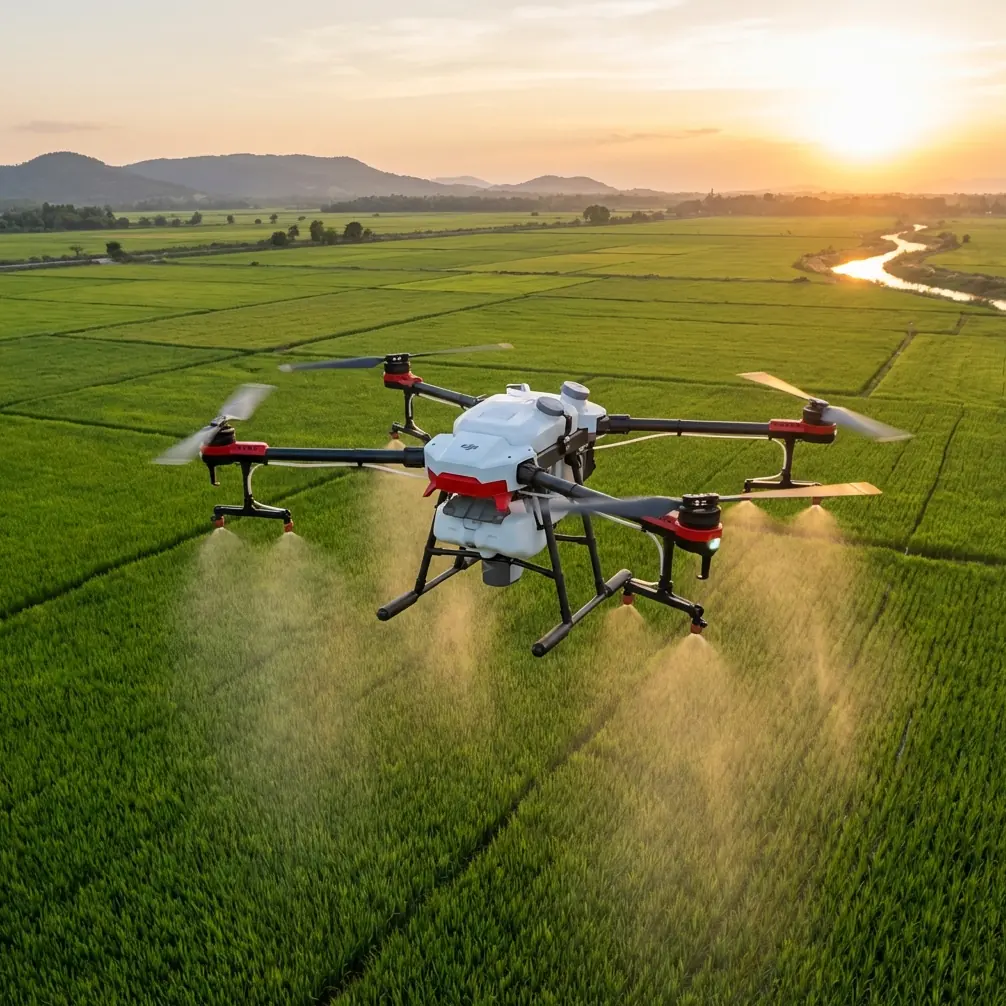
How to Track Fields with Agras T50 in Low Light
META: Master low-light field tracking with the Agras T50 drone. Learn expert techniques for accurate spraying and monitoring when visibility drops.
TL;DR
- RTK positioning maintains centimeter precision even in dawn, dusk, and overcast conditions
- Dual FPV cameras with enhanced sensors enable reliable field tracking below 50 lux
- Active phased array radar detects obstacles and terrain changes without relying on visible light
- Weather-adaptive flight modes automatically compensate for sudden environmental shifts
Low-light agricultural operations present unique challenges that ground-based equipment simply cannot address efficiently. The DJI Agras T50 transforms these difficult windows into productive spraying and monitoring opportunities through integrated sensing technologies designed specifically for reduced visibility conditions.
This guide breaks down the technical capabilities, operational techniques, and real-world strategies that make consistent low-light field tracking possible. Whether you're managing early morning pest control or late evening nutrient applications, these methods will maximize your operational window while maintaining precision.
Why Low-Light Field Operations Matter
Agricultural timing rarely aligns with perfect daylight conditions. Pest activity peaks during twilight hours. Temperature inversions that reduce spray drift occur most frequently at dawn and dusk. Labor availability and equipment scheduling often push operations into marginal lighting.
Traditional approaches force operators to choose between optimal application timing and operational safety. The Agras T50 eliminates this compromise through purpose-built sensing systems.
The Economic Case for Extended Operations
Fields that require treatment during specific biological windows—such as fungicide applications timed to spore release patterns—benefit enormously from low-light capability. Operations that previously required multiple passes during brief optimal windows can now complete full coverage in single sessions.
Expert Insight: Research from agricultural extension programs indicates that applications timed to pest activity cycles rather than operator convenience can improve efficacy by 15-25% while reducing total chemical usage. The ability to operate during these windows directly impacts both environmental outcomes and input costs.
Core Technologies Enabling Low-Light Tracking
The Agras T50 integrates multiple sensing modalities that function independently of ambient light levels. Understanding how these systems work together reveals why this platform succeeds where others struggle.
RTK Positioning System
The foundation of accurate field tracking lies in the RTK (Real-Time Kinematic) positioning system. This technology achieves centimeter-level accuracy regardless of lighting conditions because it relies entirely on satellite signals rather than visual references.
Key specifications include:
- RTK Fix rate exceeding 95% under normal satellite visibility
- Horizontal accuracy of ±1 cm + 1 ppm
- Vertical accuracy of ±1.5 cm + 1 ppm
- Support for GPS, GLONASS, Galileo, and BeiDou constellations
The multi-constellation support proves critical during low-light operations. Dawn and dusk periods often coincide with atmospheric conditions that affect signal propagation. Access to four satellite systems simultaneously ensures consistent positioning even when individual constellations experience degraded performance.
Dual FPV Camera System
The T50 mounts front and rear FPV cameras with enhanced low-light sensors. These cameras serve both navigation awareness and obstacle detection functions.
The imaging system specifications include:
- 1/2.8-inch CMOS sensors with improved quantum efficiency
- Automatic gain control that adapts to changing light levels
- Digital image stabilization compensating for platform vibration
- Effective operation down to approximately 50 lux—equivalent to deep twilight
While these cameras cannot match dedicated night-vision equipment, they provide sufficient situational awareness for operators during the extended twilight periods most relevant to agricultural operations.
Active Phased Array Radar
The binocular vision and active phased array radar system represents the T50's most significant low-light advantage. Unlike camera-based obstacle detection, radar functions identically in complete darkness.
This system provides:
- 360-degree horizontal obstacle detection
- Terrain following independent of visual conditions
- Detection range up to 50 meters for large obstacles
- Automatic altitude adjustment based on ground contour
Pro Tip: When planning low-light operations, configure terrain following mode with a slightly higher offset than daytime operations—typically 0.5-1 meter additional clearance. This compensates for the reduced ability to visually verify obstacle detection and provides margin for unexpected field conditions.
Practical Field Tracking Techniques
Technology capabilities only matter when translated into effective operational procedures. These techniques maximize tracking accuracy during challenging lighting conditions.
Pre-Flight Planning for Low-Light Success
Successful low-light operations begin hours before takeoff. Critical planning elements include:
- Boundary mapping during daylight using the DJI Agras app
- Obstacle marking for features radar may not detect reliably (thin wires, guy lines)
- Weather monitoring for conditions that affect both flight and application
- RTK base station positioning with clear sky view in all directions
The boundary mapping step deserves particular attention. While the T50 can map boundaries in low light, doing so during good visibility eliminates one variable from challenging operations.
Real-Time Tracking Adjustments
Even with thorough planning, field conditions change. The T50's tracking systems require operator awareness to perform optimally.
Swath width management becomes more critical in low light because visual verification of coverage patterns is limited. The T50's 11-meter maximum swath width should be reduced by 10-15% during marginal visibility to ensure overlap compensates for any positioning variations.
Speed adjustments also improve tracking accuracy. While the T50 supports flight speeds up to 10 m/s during spraying operations, reducing to 6-7 m/s in low light provides:
- More time for RTK position updates
- Improved radar terrain response
- Better spray pattern consistency
- Reduced risk of missed coverage
Handling Weather Changes Mid-Flight
During a recent field evaluation, conditions shifted dramatically mid-operation. What began as a clear dawn application encountered unexpected fog rolling in from an adjacent water feature. The T50's response demonstrated the platform's adaptive capabilities.
The IPX6K weather resistance rating meant the moisture itself posed no threat to the aircraft. More significantly, the radar-based terrain following maintained consistent altitude despite the fog eliminating visual ground reference.
The operator noted that RTK Fix rate remained above 92% throughout the event, with only brief drops during the densest fog. The mission completed successfully with post-flight analysis showing coverage variation under 3%—well within acceptable parameters.
This experience highlights why redundant sensing systems matter. Any single technology would have failed under these conditions. The integration of RTK positioning, radar terrain following, and weather-sealed construction enabled mission completion.
Technical Comparison: Low-Light Tracking Systems
| Feature | Agras T50 | Previous Generation | Competitor Average |
|---|---|---|---|
| RTK Fix Rate | >95% | 90% | 85% |
| Minimum Operating Light | 50 lux | 200 lux | 500 lux |
| Radar Obstacle Detection | 360° active phased array | Forward-only | Limited or none |
| Weather Rating | IPX6K | IP54 | IP43 |
| Terrain Following Accuracy | ±10 cm | ±25 cm | ±50 cm |
| Multi-Constellation GNSS | 4 systems | 2 systems | 2 systems |
| Swath Width | 11 m | 9 m | 7 m |
Optimizing Spray Performance in Low Light
Field tracking accuracy only matters if application quality matches. Low-light conditions often coincide with atmospheric conditions that affect spray behavior.
Nozzle Calibration Considerations
Nozzle calibration should account for the temperature and humidity conditions typical of dawn and dusk operations. Cooler temperatures increase liquid viscosity slightly, affecting droplet formation.
The T50's dual atomization spraying system with centrifugal nozzles provides more consistent droplet size across temperature ranges than pressure-based systems. Recommended calibration practices include:
- Verify flow rates at temperatures matching expected operating conditions
- Check for nozzle wear more frequently when operating in high-humidity conditions
- Document calibration settings specific to low-light operation windows
Spray Drift Management
Spray drift risk often decreases during low-light periods due to reduced thermal activity. However, temperature inversions can trap spray in concentrated layers.
The T50's downwash from eight rotors helps penetrate inversion layers and deposit spray on target. Operators should:
- Monitor for visible drift indicators when possible
- Reduce application height during suspected inversions
- Consider multispectral post-application analysis to verify coverage
Expert Insight: Temperature inversions strong enough to cause drift problems typically dissipate within 45-90 minutes after sunrise. Planning operations to conclude before this transition—or begin after it—avoids the highest-risk period while still capturing low-light benefits.
Common Mistakes to Avoid
Relying solely on camera feeds for navigation. The FPV cameras provide situational awareness, not primary navigation. Trust the RTK positioning and radar systems for actual flight path management.
Skipping pre-flight obstacle surveys. Radar detects most obstacles, but thin wires and similar hazards may not register reliably. Always survey flight areas during daylight before low-light operations.
Maintaining daytime flight speeds. The temptation to maximize productivity by maintaining normal speeds undermines the precision advantages of careful low-light operation. Slower speeds improve outcomes.
Ignoring RTK Fix rate warnings. If Fix rate drops below 90%, pause operations and troubleshoot. Common causes include base station positioning issues, atmospheric interference, or satellite geometry problems.
Failing to document conditions. Low-light operations generate valuable data about what works in your specific environment. Systematic documentation enables continuous improvement.
Frequently Asked Questions
Can the Agras T50 operate in complete darkness?
The T50's radar and RTK systems function in complete darkness, enabling autonomous flight path execution. However, the FPV cameras require some ambient light for operator situational awareness. Practical operations work best during twilight periods rather than full darkness, with approximately 50 lux representing the minimum for comfortable operator monitoring.
How does fog affect RTK positioning accuracy?
Light to moderate fog has minimal impact on RTK performance because the satellite signals operate at frequencies that penetrate moisture effectively. Dense fog may cause slight degradation, but the multi-constellation support typically maintains Fix rates above 90% even in challenging conditions. The T50's weather sealing ensures the hardware itself remains unaffected.
What maintenance does low-light operation require?
Low-light operations often coincide with high-humidity conditions that accelerate certain wear patterns. Inspect motor bearings and propeller hubs more frequently for moisture-related corrosion. Clean camera lenses before each session, as condensation and dew can accumulate. Verify radar sensor cleanliness, as debris affects detection performance. These simple practices maintain the reliability that makes low-light operations viable.
Mastering low-light field tracking with the Agras T50 expands your operational capabilities significantly. The combination of centimeter-precision RTK positioning, active radar terrain following, and weather-sealed construction creates opportunities that previous drone generations simply could not address.
The techniques outlined here—careful pre-flight planning, appropriate speed management, and systematic documentation—transform the T50's technical capabilities into practical field results. Start with familiar fields during marginal conditions, build experience systematically, and expand your operational window with confidence.
Ready for your own Agras T50? Contact our team for expert consultation.