
Agras T50 Guide for Tracking Construction Sites in Extreme T
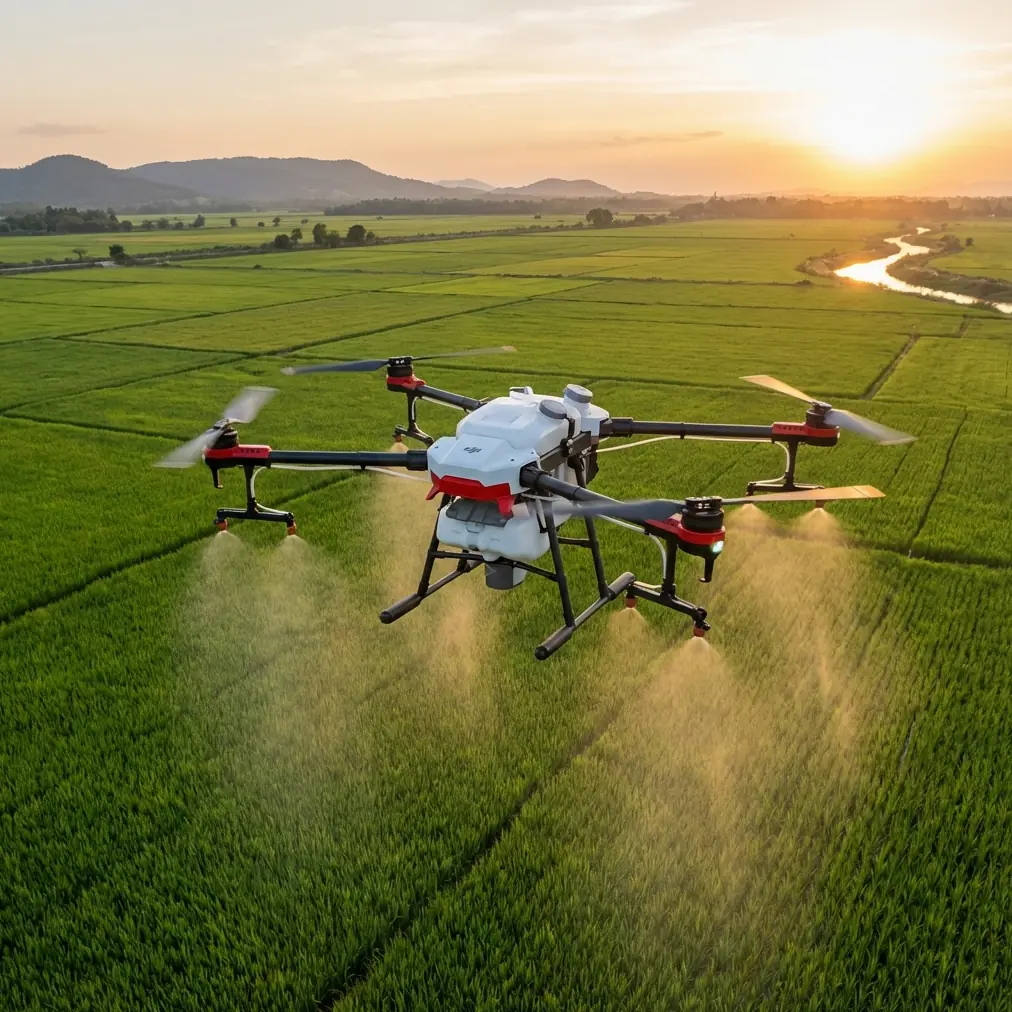
Agras T50 Guide for Tracking Construction Sites in Extreme Temperatures
META: A field-focused Agras T50 guide for construction site tracking in extreme heat and cold, with practical advice on precision flight, image capture, RTK stability, and weather-exposed operations.
Construction teams usually talk about drones in the language of progress reports: earth moved, stockpiles measured, drainage checked, perimeter updated. That is useful, but incomplete. On a harsh jobsite—summer glare bouncing off concrete, winter wind crossing open ground, dust hanging over active haul roads—the real question is not whether a drone can fly. It is whether it can deliver stable, readable, decision-ready data when conditions are trying to degrade everything at once.
That is where the Agras T50 becomes interesting.
Most people approach the T50 from the agriculture side first, which makes sense. It was built for demanding outdoor work, repetitive route execution, and exposure to water, dust, and field variability. Those same characteristics translate surprisingly well to construction site tracking, especially in extreme temperatures where lighter-duty platforms often lose consistency. If your job is documenting site progress, monitoring haul patterns, checking temporary drainage, or keeping a time-based visual record across a long project cycle, the T50’s strengths are less about novelty and more about resilience.
This guide takes a practical angle: how to use the Agras T50 for construction-site tracking when heat, cold, glare, dust, and schedule pressure all show up together.
Why the Agras T50 fits this job better than many expected
Construction tracking is not cinematic flying. It is disciplined repetition.
You need the aircraft to return to the same corridor, the same staging area, the same berm line, and the same material yard over and over again. If the flight geometry changes too much between sorties, your comparisons become messy. If the drone struggles with weather exposure, your schedule slips. If the imaging workflow produces cluttered visuals, site managers stop using the outputs.
The T50 stands out because it is engineered for hard outdoor duty rather than occasional aerial photography. That matters on construction sites where hose-down residue, airborne dust, and abrupt temperature shifts are normal. An IPX6K-level protection profile is especially relevant here. On paper, that sounds like a durability spec. In practice, it means less hesitation about operating around mud spray, fine particulates, and wet cleanup zones. Many competing platforms can capture sharp data on calm, clean days. Fewer are comfortable as routine work tools on rough sites.
The other piece is precision. Construction monitoring benefits from centimeter precision because small deviations can become expensive downstream. A stockpile edge creeping into a haul route, a grading contour that drifts from plan, or a utility trench backfill section that looks level from the ground but not in the model—these are not abstract mapping issues. They are coordination issues. A strong RTK fix rate is critical if you want repeatable flight paths and cleaner temporal comparisons. Without that, your “before and after” sequence often becomes a broad visual impression instead of a defensible operational record.
Start with the mission objective, not the airframe
Before configuring the T50, define what “tracking” means on your site. There are usually four categories:
Progress documentation
Daily or weekly visual records of structural, civil, or earthwork advancement.Measurement support
Volumetrics, cut/fill checks, swath progress, and graded area comparisons.Risk visibility
Water pooling, edge erosion, traffic conflicts, spoil placement, and temporary access conditions.Executive communication
High-level visual summaries for owners, developers, and off-site stakeholders.
The mistake many teams make is trying to collect one generic dataset for all four. That usually leads to flight plans that are too high for detail and too low for broad context.
The T50 should be assigned structured passes based on purpose. If you are documenting active grading, repeatability matters more than artistic framing. If you are trying to communicate congestion in a live logistics area, visual emphasis matters more than raw orthomosaic quality.
That distinction leads to a useful crossover from the source material: the idea that the subject should remain dominant while the surrounding field guides attention toward it.
Use dynamic image strategy, not just static mapping passes
One of the more overlooked ideas in the reference material is the zoom technique used in still photography. The core concept is simple: changing focal length during the shot creates radial blur and outward or inward streaking in the background, while visually intensifying the subject. In traditional photography, this is used to inject motion and direct the viewer’s eye. It is commonly applied to sports, night lights, portraits, and landscapes.
For construction-site tracking, that concept can be repurposed as a communication tool.
No, this does not replace survey-grade documentation. It complements it.
A jobsite is full of moving systems: dump trucks feeding fill areas, pavers advancing lane sections, cranes sequencing lifts, compactors working in patterns, and crews shifting through temporary work zones. Standard overhead images often flatten that activity into static shapes. But when you need to brief management on traffic flow, productivity bottlenecks, or the intensity of work in a constrained zone, a carefully executed zoom-based visual can do something orthomosaic exports cannot: it makes motion legible in a single frame.
The operational significance of this is not artistic. It is communicative clarity.
The source explains that changing zoom during capture generates radial blur and stretched lines around the subject, either expanding outward or contracting inward. That effect naturally directs attention to the central object. On a construction project, the “subject” might be a concrete pump setup, a material transfer point, or a crane working over a congested laydown area. If the goal is to help viewers understand where activity concentrates, this approach can turn a busy frame into a readable one.
Used sparingly, it helps site teams build better reports. Used too often, it becomes noise. The trick is discipline.
A practical flight workflow for extreme-temperature construction monitoring
1. Lock repeatability first
If the site is being tracked across weeks or months, establish fixed mission templates. Keep altitude bands, headings, overlap strategy, and turn behavior consistent. This is where centimeter precision and RTK fix quality matter most. A strong RTK fix rate reduces the drift between datasets and makes change detection more trustworthy.
Competitor platforms can collect high-resolution imagery, but many teams discover later that repeatability degrades when operating windows become tighter and environmental conditions worsen. The T50’s advantage is that it is more at home in repetitive outdoor operations than many general-purpose drones.
2. Separate survey flights from communication flights
Run one mission for measurement and one for storytelling.
- Measurement flights should prioritize stable geometry, overlap, and reliable georeferencing.
- Communication flights can focus on oblique views, activity zones, and selective dynamic imagery.
That second category is where the zoom-based visual concept becomes useful. Instead of trying to stylize every shot, reserve the technique for cases where activity needs emphasis. Think haul-road convergence, concrete placement operations, or staged material movement at dusk.
3. Watch environmental interference the same way pilots watch aircraft attitude
One of the strongest lessons buried in the second reference is that in flight, the aircraft is always telling you what it needs. The text also states that 99% of current-stage problems usually come from two causes: focusing too much on the maneuver itself, and forgetting the basics during preparation.
That maps directly onto industrial drone work.
On construction sites, operators often become too focused on the task—capturing a stockpile, documenting a retaining wall, finishing the mission before a shift change—and forget the setup variables that protect data quality: horizon alignment, wind behavior near structures, thermal shimmer, sun angle, and GNSS confidence before launch. The result is not usually a crash. It is weak data.
The “99%” idea is operationally valuable because it reframes errors. Most bad construction drone outputs are not caused by exotic failures. They are caused by rushed preparation and mixed-up steps.
If the air is unstable over heated surfaces, widen your spacing and avoid forcing low-level obliques through shimmer-heavy windows. If the site is cold and windy, leave more margin in the mission plan so turns and line starts are clean. If visibility is changing, pause. The aircraft’s behavior, your telemetry, and the image previews will tell you whether to continue.
4. Build pauses into the workflow
Another useful insight from the flight-training reference is the recommendation to create spacing between action steps so there is time to reflect and reset. In model aircraft training, that means not rushing one maneuver into the next. In construction drone operations, it means inserting deliberate checks between mission phases.
After each major pass, verify:
- RTK lock stability
- image sharpness
- lighting consistency
- wind effects near structures
- route alignment against the original mission
Those short pauses save entire reshoots. They also improve operator judgment over time.
Extreme heat: what changes on a live site
Heat creates three separate problems: aircraft stress, battery behavior, and optical degradation.
The first two are obvious. The third is often ignored. Midday heat over aggregate, asphalt, steel, and concrete can soften visual detail through shimmer, especially on long horizontal views. If you are tracking fine site changes, that can make a progress image look less reliable than it should.
For the T50, a ruggedized outdoor design helps with the environmental side, but your mission planning still matters. Fly heavier documentation earlier or later in the day when possible. Keep your most critical comparison shots consistent in timing from one survey to the next. If the site insists on noon operations, prioritize overhead datasets for measurement and use lower-expectation oblique passes for context only.
Dust is the other constant companion in heat. Here, the T50’s IPX6K-oriented protection profile earns its place. Construction sites are not clean-room environments. A drone that tolerates washdown-style exposure and harsh particulates reduces downtime and operator anxiety.
Extreme cold: consistency beats speed
Cold weather tracking tends to expose weak operational habits. Teams rush because hands are cold, wind is unpleasant, and the window feels narrow. That is exactly when repeatability suffers.
Use the same logic as structured aerobatic training: do not mix the steps. Keep launch prep, system verification, and route initiation separated and deliberate. If one leg of the mission looks questionable, extend spacing, reposition, and try again rather than forcing continuity. The reference text’s idea of giving yourself “more time to reflect” is surprisingly relevant here. Cold weather punishes rushed decision-making.
The T50’s value in this setting is not that it makes winter easy. It is that it gives you a more durable platform to execute disciplined winter routines.
Where multispectral fits—and where it does not
Readers often ask whether multispectral imaging belongs in construction monitoring. Sometimes it does. More often, it is a specialized add-on rather than a default requirement.
If the site includes environmental restoration zones, erosion-control vegetation, disturbed-soil stabilization, or compliance monitoring around seeded areas, multispectral data can add another layer of visibility. It can reveal changes that standard RGB imagery may hide until later.
But for mainstream progress tracking, haul-road analysis, and grading verification, prioritize repeatable geometry, RTK precision, and readable visual outputs first. Fancy layers do not compensate for weak field discipline.
A note on spray drift and nozzle calibration in non-ag use
Because the T50 comes from an agricultural lineage, terms like spray drift and nozzle calibration often follow the conversation. For pure construction tracking, those are not the center of the mission. Still, the relevance is indirect: a platform designed around controlled application and consistent swath width is built with route fidelity in mind. That design DNA helps when you need repeated corridor coverage over access roads, drainage lines, or broad earthwork zones.
In other words, the same engineering logic that supports accurate field application also supports disciplined site-repeat missions.
Building reports people will actually use
A technically perfect dataset can still fail if nobody can interpret it quickly.
A good construction tracking package from the T50 should include:
- repeat-angle overview images
- georeferenced map outputs
- close-up issue frames for problem areas
- selective motion-emphasis visuals where activity concentration matters
- concise annotations tied to time and location
If your team wants help structuring that workflow around the T50, a direct field discussion is usually faster than a long email thread—use this Agras T50 planning chat when you need to compare mission layouts, RTK behavior, or environmental constraints.
The bigger reason the Agras T50 works on construction sites
The T50 is not interesting because it can simply survive difficult weather. Plenty of drones can survive a day outside.
It is interesting because the qualities that matter in agriculture—repeatable coverage, tolerance for harsh conditions, operational precision, and outdoor-first design—map unusually well onto extreme-temperature construction tracking. Add disciplined mission structure, strong RTK habits, and smart visual communication, and the aircraft becomes more than a flying camera. It becomes a consistent site record tool.
That consistency is what separates useful drone programs from occasional drone flights.
If you are tracking a site where conditions swing hard, dust is constant, timelines are compressed, and stakeholders want evidence instead of impressions, the Agras T50 has a real edge. Not because it looks advanced on a spec sheet, but because it behaves like equipment built for field work.
Ready for your own Agras T50? Contact our team for expert consultation.