
Agras T50 for Coastline Operations: A Field Case Study
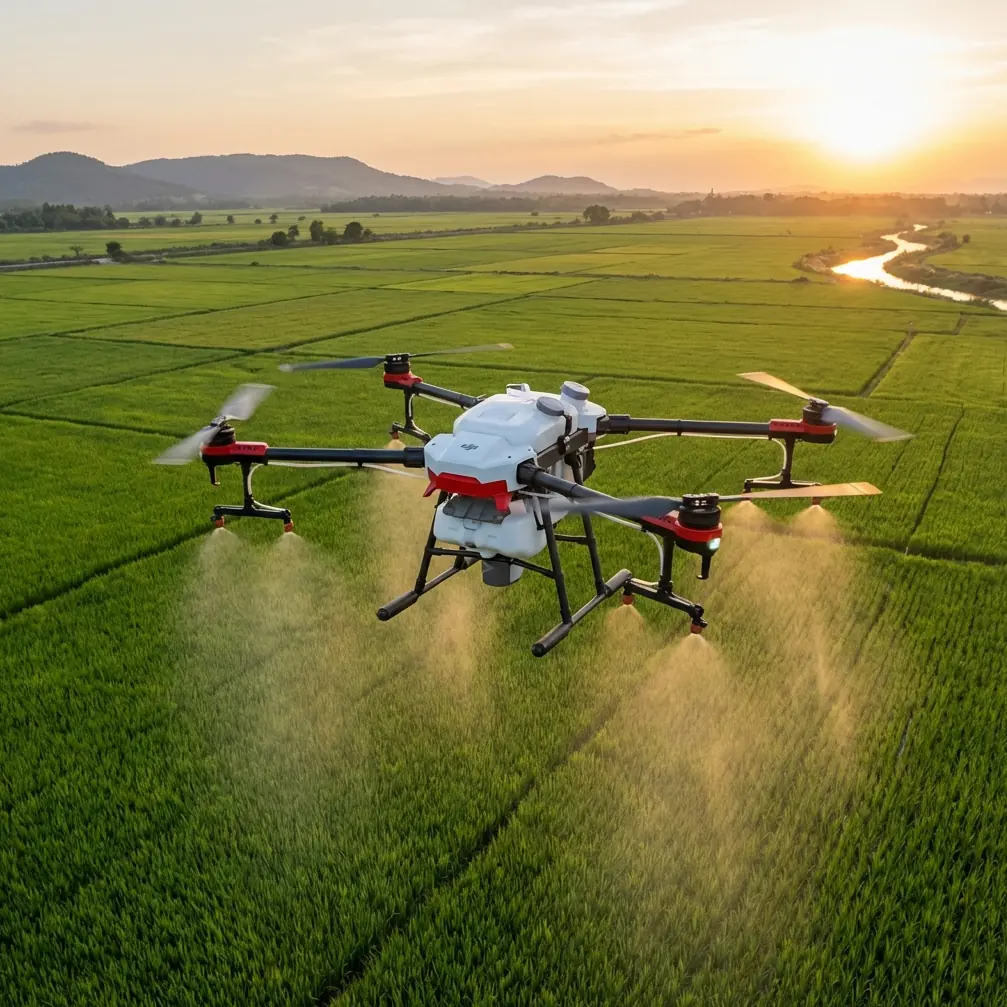
Agras T50 for Coastline Operations: A Field Case Study in Heat, Salt, and Centimeter Precision
META: A consultant-led case study on using the DJI Agras T50 along coastlines in extreme temperatures, with practical insight on spray drift, nozzle calibration, RTK fix rate, IPX6K durability, and workflow upgrades.
Coastline work exposes every weak point in a drone program.
Heat builds off rock, sand, and seawalls. Salt hangs in the air and settles into connectors, pumps, and frames. Wind direction shifts without much warning, especially when land temperature and sea temperature start fighting each other in the afternoon. If your mission depends on consistent coverage and repeatable positioning, the margin for error shrinks fast.
That is exactly why the Agras T50 deserves a more specific discussion than the usual broad claims about payload or automation. In coastal environments, the interesting question is not whether the platform can fly. Plenty of aircraft can fly. The real question is whether it can maintain application quality, position certainty, and serviceability when temperature stress and salt exposure start stacking up at the same time.
I have been reviewing drone deployments for infrastructure managers and land teams for years, and one recent coastline project made the T50’s operating profile unusually clear. This was not a showcase run on a calm inland block. It was a working assignment along a hot shoreline corridor where the team needed to track linear vegetation pressure, treat targeted sections, and maintain reliable navigation near reflective water and uneven wind bands. The aircraft was the Agras T50. The result was less about headline specs and more about how several specific features translated into field resilience.
The first operational advantage was not glamorous, but it mattered every hour of the job: the T50’s IPX6K-rated body. People often read a protection rating as a durability footnote. On the coast, it changes maintenance behavior. Salt mist, sticky particulate, and frequent washdowns are part of the routine, not an exception. A platform built for high-pressure water resistance gives crews far more confidence to clean aggressively after each sortie cycle. That directly affects uptime. If teams hesitate to wash down exposed areas because they do not trust the sealing, deposits build up, connectors degrade faster, and inspection intervals become reactive instead of planned.
For this project, that protection level became part of the workflow rather than a line on a spec sheet. The crew cleaned the aircraft at the end of each shift and again after heavier salt exposure days. That reduced the slow accumulation that usually leads to pump inconsistency and corrosion concerns later in the season. In an inland orchard, you may stretch those intervals. On a coastline, you should not.
The second detail that proved decisive was the T50’s ability to hold precise guidance when the route hugged irregular shoreline geometry. Linear coastal work is unforgiving because you are rarely dealing with neat rectangular blocks. You are tracing edges, access roads, embankments, buffer zones, and vegetation bands that bend around the shoreline. That is where centimeter precision is not just a mapping luxury. It is what keeps repeated passes useful. If you return on a later date to inspect drift-prone areas or re-treat a strip that missed threshold coverage, you need a route that lands back on the same corridor rather than generally near it.
This is why RTK fix rate becomes a serious performance indicator in coastal operations. Teams often focus on whether RTK is available at all. The better question is how consistently the aircraft holds a fixed solution during the portions of the route where drift risk, adjacency concerns, or narrow buffers make lateral error expensive. Along water, signal behavior can become messy, and crews may also be working around sparse shoreline infrastructure that limits ideal base placement. In our case, the T50’s precision workflow allowed the operator to maintain route discipline across a broken coastal boundary where visual estimation alone would have introduced too much overlap in some segments and not enough in others.
That accuracy had a direct application effect. Swath width only helps if it is real in the field, not theoretical on paper. Coastal wind shear can deform the treatment pattern, especially once midday temperatures rise and the sea breeze starts shifting. The team narrowed the working swath during the rougher thermal window instead of chasing nominal width. That decision reduced productivity per pass, yes, but it improved consistency where it mattered. A wide swath that drifts is just a more efficient way to miss the target.
This is where nozzle calibration became central. The T50 gave the team enough control to tune for the environment rather than forcing the environment to fit a default setup. We adjusted nozzle behavior after early test runs showed uneven droplet behavior on exposed sections near the embankment. The lesson was simple: coastal work punishes lazy calibration. If the aircraft is operating in extreme temperatures and intermittent crosswinds, nozzle settings should be validated at the site, not inherited from a previous inland mission. A small calibration adjustment can be the difference between an acceptable deposition pattern and visible lateral loss.
Spray drift, of course, was the operational threat that shaped almost every flight decision. When people hear “drift,” they often think only about wind speed. On the coast, drift is a more layered problem. You have changing surface temperatures, abrupt airflow changes near dunes or retaining walls, and moisture dynamics that alter droplet behavior. The T50’s value in this setting came from the fact that the platform supported a disciplined, repeatable application strategy rather than forcing rushed passes to hit a daily area target.
That distinction matters because coastline missions are often constrained by timing windows. Early morning can offer more stable air, but the team may be balancing access restrictions, tidal considerations, and visibility needs for inspection. By late morning, thermal activity can increase enough that your original parameters stop making sense. On this project, we split mission logic into two modes: an early precision application mode and a later verification mode. The T50 handled both, but the operator mindset changed. Early sorties prioritized controlled spray behavior and route consistency. Later sorties focused more on tracking treatment boundaries, documenting conditions, and confirming where a return pass would be safer on the next cycle.
A third-party accessory made that split workflow substantially better: a compact multispectral payload integration package used as a planning and verification companion within the broader operation. Not every T50 deployment needs that. This one did. The coastline corridor had sections where visible inspection alone could not reliably distinguish stressed vegetation from salt-burned surfaces and transient heat effects. The multispectral add-on helped the team separate cosmetic visual stress from vegetation areas that actually warranted intervention. That changed sortie planning. Instead of broad treatment assumptions, the crew worked with a more selective map of concern zones.
That accessory did not replace the T50’s core role. It sharpened it. And that is a meaningful distinction for serious operators. The best drone workflows are rarely about one platform doing everything. They are about removing uncertainty before the aircraft commits liquid, time, and battery cycles. In practical terms, the multispectral layer reduced unnecessary passes in borderline areas and improved confidence that the T50 was being used where it would produce measurable value.
Another underappreciated issue on the coast is visual fatigue for pilots and spotters. Glare off water, heat shimmer over stone, and repetitive linear flying can degrade situational awareness over time. This is where route reliability and precision automation become safety multipliers, not just efficiency tools. If the aircraft is holding line correctly and the fix quality remains stable, the crew can devote more attention to environment monitoring instead of continuously correcting tiny route deviations. That becomes especially helpful when wind direction starts rotating and the operator needs to decide quickly whether to continue a pass or break off.
There was also a maintenance lesson from this case that many teams overlook with large ag platforms used outside classic farmland settings. Coastal missions create contamination patterns that are different from what operators see in broadacre work. Fine salt residue can combine with treatment remnants in ways that mask early wear. We implemented a stricter inspection sequence focused on nozzle output consistency, seal checks after washdown, and close monitoring of any reduction in pumping uniformity. The T50 held up well, but that was partly because the team treated maintenance as part of mission design rather than something that happened after productivity targets were met.
For organizations considering the Agras T50 in shoreline, levee, coastal utility, or near-water vegetation programs, the headline takeaway is not that the aircraft is somehow immune to coastal stress. No drone is. The stronger point is that the T50 offers a combination of washdown-friendly durability, route precision, and application control that makes a disciplined coastal workflow realistic.
Two details stand out operationally.
First, the IPX6K protection rating is not abstract. It supports the aggressive cleaning routine that salty environments demand, and that helps preserve long-term reliability. Second, centimeter-level positioning with strong RTK discipline is not just about neat track lines on a screen. It is what allows repeatable work on narrow coastal corridors where overlap, missed strips, and boundary encroachment all carry real consequences.
If I were setting up another T50 program for extreme-temperature coastline work tomorrow, I would insist on four things from day one: site-specific nozzle calibration, conservative swath width assumptions during unstable wind periods, explicit RTK fix monitoring, and a post-flight cleaning standard that treats salt as the primary long-term threat. If the mission includes identification of stressed vegetation or variable treatment need, I would also push for the kind of accessory pairing used here. A compact multispectral enhancement can prevent a lot of wasted effort when visible cues are misleading.
That combination is what turns the T50 from a capable aircraft into a reliable coastal tool.
If you are building a shoreline workflow and want a second opinion on configuration, application settings, or accessory pairing, message our field team here. The right decisions usually happen before the first battery goes in.
The Agras T50 is often discussed as if its story is mostly about capacity and automation. Along the coast, that framing misses the point. What matters is how well the platform tolerates harsh cleaning cycles, how accurately it repeats narrow routes, and how controllably it applies in conditions where drift can turn a routine sortie into a bad decision. In that kind of environment, the T50 earns attention not through hype, but through the small technical advantages that keep a difficult job manageable.
Ready for your own Agras T50? Contact our team for expert consultation.