
Surveying Vineyards at Altitude with Agras T50 | Guide
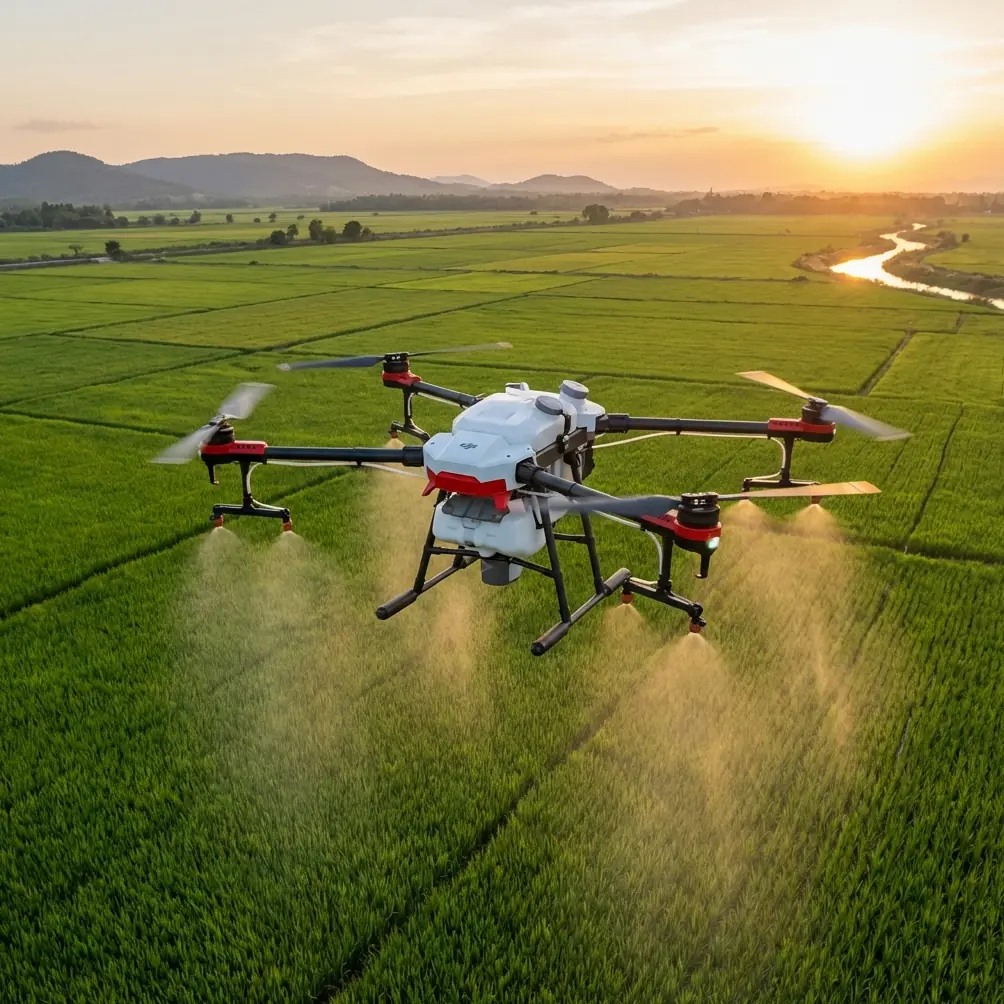
Surveying Vineyards at Altitude with Agras T50 | Guide
META: Master high-altitude vineyard surveying with the Agras T50 drone. Learn RTK calibration, spray optimization, and expert techniques for precision viticulture.
TL;DR
- Pre-flight cleaning of optical sensors ensures accurate multispectral readings at elevations above 1,500 meters
- RTK Fix rate optimization delivers centimeter precision for vine-row mapping in challenging terrain
- Proper nozzle calibration reduces spray drift by up to 40% in mountain vineyard conditions
- The T50's IPX6K rating handles morning dew and unexpected weather common in alpine growing regions
Why High-Altitude Vineyards Demand Specialized Drone Technology
Mountain vineyards present unique surveying challenges that standard agricultural drones simply cannot handle. Thinner air reduces rotor efficiency. Steep slopes create unpredictable wind patterns. Temperature swings between dawn and midday affect sensor accuracy.
The Agras T50 addresses these variables through integrated systems designed for precision agriculture in extreme conditions. This guide walks you through the complete workflow for surveying vineyards at elevations between 1,200 and 2,500 meters—from critical pre-flight protocols to data interpretation.
Understanding the High-Altitude Challenge
Vineyards planted on mountain slopes—common in regions like Mendoza, the Douro Valley, and parts of Napa—require different operational parameters than flatland agriculture.
Key altitude-related factors include:
- Air density reduction of approximately 12% per 1,000 meters of elevation gain
- Increased UV exposure affecting multispectral sensor calibration
- Rapid weather changes requiring robust equipment ratings
- Steeper terrain demanding precise swath width calculations
The T50's flight controller automatically compensates for reduced air density, adjusting motor output to maintain stable hover and consistent ground speed during survey passes.
Pre-Flight Protocol: The Cleaning Step That Protects Your Investment
Before discussing flight parameters, let's address a safety-critical procedure that many operators overlook: optical sensor cleaning.
The T50 integrates multiple sensor systems including obstacle avoidance cameras, the FPV camera, and optional multispectral imaging modules. At high altitudes, dust particles are finer and more abrasive. Morning condensation leaves mineral deposits when it evaporates.
Expert Insight: Dr. Elena Vasquez, viticulture researcher at UC Davis, recommends cleaning all optical surfaces with lint-free microfiber cloths and isopropyl alcohol (70% concentration) before every flight session. "Contaminated sensors don't just affect image quality—they compromise obstacle detection. At altitude, where reaction margins are already reduced, this becomes a genuine safety concern."
Sensor Cleaning Checklist
Complete these steps 15 minutes before each flight:
- Power down the aircraft completely
- Inspect forward, backward, and downward vision sensors for debris
- Clean each lens surface using circular motions from center outward
- Verify the RTK antenna dome is free of moisture or contamination
- Check spray nozzles for crystallized residue from previous applications
- Confirm the multispectral sensor housing shows no condensation
This routine takes approximately 8 minutes but prevents sensor-related failures that could result in crashes on steep vineyard terrain.
RTK Configuration for Centimeter Precision
Accurate vineyard mapping requires RTK (Real-Time Kinematic) positioning with fix rates above 95%. The T50 supports both network RTK and base station configurations.
Network RTK Setup
For vineyards within cellular coverage:
- Configure the remote controller to connect to your regional CORS network
- Set the correction data format to RTCM 3.2 for optimal compatibility
- Verify baseline distance remains under 35 kilometers to the nearest reference station
Base Station Deployment
Remote mountain vineyards often lack cellular connectivity. Deploy a ground-based RTK station using these parameters:
| Parameter | Recommended Setting | Notes |
|---|---|---|
| Observation Time | Minimum 5 minutes | Longer at elevations above 2,000m |
| Satellite Systems | GPS + GLONASS + Galileo | Multi-constellation improves fix rate |
| Elevation Mask | 15 degrees | Prevents multipath from terrain |
| Update Rate | 5 Hz | Balances accuracy with data throughput |
| Mounting Height | 2 meters minimum | Clear line of sight to aircraft |
Pro Tip: Position your base station on the highest accessible point within the vineyard. Mountain terrain creates signal shadows. A elevated base location maintains RTK fix even when the T50 descends into valleys between vine rows.
Verifying RTK Fix Quality
Before launching survey missions, confirm these indicators on the DJI Agras app:
- Fix status shows "RTK Fixed" (not "Float" or "Single")
- Horizontal accuracy reads below 2 centimeters
- Satellite count exceeds 18 satellites across all constellations
- Age of differential corrections stays under 1 second
Multispectral Survey Configuration
The T50's compatibility with DJI's multispectral payload enables vine health assessment through NDVI and other vegetation indices. High-altitude operations require specific calibration adjustments.
Altitude Compensation Settings
Increased UV radiation at elevation affects spectral band readings. Configure these compensations:
- Red Edge band: Increase gain by 8-12% above 1,500 meters
- NIR band: Apply atmospheric correction factor of 1.15
- Calibration panel readings: Capture new reference images every 45 minutes as sun angle changes
Flight Planning for Complete Coverage
Vineyard row orientation determines optimal flight paths. Configure survey missions with these specifications:
| Terrain Type | Recommended Overlap | Ground Speed | Altitude AGL |
|---|---|---|---|
| Flat (<5° slope) | 75% front / 65% side | 8 m/s | 30 meters |
| Moderate (5-15°) | 80% front / 70% side | 6 m/s | 35 meters |
| Steep (>15°) | 85% front / 75% side | 4 m/s | 40 meters |
The T50's terrain-following mode maintains consistent altitude above ground level even on slopes exceeding 25 degrees—critical for uniform image resolution across undulating vineyard blocks.
Spray Application: Nozzle Calibration for Mountain Conditions
Beyond surveying, the T50 excels at precision spray applications. High-altitude vineyards face particular challenges with spray drift due to unpredictable thermals and lower air density.
Nozzle Selection Guidelines
The T50 supports multiple nozzle configurations. For mountain viticulture:
- XR TeeJet 110015 for fungicide applications requiring fine droplets
- AI TeeJet 11003 for herbicide applications needing drift resistance
- TX-VK8 hollow cone nozzles for canopy penetration on dense foliage
Calibration Procedure
Perform this calibration at your actual operating altitude—sea-level calibrations do not transfer accurately:
- Fill the tank with clean water at ambient temperature
- Set pump pressure to 3.5 bar (lower than sea-level standard due to reduced air resistance)
- Measure output from each nozzle over 60 seconds
- Calculate total flow rate and compare against target application rate
- Adjust pressure incrementally until achieving ±5% of target volume
Swath Width Optimization
Effective swath width decreases at altitude due to faster droplet evaporation and increased drift potential. Apply these corrections:
| Elevation Range | Swath Reduction Factor | Effective Width (T50) |
|---|---|---|
| Sea level - 500m | 1.0 (baseline) | 7.5 meters |
| 500m - 1,000m | 0.95 | 7.1 meters |
| 1,000m - 1,500m | 0.90 | 6.75 meters |
| 1,500m - 2,000m | 0.85 | 6.4 meters |
| Above 2,000m | 0.80 | 6.0 meters |
Program narrower swath widths into your flight planning software to ensure complete coverage without gaps.
Weather Monitoring and the IPX6K Advantage
Mountain weather changes rapidly. The T50's IPX6K ingress protection rating provides operational flexibility that lower-rated drones cannot match.
This rating means the aircraft withstands:
- High-pressure water jets from any direction
- Heavy rain during unexpected storms
- Morning dew accumulation during early flights
- Spray solution contact during application missions
However, IPX6K does not mean unlimited weather operation. Observe these limits:
- Wind: Maximum 8 m/s sustained for survey missions
- Visibility: Maintain visual line of sight per local regulations
- Temperature: Operate between -10°C and 45°C
- Precipitation: Light rain acceptable; suspend operations during thunderstorms
Common Mistakes to Avoid
Skipping the altitude acclimatization period. Batteries perform differently at elevation. Allow 20 minutes for battery temperature stabilization before first flight.
Using sea-level spray calibrations. Droplet behavior changes significantly above 1,000 meters. Always recalibrate at your operating altitude.
Ignoring thermal windows. Mountain thermals peak between 11:00 and 15:00. Schedule precision surveys for early morning when air is stable.
Overlooking firmware updates. DJI regularly releases flight controller updates that improve altitude compensation algorithms. Update before each season.
Setting identical parameters for all vineyard blocks. Slope orientation, row spacing, and canopy density vary across blocks. Create separate mission profiles for each zone.
Frequently Asked Questions
How does battery performance change at high altitude?
Expect 15-25% reduction in flight time above 1,500 meters. The motors work harder to generate lift in thinner air, drawing more current. Plan missions with conservative battery reserves—land with at least 25% remaining rather than the standard 20%.
Can the T50 survey vineyards on slopes steeper than 30 degrees?
The T50's terrain-following system handles slopes up to 35 degrees when properly configured. Enable "Terrain Follow" mode and set the altitude reference to "Relative to Ground." The downward vision system and RTK altimeter work together to maintain consistent height above the vine canopy.
What multispectral indices work best for detecting vine stress at altitude?
NDRE (Normalized Difference Red Edge) outperforms standard NDVI for high-altitude viticulture. The red edge band penetrates canopy layers more effectively and shows less sensitivity to the increased UV radiation present at elevation. Configure your processing software to generate NDRE maps alongside standard vegetation indices.
Ready for your own Agras T50? Contact our team for expert consultation.