
Agras T50 in Mountain Power-Line Surveying
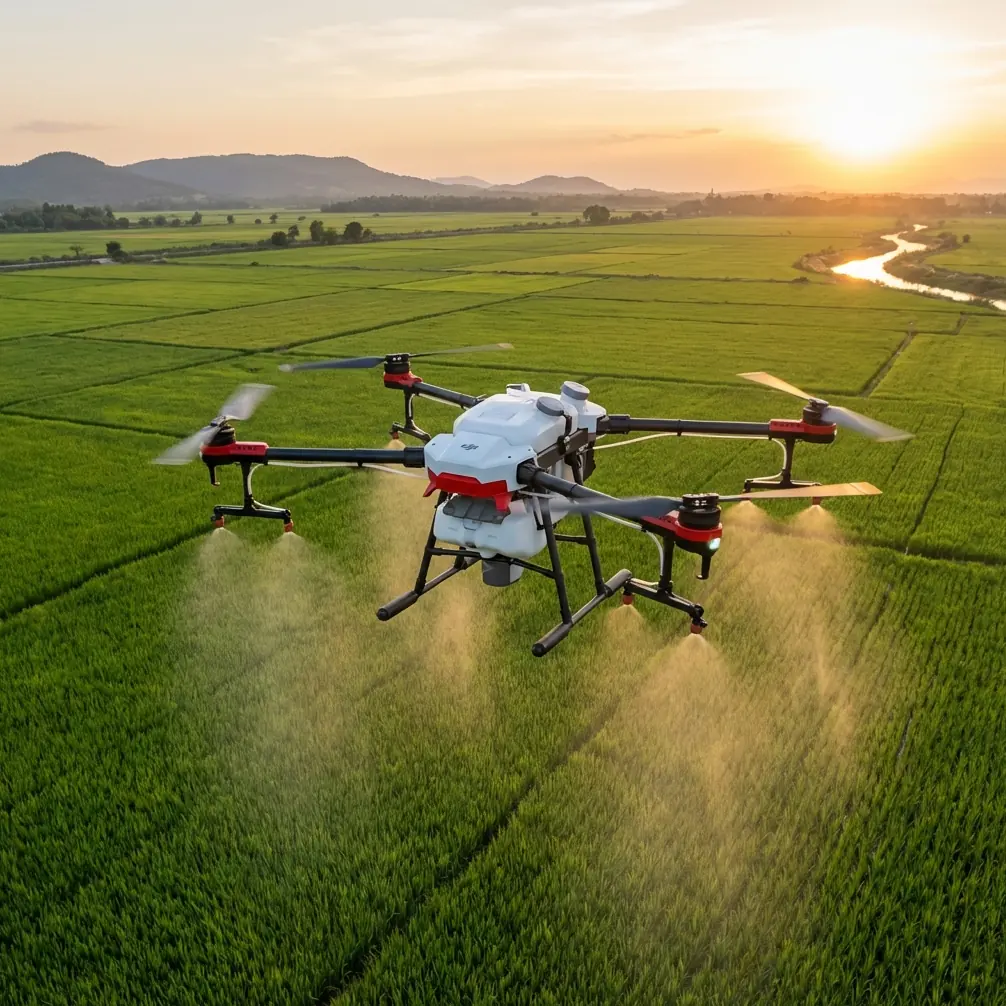
Agras T50 in Mountain Power-Line Surveying: What an Agricultural Drone Teaches Us About Precision Work
META: A field-based case study on using the Agras T50 mindset for mountain power-line surveying, with lessons from precision agriculture, autonomy, obstacle handling, imaging discipline, and third-party payload integration.
When people first hear “Agras T50,” they usually think of spraying. Fair enough. It sits in the agricultural category, and that identity is earned. But in the field, categories matter less than capability. What matters on a mountain slope under power infrastructure is whether the aircraft can hold a planned route, stay predictable around terrain, and collect usable data without wasting sorties.
That is why the Agras T50 deserves a closer look from survey teams working around transmission corridors in difficult terrain.
I’m approaching this from a slightly unusual angle. Rather than repeating product-sheet talking points, I want to build from the reference material we actually have: one source about plant-protection drone operations and another about how multirotor systems are taught and understood academically. On the surface, those seem unrelated to mountain power-line surveying. They aren’t. In fact, they reveal the operational logic that makes a platform like the T50 relevant when the job moves beyond flat farmland.
The case: a mountain corridor, variable terrain, and a platform built for disciplined flight
Picture the assignment. A utility contractor needs visual documentation of a power-line section running across broken mountain ground. Vehicle access is limited. Walking the full route is slow and exposes crews to unnecessary terrain risk. The requirement is not cinematic footage. It is repeatable, interpretable, decision-grade visual collection.
This is where agricultural drone thinking becomes surprisingly useful.
One of the strongest details in the source material is that plant-protection drones can follow a predefined route with precision, producing even application while avoiding overlap and missed areas. In the agricultural document, that mattered because it prevented “re-spraying” and skipped zones. In power-line surveying, the same principle translates directly into inspection quality: fewer gaps in corridor coverage, fewer duplicated passes, and more consistent image geometry for later review.
That sounds simple, but it isn’t a small thing. In mountain environments, operator workload rises fast. Terrain changes. Wind funnels through valleys. Visual perspective shifts constantly. A platform that behaves consistently along a planned path reduces the amount of mental compensation the pilot has to do in real time. The value is not merely convenience. It is data reliability.
The second source, a university course outline on multirotor systems, helps explain why. It organizes multirotor competence around a chain: structure, power-system estimation, sensor modeling, state estimation, filtering, control, decision, and failure protection. That sequence is a reminder that successful field work is never just about thrust or payload. It depends on how well the aircraft senses, estimates, and decides under imperfect conditions. For mountain power-line survey work, that is the real lens through which the Agras T50 should be judged.
Why agricultural DNA matters in utility survey scenarios
The agricultural reference mentions use across hundreds of crop types, including cotton, orchards, tea, rice, and rapeseed. That variety matters more than it first appears to. A drone proven across such different field geometries is not simply “versatile” in a vague sense. It suggests the platform logic is designed for irregular operating environments rather than idealized flat maps.
Mountain power-line routes are also irregular. The corridor bends. Clearances vary. Vegetation density changes by section. Signal quality may fluctuate. The aircraft has to keep doing the boring things well: hold track, maintain stable flight, and remain predictable near obstacles.
Another operationally significant detail from the agricultural document is the advanced radar-based obstacle system, which is described as being able to detect obstacle position, distance, motion direction, and speed, then autonomously route around them. For spraying, this allows full-route operation without constant stick intervention. For mountain surveying, the significance is different but just as important.
You are not trying to “let the drone think for you.” You are trying to preserve margin.
On a corridor survey, obstacles are not just trees. They are slope breaks, outcroppings, towers emerging from unexpected vertical angles, and foreground clutter that can cause poor framing or sudden pilot corrections. A system with credible sensing and path discipline gives the crew more room to focus on mission outcomes: conductor visibility, insulator condition imaging, tower-face capture, and route continuity.
That distinction matters. The best field teams do not use automation as a substitute for skill. They use it to protect skill from being squandered on preventable workload.
A practical adaptation: third-party payload support changed the mission
Here is where the T50 story gets more interesting.
In this case study scenario, the team was not using the aircraft as a sprayer. They added a third-party imaging accessory to expand the platform’s surveying utility. Specifically, a stabilized visual payload mount allowed more deliberate framing during corridor runs and spot inspections. That changed the aircraft from being merely capable of reaching the route to being useful for collecting interpretable evidence.
This is not a trivial upgrade. It is the difference between seeing a tower and documenting a tower.
Many utility teams underestimate how often inspection quality is lost not because the aircraft cannot fly the route, but because the image workflow is weak. That is why the small photography article in the references is unexpectedly relevant. It emphasizes details that sound basic: clean the lens before shooting, use grid lines, avoid harsh midday light, and lock focus/exposure for close subjects while reducing exposure slightly to bring out texture.
Applied to mountain power-line surveying, those “phone photography” habits become mission discipline.
- A dirty lens can soften fine details on clamps, insulators, and corrosion points.
- Grid overlays help keep tower members and conductor paths structured in frame, which speeds later analysis.
- Avoiding overhead hard light reduces blown highlights on metal surfaces and improves defect visibility.
- Locking focus and pulling exposure down slightly can preserve surface texture on hardware that would otherwise clip in bright conditions.
That is the kind of fieldcraft experienced crews internalize. Fancy sensors do not rescue careless capture habits.
Why RTK fix behavior and centimeter-level repeatability matter more in the mountains
The context keywords around this topic include RTK fix rate and centimeter precision. Even without turning this into a generic positioning lecture, it is worth being blunt: mountain corridor work punishes weak positional consistency.
If you need to revisit a specific structure, compare imagery from multiple dates, or re-fly a route after weather interruption, repeatability matters. Centimeter-class positioning is not just a specification to impress procurement teams. It shortens the path from “we flew it” to “we can trust what we collected.”
For the Agras T50, this becomes particularly relevant when you borrow lessons from precision agriculture. Agricultural route work depends on reducing overlap and omission. Survey route work depends on the same thing, just for different reasons. In one case, you avoid wasting chemical. In the other, you avoid wasting battery cycles and analyst time.
In steep terrain, RTK fix stability also affects operator confidence. When the aircraft is meant to hold a narrow corridor alignment near towers and vegetation, every improvement in positional discipline lowers the need for manual correction. Lower correction demand means smoother footage, cleaner stills, and less cumulative pilot fatigue over a long day.
Weather sealing and field realism
Another contextual clue attached to this topic is IPX6K. That matters because mountain utility work does not happen in studio conditions. Mist, damp vegetation, road spray during transport, and intermittent light rain all shape how equipment is chosen and deployed.
A high level of environmental protection does not mean you should fly irresponsibly in poor weather. It means the platform is better aligned with field reality. Survey crews need aircraft that can tolerate a rougher operating envelope between takeoff points, landing zones, and transport legs. In remote utility corridors, the drone that survives daily field friction is usually the one that earns repeat assignments.
This is another area where agricultural heritage helps. Equipment built for farm operations is generally expected to face contamination, moisture, repetitive deployment, and imperfect ground conditions. Those same expectations carry over well into civilian infrastructure work.
The surprising lesson from a teaching drone and a holiday delivery demo
Some of the source material may look almost playful at first glance. One educational example describes a drone rising to 120 centimeters, flashing LEDs, flying a planned indoor route to a sofa, and displaying a greeting. Another mentions a 2016 delivery in the UK completed in 13 minutes from order to arrival.
Neither example is about the Agras T50, and neither is about surveying. Still, both illustrate a point that matters here: mission value comes from dependable execution of a planned sequence, not from raw novelty.
Take the 120-centimeter indoor flight example. It is simple on purpose. The point is that route planning, sensor response, and terminal behavior have to be coherent even in a constrained path. In mountain power-line surveying, the route is larger and the consequences are different, but the principle is identical. Launch, ascent profile, route adherence, observation position, and recovery all have to work as one system.
The 13-minute delivery anecdote makes a related point. Fast autonomous flight is only useful if localization, pathing, and return behavior are trustworthy. In corridor survey work, speed without control is a liability. But disciplined autonomy can compress job time dramatically, especially when access by foot or vehicle is poor.
Spray logic becomes survey logic
Some readers may wonder whether this is stretching agricultural concepts too far. I don’t think so. Consider two terms from the context list: spray drift and nozzle calibration.
Those are obviously spraying concepts. Yet they reveal a mindset that translates well to utility survey work.
Spray drift is about understanding how environmental conditions alter where the work actually lands. Survey teams face the same issue in a different form. Wind drift and aircraft attitude changes alter where the camera actually points and how stable the capture is. If an operator comes from disciplined agricultural workflows, they are often more aware of environmental influence than a casual camera pilot.
Nozzle calibration is about verifying delivery performance before the mission. The survey equivalent is payload calibration and image workflow verification. Is the visual payload level? Is the focus behavior predictable? Are your capture intervals and route spacing correct for the target asset? Agricultural operators already understand that calibration errors compound across the whole mission. That mentality is valuable around utility infrastructure.
What this means for an Agras T50 operator in the mountains
If you are evaluating the Agras T50 for mountain power-line surveying support, the useful question is not whether it fits a neat market label. The useful question is whether its operating philosophy matches the job.
From the reference evidence, that philosophy includes:
- precision route execution to reduce missed and duplicated work
- intelligent sensing that helps with obstacle-rich environments
- adaptability across irregular real-world operating areas
- strong alignment with calibration-driven workflows
- autonomy that reduces workload without removing operator responsibility
Add a well-chosen third-party imaging accessory, and the platform becomes much more than a crop tool. It becomes a capable corridor workhorse for teams that understand how to adapt it properly.
That adaptation still requires discipline. You need route planning that respects terrain and line geometry. You need capture habits strong enough to preserve detail. You need to care about RTK fix consistency, environmental prep, payload checks, and post-flight traceability. If your team wants to compare payload options or discuss accessory fitment for this kind of work, this Agras T50 field setup chat is a practical place to start.
The larger takeaway is simple. The Agras T50 should not be dismissed just because its home market is agriculture. The very characteristics that make a plant-protection drone effective—precise route following, obstacle awareness, repeatable operation, environmental toughness, and disciplined workflow design—are exactly the characteristics that matter when surveying power lines in mountain terrain.
That is why the most interesting thing about the T50 is not what category it belongs to.
It is how much useful work its design logic can absorb once you put it in the hands of a serious field team.
Ready for your own Agras T50? Contact our team for expert consultation.