
Agras T50 Power-Line Surveying in Dusty Conditions
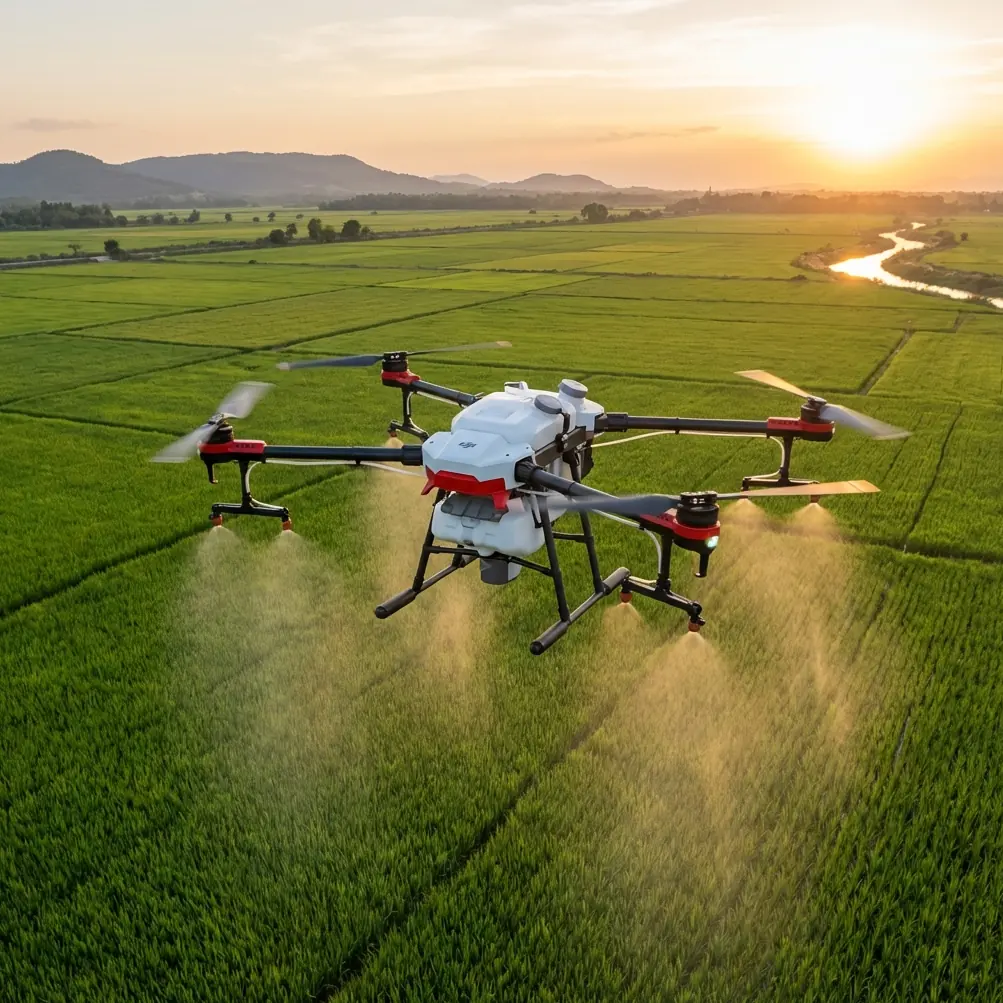
Agras T50 Power-Line Surveying in Dusty Conditions: A Practical Pre-Flight Workflow That Protects Accuracy
META: Learn a field-tested Agras T50 pre-flight and survey workflow for dusty power-line environments, with practical guidance on cleaning, RTK reliability, swath planning, and safe operation.
Dust changes everything.
On paper, a power-line survey route may look routine: stable corridor, repeatable geometry, clear linear target. In the field, especially near dry access roads, exposed substations, or agricultural edges, airborne dust becomes a quiet source of degraded visibility, dirtied sensors, inconsistent positioning confidence, and sloppy decision-making. That matters even more when the aircraft in question is the Agras T50, a platform typically associated with productive field work but increasingly evaluated by operators for adjacent industrial tasks where reliability, repeatability, and environmental toughness are what count.
If you are using the T50 around utility corridors in dusty environments, the smartest place to improve mission quality is not in the air. It is before takeoff.
This article lays out a practical how-to workflow built around one deceptively simple habit: a disciplined pre-flight cleaning step that supports the aircraft’s safety systems, positioning performance, and data consistency. For operators who care about centimeter precision, RTK fix stability, and controlled corridor coverage, that small ritual has outsized value.
Why dust deserves its own checklist item
Most drone checklists treat dust as a housekeeping issue. That is a mistake.
Dust does not just make an aircraft look neglected. It interferes with the very systems that help an operator maintain predictable performance. In a power-line survey, that can mean reduced confidence in obstacle awareness, compromised visual verification of components, and more variability between one sortie and the next. If your mission requires repeated passes along a corridor and clean spatial alignment, tiny losses in sensor clarity or positioning trust can accumulate into larger operational inefficiencies.
The Agras T50 is built for hard outdoor work, and ruggedization is part of its appeal. References around the platform often highlight terms such as IPX6K and centimeter-level positioning expectations through RTK-based workflows. Those are meaningful strengths, but they are not a substitute for disciplined field handling. Water resistance and robust construction help the drone survive a punishing workday. They do not mean the operator can ignore dust buildup on exposed surfaces, vision-related safety elements, landing areas, connectors, or payload interfaces.
That distinction is operationally significant. A rugged aircraft can keep flying in harsh conditions; a well-maintained rugged aircraft can keep flying predictably.
Start with the cleaning step, not the battery step
Many crews begin pre-flight with batteries, route upload, or mission geometry. In dusty utility corridors, I recommend reversing that order.
Before the aircraft is powered, perform a dry visual cleaning and inspection. The goal is not cosmetic. The goal is to make sure every safety-relevant surface and every positioning-relevant interface starts the mission in a known condition.
A useful sequence looks like this:
1. Clean the landing zone first
If you set a clean aircraft into a dirty launch area, you have already lost the benefit of your effort. Choose the least dusty patch available. If needed, place a launch mat or stable field surface under the aircraft. Around power lines, access roads often generate the worst dust clouds just from vehicle arrival, so let the air settle before unpacking.
This is the first risk control point. Dust kicked up during startup can coat exposed components within minutes.
2. Wipe down the aircraft exterior with emphasis on sensing surfaces
Use approved non-abrasive materials. Focus on forward and downward sensing windows, camera housings, navigation-related surfaces, and any exposed lighting or status indicators used during field confirmation. Even a thin film can reduce confidence when you are trying to inspect line-side assets or verify alignment against towers and poles.
3. Inspect arms, fold joints, and connectors for fine particulate buildup
Dust has a way of settling into areas that still appear functional but gradually become less trustworthy over repeated deployments. This matters in utility work because power-line routes are often flown repeatedly, and repeatability is one of the reasons to use an RTK-enabled workflow in the first place.
4. Check payload mounting points and any spraying-related interfaces, even if you are not spraying
This is where operators sometimes get careless. Because the Agras T50 comes from an agricultural lineage, many crews are familiar with concepts like nozzle calibration, swath width, and spray drift. Even when the mission is survey-oriented rather than application-focused, those habits still matter. A clean and correctly configured payload area affects balance, airflow behavior, and overall mission consistency. Dust around fittings and interfaces should not be ignored simply because the day’s task is inspection or mapping.
The crossover lesson from agriculture is simple: precision work starts with a machine that is physically in trim.
RTK reliability begins before the first fix
Dust is not the only issue in a power-line corridor, but it can amplify others. Utility routes already challenge positioning because of linear infrastructure, metallic structures, changing terrain, and intermittent obstructions. That is why RTK fix rate deserves special attention.
Centimeter precision is only valuable when it is stable enough to trust in operation. The operator’s job is to reduce anything avoidable that may erode that stability.
After cleaning and physical inspection, power the aircraft and confirm the RTK workflow deliberately. Do not rush into takeoff because the route is familiar.
Check for:
- solid satellite reception before motor start
- stable RTK correction input
- consistent fix status while stationary
- no unexplained drift in heading or position on the ground control display
In dusty environments, crews tend to hurry because they want less exposure on the ground. That instinct is understandable, but it often leads to the opposite result: more aborted missions, more relaunches, and more total dust exposure over the day.
If you are seeing inconsistent fix behavior, stop there. Cleanliness will not solve every positioning problem, but a dirty airframe combined with a marginal RTK setup is exactly the kind of stack-up that produces vague, low-confidence sorties.
Corridor planning: borrow discipline from agricultural coverage logic
One of the more useful mental models for power-line surveying with the T50 comes from agricultural flight planning rather than traditional visual inspection.
Agricultural operators think in swath width, overlap discipline, and environmental effects such as spray drift. Survey crews should borrow that same structured mindset, even though the output is different. Along a utility corridor, your concern is not droplet distribution. It is maintaining a repeatable observation envelope while avoiding unnecessary proximity to structures and preserving data continuity.
That means defining your corridor width intentionally.
If you fly too narrow, you may miss context around poles, insulators, conductor clearances, or encroaching vegetation. If you fly too wide, you dilute detail, increase processing load, and may expose the aircraft to more variable wind and dust behavior than necessary. The right swath width is not a marketing spec. It is a mission decision.
The same goes for lateral overlap and speed. Power-line assets are unforgiving of inconsistent capture geometry. A route that looks efficient but varies in offset or altitude from tower to tower often creates more office work later than a slightly slower but disciplined corridor pass.
Here the agricultural analogy becomes genuinely useful. Just as spray drift can carry material away from the intended target, dust drift can move into your launch area, your optical surfaces, and your situational awareness bubble. Watch wind direction before takeoff. If vehicles, bare soil, or nearby field activity are pushing particulates across your planned line, reposition launch or adjust timing.
A note on visual systems and “automatic confidence”
One of the more dangerous habits in drone operations is blind trust in automation. An unrelated reference in the source material makes an oddly relevant point: users often rely on automatic modes and fail to access the real capability of a sophisticated system. The source claimed a flagship device in automatic mode may use only “30%” of its potential, and that even a beginner could improve outcomes with just 5 minutes of learning in a more manual or deliberate mode.
That idea maps surprisingly well to field drone work.
No, the Agras T50 is not a smartphone camera, and the comparison should not be taken literally. But the operational principle is sound. If an aircraft offers robust automation, environmental protection, and precision positioning, those features are only as good as the operator’s willingness to understand the conditions under which they perform best. Dusty corridor work is where passive use gets exposed. The crews who do well are not simply tapping through defaults. They are managing setup, interpreting feedback, and making small corrections before those corrections become mission failures.
For that reason, I encourage survey teams to train on a “five-minute discipline” before each sortie:
- clean
- inspect
- confirm RTK
- assess wind and dust movement
- verify route geometry and clearance assumptions
Five focused minutes often do more for mission quality than ten extra minutes spent troubleshooting after a questionable launch.
Why a flocking lesson still applies to industrial drone work
Another source in the reference set, a DJI educational document on formation flight, describes two useful patterns. One is a simple five-aircraft line, arranged in numbered order from 1 to 5. Another is a wave motion where aircraft 2 and 4 rise while 1, 3, and 5 descend, then the pattern reverses. It also contrasts geese, which follow a structured leader, with pigeons, whose group movement appears messy but remains collision-free because it is actually governed by subtle coordination.
At first glance, that has nothing to do with an Agras T50 surveying power lines. In practice, it has everything to do with how good field teams operate.
A strong corridor survey workflow combines both models. There is a “geese” element: a lead procedure that the entire team follows every time, especially for pre-flight, route validation, and launch authority. But there is also a “pigeons” element: every crew member maintains local awareness and can react to immediate risk, such as blowing dust, changing visibility near a tower, or a degraded launch surface, without waiting for a script to catch up.
That is the operational significance. Standardization should not become rigidity. In dusty utility work, the best teams are orderly without being brittle.
Practical field sequence for the Agras T50 in dusty utility corridors
Here is the workflow I would teach to a mixed-experience crew.
Step 1: Arrive and pause
Do not unload immediately if your vehicle has just stirred up dust. Let the air settle. Use that minute to scan wind direction, wire geometry, access hazards, and alternate launch spots.
Step 2: Prepare a clean launch surface
A mat or clean case lid can be enough. The point is to separate the aircraft from loose grit.
Step 3: Perform the cleaning pass
Wipe critical surfaces, inspect sensor windows, clear particulate from seams and mounting points, and confirm no residue has accumulated around interfaces.
Step 4: Confirm structural and propulsion readiness
Check props, arm locks, fasteners, and visible connectors. Harsh environments punish small oversights.
Step 5: Establish positioning confidence
Wait for a stable RTK fix. If you need help diagnosing repeat fix issues in the field, share the symptoms with a technical specialist through this utility drone support line.
Step 6: Validate corridor geometry
Review altitude, offset from the line, expected swath, overlap logic, and turn behavior around structures. Avoid ad hoc path changes after takeoff unless safety requires them.
Step 7: Watch the first climb carefully
The first seconds after liftoff tell you a great deal. Look for abnormal dust ingestion around the launch site, hesitation, inconsistent hold, or any mismatch between expected and actual stability.
Step 8: Recheck after landing
Dust management is not just pre-flight. If the first sortie was flown in active particulate conditions, inspect again before the next leg. A route with multiple short launches may need multiple light cleanings.
Where operators usually lose quality
In my experience, the biggest losses in dusty power-line surveys come from four avoidable habits:
- launching too quickly after vehicle arrival
- assuming ruggedness makes cleaning optional
- accepting weak or unstable RTK status because the corridor is familiar
- treating route width and offset casually instead of as mission-critical parameters
None of those errors are dramatic. That is why they persist. But together they can erode the very reasons an operator would choose a capable platform like the Agras T50 for demanding field conditions.
The real takeaway
Dusty power-line surveying is not won by one specification. Not by IP rating alone. Not by RTK alone. Not by automation alone.
It is won by discipline at the edges of the mission: the launch surface, the wipe-down, the fix check, the wind read, the corridor definition. Those are small acts, but they protect the systems that carry the larger promise of the aircraft. If your objective is reliable corridor work with repeatable spatial quality, start there.
The Agras T50 is at its best when operators treat preparation as part of precision, not as a delay before it.
Ready for your own Agras T50? Contact our team for expert consultation.