
Agras T50 for Coastal Highway Survey Work
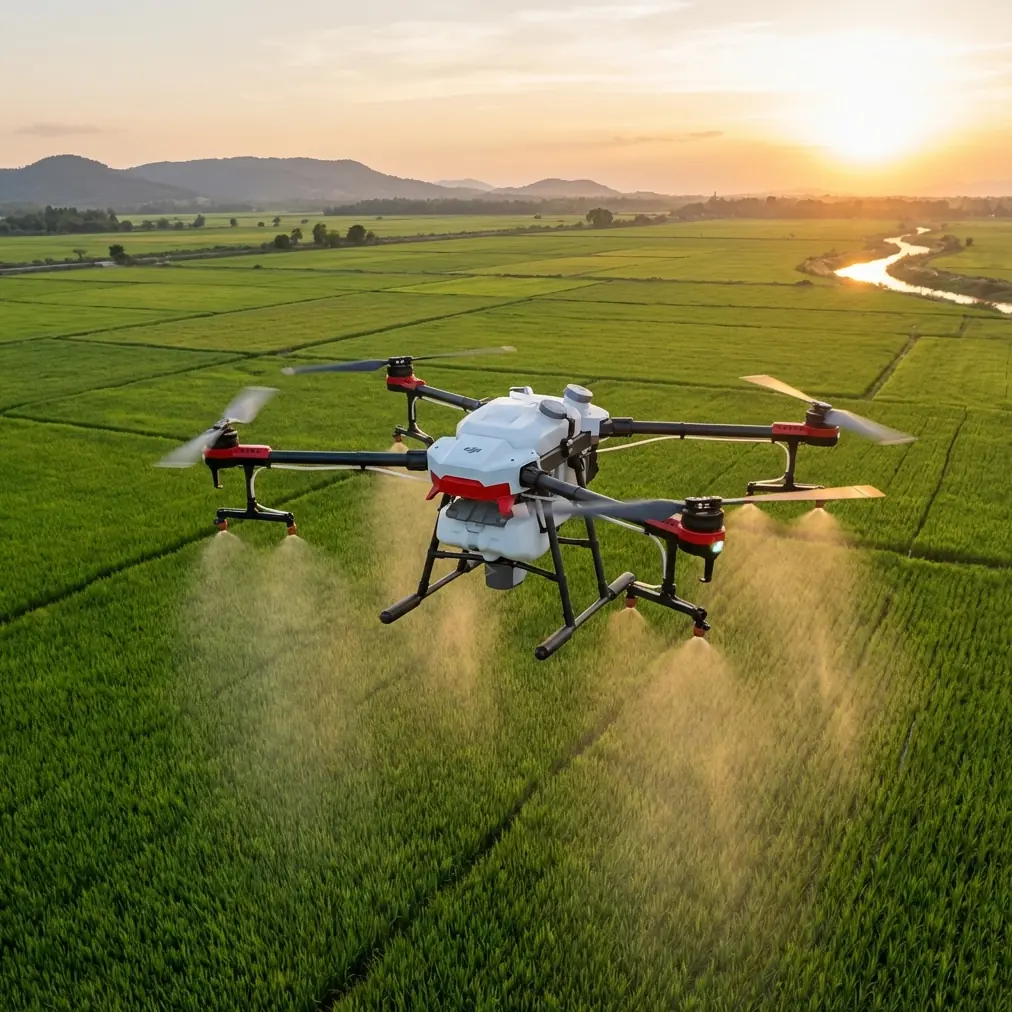
Agras T50 for Coastal Highway Survey Work: What Actually Matters in the Field
META: A technical review of using the Agras T50 mindset for coastal highway survey operations, focusing on flight behavior, environmental awareness, payload logic, precision workflows, and practical accessory integration.
The Agras T50 is usually discussed through an agricultural lens, but that framing misses something useful. When you shift the conversation to coastal highway survey work, the aircraft becomes less about crop throughput and more about controlled, repeatable movement in a difficult environment. Salt air, crosswinds, reflective pavement, drainage structures, embankments, and long linear corridors all punish sloppy setup. A drone that can carry more, stay stable, and support disciplined workflows has an advantage here.
That does not mean every big airframe is automatically a good survey platform. It means the operator has to think like an engineer, not a spec collector.
One clue comes from outside the DJI ecosystem. A 2026 industry launch from Applied Aeronautics introduced the U.S.-made SkyBeam heavy-lift quadrotor as a modular platform built around endurance and payload capability, with commercial work explicitly in scope. That matters because it reflects a broader shift in the drone sector: larger civilian platforms are being judged less by headline speed and more by what they can carry, how long they can remain productive, and how flexibly they can be adapted to a mission. For coastal highway surveying, that same logic applies to the Agras T50. The real question is not whether it was originally marketed for mapping. The question is whether its structure, payload tolerance, and operating discipline can support corridor data collection when paired with the right methods and accessories.
Agras operators who understand that distinction tend to get better results.
Why coastal highway survey work is hard on any drone
Highway corridors near the coast look simple from above. They are not. Wind changes fast as the route moves between open shoreline, cut slopes, bridges, sound walls, and vegetation. Surfaces vary between dark asphalt, bright lane markings, concrete barriers, water channels, and metallic infrastructure. GNSS conditions can also shift, especially around overpasses, service gantries, and nearby industrial zones.
In those conditions, centimeter precision is not a marketing luxury. It is the line between usable corridor geometry and a dataset that requires too much cleanup. RTK fix rate becomes one of the most important operational indicators because long, narrow projects amplify small positioning inconsistencies. A few weak sections in a broad field map may be manageable. Along a highway centerline, they can ripple through chainage-based measurements, drainage inventory positioning, and edge-of-pavement extraction.
This is where the T50 mindset becomes interesting. Even when a platform is known for application work, its value in survey support often comes from steadiness under load, dependable routing, and the ability to support add-on systems without becoming fragile.
The hidden lesson from entry-level training material
Oddly enough, one of the most relevant references for this kind of mission comes from a basic educational drone document rather than a survey manual. In that source, a simple exercise changes control inputs to observe how flight tracks respond. The conclusions are revealing. When yaw alone is set to zero, the aircraft moves in a straight diagonal climb or descent. When roll is zero, it spirals upward or downward. When throttle is zero, it holds roughly the same height while tracing a circular path.
That sounds elementary, but it cuts to the heart of coastal corridor surveying. Flight path quality is a control problem before it becomes a data problem.
If the aircraft is not behaviorally predictable, the payload will not rescue the mission. Along a highway shoulder or median, you often need long, disciplined runs with minimal lateral wandering. A platform that can maintain track cleanly while the operator manages heading, speed, and altitude transitions will produce more consistent image geometry and cleaner overlap. The educational example also reminds us that one control variable can distort the whole path. In field terms, that means poor yaw management, imprecise acceleration, or unbalanced roll corrections can create survey lines that look acceptable on the controller but degrade reconstruction later.
The same training source describes a basic “environment scan” exercise: switch on the camera, climb first to 80 centimeters, rise another 50 centimeters to around 130 centimeters above ground, rotate 360 degrees clockwise, then land. For a small teaching drone, this is just orientation. For a T50-class survey workflow, the principle scales beautifully. Before every coastal highway mission, a structured visual scan should be treated as mandatory. Not because the pilot needs a dramatic preflight ritual, but because linear infrastructure hides risk in every direction: traffic masts, sign cantilevers, cables, temporary construction barriers, birds, and rotor wash effects near embankments. A full visual sweep at low altitude helps establish wind feel, obstacle context, and glare conditions before committing to the corridor run.
That is operational significance, not classroom theory.
Stability is more valuable than speed on corridor jobs
Another useful parallel comes from aerobatic training literature. A section on the reverse Cuban Eight emphasizes entering a 45-degree climb quickly but smoothly, then pausing at center points and keeping the maneuver symmetrical. There is even stress on starting from the right location so the figure remains balanced on both sides.
No one is flying aerobatics with an Agras T50 on a highway project, nor should they. But the underlying discipline matters. Smooth entry, measured control rhythm, and symmetry all translate directly into survey performance. On a coastal corridor, rough stick inputs or abrupt route corrections introduce pitch and roll transients that affect image consistency and sensor orientation. If you are using a third-party accessory, those disturbances become even more costly.
That is why experienced operators focus on acceleration behavior rather than only top-line speed. The educational source explicitly notes that every object transitions from rest to motion through acceleration, even if that acceleration is too fast or too slow to notice easily. For drone survey work, especially with heavy platforms, acceleration tuning affects how well the aircraft settles into a line, how cleanly it exits a turn, and how much oscillation appears after corrections. Over long highway stretches, those small gains multiply.
A practical T50 survey configuration for coastal roads
The Agras T50 is not a conventional lightweight mapping quadcopter, so using it for survey support requires intention. The best results come when the aircraft is treated as a stable utility platform rather than forced into a generic mapping template.
A strong setup for coastal highway work typically includes:
- RTK-enabled positioning workflow with close attention to fix continuity
- A carefully calibrated imaging or sensing payload
- Conservative speed planning to preserve overlap and reduce motion distortion
- Tight altitude discipline over embankments and bridge approaches
- An environmental scan before each route segment
- Post-flight review of line straightness, not just image count
The accessory question is where many teams either unlock capability or create headaches. In this case, the most meaningful upgrade is often a third-party gimbal or sensor mounting solution designed to improve payload isolation and viewing geometry. For some highway inspection and survey teams, a stabilized third-party camera mount has made the T50 more usable by reducing vibration transfer and making image framing more consistent over long linear passes. That matters much more than it sounds. Corridor projects live and die on repeatability.
If your team is evaluating add-on hardware for this kind of workflow and wants a practical compatibility discussion, this direct Agras integration chat is a sensible starting point.
What about multispectral?
For pure highway geometry, multispectral is not the first tool people reach for. Still, in coastal environments it can support adjacent asset analysis in ways RGB alone may miss. Slope vegetation health, drainage corridor encroachment, erosion patterns near shoulders, and moisture-related anomalies around culverts can all benefit from multispectral interpretation. The T50’s usefulness rises if the platform can safely and repeatably carry an auxiliary sensing package without compromising line discipline.
Again, the heavy-lift trend seen in the SkyBeam launch is relevant here. Modular payload thinking is becoming normal in commercial drone operations. Endurance and payload capacity are not abstract spec-sheet trophies. They are what allow a single airframe to serve multiple departments: survey one day, drainage assessment the next, vegetation corridor monitoring after that. For highway authorities and civil contractors, that kind of asset flexibility has real operational value.
Precision is more than RTK
People often reduce survey accuracy to whether the aircraft has RTK. That is incomplete.
RTK fix rate matters, yes. But coastal highway survey quality also depends on:
- consistent swath width planning along curved segments
- careful yaw control when following medians and ramps
- image timing that matches groundspeed
- stable attitude through wind gusts
- disciplined nozzle calibration logic when the aircraft is dual-purposed and must return to application tasks later
That last point deserves attention because the Agras T50 lives in the real world, not inside a clean product category. Some fleets use the same aircraft for multiple commercial tasks. If the airframe is shared between spraying and survey support, nozzle calibration and contamination control are not side issues. Spray drift residue, fluid system carryover, and external deposits can affect cleanliness around mounted sensors and alter maintenance routines. The operator who ignores that crossover is asking for compromised optics and unreliable field performance.
IPX6K-level environmental resilience is also part of the conversation. Coastal jobs expose aircraft to mist, salt deposition, and fine particulate contamination. A platform with strong sealing characteristics has a practical edge, not because it should be abused, but because it is better suited to repeated deployment in harsh field conditions. Even so, sealing is not immunity. After coastal flights, rinse and inspection discipline still matter.
Where the T50 fits—and where it does not
The Agras T50 can make sense for coastal highway survey support when the mission benefits from a robust platform, payload flexibility, and stable corridor flying. It is particularly compelling where teams already operate the aircraft and want to extend utility through structured sensor integration and careful mission design.
It makes less sense when the job demands ultra-light deployment, dense urban launch constraints, or a highly optimized turnkey photogrammetry stack with minimal adaptation. In those cases, a dedicated mapping platform may remain the cleaner answer.
Still, dismissing the T50 because it comes from an agricultural family would be lazy analysis. Heavy commercial drones are converging toward modularity. The SkyBeam story underscores that trend from another angle: a commercial quadrotor positioned around lower-cost access, payload capacity, and endurance. Those priorities align neatly with what many infrastructure teams actually need. The drone market is not separating into neat boxes anymore. It is reorganizing around mission architecture.
Best-practice takeaways for coastal highway operators
If I were setting a field protocol for an Agras T50 on this kind of work, I would insist on five things.
First, perform a formal environmental scan before each route segment. The educational reference’s 360-degree camera sweep may come from a small training drone, but the principle is excellent. Build it into your SOP.
Second, tune for smooth acceleration and stable line entry. The training material’s emphasis on motion behavior is not theoretical fluff. It directly affects usable survey geometry.
Third, monitor RTK fix rate continuously, not just at takeoff. Coastal infrastructure can produce localized positioning trouble that only appears once the aircraft is committed to the corridor.
Fourth, treat third-party accessory integration as a systems engineering task. Mounting quality, balance, vibration isolation, and cable discipline all matter. A good accessory can materially improve the T50’s survey utility; a bad one can make the dataset worse than a smaller drone would have produced.
Fifth, if the aircraft serves both spraying and survey roles, maintain strict cleanliness and calibration separation. Spray drift and nozzle calibration are operational realities, not side notes.
The Agras T50 is at its best when used by teams who think beyond category labels. In coastal highway survey scenarios, that means borrowing lessons from pilot training, respecting payload physics, and building a workflow around control quality rather than assumptions. The operators who do that tend to discover that a capable platform is not defined by its brochure origin story. It is defined by how well it behaves on the line.
Ready for your own Agras T50? Contact our team for expert consultation.