
Agras T50 for Coastal Forest Surveying: What Actually
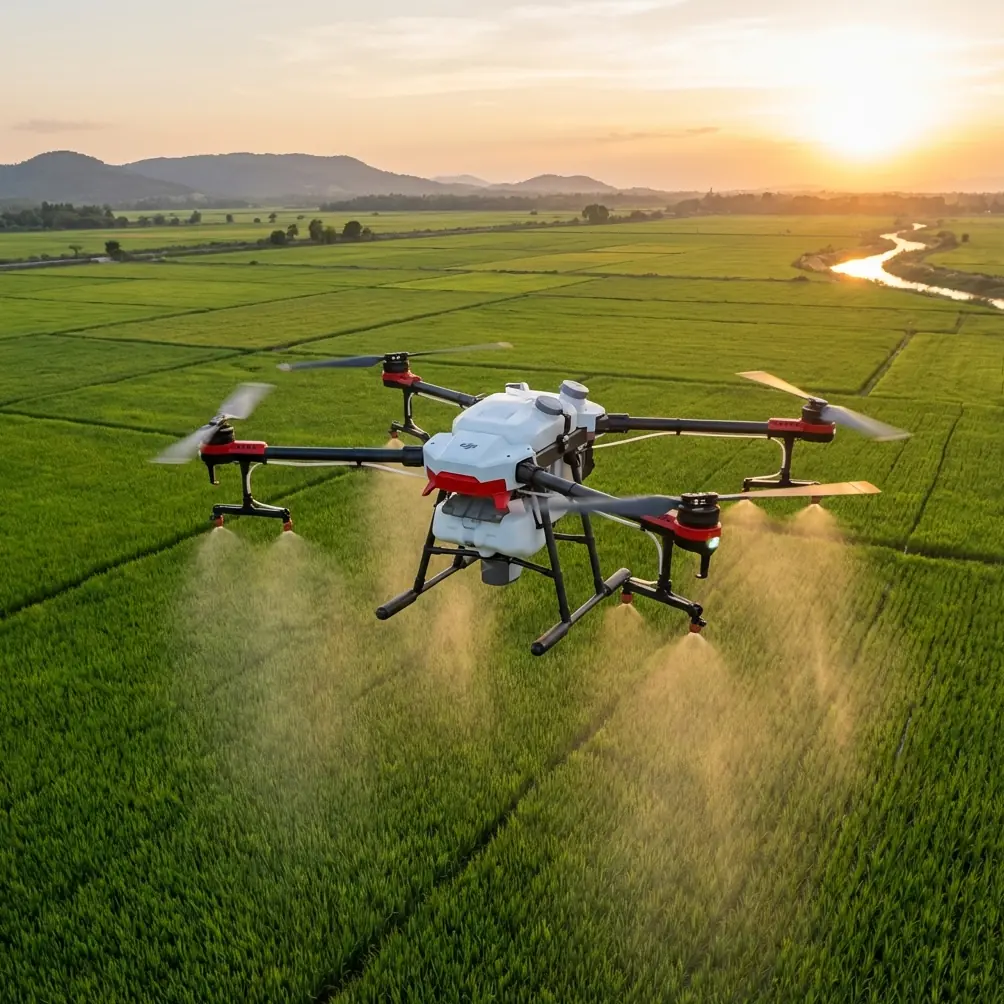
Agras T50 for Coastal Forest Surveying: What Actually Matters in the Field
META: A technical review of Agras T50 for coastal forest surveying, with practical insight on RTK stability, electromagnetic interference, antenna adjustment, autonomous workflows, and calibration discipline.
The Agras T50 is usually discussed through an agricultural lens. That makes sense; it was built for demanding field work, repeatable routes, and payload-heavy operations. But if you shift the mission from crop application to coastal forest surveying, a different set of strengths comes into focus. What matters is not only lift, endurance, or coverage. It is how the aircraft behaves when salt air, uneven canopy lines, variable wind, and intermittent signal conditions start pushing against the mission plan.
That is the real test.
Coastal forests are messy operating environments. Tree height changes fast. Moisture is constant. Wind can swing from open shoreline gusts to strangely still pockets beneath canopy edges. Add marine infrastructure, power lines near access roads, and the occasional communications equipment on elevated ground, and signal quality becomes a practical issue rather than a theoretical one. In that context, the Agras T50 becomes interesting not because it is simply powerful, but because it sits at the intersection of manual control, structured autonomy, and data-driven adjustment.
That combination deserves a closer look.
The first operational question: is the aircraft truly useful when the site gets complicated?
A drone for coastal forest surveying has to do more than fly a preplanned line. It has to remain predictable when conditions change. One of the most useful ideas from training literature on unmanned flight is surprisingly simple: the best aircraft are the ones that hold the attitude you introduce and mostly do only what you command. That principle comes from model aircraft instruction, where more “neutral” flight behavior is valued because it reduces surprises and demands cleaner inputs. In field survey work, the same idea has real value.
Why? Because coastal forest mapping is already full of variables you cannot eliminate. If the aircraft adds its own unpredictability, your margins disappear.
For Agras T50 operators, that means setup discipline matters as much as headline capability. Stable route execution, repeatable track spacing, and reliable response to pilot input are not luxuries. They are the foundation of any useful survey pass over forest blocks where tree crowns, drainage channels, and shoreline transitions all compete for attention. When the platform tracks cleanly from point A to point B with fewer unwanted corrections, your swath consistency improves and your interpretation workload after the flight drops with it.
The autonomy discussion is often too shallow
People use the word “autonomous” loosely. A more rigorous definition comes from educational drone programming: a manually controlled aircraft can fly, but a truly meaningful UAV is one that can execute programmed behavior on its own. That distinction matters for the Agras T50 in survey-style operations.
In one educational reference, the TT drone is described as supporting both manual remote-control flight and programmed autonomous flight through Mind+ software, with languages resembling Scratch, Arduino C, and MicroPython. It also separates two programming modes: a real-time mode where the computer runs the program and sends commands over Wi-Fi, and an upload mode where the mission is loaded into an onboard expansion module over USB. The significance is bigger than the classroom example might suggest.
It highlights a core truth for field operations: where the logic runs matters.
In real-time mode, the operator can watch live scene capture and view aircraft feedback data on the computer, which makes debugging easier. That is excellent for testing workflows, route logic, and response behavior near a staging area. But there is a catch built right into the source material: once the computer connection is broken, the drone no longer executes the program. For a coastal forest survey team working around signal shadows, vegetation edges, and shoreline interference, that dependency can become a liability.
The upload-mode idea is the more useful analogy for the Agras T50. When mission instructions live onboard rather than depending on a fragile live link, the aircraft is less exposed to temporary Wi-Fi instability. The educational document explicitly notes that this approach can avoid interference from unstable Wi-Fi signals. Translate that into a coastal forestry context and the lesson is obvious: do not build your mission architecture around ideal communications. Build it around resilience.
That is why route verification, onboard mission confidence, and fallback procedures matter so much with the T50. The best operators do not just ask whether the drone can fly the plan. They ask whether it can keep executing safely and consistently when the link quality is less than perfect.
RTK fix rate is not a spec-sheet trophy in coastal forests
RTK performance gets talked about as if centimeter precision alone solves everything. It does not. In coastal forest surveying, a strong RTK fix rate is only useful if the aircraft can maintain reliable positioning under the combined pressure of canopy adjacency, reflective moisture, shifting weather, and localized interference.
A coastal site is full of things that compromise elegant assumptions. Water surfaces can complicate signal behavior. Dense forest edges can narrow sky visibility. Nearby infrastructure can inject electromagnetic noise. If you are flying the Agras T50 along forest margins or access tracks, antenna orientation and placement start to matter more than many teams expect.
This is where the narrative around electromagnetic interference becomes practical rather than dramatic. If you see degraded positioning confidence, inconsistent route holding, or delayed lock behavior, one of the first field checks should be antenna adjustment. That means evaluating the aircraft’s orientation relative to the base or correction source, checking whether support vehicles or metal equipment are creating a shadowing problem, and repositioning takeoff infrastructure away from obvious sources of RF clutter. Sometimes the fix is not in the software menu. Sometimes it is ten meters to the left and a cleaner line of sight.
With the T50, that discipline can be the difference between a route that holds with centimeter-level repeatability and one that slowly accumulates alignment error across a tree block. That matters for every downstream task: canopy health comparison, treatment planning, boundary verification, and repeat missions meant to show seasonal change.
Coastal forestry is harsh on assumptions, so calibration has to be routine
Even though the reader scenario here is surveying forests rather than spraying crops, spray-related discipline still matters because the Agras T50 lives in a world where liquid delivery, route geometry, and environmental control are tightly connected. Terms like spray drift and nozzle calibration are not irrelevant side notes. They are reminders that this platform is built for precision work in the open air, where environmental variables punish sloppy setup.
If your operation alternates between survey passes and application planning, nozzle calibration cannot be treated as a seasonal chore. In coastal environments, salt residue, humidity, and particulate contamination can slowly shift performance. A calibrated system supports more than application quality; it improves trust in the entire workflow. The operator who is rigorous about calibration is usually the operator who is equally rigorous about route spacing, altitude discipline, and data integrity.
Spray drift is another operational lens worth keeping in view. Along the coast, drift risk can change quickly with a small shift in wind direction or with the thermal behavior of open water versus tree cover. Even if the mission on a given day is strictly survey-focused, understanding drift patterns helps interpret the same microclimate forces that will affect low-altitude route stability and swath behavior. In other words, environmental reading is a transferable skill. The T50 rewards crews who think that way.
Swath width is only valuable if it stays honest
Wide coverage sounds efficient until the edges of the pass stop being trustworthy. In coastal forest blocks, swath width should be treated as a controlled variable, not a marketing number. Terrain breaks, canopy height variation, and side winds can all reduce effective consistency across the pass.
Agras T50 operators who produce dependable results usually work backwards from acceptable overlap and positional confidence rather than chasing maximum theoretical coverage. That is especially true when the mission objective is not simply area completion, but comparable data across repeated flights. A narrower, repeatable working pattern often beats a wider but less stable one.
This also ties back to aircraft behavior. The model-flight training reference makes a useful point: an aircraft that flies straighter and requires fewer course corrections is easier to keep on line. That is not an aerobatics lesson here. It is a survey principle. The less the platform wanders under wind influence, the cleaner your pass geometry becomes. In coastal work, that can save hours during analysis because you are not constantly explaining away route irregularity.
IPX6K-style durability thinking matters more near the sea
Coastal forests are wet even when it is not raining. Salt mist hangs in the air. Equipment cases sweat when they move from air-conditioned vehicles into humid launch zones. Connectors, antennas, exposed surfaces, and maintenance habits all matter.
This is why ruggedization language, including standards thinking such as IPX6K, deserves attention in the T50 conversation. Not as a badge, but as an operating mindset. Water resistance does not cancel out corrosion risk. It does not eliminate the need for post-flight cleaning, seal inspection, or careful drying protocols around charging and storage. What it does do is widen the margin for work in ugly conditions where lighter-duty platforms may demand more caution or more downtime.
For survey teams, that reliability has a direct operational effect. The less time you spend babying the aircraft between sorties, the more consistent your mission tempo becomes. And consistency is exactly what coastal forest projects need, especially when weather windows open briefly and close fast.
Multispectral thinking starts before the sensor is mounted
Not every Agras T50 mission in forestry will involve multispectral analysis, but many teams planning canopy health assessment, stress detection, or moisture-related pattern mapping are moving in that direction. The mistake is assuming the sensor alone creates useful insight.
It does not.
Multispectral work depends on repeatable flight behavior, stable positioning, sensible overlap, and environmental awareness. If your RTK fix rate is weak, if your route logic depends too heavily on a brittle live connection, or if electromagnetic interference is forcing subtle deviations, the dataset suffers before analysis even begins. The aircraft workflow is upstream of the analytics. That is why all the supposedly “small” operational details around antenna adjustment, mission upload discipline, and route verification matter so much.
They are not housekeeping. They are data quality.
A practical coastal workflow for the Agras T50
For teams using the T50 around forested shoreline zones, the most effective workflow is usually conservative in the right places.
Start with a communication and interference survey before takeoff. Look for nearby towers, vehicles packed with electronics, power infrastructure, and metallic staging surfaces. If RTK lock is slower than expected, adjust antenna orientation and, if necessary, move the launch point rather than forcing the mission from a bad spot.
Then verify route logic in a way that mirrors the educational distinction between real-time and uploaded execution. Use connected tools for setup, visualization, and debugging when convenient, but make sure the actual mission can tolerate link interruptions. The lesson from the TT drone reference is direct: a workflow that depends entirely on continuous Wi-Fi is vulnerable, while onboard execution is inherently more robust. On a humid coastal edge with patchy signal behavior, that difference is operationally significant.
Next, keep swath planning honest. Do not let broad theoretical coverage override terrain and canopy realities. Preserve overlap. Watch for side-wind influence. If route lines start to drift, solve the positioning issue before expanding the operational envelope.
Finally, treat maintenance as part of mission design. Salt exposure accumulates. Connectors and moving parts do not care whether the day’s task was “just a survey.”
If your team is refining this kind of workflow and needs a technical second opinion, a quick field-operations discussion can be arranged here: https://wa.me/85255379740
What makes the Agras T50 credible for this job
The most convincing case for the Agras T50 in coastal forest surveying is not that it can do everything. It is that it rewards disciplined operators with repeatable outcomes. The platform makes the most sense when you stop thinking of it as a generic drone and start treating it as a serious field system: one that benefits from autonomous mission planning, careful signal management, route precision, calibration rigor, and environmental respect.
Two details from the source material stand out because they map cleanly onto real operations.
First, the educational TT drone reference explains that real-time programming over Wi-Fi is useful for viewing live imagery and telemetry during debugging, but it also warns that the program stops executing when the connection is lost. That is a sharp reminder for T50 teams working in coastal forest zones: use live links intelligently, but do not build the mission around fragile connectivity.
Second, the same reference describes an upload-based mode where the program is loaded via USB onto an onboard module so the drone can continue executing without dependence on the computer link, specifically reducing the impact of unstable Wi-Fi. Operationally, that mirrors the logic behind resilient autonomous workflows on professional platforms. For complex survey environments, onboard mission confidence is not a convenience. It is a risk-control measure.
Even the model-aircraft training source contributes something useful. Its emphasis on aircraft that hold commanded attitudes and require precise inputs points toward a larger truth: stable, obedient flight behavior is what makes high-quality route work possible. In coastal forest surveying, that stability shows up as cleaner lines, fewer corrections, better repeatability, and more trustworthy data.
That is what serious operators should care about.
Ready for your own Agras T50? Contact our team for expert consultation.