
Agras T50 in Extreme-Temperature Forest Surveying
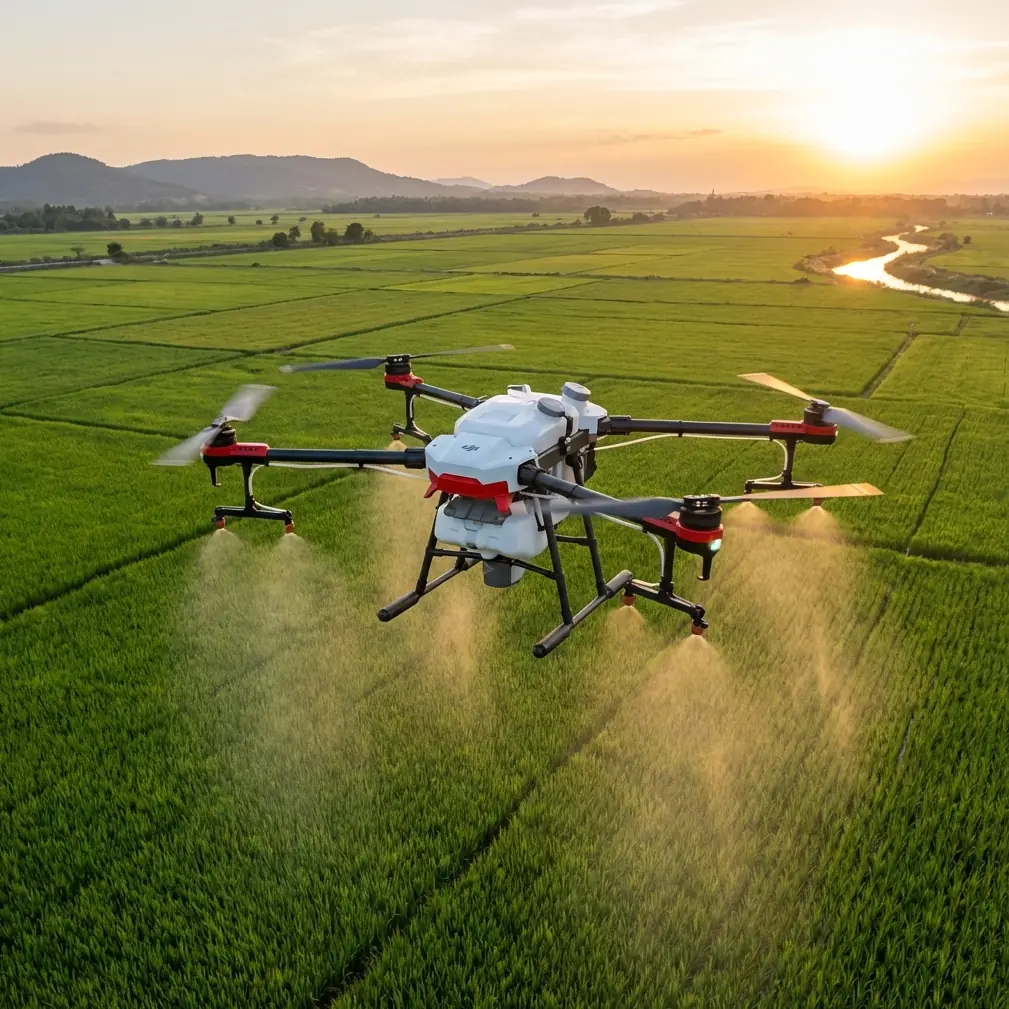
Agras T50 in Extreme-Temperature Forest Surveying: What Actually Matters in the Field
META: A technical review of the DJI Agras T50 for forest work in extreme temperatures, with practical insight on flight stability, calibration discipline, RTK precision, accessory strategy, and why impact data and low-altitude training matter.
When people look at the Agras T50, they usually see an agricultural aircraft first. That is fair. It was built for demanding work, high-throughput coverage, and repetitive operations where consistency matters more than theatrics. But in forest surveying under extreme temperatures, some of its most valuable traits are not about payload headlines. They are about discipline: stable control, predictable behavior close to obstacles, environmental sealing, and the operator’s ability to build procedures around the machine.
That distinction matters in forests.
Unlike open-field work, forest survey operations compress your margin for error. Branch lines, variable wind channels, temperature swings, moisture, and uneven terrain expose every weakness in setup and training. A platform like the Agras T50 can be adapted to this kind of mission, especially when the workflow includes RTK-based positioning, careful nozzle calibration when dual-use agricultural tasks are part of the day, and a well-chosen third-party accessory stack for thermal and multispectral data capture. But the airframe alone is not the whole story. The operating method is.
Why extreme-temperature forest work is harder than spec-sheet work
Forests create small weather systems. Cold pockets settle in low areas. Heat can build above dark canopy. Humidity changes quickly around streams and dense vegetation. If you are surveying tree health, drainage patterns, pest pressure, or corridor edges, you are not just flying over land. You are flying over a complex thermal and aerodynamic surface.
That is where the Agras T50’s general suitability for harsh outdoor duty starts to matter. An IPX6K-grade protection profile is useful here not because it sounds rugged on paper, but because forest jobs often mean water spray, condensation, mud on landing gear, and frequent cleaning between sites. In extreme temperatures, gear also tends to accumulate grime faster because operators are constantly moving between frost, damp brush, and dusty access roads. Equipment that tolerates aggressive washdown and rough handling reduces downtime between sorties.
Still, sealing is only one layer. Precision is the other.
In forest surveys, centimeter precision is not a marketing phrase. It directly affects whether repeat passes line up over a stand boundary, whether you can compare canopy changes over time, and whether your swath width assumptions stay valid on sloped ground. If your RTK fix rate drops or becomes inconsistent under canopy edges, your output quality suffers long before the aircraft shows any obvious instability. That is why a serious T50 forest workflow should be built around RTK discipline first, not afterthought.
The overlooked lesson from educational drone impact data
Oddly enough, one of the most useful reference points for understanding how to operate a large commercial drone safely in cluttered environments comes from a much smaller educational platform.
A training document for the DJI TT educational drone shows how dramatic the jump in acceleration and attitude can be during even a low-speed wall impact. In one experiment, when the small drone was flying backward normally at 50 centimeters per second, its X-axis acceleration was generally below 100 and its pitch angle sat around 5 degrees. During wall contact, the measured acceleration rose above 2000, and the pitch angle exceeded 20 degrees. That is not a minor disturbance. It is a sharp mechanical event.
Why bring this up in a discussion about the Agras T50?
Because the lesson scales conceptually even when the airframes do not. In forest operations, especially around trunks, fence lines, narrow service roads, and edge habitat, pilots often normalize slow-speed proximity as “safe enough.” The training data says otherwise. Low-speed contact can still produce abrupt force spikes and attitude changes. On a larger platform, the operational significance is even greater: more inertia, more consequence, and more need for route discipline.
The same educational material describes a controlled drop test from about 80 centimeters, where the drone hovers, stops propulsion after a one-second wait, and records maximum Z-axis acceleration over a three-second window. The protocol even recommends placing soft material such as towels, mats, or thick cardboard on the ground to limit damage. That mindset is worth borrowing. Good operators do not wait for a real incident to learn how a system behaves in shock conditions. They build low-risk training scenarios that reveal aircraft response, sensor logging behavior, and crew readiness before the machine goes into expensive terrain.
For Agras T50 teams surveying forests in severe cold or heat, this means the smartest preparation may not be another long mission rehearsal. It may be short, controlled drills: low-altitude hover stability, obstacle-approach rehearsal, and emergency response practice in thermally stressed conditions. The TT reference is small-scale, but the operational message is large.
Flight behavior near trees: stability is not the same as forgiveness
Forest surveying asks pilots to work near visual clutter and uneven airflow. That can create false confidence. If the aircraft looks stable in open air, crews may assume it will be equally forgiving near canopy edges. That is rarely true.
Motor response characteristics and braking behavior are part of this conversation, even if most operators never read ESC documentation. A BLHeli technical reference notes that “damped light” mode combines braking with active freewheeling, balancing braking losses with reduced freewheeling losses. It also shows a speed tradeoff: approximate maximum speed falls from 200,000 eRPM in non-damped open loop operation to 180,000 eRPM in damped light open loop, and lower still in closed-loop variants.
Those numbers are not T50 specifications, and they should not be presented as such. But they illustrate a broader truth relevant to any multirotor used for precision work: faster is not automatically better, and braking behavior affects control feel, stopping authority, and system load. In forestry missions, where line corrections happen frequently and deceleration near no-fly obstacles matters, the quality of response is often more valuable than raw top-end motor speed.
That is one reason the T50 makes sense for complex civilian field work. It belongs to a class of aircraft designed around predictable, repeatable commercial operation, not recreational burst performance. In extreme temperatures, that bias toward stable task execution becomes even more useful. Cold can stiffen components and reduce battery efficiency. Heat can compound system stress and change environmental lift behavior. An aircraft that rewards measured inputs and procedural flying has an advantage.
Surveying forests with an agricultural platform: where adaptation works
Let’s be honest: the Agras T50 is not a purpose-built forestry mapping drone in the same mold as a lightweight fixed-wing survey platform or a dedicated photogrammetry quad. Yet that does not rule it out. It changes the mission design.
The strongest use case is mixed-duty operation. Forestry contractors, land managers, and large estates often need more than imagery. They may need tree health assessment one week, targeted spray work the next, and access-path inspection after weather events. In that environment, a robust multirotor with configurable workflows can earn its place.
This is where spray drift and nozzle calibration enter the picture, even for a survey-focused article. If the same T50 is used across forestry survey and treatment tasks, calibration discipline becomes operationally critical. Nozzle calibration affects droplet consistency and deposition accuracy, but it also affects mission planning because application settings determine speed, altitude, and effective swath width. If crews move between data collection and treatment without a rigorous calibration checklist, they risk carrying bad assumptions from one task type into another.
In wooded areas, swath width is never just a table value. Terrain undulation, crosswind channels, and canopy edge turbulence can all compress real-world coverage. A contractor who treats swath width as fixed will either miss sections or overlap too heavily. In cold weather, fluid behavior can also shift enough to make poor calibration harder to ignore. So even if your primary interest is surveying, understanding the spray side of the T50 is part of understanding the platform as a whole.
The accessory question: where third-party hardware can genuinely help
The most practical enhancement for forest survey use is not decorative. It is sensor flexibility.
A third-party gimbal or payload adapter can significantly extend what the Agras T50 can do, particularly if the goal is to add multispectral or thermal capture for vegetation analysis, moisture stress assessment, and stand health monitoring. That kind of accessory matters because forests rarely reveal their problems in visible imagery alone. A corridor may look intact from above while heat signatures, moisture anomalies, or spectral differences tell a very different story.
This is also where the current education trend in China becomes more relevant than it first appears. Recent reporting from Heilongjiang notes that multiple universities added new undergraduate programs tied to low-altitude systems and aircraft operations, including “low-altitude technology and engineering” and “aircraft operation and maintenance engineering.” Harbin Institute of Technology also reportedly introduced undergraduate programs in embodied intelligence and brain-computer science and technology, while five universities across the province added artificial intelligence majors at the same time.
That cluster of changes matters because the future of platforms like the T50 will not be defined only by airframes. It will be shaped by the people being trained to integrate aviation, autonomy, AI, maintenance, and field robotics into one workflow. Forest surveying in extreme temperatures is exactly the kind of application that benefits from that convergence. You need operators who understand aircraft maintenance, data capture, route planning, and environmental interpretation together. Not separately.
In other words, the T50 is becoming part of a bigger low-altitude ecosystem. The accessory market is one expression of that. Specialized mounts, sensor integration kits, and field charging workflows are another. If you are evaluating a T50 setup for forest work, it is worth discussing your payload integration path early rather than improvising later; teams often use a direct field-ops channel like this setup conversation link to sort out compatibility questions before deployment.
RTK fix rate under canopy edge conditions
The phrase “RTK fix rate” gets thrown around casually, but in forests it deserves more respect.
A drone can have RTK on paper and still deliver frustrating field performance if mission planning ignores canopy blockage, terrain shading, and launch-point geometry. For repeated forest surveys, maintaining a strong fix is what turns isolated flights into comparable datasets. Without that consistency, centimeter precision becomes conditional rather than dependable.
That has practical consequences:
- Boundary retrace becomes less trustworthy.
- Repeat-pass analysis gets noisier.
- Narrow clearings and forest roads become harder to align accurately.
- Multispectral overlays can lose value if georeferencing drifts between sorties.
The T50’s value here depends less on theoretical capability and more on whether the operator treats RTK as a workflow discipline. Pre-check base station visibility. Confirm fix stability before entering constrained sections. Watch for transitions at canopy edges where conditions can change quickly. Precision is a habit before it becomes a result.
Heat, cold, and maintenance reality
Extreme-temperature work punishes maintenance shortcuts. That sounds obvious, but it is still the first thing crews compromise when schedules get tight.
Cold weather can hide problems by making equipment feel “tighter” until a battery or connector disagrees. Heat does the opposite. It exposes every rushed setup and every dirty interface. Forest work adds sap residue, moisture, and fine debris. An aircraft with IPX6K-level protection gives you cleaning tolerance, not immunity from neglect.
This is where the Heilongjiang education story comes back again. Adding 77 new undergraduate majors across several universities, with attention to low-altitude and AI tracks, signals a maturing support culture around UAV operations. Commercial drones no longer live on pilot skill alone. They depend on maintenance competency, data literacy, and systems thinking. The Agras T50 rewards that professionalism.
The real verdict on the Agras T50 for forest surveying
The Agras T50 is not interesting for forest surveys because it is flashy. It is interesting because it can be methodical.
Its strongest fit is with operators who need one durable commercial platform to handle rough outdoor conditions, maintain repeatable positioning, and potentially support both survey and application workflows. For extreme-temperature forestry work, its practical value rises when paired with three things: a disciplined RTK process, low-speed obstacle-response training, and a thoughtful third-party sensor integration plan.
The most revealing takeaway from the reference material is not hidden in a headline specification. It is in the training logic. A small educational drone showed that even a 50 cm/s backward contact event can send acceleration from under 100 to above 2000 and push pitch past 20 degrees. That is a reminder to treat slow-speed proximity with respect. Another reference showed how control-system behavior always involves tradeoffs between braking response and maximum rotational speed. That is a reminder that stable task execution beats raw speed in constrained environments.
Those two details, taken together, tell you how to think about the T50 in forests. Respect impact dynamics. Prioritize controlled response. Build around precision, not bravado.
That is how a large agricultural multirotor becomes a serious tool for difficult civilian survey work.
Ready for your own Agras T50? Contact our team for expert consultation.