
How to Survey Coastal Fields with the Agras T50: Altitude
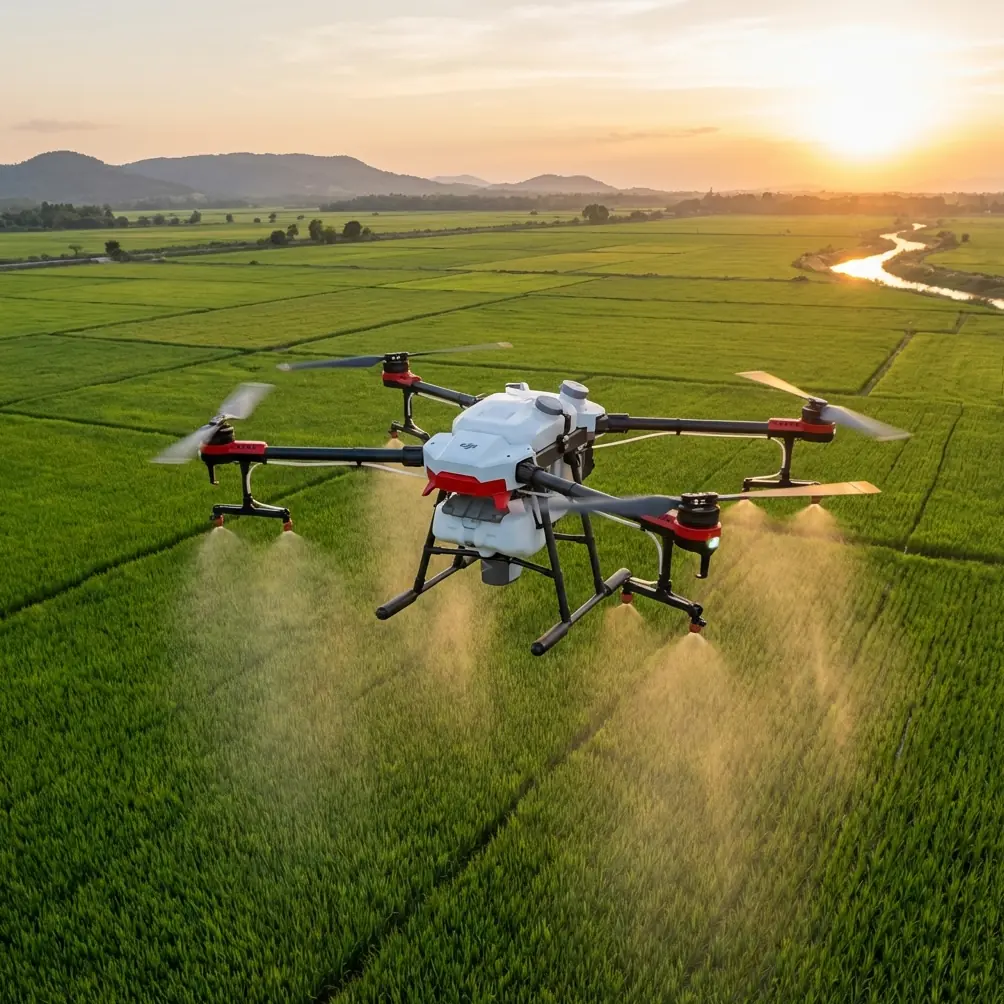
How to Survey Coastal Fields with the Agras T50: Altitude, Accuracy, and Operator Discipline
META: A practical Agras T50 tutorial for coastal field work, covering optimal flight altitude, wind exposure, RTK precision, nozzle calibration, spray drift control, and the training standards that matter in real operations.
Coastal agriculture rewards precision and punishes sloppiness.
A field that looks straightforward on a map can behave very differently once the aircraft is in the air. Sea breeze builds faster. Humidity shifts droplet behavior. Wind direction can swing during a single sortie. If you are planning field surveying or application missions with an Agras T50 in coastal conditions, the difference between a clean job and a compromised one often comes down to two things: flight altitude and operator discipline.
That sounds simple. It is not.
The T50 is often discussed as a productivity machine, but coastal work puts a different lens on the aircraft. In this environment, the smarter question is not “how much can it cover?” It is “how stable can the operation remain when weather, signal, and field geometry stop being predictable?”
This article walks through a practical operating framework for surveying coastal fields with the Agras T50, with particular attention to altitude selection, RTK-dependent accuracy, spray drift risk, and the training standards that should shape how the mission is planned and flown.
Why coastal fields are harder than they look
Coastal farmland has its own pattern of trouble. Wind is the obvious issue, but not the only one. Salt-heavy air, patchy shelter from tree lines or structures, reflective water surfaces nearby, and soft transitions between dry and saturated ground all influence mission quality.
For the T50, this matters in two separate ways.
First, if you are using the aircraft to map, scout, or build an operational plan before treatment, you need consistent position quality. That brings RTK fix rate and signal integrity into the center of the conversation. A centimeter-level workflow is only useful when the fix is stable across the full route, not just at takeoff.
Second, if your survey is tied directly to spraying decisions, altitude affects drift, swath width, canopy penetration, and overlap efficiency. Coastal fields exaggerate the trade-off. Fly too high and you widen uncertainty along with the swath. Fly too low and you may lose efficiency or struggle with uneven terrain and crop height variation.
So the right altitude is not a fixed number. It is a controlled compromise.
The best starting altitude for coastal T50 field work
If I were setting a baseline for coastal surveying with the Agras T50, I would start conservatively and validate upward, not the other way around.
For low-altitude field passes, an operational starting point around 3 to 4 meters above the crop canopy is usually the safest place to begin when the objective is to maintain stable coverage while limiting drift exposure. In coastal conditions, that lower envelope helps reduce the time droplets or sensor line-of-sight assumptions are exposed to lateral wind push. It also improves confidence when you are working irregular boundaries or fragmented plots.
Why not climb higher for broader swath width?
Because in coastal air, extra height can become borrowed efficiency. The aircraft may appear to gain wider coverage, but the mission starts paying hidden penalties through crosswind displacement, overlap inconsistency, and edge loss. A wider pass is only productive if the material or data actually lands where intended.
This is especially relevant if your survey mission leads directly into application planning. The T50’s operational value depends on how well the map and the treatment line up in the real field, not just on screen.
My rule for coastal plots is straightforward:
- Start at 3–4 meters above canopy
- Observe crosswind behavior on the first runs
- Increase only if drift and positional consistency stay controlled
- Reduce altitude immediately if edge fidelity or deposition uniformity starts to degrade
That sequence sounds modest, but it is where disciplined operators separate themselves from rushed ones.
Altitude affects more than drift
Most operators understand that flying higher increases spray drift risk. Fewer fully appreciate how altitude also changes the quality of the survey itself.
On coastal fields, the T50 is often used in workflows that depend on repeatability. You may be building route plans, checking field condition, marking treatment zones, or coordinating with other geospatial inputs. Even when the aircraft is not carrying a dedicated multispectral payload, the principle is the same: the more repeatable the track and the more stable the aircraft, the more valuable the output.
Altitude interacts with four practical variables:
1. Wind exposure
Every extra meter above canopy can place the aircraft and droplets in a less stable air layer. Coastal turbulence is often shallow but persistent. That makes “slightly higher” more consequential than operators expect.
2. Swath quality
A larger swath width may look good in mission planning, but if the edges become inconsistent, the real covered area becomes less uniform. In agricultural work, theoretical width is not the same thing as effective width.
3. RTK-dependent route confidence
The T50 benefits from high-quality positioning, especially where field boundaries are tight or where previous mission data informs repeat operations. In a coastal setting, maintaining strong RTK fix behavior matters more than squeezing out extra speed. Centimeter precision is useful only if the aircraft holds that standard throughout the job.
4. Terrain and canopy tracking
Fields near the coast are not always flat in the way inland operators imagine. Drainage shaping, embankments, and uneven moisture zones can produce subtle altitude instability relative to canopy. The lower you fly, the more carefully this must be monitored. The higher you fly, the more drift and edge uncertainty you invite. Again, compromise.
RTK fix rate is not a luxury in coastal operations
When people talk about agricultural drones, they often jump straight to tank volume, pump performance, or acres per hour. On coastal field jobs, RTK reliability deserves equal attention.
The reason is simple. Coastal parcels often involve narrow edges, water channels, windbreaks, roads, or neighboring plots with different treatment requirements. If the aircraft’s positioning degrades, small mapping or route errors become operational mistakes.
A solid RTK fix rate supports:
- repeatable line spacing
- cleaner headland turns
- tighter boundary adherence
- better alignment between survey findings and follow-up treatment
That is where the regulatory training material becomes unexpectedly relevant. The civil UAV pilot management rules referenced in AC-61-20R1 emphasize that applicants must complete and record training in system knowledge, navigation, flight control, link systems, and emergency procedures. They also specify oral assessment on the aircraft system characteristics and communication, navigation, and surveillance functions.
That is not bureaucratic filler. In coastal work, it has direct operational significance.
If a pilot does not understand the aircraft’s navigation architecture, C2 link behavior, or designated working coverage, they are not really managing a precision mission. They are hoping through one.
The same regulation extract goes further and requires structured practical training. For a captain-level role, it lists not less than 4 hours for route planning, 4 hours for system inspection procedures, 20 hours for normal flight command, and 20 hours for emergency flight procedures, including link loss and emergency recovery scenarios. Those numbers matter because coastal conditions compress response time. You do not want your first serious link or wind-management problem to arrive during a live mission over a vulnerable field edge.
Nozzle calibration is where coastal professionalism shows up
A lot of poor agricultural drone work gets blamed on weather when the real problem started on the ground.
Nozzle calibration is one of the clearest examples.
In coastal environments, drift sensitivity is higher, which means application quality is less forgiving of bad droplet assumptions. Two operators can fly the same T50 on the same field in the same hour and produce very different results if one has calibrated properly and the other is relying on habit.
Calibration affects:
- droplet size behavior in humid, moving air
- flow consistency across the boom/nozzle setup
- compatibility between speed, altitude, and target deposition
- the realism of your planned swath width
If your swath width assumptions are built on ideal conditions but your nozzles are producing a different pattern under current environmental load, your overlap math is fiction. Coastal operations expose that fiction quickly.
The practical sequence should be boringly consistent:
- Verify nozzle condition before every mission.
- Match calibration to the actual target and weather window, not to the previous day’s settings.
- Re-check after transport, cleaning, or any maintenance interruption.
- Validate pass spacing based on effective deposition, not just software defaults.
That last point gets missed too often. Effective width is earned in the field.
IPX6K matters more near the sea than inland
The T50’s ruggedness is not just a spec-sheet brag line in coastal work. Protection characteristics such as IPX6K become operationally meaningful when the aircraft is repeatedly exposed to moisture, fine contamination, and aggressive field cleaning routines.
Near the coast, equipment sees more than occasional splashing. It encounters humid residue, aerosolized contaminants, and a maintenance burden that accumulates faster than many teams expect. A robust sealing standard supports reliability, but it does not replace inspection discipline.
Think of IPX6K as resilience, not immunity.
The aircraft may be built for hard field conditions, but coastal operators should still tighten their post-flight process:
- inspect connectors and exposed interfaces
- check residue around spray-system components
- verify moving parts after washdown
- monitor any decline in sensor or link consistency over time
That maintenance mindset ties back to the pilot training rules again. The same civil UAV regulation highlights system knowledge and inspection procedures as required competencies. In a coastal environment, those are not academic requirements. They are how you keep a productive aircraft from drifting into intermittent faults.
Why an eVTOL safety workshop matters to T50 operators
At first glance, a recent Chengdu seminar on how eVTOL can safely move into real-world flight and operations seems far removed from an Agras T50 working a coastal field.
It is not.
The significance is broader than aircraft category. The workshop’s focus on safe transition from test activity to real operational use reflects the same maturity problem agricultural drone teams face. Civil UAV operations are no longer judged only by whether the aircraft can fly. They are judged by whether the operation is structured, repeatable, and safe in real conditions.
That shift matters for T50 crews because it reinforces a truth the industry is finally accepting: operational success is not hardware alone. It is procedure.
For coastal field surveying, that means:
- defining weather cutoffs before launch
- setting a conservative initial altitude
- confirming RTK stability before committing to full-route execution
- planning for communication degradation
- documenting what changed between planned and actual mission conditions
This is exactly the mindset that separates demonstration culture from production culture.
A practical coastal mission workflow for the Agras T50
Here is the workflow I recommend for most coastal field scenarios.
Pre-mission
Review the field boundary, nearby water, obstacles, and expected wind shifts. Confirm RTK readiness and inspect the communication chain. The regulatory guidance in AC-61-20R1 puts heavy emphasis on navigation, communication, and emergency procedures for a reason: these are the systems that unravel first when conditions get unstable.
Setup
Begin with a conservative route design. Avoid overselling swath width on the first pass set. Build overlap margin into irregular field edges. If the crop canopy is inconsistent, plan around the tallest and most sensitive sections first.
Initial altitude
Start around 3 to 4 meters above canopy. This is the most practical baseline in coastal conditions when balancing drift control against efficient coverage. Watch the first two or three passes closely before changing anything.
Validation pass
Check track stability, edge behavior, and whether the aircraft is holding route confidence cleanly. If your RTK fix rate is fluctuating, solve that before scaling up. Do not “fly through” a positioning issue on a boundary-sensitive field.
Calibration check
Validate nozzle performance against the actual weather and target. If droplets are showing signs of lateral movement beyond your tolerance, reduce altitude, reconsider speed, or pause the mission window.
Execution
Expand only when consistency is proven. Coastal operations reward measured escalation, not aggressive assumptions.
If your team needs a second set of eyes on route logic or setup decisions, this is a practical way to get field-specific guidance: message a T50 operations specialist.
The real lesson for coastal T50 work
The Agras T50 is powerful, but coastal performance is not unlocked by power alone.
It comes from flying lower before flying wider. From treating RTK fix rate as mission-critical. From calibrating nozzles like the weather actually matters. From respecting the fact that civil UAV regulations require structured knowledge of communication, navigation, aircraft system characteristics, inspections, and emergency procedures because those are the exact areas where real-world jobs succeed or fail.
And there is one more point worth being blunt about: the best altitude is the one that preserves control, accuracy, and field outcome under the conditions you actually have, not the conditions you wish you had.
For most coastal field surveys and related T50 operations, that starts near the canopy, not high above it.
Ready for your own Agras T50? Contact our team for expert consultation.