
Agras T50 Guide for Low-Light Field Surveying: The One
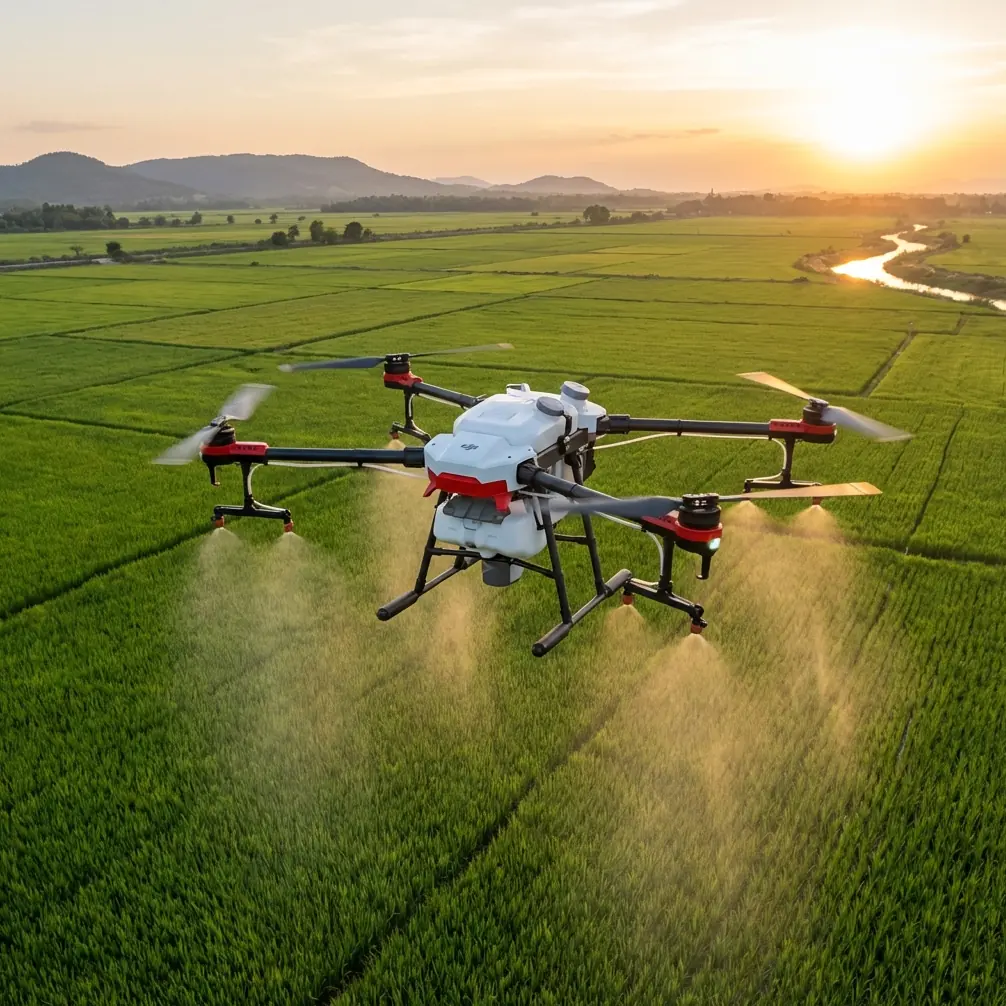
Agras T50 Guide for Low-Light Field Surveying: The One-Minute Setup That Changes Your Results
META: A practical Agras T50 tutorial for low-light field surveying, covering pre-flight setup, RTK fix discipline, battery management, swath awareness, nozzle calibration, and image-quality habits that improve usable field data.
Low-light field work exposes a simple truth most operators learn the hard way: weak survey results are often blamed on the aircraft when the real problem is preparation. That idea is not unique to drones. A recent photography piece aimed at everyday phone users made the same point from a different angle: image quality usually hinges less on hardware than on technique, and spending one minute adjusting key settings before capture can noticeably improve the final result. That lesson maps directly onto the Agras T50.
For operators surveying fields at dawn, dusk, or under flat overcast conditions, the T50 is capable enough. The bigger variable is whether the pilot treats setup as part of the data-collection process rather than a formality. In low light, small mistakes compound fast. A weak RTK Fix rate, rushed route planning, unverified nozzle calibration after a prior spray mission, or poor battery temperature discipline can turn an otherwise excellent aircraft into a source of inconsistent field records.
This tutorial is built around that practical mindset. Not theory. Not brochure talk. Just the operational habits that make the Agras T50 more reliable when visibility and contrast are working against you.
Why low-light surveying is less forgiving on the Agras T50
The Agras T50 is usually discussed in the context of application work, swath width, flow rates, and throughput. Those matter. But when you use the platform to survey fields in dim conditions, a different set of priorities comes forward.
Low light reduces visual separation between crop rows, standing water, tire tracks, lodged sections, and canopy density changes. If your aircraft positioning drifts, or if your planned lines don’t match the field geometry tightly enough, the resulting dataset becomes harder to interpret. This is where centimeter precision and a strong RTK lock stop being abstract specs and start affecting real agronomic decisions.
If the aircraft is off line by a small amount on each pass, those errors stack across a block. In bright conditions, an operator can sometimes visually catch alignment problems. At dusk, that margin shrinks. The survey still gets flown, but confidence in what you captured drops.
That is why I tell teams to think about low-light surveying the same way a careful photographer thinks about a difficult scene: the minute before capture often matters more than the minute during capture.
The one-minute setup rule
The photography article’s most useful operational idea was strikingly simple: spending one minute on key settings before taking the shot can raise quality by a wide margin. For Agras T50 work, that same one-minute rule should become standard practice before every low-light survey sortie.
Here is what that minute should cover.
1. Confirm RTK status before the aircraft leaves the edge of the field
Do not treat RTK as “probably fine.” Check the actual fix condition and wait for a stable solution. In low light, you have fewer visual cues to compensate for positional inconsistency, so centroid accuracy matters more, not less.
Operational significance: a stable RTK Fix rate supports repeatable flight lines and tighter geospatial consistency. If you are comparing drainage issues, emergence gaps, or treatment zones over time, centimeter precision is what allows you to trust those comparisons.
2. Verify the mission profile against field shape, not memory
Many crews revisit the same fields often enough to become casual. That is when route errors creep in. In dim conditions, start point selection, line direction, turn behavior, and overlap choices need a deliberate review.
Operational significance: even if your purpose is only visual assessment, clean line geometry reduces missed strips and duplicate coverage. If the T50 has just completed application work on nearby parcels, separating survey logic from spray logic matters. A field that was efficient to spray from one axis may be clearer to survey from another.
3. Check payload condition and nozzle state even for non-application flights
This sounds minor until it isn’t. The Agras T50 is a working machine, not a studio camera. If it has recently been used for spraying, residue, wet fittings, or partially fouled nozzles can influence airflow behavior, cleanliness, and readiness. Nozzle calibration belongs on your list because a machine transitioning between application and observation tasks should not carry hidden variables from the last job.
Operational significance: nozzle calibration and system cleanliness reduce the chance that residual liquid, asymmetrical flow remnants, or contamination interfere with safe, stable commercial operations. It also helps when you later return to spray work and need confidence that drift behavior and droplet delivery remain predictable.
4. Look at battery condition with more skepticism than you do at noon
This is where field experience matters. I’ve seen operators launch a low-light mission with a battery that was technically acceptable but thermally sluggish after sitting in a truck bed during a cool morning. The aircraft flew, but the voltage behavior under load became less graceful than expected near the middle of the block.
My preferred habit is simple: for dawn work, keep the next battery out of the cold airflow and rotate packs so the one going up has not spent too long exposed to low ambient temperature. Do not warm packs artificially in unsafe ways; just manage storage and sequencing intelligently. If you are running multiple sorties, choose the battery with the most stable recent behavior, not merely the one with nominal charge.
Operational significance: battery stability helps maintain more predictable power delivery during long passes and turns, which supports steadier flight performance when visual verification is harder. Low-light work is exactly where you want fewer surprises, not more.
That entire routine takes about a minute if your process is organized. Just as with phone photography, the gain is disproportionate to the time invested.
Borrowing a lesson from photography: hardware is rarely the main problem
The source material behind this article was about smartphone photography for ordinary users. Its central argument was refreshingly blunt: people often think their poor photos come from the phone, when the real issue is that they have not learned the method. The article said the topic would be taught through four pillars—basic settings, composition, light, and editing—with an emphasis on practical use rather than mystique.
That framework happens to fit the Agras T50 surprisingly well for field surveying.
Basic settings
On the T50 side, this means RTK status, mission parameters, return behavior, obstacle awareness settings appropriate to the environment, and battery readiness.
Composition
For a field survey, composition is route design. What angle best reveals row uniformity? Which direction makes waterlogging stand out? Where should the first pass begin so the most time-sensitive area is captured while light is still usable?
Light
This is the obvious one. Dawn and dusk are not just “darker.” They alter contrast and perception. Wet leaves can reflect unevenly. Bare soil can flatten visually. Shadows can either reveal micro-topography or conceal crop stress patterns depending on angle.
Editing
In drone operations, the equivalent is disciplined post-flight review. If your field notes, timestamps, and geospatial organization are sloppy, even a solid mission becomes harder to use.
The value of this analogy is practical. It reframes surveying as a capture discipline, not simply a flight task.
Swath width, overlap, and why application logic can mislead survey logic
Operators who know the Agras T50 primarily as an agricultural workhorse often think in terms of coverage efficiency. That instinct is useful, but low-light surveying is one of the moments when pure efficiency can undermine interpretability.
Swath width is productive language during spray operations because it relates directly to output and field capacity. During survey work, though, wide-coverage thinking can encourage line spacing that looks efficient on paper but creates visual ambiguity in the data. You do not always want the broadest possible pass strategy. You want the most readable one.
This matters especially if the survey is intended to support later spraying decisions involving spray drift management, treatment zoning, or nozzle choice. A survey that fails to clearly distinguish crop edge conditions, shelterbelt influence, or low-lying moisture bands can lead to poorer application planning later.
Operational significance: understanding swath width as a survey variable, not just an application metric, helps the T50 produce more decision-ready field observations. The best route is the one that reveals the field clearly, not the one that finishes fastest.
Multispectral thinking, even when the mission is primarily visual
Not every Agras T50 workflow is built around multispectral analysis, but the concept still has value. Low-light field assessment is often limited by what the human eye can confidently separate in real time. The operator should therefore adopt a multispectral mindset even if the immediate mission is not a full sensor-driven agronomic analysis.
What does that mean in practice? It means looking for patterns that do not announce themselves dramatically: subtle canopy density shifts, repeated stress signatures along irrigation lines, or marginal growth differences on field transitions. In dim light, these patterns can become easier to miss from a purely visual, seat-of-the-pants approach.
Operational significance: the more structured your observation habits, the less you depend on perfect light. That raises the usefulness of each sortie and improves downstream decisions around application timing, drift-sensitive areas, and follow-up inspection.
Weather resistance is not permission to be careless
The T50’s ruggedness and references such as IPX6K-level protection are reassuring in agricultural conditions. Mud, spray residue, and wet working environments are part of the job. But in low-light survey operations, durability features should be treated as contingency support, not an excuse to ignore cleanliness and visibility.
Water resistance does not eliminate lens contamination, connector checks, or the need to inspect exposed surfaces after prior fieldwork. If the aircraft has been through a demanding spray day and is then pressed into survey duty at dawn, the operator has to reset the machine mentally and physically.
Operational significance: robust environmental protection helps the aircraft survive harsh farm routines, but usable survey data still depends on disciplined prep. Durability protects uptime. It does not replace process.
A practical low-light workflow for the Agras T50
Here is the sequence I recommend to agronomy teams and farm operators using the T50 for early or late field surveys:
- Arrive with enough time to evaluate the actual light, not just the clock.
- Use the one-minute setup rule before powering fully into mission mode.
- Confirm stable RTK lock and don’t launch on assumption.
- Choose line orientation based on what field feature you need to reveal.
- Review battery sequence and avoid sending up the coldest or least stable pack first.
- Check for residue or carryover from earlier spray operations, including nozzle condition.
- Fly the highest-priority zone first while contrast is still workable.
- Log immediate observations after landing before memory blurs details.
- If you need a second opinion on route setup or field workflow, send your notes here: message an Agras specialist
- Reassess whether the next sortie is actually improving the dataset or just adding volume.
That last point matters more than people admit. More flights do not automatically mean better information.
The real edge is consistency
The Agras T50 is not held back by a lack of capability in these scenarios. Most low-light survey problems come from treating a demanding mission like a routine one. The phone photography article that inspired the framing here was meant for ordinary users trying to make better images. Its advice was grounded, not glamorous: the gap between average and strong results usually comes down to technique, and a single minute spent adjusting settings before capture can make a visible difference.
That lesson belongs in agricultural drone operations.
When you apply it to the T50, it shows up as cleaner RTK discipline, sharper route choices, better battery management, more respect for nozzle calibration after spray tasks, and a stronger understanding of how light changes what the field reveals. The aircraft does the flying. The operator decides whether the outcome is merely completed or genuinely useful.
That distinction is where professional field surveying begins.
Ready for your own Agras T50? Contact our team for expert consultation.