
Agras T50 for High-Altitude Construction Surveying
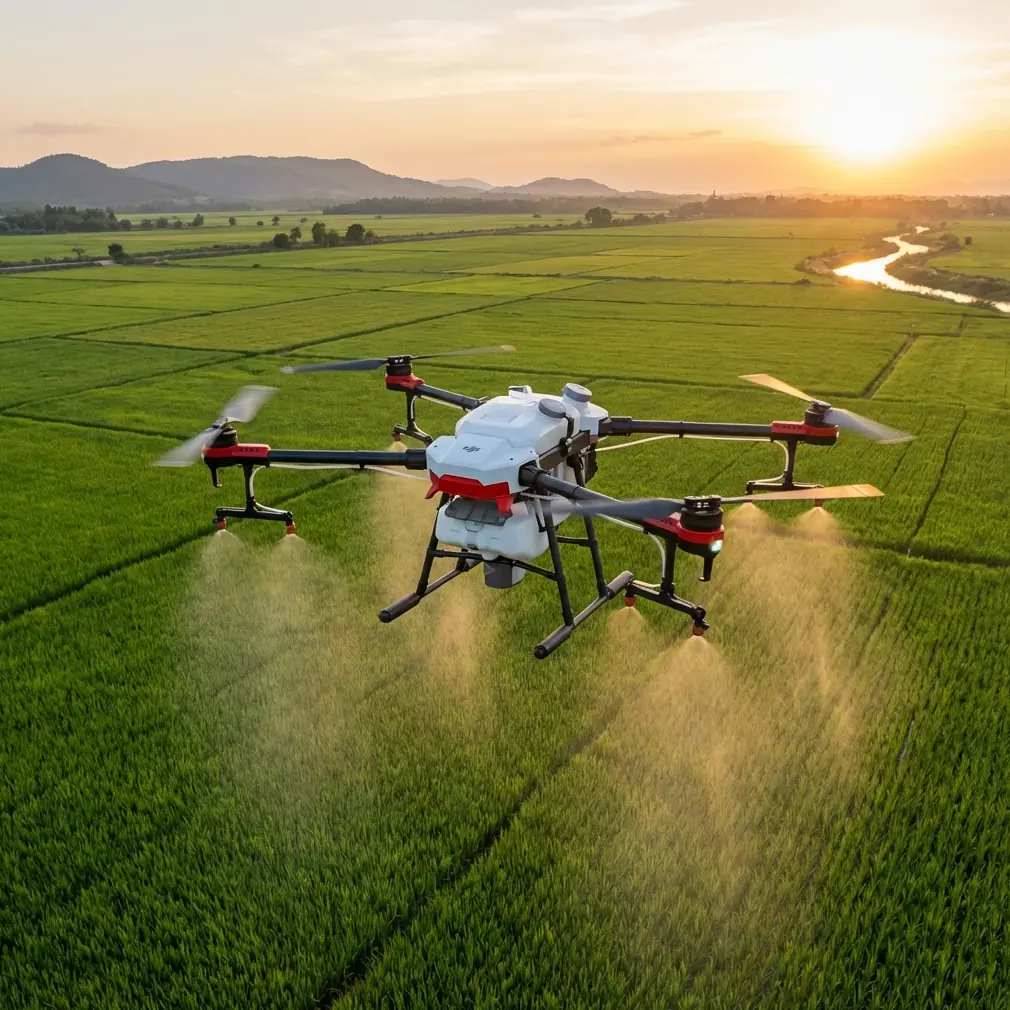
Agras T50 for High-Altitude Construction Surveying: What Actually Matters in the Field
META: A technical review of the Agras T50 for high-altitude construction site surveying, covering RTK stability, electromagnetic interference, weather sealing, swath planning, and operational precision.
High-altitude construction surveying exposes every weak point in a drone workflow. Air density drops. Wind behavior gets less predictable around unfinished structures and ridgelines. GNSS performance can look stable one minute and degrade the next as steel, temporary power systems, and relay equipment create localized electromagnetic noise. Under those conditions, the Agras T50 becomes interesting not because it was designed first as a survey platform, but because several of its core engineering traits translate surprisingly well into demanding site operations when the mission is planned with discipline.
That distinction matters. The T50 is usually discussed in the context of agricultural work, especially liquid application and broad-acre efficiency. But on elevated construction sites, the more revealing question is different: can a platform built for harsh, repetitive field duty maintain positional discipline, payload balance, and operational continuity in an electrically noisy, weather-exposed environment? In many cases, yes—provided the team understands where the aircraft’s strengths carry over directly and where mission design has to compensate.
From an engineering standpoint, the first operational advantage is not a camera spec. It is resilience. A construction survey crew working at elevation rarely has perfect staging conditions. Dust, blown moisture, wet access roads, and repeated vehicle transfers are normal. The T50’s IPX6K-rated protection is not a brochure footnote in this scenario. It affects uptime. When an aircraft can tolerate aggressive exposure to water ingress and site contamination better than lighter-duty platforms, the team spends less time interrupting work over environmental uncertainty. That does not make the aircraft invulnerable, but it does change the threshold for when operations must pause.
The second carryover advantage is precision infrastructure. If the site requires repeatable measurement over stockpiles, cut-and-fill progress, retaining walls, or temporary haul roads, centimeter precision is the benchmark that separates pretty imagery from operationally useful data. With a strong RTK workflow, the T50 can support that level of positional confidence. On a mountain project or tower-adjacent site, though, the headline is not merely that RTK exists. The real issue is RTK fix rate under interference and terrain masking.
This is where crews often make a basic mistake. They see intermittent solution drops and assume the problem is satellite geometry alone. In practice, electromagnetic interference can be just as disruptive, especially near high-voltage lines, tower cranes, site repeaters, and temporary communications hardware. A high-altitude site concentrates these risks because equipment gets installed in vertical layers, and the aircraft may pass through multiple reflective and noisy zones in a single flight path. When the RTK fix rate starts oscillating, do not treat antenna placement as an afterthought. Small antenna adjustments—both on the base setup and in how the drone is oriented during initialization—can materially improve signal integrity.
I have seen crews gain more stable lock simply by relocating the RTK base away from metal containers and generator clusters, then adjusting the antenna to preserve a cleaner sky view and greater separation from site transmitters. The effect is operational, not theoretical. A stronger fix rate reduces the need for reflights, tightens alignment between mission passes, and improves confidence when comparing sequential terrain models. On a steep construction project, where each sortie may already be constrained by narrow weather windows, that reliability saves far more than time. It preserves continuity in the dataset.
There is another subtle point here. Many high-altitude construction missions are not pure photogrammetry jobs. They are hybrid assessments. The team may need surface condition review, drainage confirmation, edge inspection, and material distribution analysis in one mobilization. That is why multispectral conversations occasionally surface even on non-agricultural sites. While multispectral is not a default requirement for most civil projects, it can add value when vegetation encroachment, erosion behavior, or water-stress patterns around temporary slope stabilization need to be documented. The T50 enters this discussion because its platform logic—high endurance under demanding field conditions, stable navigation support, and broad area coverage—fits the operational rhythm of those mixed missions, even when the payload strategy must be carefully matched to the survey objective.
Broad area coverage leads directly to swath width, which is usually framed as a spraying metric. On a construction survey, swath width still matters, just in a translated sense. It defines how efficiently the aircraft can cover a corridor or pad while preserving the overlap needed for mapping or surface analysis. At altitude, wind shear and crosswinds make wide passes less forgiving. A crew tempted to maximize coverage in each line may discover that inconsistent lateral displacement degrades edge fidelity across the dataset. The smarter approach is to treat swath planning conservatively. Narrow the effective working width when the aircraft is operating over uneven terrain or near abrupt vertical structures. The mission takes longer, but the data cleans up dramatically.
This becomes even more critical if the same aircraft is supporting site treatment tasks as well as survey documentation. The T50’s agricultural heritage means operators may move between imaging and application-oriented workflows. On a high-altitude site, spray drift becomes a serious risk variable, not merely an agronomic one. Wind can accelerate around scaffold gaps, retaining walls, and exposed corners, carrying droplets off target and into sensitive areas. If the aircraft is used for dust suppression additives, revegetation support on embankments, or limited treatment work around the project perimeter, drift control has to be built into route design. That includes lower-altitude passes where practical, tighter nozzle calibration, and flight scheduling that respects localized gust behavior rather than relying on broad weather app averages.
Nozzle calibration deserves more attention than it usually gets. In mountain or elevated construction environments, pressure behavior and droplet consistency can shift enough to affect application quality, especially if operators are moving quickly between temperature bands during the day. Calibration is not just about output volume. It shapes drift risk, surface coverage, and whether the aircraft’s work creates a secondary problem for adjacent crews. In that sense, nozzle calibration and survey repeatability are linked by the same discipline: both depend on refusing to trust default settings once field conditions deviate from the norm.
The T50 also benefits from being built for repetitive, high-load operations. That matters during long site days. Construction survey teams often work in bursts—mobilize, capture, review, then relaunch after site activity shifts. A fragile airframe or lightly protected system tends to accumulate delays under that pattern. The T50’s design philosophy is different. It assumes rough transport, repeated deployment, and practical handling by teams who are not operating in lab conditions. For high-altitude jobs where access roads can be punishing and setup zones are often improvised, that toughness supports more consistent sortie execution.
Still, no serious reviewer should pretend the T50 is automatically the right answer for every survey case. If the job requires ultra-light imaging, highly specialized mapping payloads, or long-endurance fixed-wing coverage across vast linear assets, other categories may fit better. The reason the T50 deserves consideration is narrower and more specific. It suits operations where the survey mission exists inside a harsh, multi-role field environment—where precision, environmental sealing, and repeat deployment matter as much as payload theory.
The practical workflow I recommend starts before takeoff. Establish the RTK base in a zone with the cleanest possible electromagnetic profile, not merely the most convenient parking area. Verify fix stability on the ground and watch for fluctuations before committing to the mission. If the site includes tower cranes, temporary substations, or radio backhaul units, note their locations and anticipate directional dead spots. During initialization, be deliberate about antenna orientation and aircraft placement; these small adjustments often determine whether you begin with a stable centimeter-level solution or spend the next 15 minutes chasing inconsistency.
Next, plan the mission around terrain and structure-induced airflow, not just target boundaries. Reduce effective swath width near edges, cut slopes, and vertical assemblies. If the aircraft is performing any liquid-related task, recalibrate nozzles after meaningful environmental shifts and treat spray drift as a site safety issue. If the operation includes imaging for topographic comparison, protect overlap margins instead of trying to squeeze maximum area into each battery cycle. On high-altitude projects, efficiency comes from fewer compromised passes, not from wider ones.
Weatherproofing should also be used intelligently. IPX6K protection gives the T50 an advantage in dirty or wet site conditions, but crews should not let that encourage sloppy maintenance. Water resistance helps preserve operational continuity; it does not cancel the need for post-flight inspection, connector checks, and contamination control around moving parts and sensors. Reliability in the field is cumulative. It is earned in the reset between sorties as much as in the flight itself.
For teams building a repeatable program, data discipline matters just as much as flight discipline. Record RTK performance, note interference zones, and compare fix behavior between mobilizations. Over time, patterns emerge. You will discover which crane positions create the worst reflection environment, which staging areas preserve the best satellite visibility, and which times of day generate the most troublesome gust corridors. That site intelligence is often more valuable than any single flight improvement because it turns the aircraft from a capable machine into part of a stable operational system.
This is also why the T50’s relevance to high-altitude construction surveying is easy to underestimate. People hear “Agras” and think only of crop treatment. In reality, the platform’s utility in this setting comes from the intersection of ruggedization, repeatability, and positional control. Centimeter precision is only useful when the aircraft can maintain it in a messy electromagnetic environment. Broad area capability is only useful when swath strategy respects mountain airflow. Liquid handling capacity is only useful when spray drift and nozzle calibration are managed with engineering rigor. The T50 does not erase those challenges. It gives a disciplined crew a stronger starting point.
If you are evaluating deployment strategy on a difficult site, the smartest next step is not a generic brochure comparison. It is a mission-specific review of interference sources, RTK behavior, coverage geometry, and environmental exposure. If that conversation would help, you can reach out through this quick field coordination link: message our UAV team here.
The bottom line is straightforward. The Agras T50 is not interesting for high-altitude construction surveying because it can simply fly there. Plenty of aircraft can fly there. It becomes compelling when the job combines harsh conditions, repeat mobilization, and a need for dependable centimeter-level positioning in the presence of real-world interference. In those situations, details such as IPX6K protection and RTK fix rate are not marketing ornaments. They directly shape whether the aircraft produces reliable outputs or burns time in recovery and rework.
Ready for your own Agras T50? Contact our team for expert consultation.