
Agras T50 on Cold Coasts and Hot Flats: A Field Report
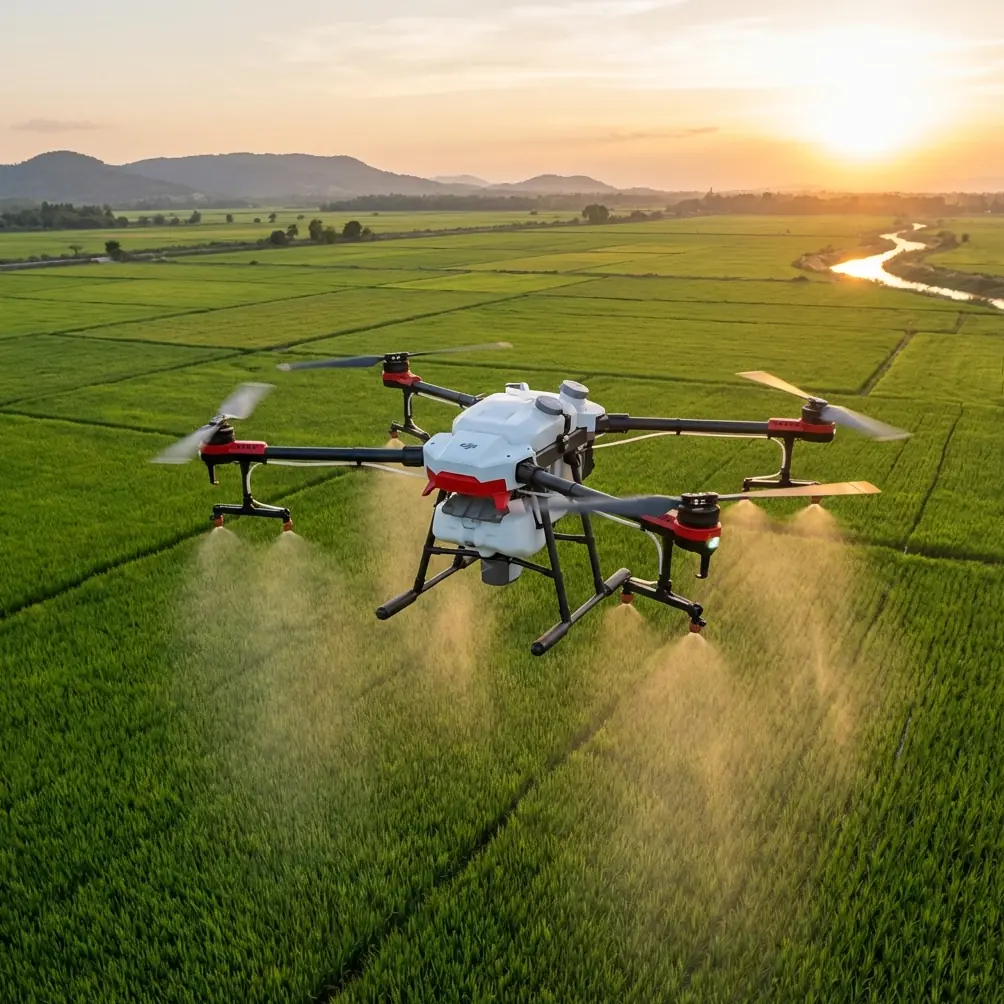
Agras T50 on Cold Coasts and Hot Flats: A Field Report on Survey Discipline, Battery Strategy, and Precision Workflow
META: Practical field report on using the Agras T50 for coastline surveying in extreme temperatures, with battery management, RTK precision, overlap targets, data workflow, and environmental control tips.
People do not usually think of the Agras T50 as a coastline survey aircraft first. They think agriculture. Heavy coverage. Productive hectares. But on difficult shorelines—salt air, gusty crosswinds, reflective water, abrupt temperature swings—the same traits that make a platform dependable in field operations start to matter for survey work too: repeatability, stable routing, disciplined preflight setup, and the ability to keep performance consistent when conditions are trying to pull the mission apart.
That is the real story with coastal surveying in extreme temperatures. It is not about raw brochure capability. It is about whether the aircraft, operator, and data pipeline can maintain standards when the environment is unstable.
I have seen two things separate usable coastal datasets from expensive rework. The first is flight consistency. The second is what happens before and after the aircraft leaves the ground: numbering aircraft correctly when working with multiple units, managing batteries so voltage behavior stays predictable, and processing imagery with overlap and geometry rules that protect the final map.
For anyone building a serious Agras T50 workflow for shoreline documentation, erosion monitoring, embankment inspection, or saltmarsh boundary updates, those details deserve more attention than they usually get.
Coastlines punish sloppy setups
Surveying a coastline is not like flying over a uniform inland parcel. Wind direction changes faster near water. Surface reflectivity can confuse image interpretation. Temperature gradients can hit hard, especially when the day starts cold and brightens quickly or when exposed rock and sand hold heat while sea air remains cool. That matters because image quality, flight stability, and battery behavior all become less predictable.
This is where the T50’s practical value shows up. Operators care about centimeter precision and RTK fix rate not because those phrases sound technical, but because shoreline edges, drainage structures, revetments, and narrow access tracks need positional confidence. If you are documenting change over time, a clean RTK-backed workflow reduces ambiguity between one survey and the next. A coastline map that shifts because of weak positioning is not a map of change. It is a map of uncertainty.
The same applies to swath width and route design. In coastal work, wider coverage is only useful if the overlap stays controlled and the aircraft holds its lines well enough for reliable reconstruction. Too many teams chase speed and then discover that data stitching becomes the bottleneck.
The overlap numbers still matter, even with a modern platform
One of the most useful technical references for this kind of work is not flashy at all. It is the basic photogrammetric standard: forward overlap at 60% ± 5% and side overlap at 30% ± 5%. Those numbers come from established UAV mapping practice, and they remain operationally significant in coastal environments because shoreline terrain is rarely simple. You are often dealing with irregular edges, elevation transitions, and repeated textures from surf, sand, stone, and vegetation.
There are more constraints hidden in that same reference that good operators should respect: image tilt should remain at or below 2°, image rotation should not exceed 6°, and route curvature should stay within 3%. These are not abstract academic limits. They are the thresholds that help your downstream reconstruction software avoid turning a windy flight into a cleanup project.
On an Agras T50, that means resisting the temptation to let conditions dictate a looser standard. If crosswinds are pushing the route enough that your line geometry starts bending or your camera perspective is inconsistent, it is often better to shorten the mission window, change your route direction, or split the survey into sections rather than force a single pass.
That is especially true along cliffs, breakwaters, and estuary transitions where the terrain can introduce sudden visual complexity. A strong aircraft helps, but stable data still comes from disciplined mission design.
Multi-aircraft workflows are only efficient if they are organized properly
Large coastlines often force teams into multi-aircraft operations. This is where a small educational drone reference actually teaches a lesson many commercial teams ignore: identifier discipline.
In one documented multi-drone workflow, aircraft can be assigned numbers using either the SN code or the WiFi name (SSID), with the SSID beginning with RMTT. The guide recommends numbering aircraft in order, 1 through 10, for formation and synchronized tasks. It also describes a network scan process that can connect 3 aircraft with a 30-second timeout, and a simple LED confirmation method where a specific aircraft showing a green light confirms connection.
That is not about the Agras T50 directly, but the operating principle absolutely applies. If you are running several aircraft and battery sets along a coastline, naming discipline saves real time and prevents real mistakes. I advise teams to mirror this logic in their T50 fleet management:
- Number aircraft consistently.
- Match each aircraft with its battery rotation group.
- Match route files to aircraft IDs.
- Record any calibration changes by aircraft number, not by memory.
It sounds mundane until a cold morning launch gets delayed, one aircraft swaps batteries out of sequence, and the wrong route is uploaded to the wrong platform. Suddenly your overlap plan, timestamp logic, and RTK records are misaligned. In coastal survey work, that can be enough to compromise a day’s dataset.
The lesson from the multi-drone training reference is simple: synchronization begins long before takeoff. For shoreline work, that translates into traceable aircraft identity, network discipline, and role clarity when multiple crews are working the same strip of coast.
A battery management tip that actually changes field performance
Here is the field habit that has saved me more trouble than any single software setting: never let your battery strategy be dictated by convenience when working in extreme temperatures.
On cold coasts, crews often leave packs in the vehicle until needed. On hot coastal flats, they do the opposite and leave everything out in the open to “stay ready.” Both habits create inconsistency.
My rule is this: stage batteries in a temperature-buffered case and rotate them in a written sequence tied to aircraft ID. Do not judge readiness by how the pack feels in your hand. Judge it by whether it has been stabilized long enough to avoid a sudden voltage drop after climb-out or a heat-soaked recovery cycle before the next sortie.
Why this matters on a T50-style workflow is straightforward. Coastal surveying often involves repeated short missions with tight windows between gust fronts or tide changes. If one battery set is colder or hotter than the others, your climb performance, reserve behavior, and confidence in mission completion stop being uniform. That makes route planning harder and increases the chance that the final leg of a mission is flown under avoidable stress.
The practical routine I recommend:
- Assign battery groups to aircraft numbers.
- Keep packs out of direct sun and off cold metal surfaces.
- Rotate in order, not by guesswork.
- Add a short hover and systems check at the start of the first sortie after a temperature transition.
- If the morning warms quickly, shorten early flights rather than assume the same reserve model still applies.
That is not glamorous advice. It is the kind of thing experienced crews do because they have already learned the alternative.
Processing discipline is where survey value is either preserved or lost
Field teams like to focus on flight execution, but in shoreline work the processing chain has equal weight. One technical reference on mountain-area water conservancy mapping makes a sharp point: UAV remote sensing uses relatively small-format digital cameras, which creates a high image count and increases the burden on geometric and radiometric correction. In other words, the challenge is not just collecting images. It is making them coherent.
That reference also outlines a low-altitude processing workflow built around project management, strip setup, and image preprocessing, followed by automated aerial triangulation. One standout detail is the use of intelligent point selection across corresponding flight strips and error rejection through a local free-network adjustment using 6 images from adjacent strips. That matters because coastlines are full of repetitive textures and low-feature areas where weak tie points can quietly degrade reconstruction.
For an Agras T50 survey team, the operational takeaway is this: choose your processing environment based on how well it handles strip logic, camera geometry correction, and tie point quality—not just how fast it generates a preview. A quick mosaic is not the same thing as a defensible survey output.
If your workflow includes multispectral layers for vegetation stress near coastal agriculture or wetland transition monitoring, data discipline becomes even more important. Misalignment between RGB structure and multispectral interpretation can lead to poor decisions around drainage, salinity spread, or embankment maintenance.
Environmental protection matters more near salt than many teams admit
This is where an IPX6K-class mindset earns respect, even beyond any official spec discussion. Coastlines expose aircraft to blown spray, saline residue, and abrasive particulates. Even if your mission is not flying directly through visible moisture, airborne salt finds its way into surfaces, joints, and exposed connection points.
That has two consequences. First, post-flight cleaning is not optional. Second, nozzle calibration and spray-system housekeeping still matter even if your T50 is being adapted around survey-adjacent tasks rather than conventional crop work. Residual contamination, imbalanced fluid components, or neglected rinsing can affect weight distribution, reliability, and maintenance intervals. And if your work alternates between coastal agricultural treatment and coastal mapping support, spray drift awareness remains part of mission planning because nearby water, public paths, and sensitive vegetation narrow your margin for error.
The best crews treat environmental exposure as cumulative, not event-based. You do not wait for obvious corrosion to start caring about salt.
RTK is only useful if you respect fix quality in the moment
A strong RTK workflow gives the T50 real credibility in survey-adjacent operations, but the phrase “centimeter precision” is overused. Precision is earned by maintaining a reliable fix rate throughout the mission, not by checking a box during setup.
On coastlines, satellite geometry can be affected by terrain edges, built structures, and temporary obstructions near harbors or sea defenses. The operator’s job is to watch for consistency, not just initial lock. If the fix quality degrades, the smart move is often to pause and restart a segment rather than hope the software will smooth things later.
That sounds conservative. It is also cheaper than revisiting the site.
When to divide the mission
One of the most common mistakes in extreme coastal surveying is trying to cover too much under one flight logic. The shoreline may look continuous on a map, but operationally it often contains different survey environments stitched together:
- open beach with wind exposure
- rocky edge with elevation breaks
- marsh or mudflat with low texture
- embankment or infrastructure corridor with hard edges
Each section benefits from its own route angle, speed, and overlap strategy. If one segment needs tighter control to stay near the 2° tilt and 6° rotation thresholds, split it out. If one section is more vulnerable to route bending, protect that line geometry before worrying about total daily acreage.
Efficiency in coastal survey work is not flying the fewest missions. It is collecting the fewest compromised datasets.
A final field note for serious operators
If you are building an Agras T50 workflow for coastline surveys, think less about category labels and more about operational behavior. Stable route execution. Traceable aircraft numbering. Controlled battery temperature. Conservative overlap planning. Careful RTK monitoring. A processing chain that can reject weak matches and preserve geometry.
Those are the habits that let a platform perform beyond its expected role.
If you are comparing setup options or want to sanity-check a coastal mission plan, I usually tell teams to get a second pair of eyes on route geometry and battery rotation before they head to the site. A quick message through this field coordination channel can save a full day of rework when tides, wind, and temperature are all moving against you.
The Agras T50 is most convincing in the field when it is treated as part of a disciplined system. That is what coastal surveying in extreme temperatures demands. Not optimism. Not improvisation. Standards.
Ready for your own Agras T50? Contact our team for expert consultation.