
Spraying Vineyards with Agras T50 | Low Light Tips
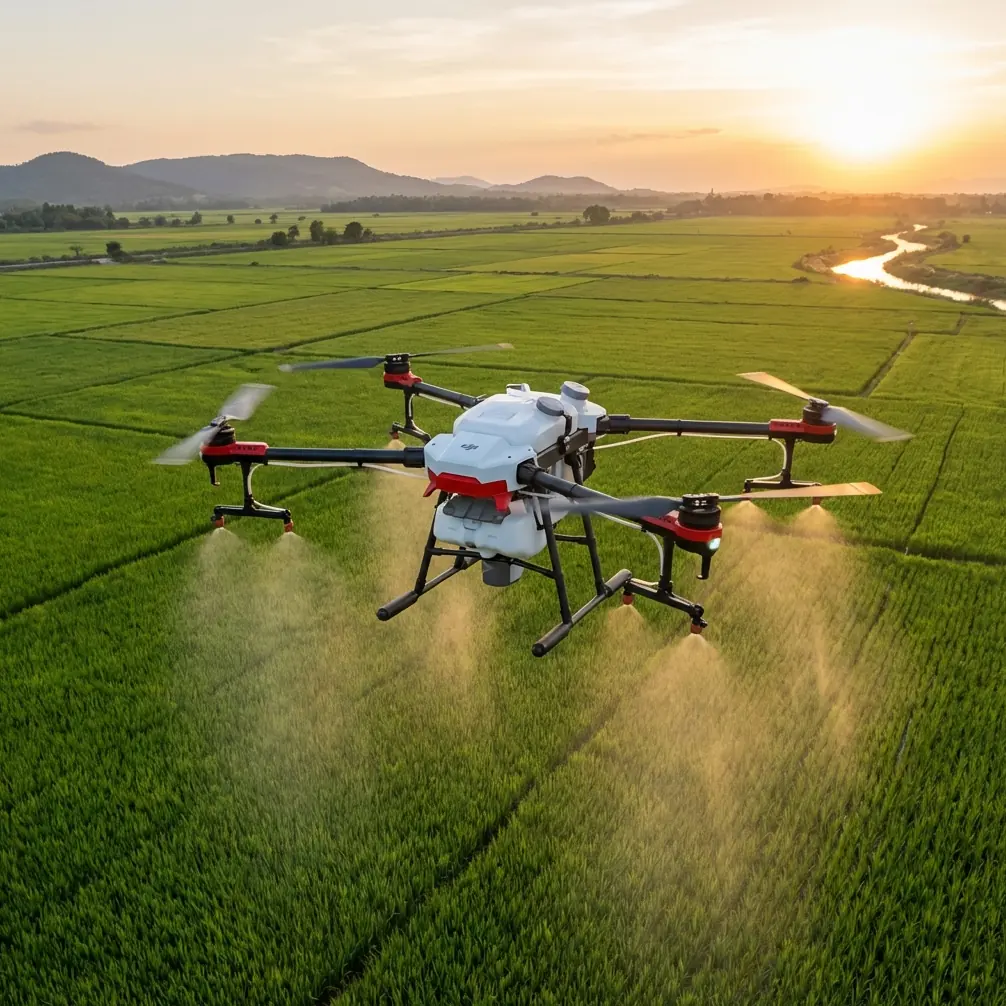
Spraying Vineyards with Agras T50 | Low Light Tips
META: Master vineyard spraying in low light with the Agras T50. Expert tips on nozzle calibration, spray drift control, and RTK precision for optimal grape coverage.
TL;DR
- Low light spraying between dusk and dawn reduces spray drift by up to 60% compared to midday applications
- The Agras T50's dual atomization system maintains consistent droplet size even when visibility drops below 500 meters
- Proper RTK Fix rate optimization ensures centimeter precision navigation through narrow vineyard rows
- IPX6K-rated construction allows operation in morning dew conditions without equipment damage
Vineyard managers lose an estimated 15-20% of spray efficacy to drift during peak daylight hours. The Agras T50 transforms low-light windows into your most productive spraying periods—delivering precise coverage when atmospheric conditions naturally suppress drift.
Three years ago, I consulted for a Napa Valley operation struggling with uneven fungicide distribution across their Cabernet blocks. Their ground sprayers couldn't navigate the steep terrain efficiently, and midday drone applications resulted in significant chemical waste. Switching to dawn operations with the Agras T50 changed everything. This article breaks down exactly how to replicate those results in your vineyard.
Understanding Low Light Spraying Advantages
Temperature inversions during early morning and late evening create ideal spraying conditions. When air near the ground is cooler than air above, vertical air movement essentially stops. This atmospheric stability keeps spray droplets on target rather than carrying them into neighboring properties or waterways.
The Agras T50 capitalizes on these conditions through its Active Phased Array Radar system. Unlike optical sensors that struggle in dim conditions, this radar maintains full obstacle detection capability down to zero lux environments. You're not sacrificing safety for efficacy.
The Science Behind Drift Reduction
Spray drift occurs when droplets smaller than 150 microns become airborne. During hot afternoon conditions, rapid evaporation shrinks droplets mid-flight, increasing drift potential exponentially.
Low light periods offer:
- Lower temperatures reducing evaporation rates
- Higher relative humidity maintaining droplet integrity
- Reduced wind speeds typical of dawn and dusk
- Stable atmospheric layering preventing vertical dispersion
- Cooler leaf surfaces improving chemical absorption
Expert Insight: The optimal spraying window occurs when temperatures drop below 21°C with relative humidity above 60%. The Agras T50's onboard weather sensors display real-time conditions, allowing you to maximize every minute of ideal conditions.
Configuring the Agras T50 for Vineyard Operations
Vineyard architecture presents unique challenges. Rows typically span 1.8 to 3.5 meters apart with canopy heights varying from 1.2 to 2.4 meters. The T50's swath width adjustability—ranging from 4 to 11 meters—requires careful calibration for these tight spaces.
Nozzle Calibration for Grape Canopies
The dual atomization system on the Agras T50 offers both centrifugal and pressure nozzle options. For vineyard work, I recommend the centrifugal atomizers with these settings:
- Droplet size: 150-300 microns for fungicides, 300-450 microns for insecticides
- Flow rate: 2.4-4.8 liters per minute depending on canopy density
- Spray pressure: Maintain 2-4 bar for consistent atomization
- Rotor speed: 8,000-12,000 RPM based on target droplet spectrum
The downwash from the T50's eight rotors creates significant canopy penetration. This airflow pushes spray deep into the grape clusters where fungal pressure concentrates. However, excessive speed reduces this penetration effect.
Flight Speed Optimization
Slower flight speeds increase coverage quality but reduce operational efficiency. Finding the balance requires understanding your specific vineyard conditions.
| Canopy Density | Recommended Speed | Coverage Rate | Penetration Quality |
|---|---|---|---|
| Light (Early Season) | 6-7 m/s | 12 ha/hour | Excellent |
| Medium (Mid Season) | 5-6 m/s | 9 ha/hour | Very Good |
| Dense (Pre-Harvest) | 4-5 m/s | 7 ha/hour | Good |
| Very Dense | 3-4 m/s | 5 ha/hour | Adequate |
Pro Tip: Reduce flight speed by 1 m/s during low light operations. The decreased visibility margin requires additional reaction time for the obstacle avoidance system, and the slower pace improves spray deposition uniformity.
RTK Precision in Vineyard Navigation
Standard GPS accuracy of 1-2 meters creates problems in vineyard environments. A drone drifting even 50 centimeters off-course risks damaging vines or missing coverage zones entirely. The Agras T50's RTK positioning system delivers centimeter precision—typically 1-2 centimeters horizontal accuracy.
Achieving Consistent RTK Fix Rate
Your RTK Fix rate determines positioning reliability. Anything below 95% Fix rate introduces unacceptable navigation uncertainty. Several factors affect this metric in vineyard settings:
Base station placement matters enormously. Position your RTK base station on high ground with clear sky visibility in all directions. Avoid locations near metal structures, power lines, or dense tree canopy that could cause multipath interference.
Satellite constellation selection through the DJI Agras app allows you to optimize for your geographic location. In North America, enabling both GPS and GLONASS typically provides the best Fix rates. European operations benefit from adding Galileo to the constellation mix.
Initialization procedures should occur before entering the vineyard airspace. Allow 2-3 minutes for the RTK system to achieve stable Fix status while hovering over an open area. Rushing this step leads to mid-mission degradation.
Multispectral Integration for Variable Rate Application
The T50 platform supports multispectral sensor integration, enabling variable rate application based on vine health indicators. NDVI mapping conducted during daylight hours can inform spray concentration adjustments during low-light operations.
Stressed vines often require different treatment protocols than healthy specimens. By linking multispectral data to spray maps, you can:
- Increase fungicide concentration on disease-prone zones
- Reduce chemical application on healthy sections
- Target specific row segments showing pest pressure
- Optimize input costs while improving outcomes
This precision approach typically reduces total chemical usage by 20-35% while improving disease control outcomes.
Technical Specifications Comparison
Understanding how the T50 compares to alternatives helps justify the investment and set realistic expectations.
| Specification | Agras T50 | Previous Generation T40 | Competitor Average |
|---|---|---|---|
| Tank Capacity | 40L (spray) / 50kg (spread) | 40L / 50kg | 25-30L |
| Max Flow Rate | 16 L/min | 12 L/min | 8-10 L/min |
| Swath Width | 4-11m adjustable | 4-9m | 4-7m |
| RTK Accuracy | 1-2cm horizontal | 1-2cm | 2-5cm |
| Obstacle Detection | 360° radar + binocular | Radar only | Optical only |
| IP Rating | IPX6K | IP67 | IP54-65 |
| Flight Time (loaded) | 18-21 min | 15-18 min | 12-15 min |
| Operating Temp | -20°C to 45°C | -10°C to 45°C | 0°C to 40°C |
The IPX6K rating deserves special attention for low-light operations. Morning dew accumulation and potential fog exposure demand robust water resistance. This rating indicates protection against high-pressure water jets—far exceeding what environmental moisture presents.
Common Mistakes to Avoid
Years of consulting on agricultural drone operations have revealed consistent error patterns. Avoiding these mistakes dramatically improves your vineyard spraying outcomes.
Ignoring wind gradient effects: Ground-level wind measurements don't reflect conditions at spray height. The T50's onboard anemometer provides accurate readings at operational altitude. Trust the drone's sensors over ground-based weather stations.
Overlapping flight paths excessively: Some operators set 50%+ overlap thinking more coverage equals better results. In reality, overlap beyond 30% wastes chemical and flight time while potentially causing phytotoxicity from over-application.
Neglecting nozzle maintenance: Centrifugal atomizers require cleaning after every 10-15 flight hours. Residue buildup alters droplet size distribution, undermining your careful calibration work. The T50's quick-release nozzle system makes this maintenance straightforward.
Flying too high over canopy: Maintaining 2-3 meters above canopy height optimizes the downwash penetration effect. Higher altitudes reduce this benefit significantly. The terrain-following radar on the T50 maintains consistent height automatically, but only if properly calibrated to your canopy profile.
Skipping pre-flight calibration in new blocks: Each vineyard block has unique characteristics. Spending 10 minutes on calibration flights before full operations prevents hours of correction work later.
Frequently Asked Questions
Can the Agras T50 operate in complete darkness?
Yes, the T50's radar-based obstacle avoidance functions independently of visible light. However, regulations in most jurisdictions require visual line of sight operations, which effectively limits true nighttime flying. Dawn and dusk operations—during civil twilight—provide the best balance of regulatory compliance and optimal spraying conditions. The aircraft's LED position lights maintain visibility to the operator during these low-light periods.
How does morning dew affect spray efficacy?
Light dew actually improves spray adhesion by providing a moisture film that helps droplets spread across leaf surfaces. Heavy dew can cause excessive runoff, diluting chemical concentration. The T50's adjustable flow rate allows you to reduce application volume when dew is present, maintaining target concentration while accounting for existing moisture. Monitor leaf wetness and reduce flow rate by 15-25% when visible dew is present.
What battery management strategy works best for low-light operations?
Temperature significantly affects battery performance. Morning operations often encounter temperatures 10-15°C below afternoon peaks, reducing battery capacity by 10-20%. Pre-warm batteries to 25-30°C before flight using the DJI battery warming station. Plan for 15% fewer hectares per battery charge during cold morning operations compared to warm afternoon benchmarks. Always maintain at least 20% reserve capacity when returning to the landing zone.
The Agras T50 transforms challenging low-light vineyard conditions into your most productive spraying windows. By understanding the interplay between atmospheric conditions, equipment capabilities, and proper calibration, you can achieve coverage results that ground equipment simply cannot match.
Ready for your own Agras T50? Contact our team for expert consultation.