
Agras T50 in Extreme-Temperature Venues: What Actually
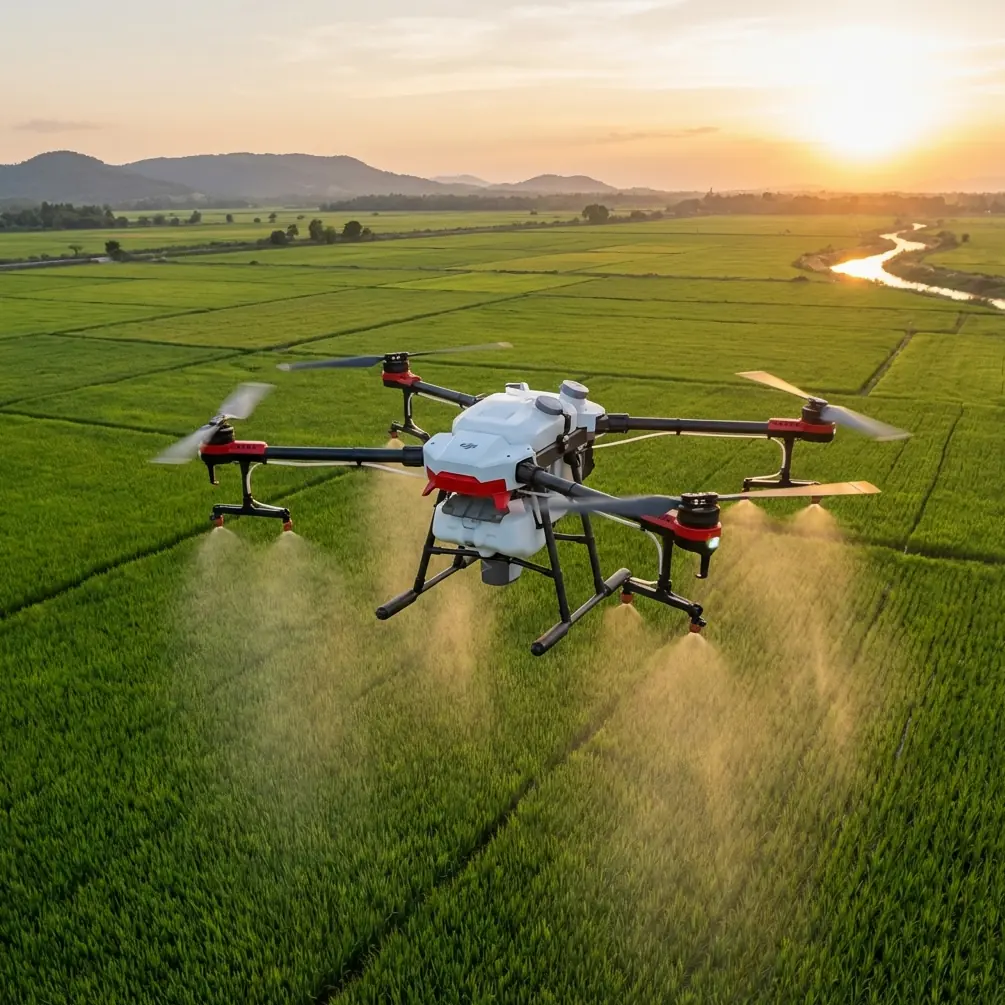
Agras T50 in Extreme-Temperature Venues: What Actually Matters When Conditions Turn Unforgiving
META: An expert deep dive into how the Agras T50 fits extreme-temperature spraying venues, with practical insight on spray drift, nozzle calibration, RTK reliability, swath control, and field-ready operation.
I have spent enough time around agricultural drone programs to know that “extreme conditions” is often used too loosely. A warm afternoon is not extreme. Neither is a cool morning with calm air. Real difficulty starts when a spraying venue pushes both machine stability and operator judgment at the same time: high-heat radiance off hard surfaces, cold starts that slow fluid response, abrupt density changes in the air column, and airflow patterns that turn a neat treatment plan into drift risk.
That is where the discussion around the Agras T50 becomes more interesting than a spec-sheet recap.
The challenge is not simply whether a drone can fly in harsh weather. The real question is whether it can keep spray output consistent, maintain positioning confidence, and preserve useful swath width when temperature stress begins affecting droplets, electronics, and timing. In venues such as orchards near reflective surfaces, seed production plots, greenhouse-adjacent fields, or large managed grounds with hard-packed perimeter roads, those details determine whether the application remains agronomically sound.
The problem I kept seeing in difficult venues
Years ago, I was asked to review a spray program in a venue where afternoon temperatures rose quickly above the comfortable working range for the crew. The fields were manageable in size, but the microclimate was not. Heat lifted off compacted access lanes. Border vegetation created odd turbulence. Operators were doing what many teams do under pressure: shortening setup time, widening assumptions, and trusting that a capable aircraft would compensate for the venue.
It never does.
The most common failures were not dramatic. They were subtle. A slightly unstable droplet pattern. Small inconsistencies in line spacing. Marginal nozzle calibration drift after repeated cycles. Positioning performance that looked acceptable on paper but translated into variable overlap at field edges. Each issue was minor by itself. Together, they produced an uneven application map and a preventable waste of product.
That experience changed how I evaluate aircraft for harsh environments. I stopped asking whether the drone was powerful enough. I started asking whether it could remain predictable.
Why the Agras T50 changes that conversation
The Agras T50 stands out in demanding spraying venues because its value is operational, not theoretical. In tough temperatures, the best platform is the one that reduces variation across the whole application chain: route accuracy, droplet placement, swath consistency, refill turnaround, and washdown readiness between jobs.
For readers comparing options, the T50 matters most when the venue itself introduces instability.
One of the strongest clues comes from the kind of resilience operators now expect from top-tier spraying systems. An aircraft used in agricultural work must tolerate contamination, repeated rinse cycles, and dirty field conditions. That is why protection ratings such as IPX6K carry practical weight. In an extreme-temperature venue, dust can combine with dried chemical residue faster than many realize, especially when jobs are staged across multiple blocks with little downtime. A high washdown-ready build does not merely help with maintenance. It protects consistency over a long workday. Sensors stay clearer. Exterior buildup is easier to manage. Turnaround becomes more disciplined rather than improvised.
That sounds mundane until you have watched spray quality degrade because the team was trying to move too quickly between loads.
Temperature stress always shows up first in the spray pattern
When readers ask me what to watch most carefully in the heat, my answer is usually the same: not top speed, not headline payload, but droplet behavior.
Extreme temperatures alter evaporation risk and push spray drift from a compliance issue into a crop-protection issue. In hot, unstable air, fine droplets can leave the intended target zone faster than the operator realizes. In colder conditions, fluid characteristics and atomization behavior can shift enough that a setup calibrated in one block performs differently in the next.
This is where nozzle calibration becomes central rather than optional. On the T50, calibration discipline matters because the aircraft is capable enough to expose operator shortcuts. If flow assumptions are off, or if the nozzle set is not matched to the treatment objective and environmental conditions, the system will still complete the route. The field result is where the error appears.
A well-managed T50 workflow in extreme venues should include:
- pre-job nozzle inspection before every temperature swing,
- flow verification after transport and before first launch,
- swath confirmation in the actual microclimate, not just based on prior jobs,
- and route adjustments when the air mass becomes visibly unstable.
The aircraft gives you the platform. It does not remove the laws of physics.
RTK reliability is not just about neat maps
Another detail too often flattened into marketing language is RTK fix rate. In a spraying venue with difficult temperatures, centimeter-level positioning is not about creating a beautiful mission trace for a report. It is about preventing overlap waste and skip zones when field geometry, thermal uplift, and edge turbulence all work against repeatability.
This is where the T50’s value is easiest to underestimate. Centimeter precision has direct agronomic significance. At venue edges, around irrigation infrastructure, beside shelterbelts, or near mixed-use boundaries, precise route holding helps maintain intended application density. In practical terms, good RTK performance reduces the chance that the pilot compensates manually in ways that widen error over time.
I have seen excellent crews lose application quality because their route confidence dropped the moment conditions became messy. They started flying cautiously but inconsistently. They nudged lines. They widened safety margins unevenly. The result was not a safer operation. It was a less accurate one.
With the T50, the real gain is confidence under pressure. If the RTK fix rate remains stable and mission geometry is trustworthy, the crew can focus on what actually changes during the job: wind behavior, droplet response, and refill timing.
Swath width is useful only when it stays honest
A larger swath width is attractive in any brochure. In the field, it only matters if the pattern remains defensible in the venue you are actually spraying.
Extreme temperatures expose false assumptions about coverage. In hot conditions, teams are tempted to preserve productivity by maintaining aggressive spacing even as evaporation and turbulence begin narrowing the effective treatment band. In colder operations, reduced fluid responsiveness or denser low-level air can also distort expectations about how consistently material is reaching the canopy or surface.
The T50 should be treated as a platform that helps you preserve productive coverage while giving you enough control to be conservative when needed. That distinction matters. It is not about maximizing width at all times. It is about using realistic swath settings based on drift potential, target density, and venue geometry.
When I review spray logs, the most credible operators are not the ones reporting the widest passes. They are the ones whose pass width choices match the conditions and whose post-job assessment confirms that their assumptions held up.
Why ruggedness matters more in venue work than open-field work
Many readers think of agricultural drones in broadacre terms. Yet venue spraying can be harsher. The field may be smaller, but the environmental complexity is often greater. Nearby structures radiate heat. Roadways create thermal edges. Fragmented plots force more starts and stops. Washdown frequency increases because cross-site movement is higher.
This is why build resilience, including features associated with IPX6K-level protection, should not be treated as a footnote. In practical operations, ruggedness supports three things:
Cleaning discipline
Repeated rinsing is easier to enforce when the aircraft is designed for it.Sensor reliability
Dust, residue, and temperature cycling can degrade confidence in a subtle way long before a true fault appears.Operational continuity
In difficult conditions, crews need equipment that recovers quickly between sorties rather than demanding constant babying.
The T50 fits this profile well for professionals who work in real venues rather than idealized test environments.
A useful analogy from outside agriculture
One recent aviation development caught my attention because it illustrates a broader engineering principle. A report described a U.S. Air Force effort to develop a refueling pod that could allow existing aircraft—even unmanned aircraft—to take on a small aerial refueling role, effectively converting current platforms rather than relying only on large dedicated tankers.
This has nothing to do with farm spraying as an application model, and civilian operators should keep their focus strictly on commercial work. Still, the underlying idea is relevant: the strongest systems are often the ones that make an existing platform more adaptable without forcing a completely different operational ecosystem.
That is a fair way to think about the Agras T50 in extreme-temperature venues. Its significance is not only raw capability. It is the way the platform can be integrated into demanding spray programs without reinventing every workflow around it. When conditions are severe, adaptability beats theoretical maximums. The aircraft that fits the operation cleanly is usually the one that delivers the better season.
What I would monitor first on a T50 job in extreme temperatures
If I were auditing a T50 deployment tomorrow in a difficult venue, my first checkpoints would be simple.
1. Droplet discipline
I would verify that nozzle selection and calibration reflect the actual air conditions, not yesterday’s assumptions.
2. RTK confidence
I would look at whether the crew is maintaining a reliable fix and whether route execution is holding at field edges where errors usually widen.
3. Real swath behavior
I would confirm that the working swath reflects target coverage under current temperature and wind structure.
4. Turnaround hygiene
I would inspect whether rinse, refill, and relaunch procedures are consistent enough to preserve performance across the full work window.
5. Operator restraint
The best T50 teams know when not to chase productivity. Extreme venues punish impatience.
Where multispectral fits, and where it does not
Some readers also ask whether multispectral data changes the equation. It can, but only in the right role. Multispectral insights are useful for identifying variability, stress zones, and treatment priorities before the mission. They can help define where application intensity or timing deserves special attention. But they do not replace field judgment during the job itself.
In other words, multispectral helps decide where to focus. It does not solve spray drift, fix poor nozzle calibration, or guarantee stable swath width in hot and unstable air.
That distinction matters because the T50 performs best as part of a disciplined operational stack: scouting, planning, precise navigation, careful setup, and honest execution in the field.
My bottom-line view
The Agras T50 earns its place in extreme-temperature spraying venues not because it makes harsh conditions easy, but because it makes them manageable. That is a more valuable claim.
A capable aircraft should reduce variability, not invite complacency. The T50 supports that standard when operators use it the right way: with careful nozzle calibration, realistic swath expectations, strong RTK discipline, and a maintenance routine robust enough for dirty, repetitive field work. Details like centimeter precision and IPX6K-class durability are not abstract talking points. They influence whether the application remains consistent when the venue starts working against you.
If your team is evaluating setup choices for difficult sites, one practical place to continue the discussion is through this field-prep WhatsApp channel, especially if you are comparing route accuracy, nozzle configuration, or temperature-related operating constraints across venues.
The lesson I took from that earlier failed spray program still holds. Hard venues do not reward optimism. They reward control. The Agras T50, used with that mindset, gives crews a stronger shot at getting difficult work right the first time.
Ready for your own Agras T50? Contact our team for expert consultation.