
Agras T50 Field Report: Best Practices for Spraying
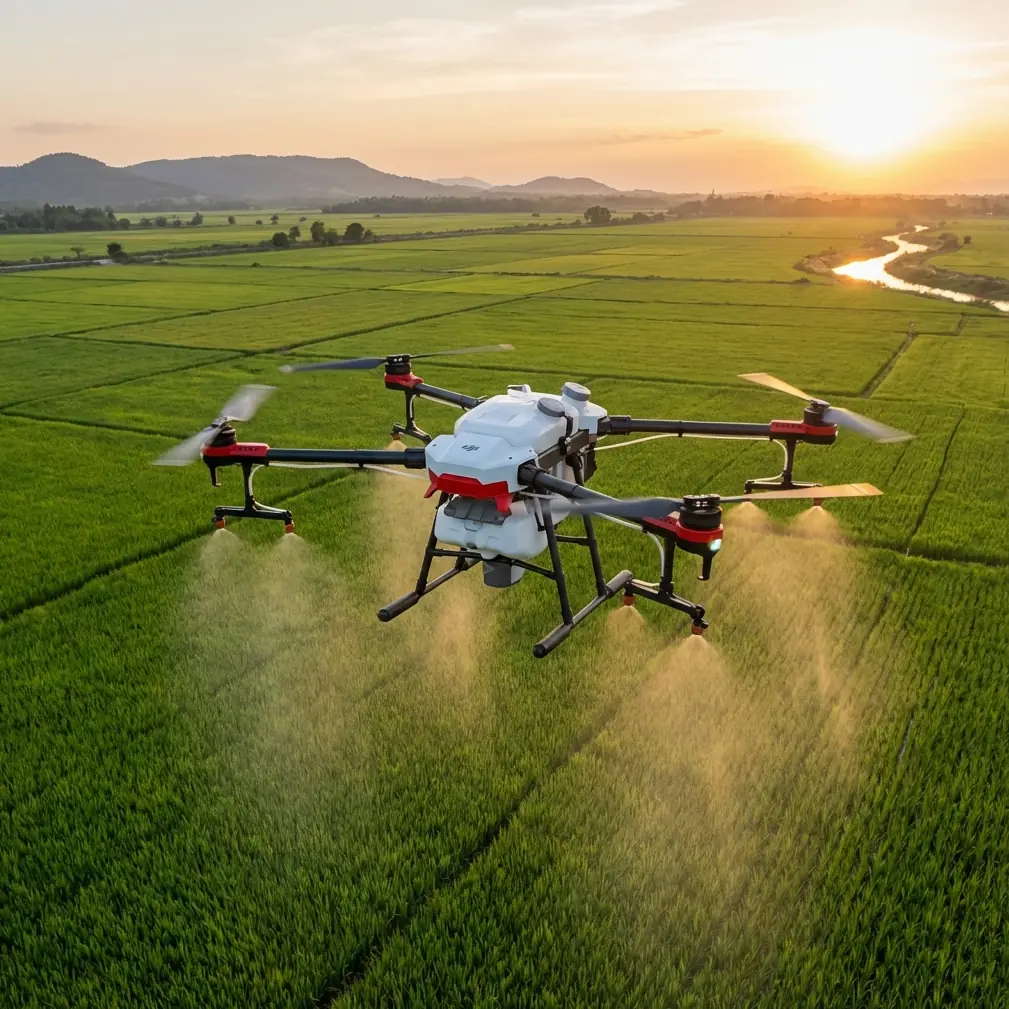
Agras T50 Field Report: Best Practices for Spraying in Complex Terrain Under a Tightening Drone Rulebook
META: A field-tested Agras T50 spraying guide for complex terrain, covering drift control, nozzle calibration, RTK precision, pre-flight cleaning, and why new U.S. drone legislation matters to commercial operators.
I spend a lot of time with spray teams who work where the easy acres end. Hillsides. Orchard edges. Irregular blocks broken up by tree lines, service roads, ditches, and utility setbacks. This is exactly the kind of environment where a platform like the Agras T50 earns its keep, but only if the operation around it is disciplined.
That point matters even more now. A recent report from DroneLife highlighted new federal drone legislation being pushed by a Democratic congressman from New Mexico: the COUNTER Act and Secure Our Skies. The article framed those bills as part of a broader effort by lawmakers to respond to the expanding use of UAVs across the United States and to address potential misuse before larger problems emerge.
For agricultural operators, that news is not abstract Washington chatter. It has practical consequences in the field. When federal lawmakers start focusing on UAV risk, professional spray crews need to look unmistakably professional. Documented procedures. Clean aircraft. Stable navigation. Predictable application quality. Tight operational judgment. If you are running an Agras T50 in complex terrain, your workflow has to show that you are reducing risk, not adding to it.
This field report is built around that reality.
The Agras T50 is only half the system
People often talk about spray drones as if performance begins and ends with payload, flow rate, or acreage per hour. That misses the real picture. In uneven ground, the aircraft is just one component in a chain that includes route design, nozzle condition, RTK stability, environmental judgment, and crew habits.
With the T50, the question is not whether the aircraft can handle demanding agricultural work. The better question is whether the operation around it is refined enough to take advantage of what the platform can do.
Complex terrain exaggerates every weak point:
- A slight guidance error becomes a missed strip along a contour.
- Poor nozzle calibration becomes uneven deposition across changing crop density.
- Casual setup around wind direction turns into spray drift near boundaries.
- Dirty sensors or obstructed components compromise safety behavior when the aircraft is working close to trees, poles, and sloped ground.
This is why I tell crews to stop thinking about pre-flight as a battery-and-tank routine. On the T50, pre-flight is quality control.
Start with the part crews skip: cleaning for safety, not appearance
The most underrated pre-flight step on a spray drone is a cleaning pass focused on operational surfaces and safety-related components. Not a cosmetic wipe-down. A targeted inspection clean.
In muddy or dusty spray venues, residue accumulates fast. Chemical splash, fine dust, oily film, and dried product can interfere with the aircraft’s ability to perform consistently. When you are flying near obstacles in layered terrain, anything that degrades sensor reliability or mechanical consistency deserves attention before takeoff.
On an Agras T50 job, I want crews to build a short cleaning sequence into every turnaround and a deeper version into every shift start:
Wipe down sensor windows and exposed detection surfaces.
If the aircraft’s safety systems are expected to help in cluttered terrain, those surfaces cannot be carrying dried residue.Inspect arm joints, landing gear contact points, and spray system exterior surfaces.
Build-up here can hide leaks, wear, or impact marks from the previous sortie.Check nozzle bodies and surrounding mounts for residue crusting.
This matters because partial obstruction does not always look dramatic, but it can still alter atomization and spray distribution.Clean around fill areas and tank interfaces.
Chemical residues near these points can spread into other components during handling.
The T50’s ruggedized design is an advantage in agricultural environments, and an IPX6K-class protection reference is operationally meaningful here. It indicates the machine is built to tolerate demanding washdown and harsh field exposure better than fragile consumer-grade airframes. That does not mean crews can become careless. It means the aircraft is designed for serious work, and serious work still requires disciplined cleaning so its safety and spray systems remain trustworthy.
In complex terrain, trust in the aircraft begins with visibility and cleanliness.
RTK fix rate is not a spec-sheet vanity metric
If you spray hilly, irregular blocks, your RTK behavior matters more than most crews realize. People hear phrases like centimeter precision and treat them as marketing shorthand. In practice, the value is much more concrete.
On a simple rectangular field, a brief positioning inconsistency may be annoying. On terraced sections, orchard rows, or parcels with curved boundaries, it can translate directly into overlap, skips, or route hesitations. The T50 performs best when the crew actively verifies RTK fix rate before and during operation rather than assuming it is stable because the system powered up normally.
Why this matters operationally:
- Boundary integrity: In fragmented fields, better positional confidence helps the aircraft stay aligned to intended edges without excessive buffer guesswork.
- Consistent swath placement: If your guidance quality degrades, your intended swath width stops being a planning number and becomes an estimate.
- Reduced crop stress from overlap: Double application is not a paperwork issue. It can become a crop health issue, especially in sensitive growth stages.
- Smoother terrain-following behavior: Precise spatial awareness supports cleaner execution when elevation changes are frequent.
A lot of spraying mistakes are blamed on wind or terrain when the real issue was unstable positioning discipline. Before the first productive pass, confirm your fix quality, confirm correction source health, and confirm the aircraft is behaving predictably in a short test run. That five-minute decision can save an entire block from uneven coverage.
Nozzle calibration is where Agras T50 performance becomes real
Every operator says calibration matters. Fewer treat it like a first-order field variable.
On the T50, nozzle calibration is not a paperwork formality. It is how you make the aircraft’s capability useful in the crop you actually have, under the conditions you actually face. In complex terrain, small changes in air movement, elevation, canopy shape, and travel path can magnify poor setup.
When I audit spray results, I usually look at three things first:
- Was the nozzle setup matched to the target and conditions?
- Was the intended flow validated rather than assumed?
- Did the team revisit calibration after cleaning, maintenance, or product changes?
That last point gets overlooked. A crew may clean the system properly, swap components, or change formulation viscosity, then continue as if output characteristics are unchanged. That is where subtle inconsistency starts.
The operational significance is straightforward. If calibration drifts, the T50 may still fly beautifully while your application quality degrades silently. In uneven blocks, you do not need a dramatic failure to lose effectiveness. A modest change in droplet behavior or output uniformity is enough.
This is also where spray drift management becomes inseparable from calibration. Drift is not just a wind problem. It is a system problem. Droplet size, nozzle condition, flight height, speed, route orientation, and local airflow all interact. The T50 gives you a capable platform, but drift control still depends on the crew making disciplined setup decisions for the venue in front of them.
Complex terrain changes how you think about swath width
Many operators inherit a preferred swath width from flatter jobs and carry it into terrain where it no longer fits. That is a mistake.
In broken landscapes, the useful swath is not the maximum the aircraft can theoretically cover. It is the width you can maintain consistently while preserving deposition quality and boundary control. Those are not the same thing.
A wider plan may look more efficient on paper. On a hillside with variable vegetation and cross-flow, it can produce uneven coverage or increase the risk of edge drift. A narrower, more controlled swath often delivers better real productivity because it reduces rework and keeps the application inside the intended zone.
This is where the T50’s precision-oriented workflow pays off. If your centimeter precision and route execution are stable, you can make deliberate swath decisions instead of compensating for uncertainty with excessive overlap. That protects both efficacy and compliance.
The broader regulatory mood reflected in the COUNTER Act and Secure Our Skies discussion reinforces this. As drone use expands, lawmakers are trying to address risk before misuse becomes a larger problem. Agricultural operators should read that as a signal: documented control matters. The more clearly your operation demonstrates predictable routes, clear application boundaries, and professional risk reduction, the stronger your position in a more scrutinized UAV environment.
Use multispectral data carefully, not theatrically
I am seeing more teams talk about multispectral inputs when planning spray jobs, and that can be useful, but only when it leads to a specific operational decision. Too often, the data is collected because it sounds advanced, not because it improves the treatment plan.
For T50 crews working complex terrain, multispectral insight can help identify variability in vigor, stress patterns, drainage effects, or canopy inconsistency. That matters because irregular fields often contain micro-zones that do not behave like the rest of the block. If your pre-mission analysis shows those shifts clearly, you can plan flight paths, refill timing, or treatment segmentation more intelligently.
But the value is not the map itself. The value is the decision it supports.
For example:
- adjusting route segmentation where canopy density changes abruptly,
- treating exposed slope sections with more conservative drift management,
- validating whether apparent problem areas align with terrain-driven stress rather than a spray coverage issue.
The T50 becomes more effective when upstream field intelligence is translated into flight choices instead of sitting in a report folder.
Professionalism is becoming part of operational safety
The DroneLife report did not focus on the Agras T50 specifically, but the policy direction it described is directly relevant to T50 operators. Federal lawmakers are trying to create rules that address drone-related risks before those problems escalate. That is the key phrase here: before they escalate.
Commercial agricultural crews should not wait for a tighter rulebook to start acting like every flight is auditable.
That means:
- maintaining clear pre-flight and post-flight routines,
- keeping service and calibration records,
- documenting route boundaries and environmental decisions,
- training crew members to identify drift risk and navigation anomalies,
- treating cleaning as a safety control rather than a housekeeping chore.
When an aircraft is operating around workers, crops, property lines, and obstacles, professionalism is not branding. It is risk management.
If you are setting up a team process for the T50 and need a second set of eyes on workflow or field prep, I usually recommend operators get quick field-specific feedback before they institutionalize bad habits; this WhatsApp field setup line is a practical way to do that.
The field standard for Agras T50 work is rising
The biggest shift I see in spray drone operations is not hardware. It is expectation. People no longer view agricultural UAV work as an experimental shortcut. They expect repeatability, clean records, and visible operational discipline.
The Agras T50 fits that expectation well, especially in difficult terrain, but only when crews understand what actually drives performance:
- clean safety-related surfaces before every serious mission,
- verify RTK fix quality instead of assuming it,
- recalibrate nozzles whenever conditions or system variables change,
- set swath width based on deposition control, not ego,
- use field data, including multispectral inputs, only when it improves a treatment decision,
- run the job like scrutiny is normal, because increasingly it is.
The policy discussion around the COUNTER Act and Secure Our Skies is a reminder that drone operations in the U.S. are entering a more watchful phase. For agricultural professionals, that does not have to be a problem. In many ways, it favors disciplined operators. The teams that can show they control their aircraft, their spray quality, and their procedures are the ones most likely to thrive as the sector matures.
That is the real lesson for Agras T50 work in complex terrain. Precision is not a feature you buy once. It is a habit you prove on every flight.
Ready for your own Agras T50? Contact our team for expert consultation.