
Agras T50 on Remote Solar Farms: Practical Spraying Setup
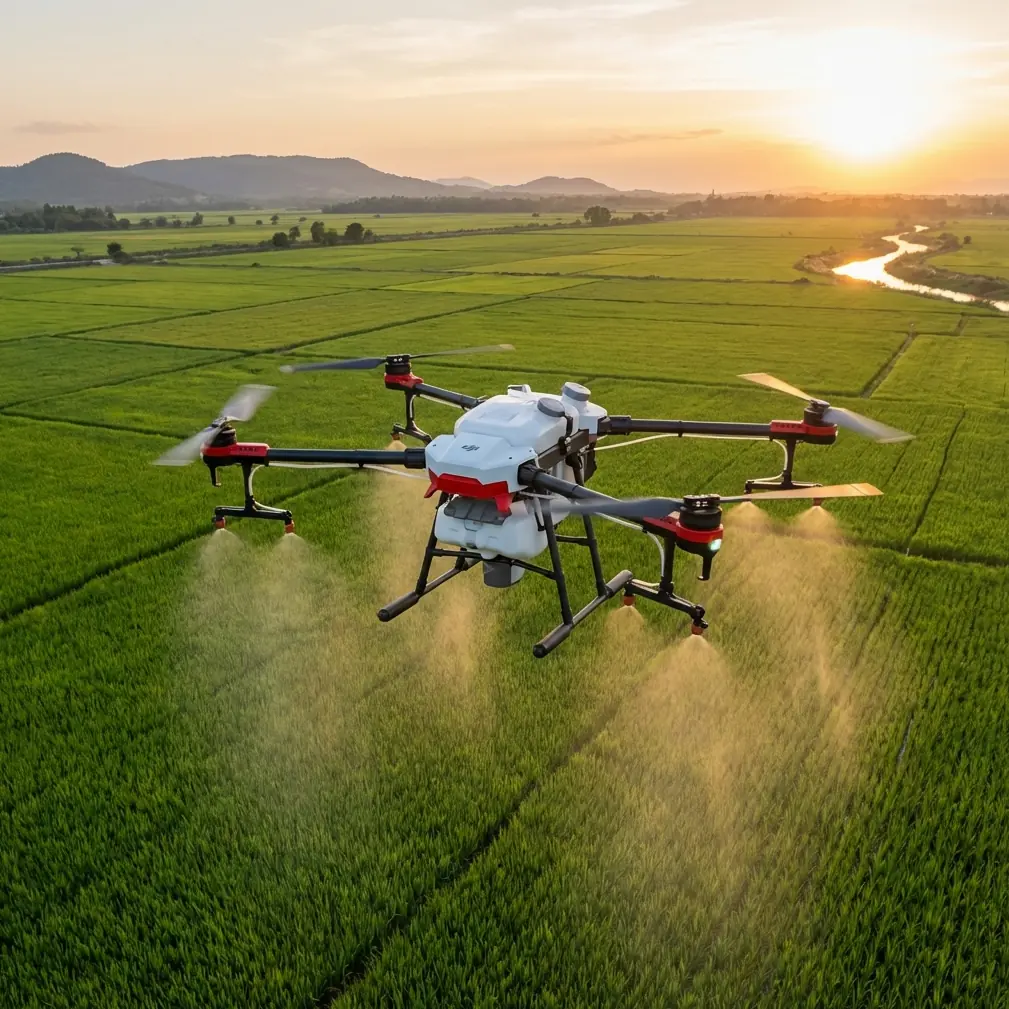
Agras T50 on Remote Solar Farms: Practical Spraying Setup, EMI Control, and Safer Flight Habits
META: Expert tutorial on using the DJI Agras T50 for spraying remote solar farms, with field-tested guidance on RTK stability, spray drift control, nozzle calibration, obstacle sensing limits, and handling electromagnetic interference.
Remote solar farms create a strange kind of agricultural flight environment. On paper, they look open. In practice, they are dense with repetitive geometry, narrow service lanes, steel framing, inverter stations, fencing, and pockets of electromagnetic noise that can unsettle positioning or pilot confidence. That matters if you are deploying an Agras T50 for vegetation management beneath and around panels, where accuracy is tied directly to coverage quality, drift control, and site safety.
This is not the same job as broadacre field spraying. The target zone is fragmented. The margin for overspray is tight. The cost of sloppy route planning is high because chemical contact with panel surfaces, electrical infrastructure, or site access roads creates avoidable cleanup and operational headaches.
The good news is that the T50 is well suited to this kind of work when the operator treats the site like an engineered environment rather than a simple field. That means thinking in terms of signal integrity, sensor limits, airflow behavior, and nozzle output consistency before the first tank goes airborne.
Start with the real constraint: remote solar farms are signal environments, not just spray environments
Many T50 operators focus first on payload, swath width, and work rate. On solar sites, the smarter first question is whether your positioning remains stable beside arrays, substations, and inverter equipment. If your RTK fix rate drops or fluctuates, everything downstream gets worse: line keeping softens, edge fidelity slips, overlap becomes inconsistent, and drift risk rises because the aircraft may not hold its intended path as tightly as expected.
A useful habit is to verify centimeter precision in the exact work zones that matter most, not just from the launch point. A clean RTK status near the staging area tells you very little about what happens along the back rows next to electrical cabinets or steel-heavy structures. Walk the route. Watch whether the fix remains stable at the panel edges, turning points, and narrow passages.
This is where antenna adjustment becomes operational, not theoretical. If you are seeing unreliable positioning near high-interference pockets, do not assume the issue is purely software or mapping related. Antenna orientation, base station placement, and even your launch location relative to metal infrastructure can change fix stability in a measurable way. On some sites, shifting the RTK setup farther from inverter clusters and giving antennas a clearer sky view does more for repeatable spraying than tweaking mission geometry for an hour.
The reason this deserves emphasis is simple: a solar farm punishes small guidance errors. In an open field, a slight drift in line tracking may disappear into normal overlap. Between panel rows, that same error can push spray into non-target space or force the aircraft to correct abruptly.
Treat obstacle sensing as support, not permission
One of the most useful facts from drone education material is also one of the easiest to ignore in professional operations: obstacle recognition distance can be limited, often around 15 meters. That figure should reset expectations for any operator working around fixed structures.
Why does that matter on a solar site? Because 15 meters is not much space when you are flying a loaded spraying platform through repeating rows with vertical posts, cable runs, and uneven terrain. Visual, ultrasonic, and infrared sensing can help the aircraft identify and avoid hazards, but they do not replace conservative route design. They are a safety layer, not a substitute for planning.
This has two direct implications for T50 work:
Do not build missions that rely on last-second obstacle detection.
If a route line passes close to panel supports or ancillary equipment, redesign the line. Sensing works best when it confirms a safe operating envelope, not when it is expected to rescue a poor one.Reduce speed in cluttered or ambiguous spaces.
A site may look repetitive from above, but local geometry changes fast near junction boxes, fencing corners, or washouts in access lanes. The shorter the recognition distance, the more important it becomes to match speed to available reaction time.
That same educational source frames another point worth carrying into commercial work: programming and system logic can improve flight safety. For the T50 operator, that translates into practical discipline—setting conservative boundaries, validating route segments, and using repeatable preflight checks rather than improvising around obstacles once the aircraft is in motion.
Nozzle calibration is where solar-farm quality actually starts
People love to talk about aircraft capability. Customers care about what lands on the vegetation and what does not land on the panels.
Nozzle calibration is the dividing line between those two conversations.
On remote solar farms, weed pressure is often uneven. Growth may be heavier along fences, drainage edges, shaded strips, and maintenance roads. If output is not calibrated correctly, the operator tends to compensate with speed changes or heavier application assumptions. That usually creates one of two bad outcomes: underdosing in dense strips or excess deposition in clean areas.
For the Agras T50, calibration should be tied to the actual mission geometry, not a generic chart carried over from open-field work. The target is consistent deposition within the row architecture you are flying. That means checking:
- actual flow rate at the nozzles
- droplet behavior under the day’s wind and thermal conditions
- travel speed consistency through narrow sections
- swath width reality near panel rows, not just in an unobstructed test area
Swath width is especially easy to overestimate around solar infrastructure. The arrays alter airflow. The result can be uneven lateral distribution, particularly when a breeze channels down service corridors or tumbles at row ends. A T50 that lays down a clean pattern in open space may produce a different effective swath when the site starts shaping the air around it.
This is why drift management on solar projects cannot be reduced to “fly lower and slow down.” Sometimes that helps. Sometimes the larger issue is that your droplet spectrum and route spacing are not matched to the row microclimate.
Airflow around panels changes how the spray behaves
One of the more valuable aerodynamic references in the source material comes from fixed-wing training, not spraying. It explains that slightly thicker control surfaces can engage smoother airflow and produce more effective, consistent control. The exact hardware lesson belongs to model aircraft, but the underlying principle is relevant here: airflow quality determines control quality.
That matters for T50 spraying in two ways.
First, the aircraft itself behaves better when the air it is working in is predictable. Solar arrays reduce that predictability. They create edges, heat differentials, and wake effects that can influence stability near the ground. If the aircraft seems more “busy” on the controls at row ends or beside elevated structures, that is not always a pilot issue. It can be a local airflow issue.
Second, spray cloud behavior follows the same atmospheric logic. Smooth, consistent airflow supports repeatable deposition. Broken airflow increases variability. In real terms, if you are getting uneven results near panel edges, you may be seeing a site-induced airflow problem as much as a nozzle problem.
Operationally, this means:
- avoid making calibration decisions only from open-pad test passes
- observe deposition patterns in representative row sections
- pay close attention to turn zones, row ends, and gaps between array blocks
- keep route spacing conservative until pattern quality is proven
The aerodynamic source also notes that improved control consistency is especially valuable in low-altitude work and windier conditions. That lands directly in the solar-farm use case. The T50 is often asked to operate low, precisely, and repeatedly in places where small disturbances matter. Your setup should assume that consistency is precious and easily degraded.
A practical workflow for EMI-heavy solar sites
Here is a field-ready sequence that works well when electromagnetic interference is a realistic concern.
1. Survey the site as a navigation problem
Before thinking about tank cycles, identify:
- inverter stations
- transformer areas
- perimeter fencing
- metal-dense maintenance compounds
- narrowest row sections
- probable dead spots for signal quality
Mark these mentally or in your site notes as navigation risk zones.
2. Verify RTK where the work happens
Do not accept a good fix at the truck as proof of a good fix at the panels. Move through the site and confirm stability where the aircraft will actually spray. If the fix degrades near certain equipment, plan around it.
3. Adjust antenna placement before adjusting expectations
If interference appears localized, relocate the RTK setup or adjust antenna orientation for cleaner sky exposure. Even modest changes can improve fix reliability. This step often solves “mystery” tracking inconsistency that operators mistakenly blame on mapping or wind.
4. Rehearse low-risk passes first
Use initial passes in the cleanest sections to confirm guidance behavior, speed stability, and spray pattern. Do not begin in the hardest corridor on the site.
5. Validate swath width on the site, not from memory
Use a representative row with similar spacing, exposure, and panel height. If your expected coverage width is too optimistic, the penalty shows up as stripes, overlap, or drift into non-target zones.
6. Tighten operating margins near structures
Remember the roughly 15-meter recognition range reference for obstacle sensing. Build routes that never depend on the aircraft detecting obstacles at the last moment.
7. Recheck drift as conditions change
Solar farms can develop changing thermal behavior through the day. Wind that looks manageable at the launch pad may become more disruptive down a corridor between arrays.
Why remote operations demand extra discipline
Remote solar sites tempt teams to move fast. Fewer people around. Wide access roads. Large, repetitive blocks. The risk is assuming that remoteness equals simplicity.
It does not.
Distance from support infrastructure makes recoveries slower. A calibration mistake consumes more time. A positioning issue can waste an entire work window. And if spray drift reaches panel surfaces in a remote location, cleanup logistics become more painful than they would be on a compact site.
That is why the T50 operator who performs best in this environment is usually not the one chasing maximum hectares per hour. It is the one who builds a stable, repeatable system: reliable RTK, tested nozzle output, realistic swath assumptions, and mission lines that respect the site’s geometry.
A note on training mindset
An odd but useful crossover from training materials is the value of rule-based decision logic. One educational exercise describes a drone responding to numbered cards with different actions depending on whether the number is odd or even, and landing when the card is 8. The lesson is not about card reading for field work. It is about building predictable behavior from simple conditions.
That mindset belongs on solar-farm spraying.
For example:
- if RTK fix becomes unstable in a known interference zone, pause and reposition rather than pushing through
- if wind shifts beyond your drift threshold in row corridors, switch sections or stop
- if nozzle output deviates during refill checks, recalibrate before the next block
In other words, write your field rules before the aircraft tests them for you.
When the T50 is used well, solar-farm spraying becomes an engineering task
That is the clearest way to think about this platform in remote vegetation-control work. The Agras T50 is not just a spraying drone here. It is a low-altitude application system operating inside a man-made aerodynamic and electromagnetic environment.
Success depends on respecting both halves of that sentence.
If you keep RTK fix rate stable, protect centimeter precision with smart antenna placement, calibrate nozzles to the actual site geometry, and treat obstacle sensing as limited support rather than invincibility, the T50 can deliver very clean work around solar assets. If you skip those steps, the same site will expose every weak assumption in your setup.
If you need a second opinion on route planning or EMI troubleshooting before a difficult deployment, you can message a field specialist here.
The operators who get the best results on remote solar farms are usually the ones who slow down first, verify everything, and only then scale up. With the Agras T50, that discipline is not excessive. It is what turns a capable aircraft into a dependable one.
Ready for your own Agras T50? Contact our team for expert consultation.