
Agras T50 for Remote Solar Farm Spraying: What the 2026 Low
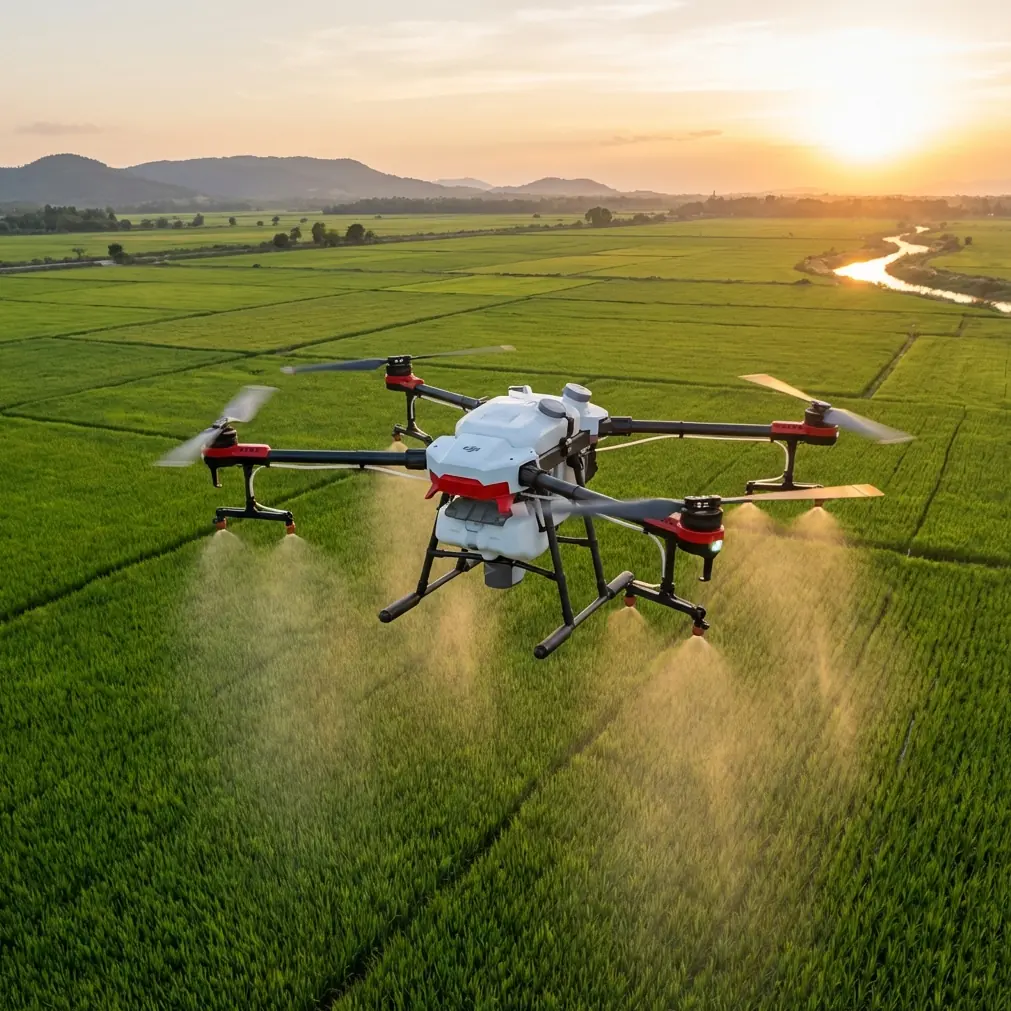
Agras T50 for Remote Solar Farm Spraying: What the 2026 Low-Altitude Industry Shift Means in Practice
META: A technical expert review of the DJI Agras T50 for remote solar farm spraying, with field-focused insight on drift control, RTK precision, nozzle calibration, battery management, and why China’s 2026 low-altitude industry push matters.
Remote solar farms create a peculiar maintenance problem. They are large, exposed, hard to staff consistently, and often built in places where terrain, heat, dust, and access roads work against efficient operations. Vegetation control matters. Panel-edge buildup matters. Downtime from poorly managed ground spraying matters too. In that setting, the Agras T50 deserves attention not as a generic agricultural drone, but as a low-altitude work platform that fits a much larger industrial transition now taking shape.
That broader transition was visible at the 2026 Low-Altitude Industry Development Conference in Hengqin, where multiple cooperation projects were signed during the event. One public statement from Cheng Fubo stood out for anyone evaluating platforms like the T50 in real commercial operations: the Aviation Industry Corporation of China described low-altitude industry as an important development direction, tied to national strategy, with emphasis on technology innovation, industry cultivation, and ecosystem building. That matters because remote solar farm spraying does not succeed on aircraft specifications alone. It depends on the surrounding ecosystem: training, service support, regulatory maturity, batteries, charging logistics, route planning, and the ability to integrate drones into repeatable industrial workflows.
So if you are looking at the Agras T50 for spraying around remote photovoltaic sites, the real question is not simply whether it can carry liquid and cover ground. The question is whether it fits the direction the low-altitude sector is moving toward: standardized, supported, scalable operations.
Why the T50 makes sense beyond agriculture
The Agras T50 was built with plant protection in mind, but the same core strengths translate well to solar farm maintenance. Remote PV sites need precise application near panel rows, inverter pads, fence lines, drainage channels, and access corridors. In those environments, centimeter precision is more than a spec-sheet phrase. It directly affects overspray risk, repeatability, and labor planning.
This is where RTK fix rate becomes operationally significant. A strong RTK solution helps the aircraft hold clean lines across long rows and narrow maintenance zones, especially where panel geometry creates repetitive patterns that can tempt operators into relying too heavily on visual judgment. Good positioning reduces missed strips and overlap. On a large site, that means less chemical waste and fewer return passes. On a windy day, it can also reduce the temptation to fly wider corrective arcs that increase spray drift.
Swath width matters too, but not in the simplistic “wider is always better” way. On open farmland, maximizing swath width may be the first instinct. Around solar arrays, the smarter goal is often controllable swath width. Panel rows, cable trenches, and variable vegetation density reward consistency over brute coverage. The T50’s usefulness comes from pairing output capacity with controlled application, not from trying to treat a solar farm like a broad-acre field.
Spray drift is the operational risk that separates amateurs from professionals
If there is one topic that deserves serious attention in solar farm spraying, it is drift. Drift is not just a compliance issue. It is a quality issue and a site-protection issue. Remote solar farms often sit in exposed areas with crosswinds, thermal currents, and reflective heat from panel surfaces. Those conditions can move fine droplets farther than an operator expects.
This is why nozzle calibration should be treated as a routine discipline, not a setup checkbox. The goal is not merely to confirm flow. It is to match droplet behavior to site conditions. In practical terms, that means evaluating application rate, flight speed, and droplet size together. If the nozzles are delivering unevenly, a pilot may compensate by slowing down or adding overlap, which can create over-application in some zones while still leaving misses in others. Around panel infrastructure, that inconsistency becomes expensive fast.
From field experience, one of the easiest mistakes is calibrating early in the morning under ideal conditions, then continuing with the same assumptions once the site heats up. Remote solar farms often become harsher environments by late morning. Surface temperature rises, air movement becomes less predictable, and battery performance can change with ambient heat. A well-run T50 operation revisits calibration logic as conditions evolve. Not every site requires a full recalibration mid-day, but every serious operator should at least verify whether pressure, droplet pattern, and route speed still make sense for the current wind profile.
The battery management tip that saves more time than people expect
Here is the battery habit I recommend after seeing too many crews lose productive hours in remote deployments: do not cycle every pack the same way just because the workflow looks neat on paper.
At solar farms far from base infrastructure, battery management is not only about charging speed. It is about thermal discipline. If one battery returns hot from a demanding mission and goes straight into a charging rotation without enough cooling time, performance in the next sortie may be technically acceptable but operationally weaker. You begin to see subtle effects: less confidence in sustained output, more conservative route planning, and sometimes inconsistent pacing between aircraft loads.
The better approach is to tag packs by thermal state, not just state of charge. Keep a simple rotation logic: recently landed hot packs cool first, moderate-temperature packs charge next, and reserve packs are held back for missions where wind or terrain may demand extra stability margin. This sounds small. In the field, it prevents a chain reaction of rushed charging decisions.
On remote solar projects, I also advise crews to shade charging stations whenever possible and separate battery staging from dust-heavy landing zones. Dust plus heat is a poor combination for connectors, cooling pathways, and long-term reliability. The T50 can work in demanding industrial environments, but disciplined battery handling is often the difference between a smooth six-hour day and an afternoon lost to preventable downtime.
Why IPX6K matters more at solar sites than many buyers realize
The LSI term IPX6K often gets thrown around as if it were only a ruggedness badge. For remote solar applications, it has practical significance. Solar farms are dusty. They are often serviced in hot climates. Cleaning routines matter. Residue from spraying operations matters. Equipment that can tolerate harsh washdown and exposure conditions is easier to maintain between jobs and less likely to accumulate hidden contamination around frames, landing gear, and fluid-contact areas.
That does not mean crews should become careless. Protection ratings are not a substitute for proper post-operation inspection. But when a platform is working in sites where dust, moisture, and chemical residue are part of the weekly reality, durability affects actual uptime. It also affects whether operators follow through on cleaning routines, because equipment that is easier to clean properly is more likely to be cleaned properly.
RTK, route quality, and the case for repeatable maintenance programs
One of the strongest arguments for using a T50 at solar farms is not a single mission. It is the repeatable program. Vegetation suppression, spot treatment, and seasonal maintenance all benefit from route consistency. If the aircraft can return to the same corridors with a reliable RTK fix rate, managers gain more than precise flight lines. They gain comparability.
That means they can document whether treatment frequency is changing. They can compare vegetation pressure near panel blocks versus drainage edges. They can identify recurring hotspots where application patterns or ground conditions should be adjusted. If a site operator also uses multispectral tools elsewhere in the workflow, there is room to connect drone spraying data with broader site monitoring, even if the spray aircraft itself is not the imaging platform. That pairing can be especially useful when distinguishing between areas that need repeated intervention and areas where route design or surface runoff is driving regrowth.
This is where the conference news from Hengqin becomes relevant again. Multiple signed cooperation projects and the stated emphasis on ecosystem building suggest a market moving toward integrated low-altitude operations rather than isolated aircraft purchases. For T50 users, that is good news. Industrial spraying around energy infrastructure needs more than pilots. It needs service pathways, technical support, data practices, and a stable development environment.
What the low-altitude policy signal means for T50 operators
Cheng Fubo’s comment about serving national strategy and treating the low-altitude industry as an important development direction is not abstract political language for operators in the field. It points to a practical reality: the sector is being framed as infrastructure, not novelty.
For commercial users of aircraft like the Agras T50, that can influence three things.
First, training quality tends to improve when an industry is treated as strategic rather than peripheral. Better training reduces misuse, especially in sensitive environments like solar farms where drift, route design, and obstacle awareness all matter.
Second, industrial ecosystem building helps normalize the support chain. Batteries, service partners, operational standards, and software workflows become more available and more predictable.
Third, cooperation projects accelerate specialization. A drone used for crop spraying in one region may be adapted into a highly refined energy-site maintenance tool in another. That specialization is where real productivity gains appear.
In other words, the T50 becomes more useful when the industry around it matures. The aircraft can already perform. The bigger development is that the operating environment is catching up.
A realistic workflow for remote solar farm spraying
A strong T50 deployment at a remote photovoltaic site usually looks less dramatic than people imagine. It is mostly discipline.
You begin with route segmentation rather than trying to treat the entire site as one continuous block. Different zones have different wind exposure and vegetation behavior. Next comes nozzle calibration linked to the actual target condition, not just a default liquid rate. Then comes a pre-flight check focused on RTK status, obstacle review, and battery temperature, not merely battery percentage.
During operations, monitor drift visually and adjust before the site forces you to. If the wind starts pushing droplets off-row, narrow the operational objective rather than trying to maintain the original pace. Productivity that creates rework is false productivity.
After the flight window, clean thoroughly, inspect for residue, log pack temperatures, and note any route areas where swath width should be tightened on the next cycle. Those records matter because solar farm maintenance is repetitive by nature. Every pass should improve the next one.
If your team is refining a workflow for these kinds of sites and wants an operational discussion rather than a generic brochure conversation, this direct line can be useful: message the field team here.
Final assessment
The Agras T50 is well suited to remote solar farm spraying when it is treated as part of a professional low-altitude operation, not simply as a high-capacity drone with tanks and rotors. Its value comes from precision, repeatability, site adaptability, and the ability to work inside a maintenance program that respects spray drift, nozzle calibration, RTK stability, and battery thermal management.
The timing is notable. The 2026 Low-Altitude Industry Development Conference in Hengqin, with its concentrated project signings, signals a market that is organizing itself around cooperation and scale. The statement that low-altitude industry is a key development direction, backed by technology innovation, industry cultivation, and ecosystem building, gives useful context for anyone investing in real operational capability.
That is exactly the lens through which the T50 should be judged. Not as an isolated machine, but as a platform entering a stronger industrial ecosystem at a moment when remote infrastructure maintenance is becoming one of the clearest civilian use cases for advanced low-altitude aviation.
Ready for your own Agras T50? Contact our team for expert consultation.