
How I Spray Remote Solar Farms With the Agras T50
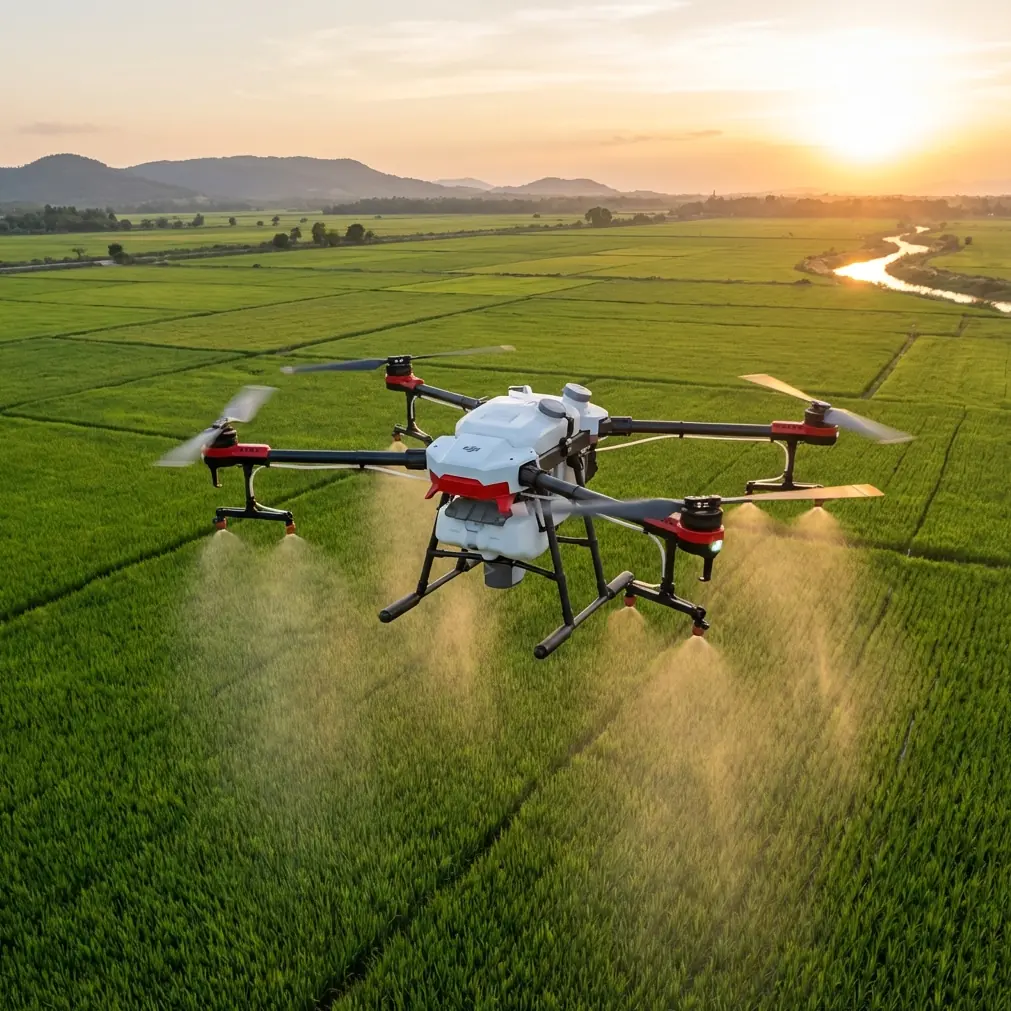
How I Spray Remote Solar Farms With the Agras T50
META: A field-tested Agras T50 tutorial for spraying remote solar farms, covering drift control, nozzle calibration, RTK accuracy, swath planning, and battery management.
Solar farms look simple from the access road. Long rows. Repeating geometry. Plenty of open air. From a distance, they seem like the kind of site where a spray drone should breeze through a weed-control job without friction.
The reality is less forgiving.
A remote solar installation creates a strange operating environment for an aircraft like the Agras T50. You are dealing with reflective surfaces, narrow service corridors, shifting wind around panel edges, uneven ground cover, and a work area that often sits far from reliable power, clean water, and cellular stability. The drone itself is fully capable. The outcome depends on whether the operator builds the mission around those conditions instead of forcing a farm-field workflow onto an energy site.
That distinction matters. I have seen excellent agricultural pilots underperform on solar vegetation control simply because they treated the array like a flat pasture. The Agras T50 rewards a more deliberate setup.
This guide is how I approach it in the field.
Start with the site, not the drone
Before I mix product, install batteries, or even decide on a swath width, I walk the site. Remote solar farms punish assumptions.
The first thing I want to understand is row spacing. Not the brochure spacing. Actual usable spacing. If the panel tables, inverter pads, fencing, drainage cuts, and cable protections reduce the flight corridor, then your planned pass spacing has to reflect that reality. A theoretical wide pattern looks efficient until your aircraft spends half the job slowing down to maintain stability near obstructions.
Second, I look at weed density and height. Solar farms often have patchy growth patterns: sparse gravel shoulders, dense grass in low areas, and heavier vegetation near drainage retention sections. That matters because the T50 can carry enough liquid to tempt operators into broad uniform settings, but uniform settings are often the wrong choice on a site with uneven biomass.
Third, I pay attention to the wind where the weeds are, not just where I am standing. Spray drift around solar panels can behave differently than in open cropland. Panel rows create micro-currents. You can get a light crosswind in the open lane, then feel a localized roll or lift near panel edges. If you are trying to keep herbicide on target and off module surfaces, that nuance is everything.
Why RTK behavior matters more on solar than on open fields
When people talk about precision on the Agras T50, they usually stop at a vague phrase like “centimeter precision.” That misses the operational point.
On a remote solar farm, centimeter-level positioning is not a bragging right. It is how you avoid accumulating tiny line errors that turn into visible misses between rows or overspray near fixed infrastructure. The T50’s RTK-supported workflow becomes especially valuable when you are flying long parallel corridors where repeated alignment matters more than raw acreage per hour.
I pay close attention to RTK fix rate before I trust any automated pattern. If the fix is unstable, I do not pretend the system will sort itself out once the aircraft is airborne. Remote sites can have weak network conditions, and the geometry of nearby structures can sometimes complicate signal consistency. A poor fix rate on a broadacre field may create minor overlap. On a solar array, it can put spray where you do not want it.
That is why I build a habit: confirm stable correction input, then verify the first few lanes visually. If the aircraft is holding line cleanly, I continue. If not, I solve that problem before chasing productivity. The extra minutes on the front end are cheaper than re-treatment, cleanup, or site complaints.
Swath width is not a number you set once
One of the most common mistakes I see is treating swath width like a fixed feature of the machine. On paper, operators want the widest effective pattern possible. In practice, a solar farm often calls for restraint.
A wider swath can be productive in open areas with low drift risk and uniform weed height. But near rows of modules, support posts, transformers, or fencing, a tighter pattern often delivers better actual performance because deposition stays controlled and predictable.
The T50 gives you enough application flexibility to tune for the site, but you need to think beyond tank volume and acres covered. Ask a better question: what swath width lets me maintain target coverage while minimizing drift and keeping the aircraft settled in the corridor?
That answer may change across the same property.
I have worked sites where the perimeter lanes could support a broader pattern, while internal corridors needed a narrower one due to turbulence around densely packed tables. If you refuse to adjust, you are choosing simplicity over accuracy. Remote solar work does not reward that.
Nozzle calibration is where professional results start
If you spray solar farms regularly, nozzle calibration should be treated as a pre-job discipline, not an occasional maintenance item.
The Agras T50 is capable of serious output, but that capability only helps you if the flow profile matches the job. Different herbicide strategies, carrier volumes, vegetation density, and environmental conditions call for different droplet behavior. Calibration is what turns the aircraft from a flying tank into a controlled application system.
I check nozzles for consistency before every serious remote deployment. Not because the manual says to, but because field reality does. Transport vibration, residue buildup, partial blockage, and wear can all distort output in ways that are subtle at takeoff and obvious on the ground a day later.
Here is the practical consequence: if one side of your spray pattern is underperforming, you may not notice during the mission because the flight logs still look clean. The route will be perfect. The application will not.
On a solar site, that can show up as untreated strips under panel edges or heavier deposition where overlap and asymmetrical output combine. Both create callbacks. Both are preventable.
My rule is simple. If I cannot trust the nozzles, I do not trust the pass.
Spray drift control around panels is its own discipline
Spray drift on a solar farm is not just a regulatory or stewardship issue. It is also a site relations issue.
Operations teams do not like seeing residue where it does not belong. Asset owners do not want questions about surface contamination. Even if the chemistry choice is appropriate, the visual optics of poor control can become a problem.
That is why I treat drift management as a layered system:
- correct droplet size for conditions
- conservative speed when panel turbulence is active
- lower height only when safe and stable
- swath adjustments around sensitive structures
- continuous reassessment as the day warms up
A breeze that seems workable at 8 a.m. can become far less forgiving by midday once thermal activity builds over dark surfaces and open ground. Solar farms amplify that effect. The mix of gravel, vegetation, equipment pads, and panel shading creates inconsistent air behavior.
The T50 has the lift and application capacity to move quickly, but speed only helps if the droplets are landing where they should. I would rather finish later and avoid drift than explain to a site manager why the easy part of the job became the expensive part.
The battery management tip I wish more operators used
Remote solar work changes how you should think about batteries.
Most pilots focus on total battery count. That matters, but the more useful habit is tracking battery temperature recovery and mission pairing. In plain terms: do not keep assigning the same battery pattern to the hardest part of the site.
Here is what I do in the field. I reserve my strongest, coolest battery cycles for the sections with the longest transit from refill point to work zone, the greatest elevation change, or the tightest maneuvering. Easier perimeter strips can be assigned to packs that are still within operating limits but not at their freshest thermal condition.
That sounds obvious. It is not commonly practiced with enough discipline.
The reason is simple. On a remote site, battery performance is not just about whether the pack can fly. It affects how confidently the aircraft holds its work rhythm when loaded, turning, accelerating, and resisting gusts between infrastructure. A pack that is technically acceptable but heat-soaked from repeated quick turns can still alter the way the mission feels and performs.
My field tip is to build a rotation board and log three things every cycle: pack ID, charge completion time, and what kind of mission segment it just flew. That lets you avoid stacking stressful assignments onto the same battery all day.
I have seen this reduce mid-job variability more than almost any “advanced” trick operators talk about online. Fancy settings do not compensate for tired packs.
If you want help setting up a practical battery rotation workflow for remote sites, I put together a simple checklist you can request here: send me a field note on WhatsApp.
Weatherproof does not mean careless
The Agras T50’s IPX6K protection is genuinely useful for dirty, wet, chemical-heavy work. On a remote solar farm, that protection helps when conditions are less than ideal and cleanup opportunities are limited. Dust, splash, and residue are part of the job.
But I would caution operators against turning a protection rating into an excuse for sloppy handling.
IPX6K is a durability advantage, not a permission slip. If you are working far from your shop, every connector, tank seal, and spray component deserves a quick inspection during refill cycles. A minor leak or residue issue that would be easy to solve at home can become a lost half-day when you are miles from parts, shade, or support.
The operators who get the most from the T50 on remote energy sites are not the ones who “trust the machine” blindly. They are the ones who use the machine’s ruggedness as a buffer while still maintaining a disciplined routine.
That is a big difference.
When multispectral is useful, and when it is not
There is growing interest in using multispectral data to guide vegetation management around infrastructure, and in the right program it can be valuable. On large solar sites, it may help identify zones of aggressive regrowth, moisture retention, or recurring pressure areas that deserve a different maintenance interval.
But I would not oversell it for every spray day.
For many remote solar farm jobs, your biggest gains still come from disciplined scouting, accurate corridor mapping, proper nozzle calibration, and stable RTK performance. Multispectral inputs can improve planning, especially on multi-visit contracts, but they do not replace operational fundamentals. If those fundamentals are weak, better imagery just helps you document inconsistent execution in higher resolution.
Use the data when it supports decisions. Do not let it distract from the basics that determine whether the T50 actually lays down a clean treatment.
A practical workflow for spraying solar farms with the T50
If I had to compress my field process into a working sequence, it would look like this:
First, inspect access, row spacing, obstacles, refill logistics, and wind behavior across the site. Not just at staging.
Second, verify RTK stability before relying on automated line discipline. If the fix is questionable, fix that first.
Third, calibrate nozzles and confirm even output. I do not skip this on remote deployments.
Fourth, choose a swath width based on actual corridor behavior, not maximum theoretical productivity.
Fifth, start with the most drift-sensitive or operationally constrained section while morning conditions are more manageable.
Sixth, rotate batteries intentionally. Match your best thermal performers to the hardest segments.
Seventh, reassess every few loads. Wind, temperature, and site turbulence change faster around solar arrays than many operators expect.
That sequence is not glamorous. It works.
What separates a clean job from a problem job
On paper, spraying vegetation around solar infrastructure with the Agras T50 sounds like a straightforward application task. In the field, it is a precision operations job disguised as routine maintenance.
The pilots who do it well understand that the aircraft’s strengths only show up fully when the workflow is built around the site’s quirks. RTK consistency matters because tiny tracking errors accumulate. Nozzle calibration matters because visual symmetry in flight does not guarantee uniform deposition. Swath width matters because array turbulence changes the effective pattern. Battery management matters because remote work exposes small performance differences that closer-to-base jobs can hide.
That is the real story with the T50 on solar farms. Not hype. Not broad claims. Just a very capable aircraft that rewards disciplined operators with cleaner, safer, more repeatable work in one of the more deceptively technical spray environments out there.
Ready for your own Agras T50? Contact our team for expert consultation.