
Agras T50 Around Power Lines in Windy Conditions
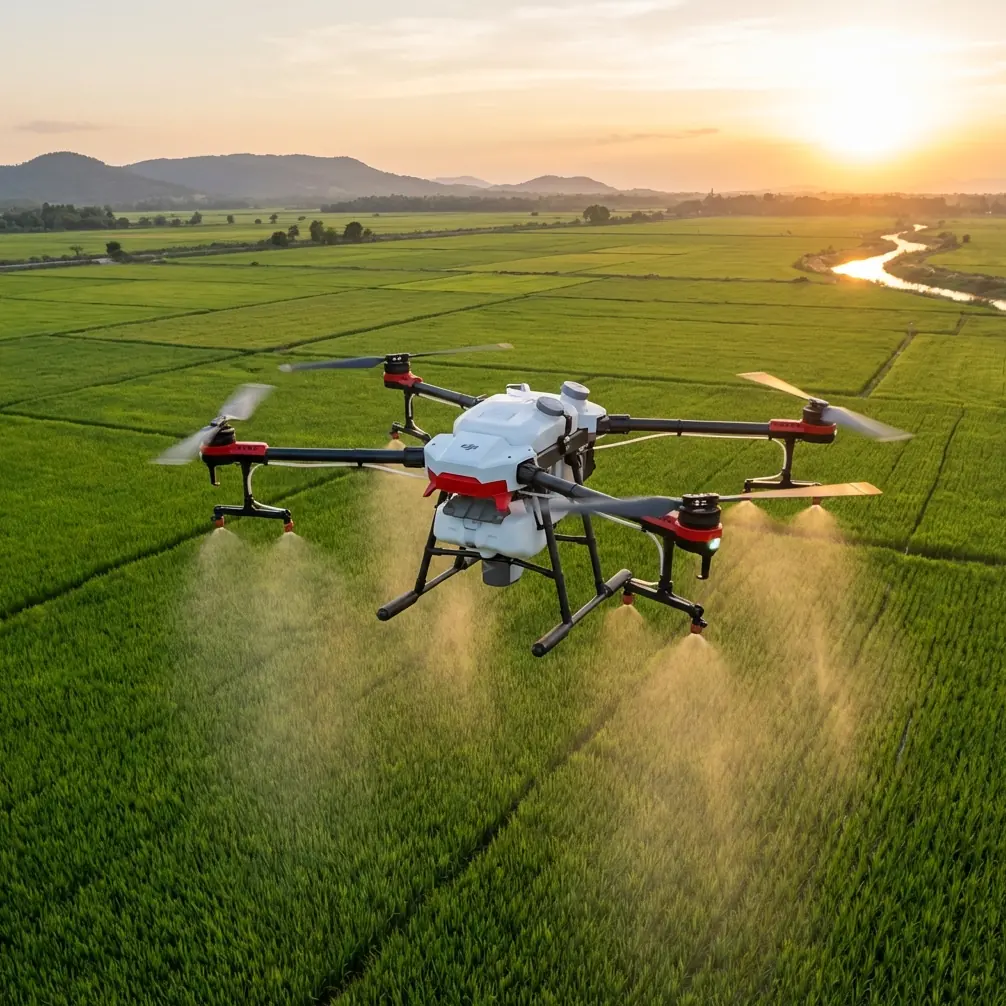
Agras T50 Around Power Lines in Windy Conditions: A Field Report on Drift Control, Terrain Discipline, and Data Accuracy
META: A field-based expert analysis of using the Agras T50 near power lines in windy conditions, with practical insight on spray drift, nozzle calibration, RTK discipline, terrain-following logic, and image-data workflows.
Power-line corridors punish sloppy drone work.
Wind tunnels form where towers break the airflow. Vegetation height changes fast. Electromagnetic noise can unsettle weak positioning discipline. And when the mission involves spraying along infrastructure edges, every error gets magnified: too much drift, too little coverage, poor repeatability, and messy records nobody wants to sort through later.
That is exactly why the Agras T50 deserves to be discussed as an operational system, not just a spray aircraft.
I have spent enough time around utility-adjacent agricultural and vegetation-management work to know that the challenge is rarely raw payload or simple flight time. The harder question is whether the aircraft, pilot, and workflow can hold a stable, repeatable line when wind, terrain variation, and signal complexity all arrive at once. The answer depends less on brochure language and more on how well you manage three things: relative height, positional confidence, and post-flight data discipline.
What windy power-line spraying actually exposes
Agras T50 missions near power lines are not normal broad-acre passes. The corridor is narrower. Obstacle pressure is higher. Spray drift matters more because you are often managing vegetation in proximity to assets, access roads, drainage channels, or neighboring crop edges. The wind does not behave uniformly either. It shears around structures and changes character as the aircraft moves from open strips into tower-adjacent turbulence.
That means the T50 operator has to think in layers.
First, drift control starts before takeoff. Nozzle calibration is not just a maintenance checkbox. In a windy corridor, small deviations in droplet consistency can turn into visible coverage gaps or off-target movement. If one side of the spray system is behaving slightly differently, crosswind will expose it immediately. Second, swath width cannot be treated as a theoretical maximum. In these missions, effective swath width is usually a negotiated number shaped by wind angle, canopy density, and how close the line corridor is to non-target zones.
Third, RTK fix rate becomes more than a mapping buzzword. When you are trying to maintain centimeter precision along a utility corridor, degraded position confidence translates into inconsistent overlap and uneven application. The T50 platform is capable, but capability only matters when the operator respects the environment.
The terrain lesson most operators learn too late
One of the most useful reference points here does not come from a spraying manual at all. It comes from a training document describing terrain-following flight logic on a DJI educational drone. In that example, the aircraft flies over uneven ground while trying to maintain a relative height close to the surface—specifically around 50 centimeters, with corrective behavior when the TOF reading drops below 50 cm or rises above 55 cm. The programmed response is simple and instructive: if the aircraft gets too low, it adds upward input while continuing forward; if it gets too high, it descends while advancing.
That tiny 50–55 cm control band says something larger about drone operations in difficult environments: relative-height discipline is everything when the ground is not uniform.
Now apply that principle to the Agras T50. No, you are not flying a T50 at half a meter above the terrain in this kind of corridor work. The operational altitude is obviously different. But the concept is the same. On vegetation-management runs near power lines, if the aircraft does not maintain a reliable relationship to the changing ground and target canopy, your spray deposition becomes erratic. Too high and drift risk expands. Too low and you compromise safety margins, especially where slope breaks, shrubs, drainage cuts, or access berms interrupt the corridor profile.
The training source also notes why this matters: better ground-image quality and improved data precision in aerial survey work. That is not an isolated mapping concern. It has direct operational significance for a T50 crew. Stable relative flight over uneven terrain supports more repeatable application, cleaner documentation, and stronger confidence when correlating flight records with treatment areas.
In other words, terrain following is not just a convenience feature. In windy utility-edge work, it is one of the foundations of consistency.
Why electromagnetic interference changes pilot behavior
Power lines introduce a second problem: interference is not always dramatic, but it can be enough to degrade confidence. Good crews do not wait for a warning to start troubleshooting. They prepare for it.
My standard advice in these environments is straightforward. Antenna adjustment is not cosmetic. If you are working near towers or conductors and your link quality or positioning behavior starts to look unstable, revisit the orientation and line of sight between aircraft and controller immediately. Small changes in operator position and antenna angle can clean up communication behavior before the issue becomes operationally significant. This is especially relevant when the aircraft transitions along the corridor and the geometry between pilot, line hardware, and aircraft keeps changing.
That does not eliminate every interference effect, and it does not excuse poor site planning. But it often separates smooth work from preventable interruptions.
For the T50 specifically, this becomes part of mission design. Do not just mark the route. Walk the corridor access points. Identify where towers, terrain undulation, and vegetation walls may block clean control geometry. Then decide where the pilot should stand for each segment. If the wind is already demanding tighter swath control, the last thing you want is a degraded command link adding workload.
Mapping logic belongs in spraying operations too
A second reference document, this one centered on ArcGIS-based field collection workflows, offers another lesson T50 operators should not ignore. It explains that drone orthomosaics, sampling points, and oblique models can be shared through Portal for ArcGIS, and it warns that large survey programs can generate thousands of orthophotos in a single census effort. Over years, that archive becomes hard to manage unless image products are organized through metadata and queryable systems.
At first glance that sounds like a GIS office problem. It is not.
Power-line vegetation spraying with the Agras T50 produces an accountability problem as much as an application problem. When crews return to the same corridors season after season, someone eventually asks: Which section was treated? Under what wind? With what route geometry? What vegetation pressure was visible at the time? Was drift risk higher on one tower span than another? Did re-treatment coincide with poor coverage or simply regrowth?
If your operation treats each flight as disposable, you lose compounding intelligence. If you structure records properly, every mission improves the next one.
This is where the ArcGIS document becomes operationally relevant. Its core point is that image outputs and point data gain value when they are shareable and searchable across devices and teams. For an Agras T50 program, that means tying spray logs, corridor segments, orthomosaic snapshots, and target notes into one retrievable system. The document also highlights a practical issue inside China: satellite imagery can be offset, so operators are advised to enable the “domestic map” setting in DJI GO and Altizure before planning flights. That detail matters because map misalignment is not a harmless visual annoyance. Along a utility corridor, offset planning can place your intended route slightly wrong relative to towers, access tracks, or vegetation blocks.
Operationally, that is a big deal. Centimeter precision in the air is undermined quickly if your base map is misregistered before takeoff.
What this means for Agras T50 planning in the real world
When I evaluate a T50 corridor-spraying plan, I break it into five questions.
1. Is the route built for real swath width, not theoretical swath width?
In windy conditions, swath width should be validated against actual droplet behavior. If operators cling to optimistic spacing, they create untreated strips or force compensation passes later. Both outcomes waste time and reduce confidence.
2. Is nozzle calibration current and verified under expected working conditions?
Calibration drift becomes visible faster in corridor work because crosswind exaggerates asymmetry. If one nozzle section is underperforming, it will show up in edge coverage and downwind movement patterns.
3. Is terrain-following behavior trusted because it has been observed, not assumed?
The educational terrain-following example I mentioned earlier is useful because it frames flight as a constant correction problem. The T50 should be treated the same way: monitor how well it holds the intended relationship to ground and canopy across rises, cuts, and uneven shoulders.
4. Is RTK stability being monitored as a mission variable?
A high RTK fix rate is not just a pleasant spec. Near power lines, positional reliability determines whether repeated corridor runs line up with prior work and whether your records have any serious value afterward.
5. Is the data going somewhere usable after the job?
If the answer is “the pilot has it on a tablet somewhere,” that is not a workflow. A corridor program needs searchable image references, treatment boundaries, and notes tied to location and date.
The hidden value of visual layers
Many operators now talk about multispectral as if it is only for broad-acre crop analytics. That misses part of the picture. In corridor-adjacent vegetation programs, multispectral and orthographic references can help prioritize sections where regrowth stress, moisture variation, or species shift may affect treatment timing. You do not need to force a high-end analytics stack onto every job. But if your T50 work is recurring and spread across many kilometers, visual layers become a management tool, not just a reporting accessory.
This is exactly where the GIS reference helps frame a more mature operation. Once you can share orthophotos, sampling points, and models across the organization, treatment decisions stop depending on one pilot’s memory. They become transferable.
And that transferability matters. Utility contractors change crews. Seasonal windows tighten. Audits happen. Repeat work depends on knowing what the last mission really looked like.
A note on weather discipline
Windy corridor spraying tends to tempt operators into “good enough” judgments because the aircraft itself feels powerful and stable. The T50 can handle demanding work, but drift does not care how confident the pilot feels. If the wind profile is shifting vertically or rolling unpredictably around structures, reducing speed and narrowing assumptions about coverage is usually smarter than trying to preserve ideal productivity.
That is another reason relative-height consistency matters so much. The farther you drift from your intended spray geometry, the less your plan means.
The expert takeaway
The Agras T50 is strongest near power lines when it is treated as part of a precise workflow rather than a brute-force platform. Wind management starts with nozzle calibration and realistic swath width. Accuracy starts before takeoff with map alignment and route design. Stability near infrastructure depends on antenna discipline and awareness of electromagnetic effects. Repeatability depends on respecting terrain-following principles, the same kind of logic demonstrated in training systems that maintain a tight 50 to 55 cm band over uneven ground. And long-term value appears only when flight outputs are organized so crews can actually find and reuse them later.
That combination is what separates a clean corridor operation from a chaotic one.
If your team is trying to refine T50 deployment for utility-edge vegetation work, especially where wind and infrastructure make consistency harder than it looks, you can message me here for field-focused planning input.
Ready for your own Agras T50? Contact our team for expert consultation.