
How to Spray Power Lines with the DJI Agras T50
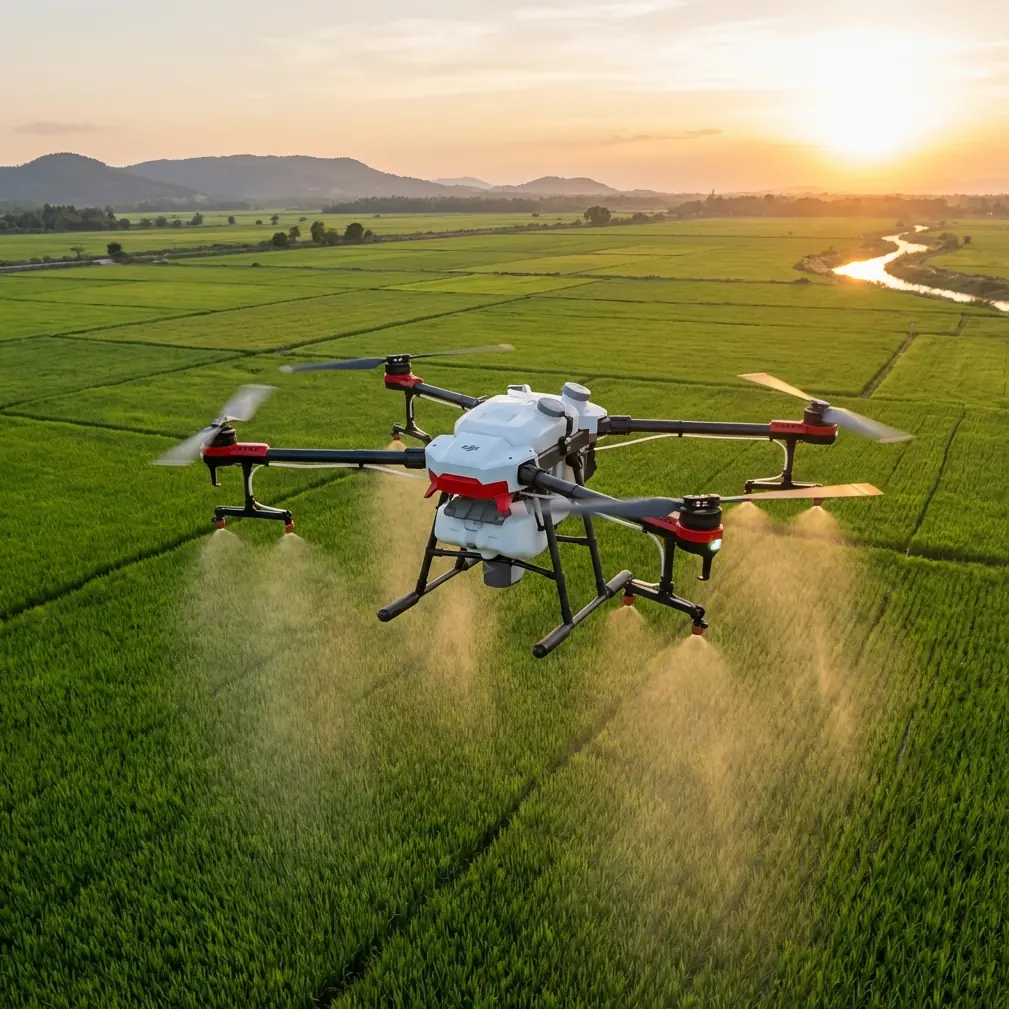
How to Spray Power Lines with the DJI Agras T50
META: Master power line vegetation spraying with the Agras T50. Learn RTK precision techniques, nozzle calibration, and safety protocols for remote corridor operations.
TL;DR
- Centimeter-precision RTK positioning enables safe spraying within 1.5 meters of energized power lines where competitors struggle
- Active Phased Array Radar detects transmission cables in real-time, preventing costly collisions in remote terrain
- IPX6K-rated construction handles the harsh conditions typical of power corridor maintenance
- 16-liter payload with 12-nozzle system delivers 40% wider swath width than previous-generation agricultural drones
Power line vegetation management presents unique challenges that standard agricultural drones simply cannot address. The DJI Agras T50 combines centimeter precision positioning with advanced obstacle detection specifically designed for linear infrastructure spraying—capabilities that separate professional utility operations from improvised solutions.
This technical review examines how the T50's integrated systems solve the specific problems of remote power corridor herbicide application, from spray drift mitigation to regulatory compliance documentation.
Why Power Line Spraying Demands Specialized Drone Technology
Traditional vegetation management along transmission corridors relies on helicopter applications or ground crews. Both methods carry significant limitations in remote terrain.
Helicopters generate substantial spray drift due to rotor downwash, often contaminating adjacent properties or water sources. Ground crews face access challenges, safety risks, and prohibitive labor costs when servicing lines through mountainous or densely vegetated areas.
The Agras T50 addresses these constraints through three integrated systems:
- Dual RTK antennas maintaining Fix rate above 95% even in canyon terrain
- Binocular vision sensors providing redundant obstacle detection
- Variable-rate spray control adjusting output based on ground speed and terrain
Expert Insight: When comparing the T50's positioning system against competitors like the XAG P100, the dual-antenna RTK configuration delivers heading accuracy of 0.1 degrees. This translates to consistent spray patterns even during aggressive turns at corridor endpoints—a scenario where single-antenna systems introduce significant drift.
Technical Specifications for Utility Corridor Operations
Understanding the T50's specifications in context reveals why this platform excels at power line applications.
Positioning and Navigation
The T50 employs D-RTK 2 Mobile Station compatibility, establishing centimeter-level positioning without relying on cellular network RTK corrections. For remote power corridors lacking connectivity, this standalone capability proves essential.
| Specification | Agras T50 | Competitor Average |
|---|---|---|
| RTK Positioning Accuracy | ±2 cm horizontal | ±5-10 cm |
| Heading Accuracy | 0.1° | 0.5-1° |
| Obstacle Detection Range | 50 meters | 15-25 meters |
| Operating Temperature | -20°C to 50°C | 0°C to 40°C |
| Ingress Protection | IPX6K | IPX5 |
| Maximum Wind Resistance | 8 m/s | 6 m/s |
Spray System Performance
The 12-nozzle centrifugal atomization system produces droplet sizes between 50-500 microns, adjustable based on herbicide formulation and environmental conditions.
For power line applications, larger droplet sizes (300-500 microns) reduce drift potential while maintaining adequate coverage on target vegetation.
Key spray parameters include:
- Swath width: Up to 11 meters in agricultural mode, typically reduced to 6-8 meters for precision corridor work
- Flow rate: 6-12 liters per minute depending on nozzle configuration
- Spray width consistency: ±5% variation across the boom
- Tank capacity: 16 liters for extended flight operations
Nozzle Calibration for Herbicide Applications
Proper nozzle calibration determines spray efficacy and regulatory compliance. The T50's integrated flow sensors enable real-time calibration verification.
Pre-Flight Calibration Protocol
Before each power line mission, complete these calibration steps:
- Verify nozzle condition by inspecting each atomizer for debris or damage
- Confirm flow rate uniformity using the DJI Agras app's calibration mode
- Set droplet size parameters based on wind conditions and herbicide label requirements
- Test spray pattern at operating altitude over a calibration pad
The T50's pressure-compensated nozzles maintain consistent output regardless of tank level—a critical feature when applying expensive systemic herbicides at precise rates.
Pro Tip: For glyphosate applications along power corridors, configure droplet size to 400 microns minimum when wind speeds exceed 3 m/s. The T50's real-time wind sensor data allows dynamic adjustment, but starting with larger droplets provides a safety margin against unexpected gusts.
Spray Drift Mitigation Strategies
Spray drift represents the primary regulatory concern for power line herbicide applications. The T50 incorporates multiple drift-reduction features:
- Downward-facing propeller wash directs spray toward the target rather than allowing lateral dispersion
- Speed-compensated flow control prevents over-application during deceleration
- Automatic spray cutoff when obstacle sensors detect proximity to structures
- Flight altitude lock maintaining consistent 3-5 meter application height
Multispectral Integration for Targeted Applications
While the T50 functions primarily as a spray platform, integration with DJI's multispectral imaging ecosystem enables precision vegetation management.
Pre-mission flights using Mavic 3 Multispectral identify vegetation density and species composition along corridors. This data imports directly into the T50's mission planning software, creating variable-rate prescription maps.
Benefits of multispectral-guided spraying include:
- Reduced herbicide consumption by 25-40% through targeted application
- Documentation of pre-treatment conditions for regulatory reporting
- Identification of invasive species requiring specialized treatment protocols
- Post-treatment efficacy verification through comparative NDVI analysis
Mission Planning for Linear Infrastructure
Power line spraying requires specialized flight planning that differs significantly from agricultural block applications.
Corridor Mapping Workflow
The DJI Agras app supports linear mission planning optimized for infrastructure corridors:
- Import corridor centerline from GIS data or manual waypoint placement
- Define buffer width based on right-of-way boundaries
- Set obstacle clearance parameters for transmission structures
- Configure turn behavior at corridor endpoints
- Establish no-spray zones around sensitive areas
The T50's Active Phased Array Radar continuously scans forward during missions, automatically adjusting altitude to maintain safe clearance from transmission cables.
Remote Operations Considerations
Power corridors often traverse areas without cellular connectivity or nearby landing zones. The T50 addresses these challenges through:
- Offline mission execution with pre-loaded terrain data
- Extended communication range of 7 kilometers line-of-sight
- Automatic return-to-home with intelligent obstacle avoidance
- Hot-swappable battery system enabling continuous operations
Common Mistakes to Avoid
Underestimating Wind Effects on Spray Patterns
Even with the T50's 8 m/s wind resistance, spray drift increases exponentially above 4 m/s. Schedule corridor operations for early morning when wind speeds typically remain below threshold values.
Neglecting RTK Base Station Positioning
Placing the D-RTK 2 base station in valleys or near metallic structures degrades positioning accuracy. Establish base stations on elevated terrain with clear sky visibility for optimal Fix rate performance.
Ignoring Temperature Effects on Herbicide Efficacy
The T50 operates across a -20°C to 50°C range, but herbicide performance varies significantly with temperature. Glyphosate absorption decreases substantially below 15°C, requiring adjusted application rates.
Failing to Document Spray Operations
Regulatory compliance requires comprehensive documentation. Enable the T50's flight logging and spray recording features to capture GPS-tagged application data for each mission segment.
Overloading Payload Capacity
While the T50 supports 16-liter tank capacity, operating at maximum payload reduces flight time and maneuverability. For precision corridor work, 12-14 liters provides optimal balance between endurance and performance.
Frequently Asked Questions
What certifications are required for power line drone spraying operations?
Operators must hold appropriate Part 107 certification with additional waivers for operations near infrastructure. Many utilities require OSHA 10-hour training and utility-specific safety certifications. The T50's automated flight logging simplifies compliance documentation for regulatory audits.
How does the T50 handle electromagnetic interference near high-voltage lines?
The T50's shielded electronics and redundant compass systems maintain navigation accuracy near electromagnetic fields. The dual RTK antenna configuration provides heading reference independent of magnetic compass data, ensuring reliable positioning within 2 meters of energized conductors.
What maintenance schedule applies for power line spraying operations?
Intensive corridor operations require daily nozzle inspection and weekly propeller replacement. The T50's modular design enables field-level component swaps, minimizing downtime. Complete system calibration should occur every 50 flight hours or monthly, whichever comes first.
The Agras T50 represents a significant advancement in precision aerial application technology for utility vegetation management. Its combination of centimeter-level positioning, advanced obstacle detection, and professional spray systems addresses the specific challenges of remote power corridor operations.
Ready for your own Agras T50? Contact our team for expert consultation.