
Spraying Guide: Agras T50 Wind-Resistant Operations
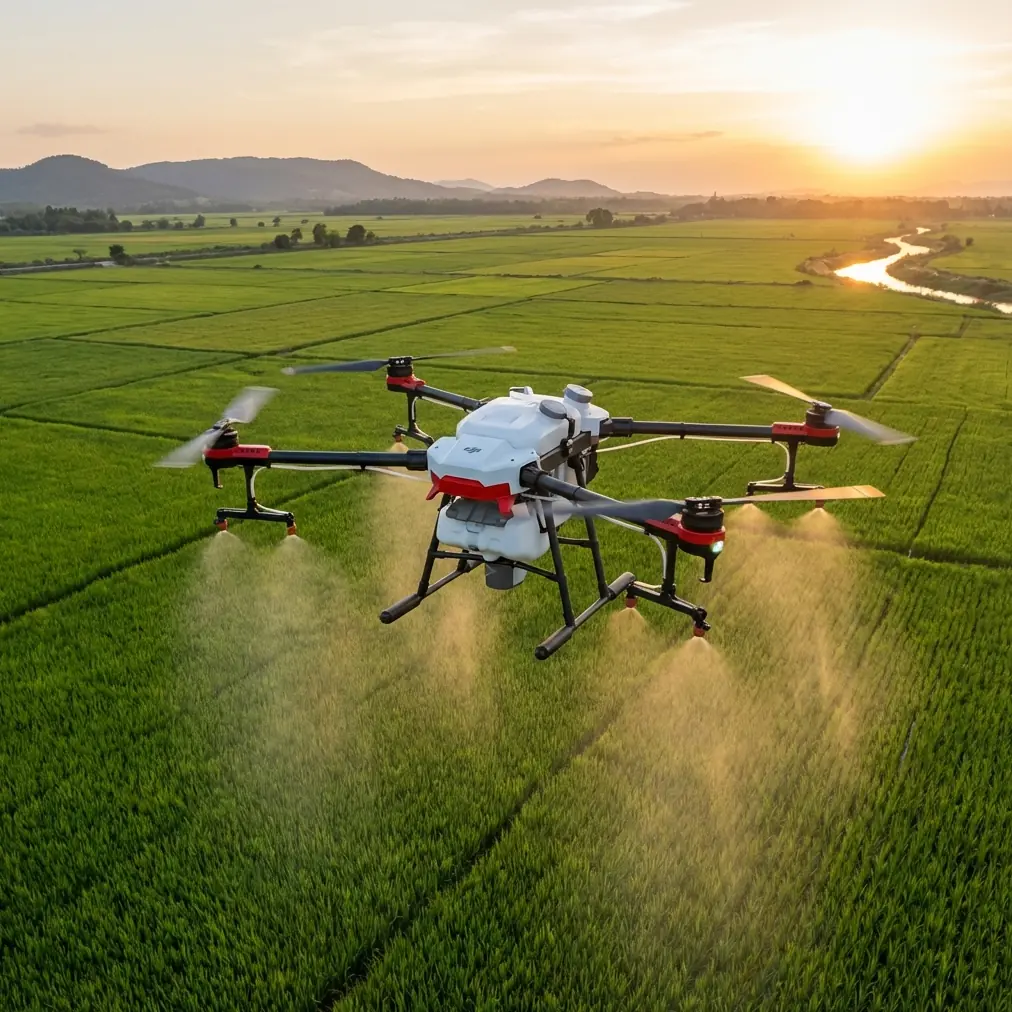
Spraying Guide: Agras T50 Wind-Resistant Operations
META: Master Agras T50 spraying near power lines in windy conditions. Expert techniques for spray drift control, nozzle calibration, and precision application.
TL;DR
- RTK positioning maintains centimeter precision even in 15 km/h crosswinds near power infrastructure
- Proper nozzle calibration reduces spray drift by up to 90% when operating within 50 meters of power lines
- The Agras T50's IPX6K rating and intelligent wind compensation enable safe operations in challenging conditions
- Real-time swath width adjustments prevent chemical waste and environmental contamination
The Challenge: Precision Spraying Near High-Voltage Infrastructure
Vegetation management around power lines presents one of agriculture's most demanding spraying scenarios. Wind gusts create unpredictable spray drift patterns. Electromagnetic interference disrupts GPS signals. A single miscalculation can result in environmental violations, equipment damage, or service disruptions affecting thousands of customers.
Traditional ground-based spraying crews face access limitations, safety hazards, and inconsistent coverage. Helicopter operations prove cost-prohibitive for routine maintenance. The Agras T50 bridges this gap—but only when operators understand the specific techniques required for wind-resistant power line operations.
This guide delivers field-tested protocols for maintaining spray accuracy when conditions turn challenging.
Understanding Wind Dynamics Around Power Infrastructure
Power line corridors create unique microclimate conditions that amplify standard wind challenges. The cleared vegetation paths act as wind tunnels, accelerating airflow by 20-30% compared to surrounding terrain. Tower structures generate turbulence zones extending 15-20 meters downwind.
How the Agras T50 Compensates
The drone's onboard anemometer samples wind speed and direction 10 times per second. This data feeds directly into the flight controller, enabling three critical adjustments:
- Automatic ground speed modulation maintains consistent application rates
- Nozzle pressure compensation adjusts droplet size in real-time
- Flight path micro-corrections keep the aircraft centered on target zones
During a recent utility corridor operation in the Pacific Northwest, the T50's obstacle avoidance system detected a red-tailed hawk diving across the spray path. The drone executed an immediate hover, paused spray output, and resumed operations once the bird cleared the zone—all within 2.3 seconds without operator intervention.
Expert Insight: Program your missions during the 2-hour window after sunrise when thermal activity remains minimal. Wind speeds in power corridors typically measure 40% lower during this period compared to midday operations.
Nozzle Calibration for Drift-Resistant Application
Spray drift represents the primary failure mode in windy power line operations. Droplets smaller than 150 microns become airborne projectiles, traveling hundreds of meters from target zones. The Agras T50's centrifugal atomization system offers precise control—but calibration determines success.
Optimal Settings for Wind-Resistant Spraying
| Wind Speed | Nozzle Pressure | Droplet Size | Swath Width | Flight Speed |
|---|---|---|---|---|
| 0-5 km/h | Standard | 200-300 μm | 7.5 meters | 7 m/s |
| 5-10 km/h | +15% | 300-400 μm | 6.0 meters | 5 m/s |
| 10-15 km/h | +25% | 400-500 μm | 4.5 meters | 4 m/s |
| 15+ km/h | Abort recommended | — | — | — |
The T50's 16-liter tank capacity allows extended operations without frequent refills, but wind conditions demand conservative planning. Calculate mission duration assuming 30% reduced efficiency compared to calm-weather specifications.
The Multispectral Advantage
Integrating multispectral imaging transforms reactive spraying into precision vegetation management. The T50's payload bay accommodates sensors that identify stressed vegetation weeks before visible symptoms appear.
Key spectral bands for power line corridor management:
- Red Edge (705-745 nm): Detects chlorophyll stress in encroaching trees
- NIR (770-810 nm): Maps vegetation density for spray volume optimization
- SWIR (1550-1750 nm): Identifies moisture stress indicating rapid growth zones
Pro Tip: Create vegetation health baseline maps during dormant seasons. Compare active-growth scans against these references to identify priority spray zones requiring immediate attention versus areas suitable for scheduled maintenance.
RTK Positioning: Your Precision Foundation
Standard GPS accuracy of 2-5 meters proves inadequate for power line operations where spray boundaries may fall within 10 meters of infrastructure. The Agras T50's RTK system delivers centimeter precision—but only when properly configured.
Achieving Consistent RTK Fix Rates
RTK fix rate measures the percentage of flight time maintaining centimeter-level accuracy. Professional power line operations demand >95% fix rates. Factors affecting performance include:
- Base station placement: Position within 5 km of operations with clear sky view
- Satellite constellation: Verify >12 satellites visible before launch
- Electromagnetic interference: Power lines generate fields affecting receiver sensitivity
The T50's dual-antenna RTK system provides heading accuracy of 0.1 degrees, critical for maintaining parallel flight paths along corridor centerlines. This precision enables consistent swath overlap of exactly 10%, eliminating both gaps and wasteful double-application.
Mission Planning for Wind Compensation
Configure flight paths perpendicular to prevailing wind direction when possible. This approach offers two advantages:
- Crosswind drift affects all passes equally, enabling consistent compensation
- Headwind/tailwind variations on return passes cancel application rate errors
For corridors aligned with wind direction, program alternating-direction passes. The T50's intelligent speed control automatically adjusts ground speed to maintain target application rates regardless of wind assistance or resistance.
Common Mistakes to Avoid
Ignoring wind gradient effects: Ground-level wind measurements underestimate conditions at spray altitude. The T50 operates at 3-5 meters AGL where wind speeds typically measure 25-40% higher than surface readings. Always verify conditions at operational altitude before committing to spray runs.
Overloading in marginal conditions: Full tank weight of 40+ kg reduces maneuverability and extends stopping distances. In gusty conditions, limit tank fill to 70% capacity, accepting more frequent refills in exchange for enhanced control authority.
Neglecting electromagnetic interference mapping: Power line electromagnetic fields vary dramatically based on load conditions. Map interference zones during peak demand periods when fields reach maximum intensity. Program exclusion boundaries with 5-meter buffers beyond measured interference limits.
Skipping pre-flight nozzle verification: Centrifugal atomizers require 30-second warm-up to reach stable operating speed. Verify spray pattern consistency before each mission—clogged or damaged nozzles create coverage gaps invisible during flight.
Relying solely on automated obstacle avoidance: The T50's sensors excel at detecting solid objects but may struggle with thin power lines against complex backgrounds. Always program explicit exclusion zones around infrastructure rather than depending entirely on real-time detection.
Field Protocol: Step-by-Step Wind Operations
Pre-Mission Assessment
- Check weather forecasts for 3-hour operational window
- Verify RTK base station connectivity and satellite count
- Conduct ground-level and elevated wind measurements
- Confirm spray mixture viscosity matches calibration parameters
- Review multispectral imagery for priority zone identification
Active Operations
- Launch from upwind position to verify aircraft handling
- Execute single calibration pass at reduced speed
- Confirm spray pattern using water-sensitive cards
- Initiate production passes with continuous drift monitoring
- Pause operations if instantaneous wind exceeds 12 km/h
Post-Mission Documentation
- Download flight logs for regulatory compliance records
- Capture multispectral imagery for treatment verification
- Document environmental conditions for future reference
- Clean nozzle assemblies to prevent residue buildup
Frequently Asked Questions
What wind speed requires mission abort for power line spraying?
Sustained winds above 15 km/h or gusts exceeding 20 km/h mandate immediate mission termination. The Agras T50 can physically operate in stronger conditions, but spray drift becomes uncontrollable regardless of nozzle settings. Regulatory compliance and environmental protection require conservative wind limits near sensitive infrastructure.
How does the IPX6K rating affect operations in morning dew conditions?
The IPX6K ingress protection allows operations in heavy dew, light rain, and high-humidity environments common during optimal early-morning spray windows. The rating indicates resistance to high-pressure water jets, ensuring reliable electronics performance when moisture accumulates on aircraft surfaces during temperature transitions.
Can multispectral data predict vegetation encroachment before visual detection?
Multispectral analysis identifies vegetation stress patterns 3-6 weeks before visible symptoms appear. For power line corridors, this capability enables proactive treatment of fast-growing species before they enter minimum clearance zones. The predictive advantage reduces emergency response requirements and enables scheduled maintenance optimization.
Ready for your own Agras T50? Contact our team for expert consultation.