
Agras T50 for Dusty Highway Spraying: A Field
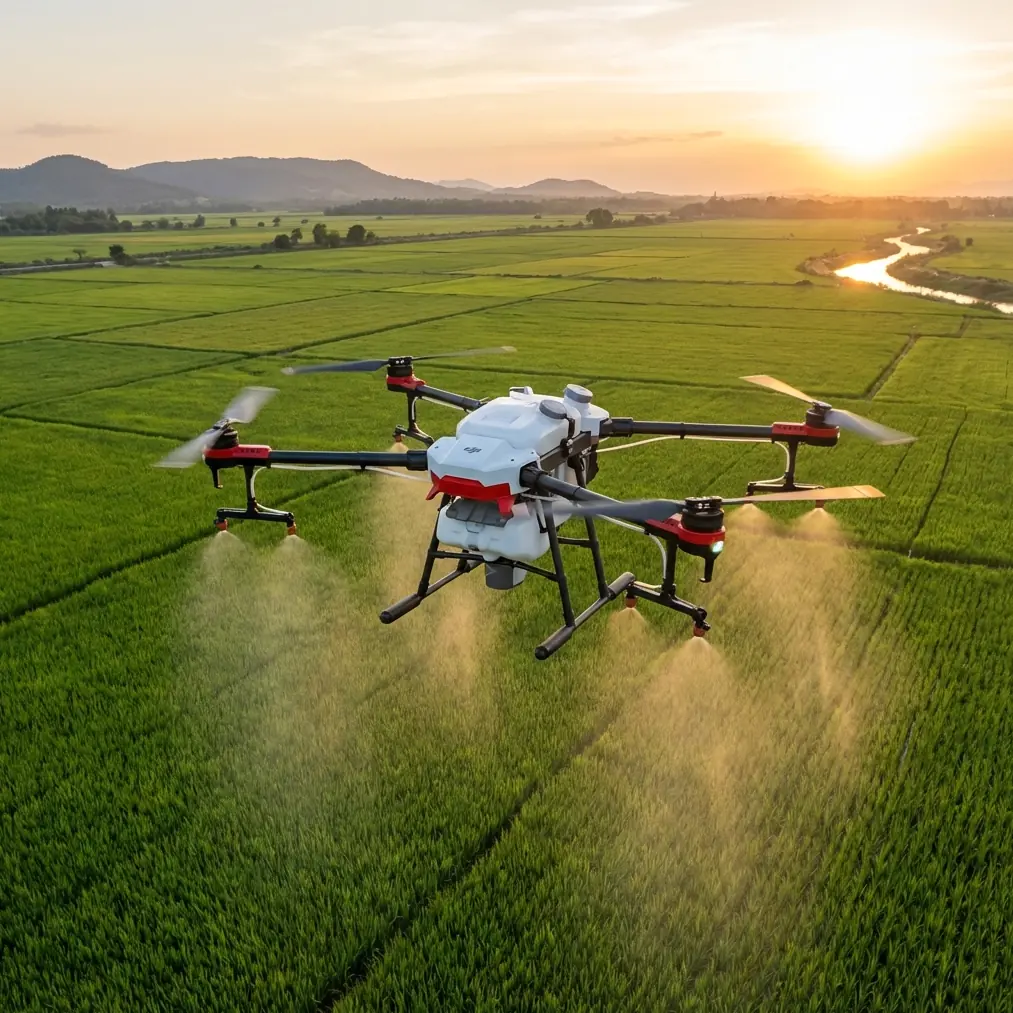
Agras T50 for Dusty Highway Spraying: A Field-First Operating Tutorial
META: Learn how to plan safer, more precise dusty highway spraying workflows with the Agras T50 by applying low-altitude mapping logic, flight service coordination, and practical drift-control methods.
Dusty highway corridors are awkward places to spray well.
The terrain changes without warning. Embankments rise and fall. Roadside vegetation creates uneven airflow. Utility lines and sign structures break up a straight route. Add passing vehicle turbulence and suspended dust, and precision starts to fall apart fast. That is exactly why the Agras T50 deserves to be discussed as an operating system for corridor work, not just as a spray drone.
If you are evaluating the Agras T50 for highway-edge vegetation management, roadside dust suppression support, or similar linear spraying tasks, the real question is not whether it can carry liquid and cover ground. Many aircraft can do that. The question is whether it helps you manage the two things that usually ruin these jobs: low-altitude safety and data quality.
That is where the reference material points in a useful direction.
Why corridor spraying needs more than low flight and a big tank
A common mistake in difficult spray environments is assuming lower flight always means better results. On paper, dropping lower can improve target placement and reduce drift distance. In practice, it can turn into the exact opposite if the route has elevation changes, trees, poles, wires, and dust plumes.
The ArcGIS field-collection material makes this painfully clear. In one documented workflow, high-resolution orthomosaic capture was performed at about 100 meters, while low-altitude interpretation sample collection happened at roughly 15 meters. That gap matters. The lower pass produced finer visual detail, but it also demanded slower flight, more images, more battery use, and more operator attention. In rough terrain with elevation variation of tens of meters, automated low-altitude collection could create collision risk with hillsides, trees, or power lines.
Translate that into an Agras T50 spraying job along a dusty highway, and the lesson is immediate: the best spraying plan is rarely “fly as low as possible the whole time.” The better plan is layered.
Use higher-altitude scouting or pre-mission route review to understand the corridor. Then reserve lower, more precise spray passes for sections where target conditions justify it and obstacle exposure is controlled. This is one of the places where the T50 stands out against less capable competitors that are often flown as blunt instruments. The stronger platform is the one that supports disciplined workflow decisions, not reckless simplification.
The T50 advantage is operational stability, not just output
The Agras T50 gets attention because it is built for serious agricultural throughput, but in dusty roadside work, the stronger differentiator is how well it fits repeatable precision operations.
On linear infrastructure edges, consistency matters more than burst performance. You need a stable swath width, predictable nozzle calibration behavior, reliable positioning, and enough environmental robustness to keep dust and moisture from degrading the job. Readers looking at alternatives often compare payload first. I would compare mission stability first.
Why? Because dust-heavy corridors punish weak systems. A drone that looks good in open-field spec sheets may lose its edge when every pass is interrupted by shoulder slope, roadside brush, sign gantries, and vehicle-induced crossflow. The T50’s appeal in this setting is that it is built for real agricultural duty cycles, where repeatability matters. That makes it a better fit for long roadside segments than lighter platforms that can technically spray but struggle to maintain professional consistency under harder conditions.
Its ruggedized build also matters more here than many buyers admit. Dust intrusion is not a cosmetic problem. It affects cleanup burden, connector longevity, cooling behavior, and confidence across multiple sorties in the same day. When operators mention an IPX6K-class durability conversation in the market, they are really talking about whether the machine is ready for harsh washdown and contaminated environments after work is done. On dusty highway jobs, that is not a side note. It is part of fleet survivability.
Start with mapping logic, even if the mission is spraying
This is the biggest practical takeaway from the source documents.
The ArcGIS material explains why teams still collect selective low-altitude sample points even after they already have high-definition orthomosaic imagery. The reason is simple: full-scene detail and ground-truth detail are not the same thing. Ultra-low flight can reveal what higher-altitude imagery cannot, but doing it everywhere is inefficient and sometimes unsafe.
The same logic improves Agras T50 corridor spraying.
Before spraying a long dusty roadside stretch, divide the mission into three decision layers:
1. Corridor overview
Use prior imagery, route records, or a preliminary flight review to understand terrain breaks, vegetation density, structures, and known hazard points. Think of this as your 100-meter mindset: broad coverage, efficient planning.
2. Critical sample zones
Identify limited segments that need closer visual confirmation. These are the equivalents of the 15-meter interpretation points in the ArcGIS workflow. On a highway corridor, that could mean:
- tight wire crossings
- steep roadside cut sections
- drainage channels with abrupt drop-offs
- dense vegetation transitions
- areas where dust accumulation obscures visual contrast
3. Spray execution segments
Only after the corridor is understood should you lock in low-altitude application parameters, swath width, speed, and nozzle output.
This layered process does two things. First, it reduces unnecessary low-altitude exposure. Second, it improves spray quality because your settings are chosen for actual field conditions, not assumptions.
Why “sample library thinking” makes the T50 more productive
One of the smartest details in the reference documents is not about flying. It is about pattern recognition.
The ArcGIS case notes that once interpretation sample points accumulate across several plots, teams can build a sample library and identify other plots by correspondence instead of collecting fresh low-altitude samples everywhere. In the example, a sample point from plot 69 was enough to judge crop type in plots 51 and 52.
That principle has real value for Agras T50 corridor operations.
In highway spraying, you should build your own operational sample library by corridor type. Over time, your team can classify sections such as:
- open shoulder with low drift risk
- embankment edge with recirculating airflow
- tree-lined section with turbulence pockets
- utility-heavy zone requiring tighter obstacle buffers
- dust-prone cut section where visibility and deposition patterns change
Once those patterns are documented, you do not need to re-learn every kilometer from scratch. You can apply proven nozzle calibration, speed, and pass-spacing logic to repeating corridor types. This is where experienced T50 teams outperform less structured operators. They are not just flying better; they are reusing field intelligence.
Spray drift control on dusty highways: what actually matters
Dust changes everything because it interferes with visual judgment and airflow interpretation.
If you are running an Agras T50 near road edges, focus on these variables in order:
Swath width discipline
Do not chase maximum nominal coverage if the corridor is broken by poles, signs, and changing shoulder width. A narrower, controlled swath often delivers better real output because overlap and misses are reduced.
Nozzle calibration
This is not optional on corridor jobs. Dust deposition can make visual coverage look heavier or lighter than it really is. If calibration is sloppy, the operator may compensate in the wrong direction. Precision starts at the nozzle, not the screen.
RTK fix stability
Centimeter precision is most useful when the mission geometry is narrow and linear. Highway shoulders are exactly that. If your RTK fix rate is unstable, each pass can drift just enough to create under-treated strips or excessive overlap along the edge. On a broad field, that error may be tolerable. On a roadside lane edge, it becomes obvious.
Height strategy
Do not confuse “low” with “safe” or “accurate.” The source material warns that terrain undulation of dozens of meters can make automated low-altitude work dangerous. That applies directly to cut slopes and elevated roadside sections. The T50 should be flown with terrain awareness in mind, not with a single simplistic height target.
Real-time hazard review
The documents explicitly mention operators checking live video to spot hazards such as terrain changes, tall vegetation, and power lines. That operator behavior is highly relevant for T50 corridor spraying. Dust can hide small but critical threats until the aircraft is already committed. Live review is a safety function, not just a convenience.
A practical T50 tutorial workflow for dusty roadside spraying
Here is a field-ready sequence that aligns with the logic in the source material.
Step 1: Build the route in segments, not one long line
Break the highway section into operational blocks based on slope, vegetation, structures, and traffic exposure. This reduces the temptation to apply one spray profile everywhere.
Step 2: Review broad-area imagery or prior survey data
Use a higher-level corridor view first. The point is not leaf-level detail. The point is identifying where low-altitude passes would be inefficient or risky.
Step 3: Inspect only the ambiguous sections more closely
Borrow the sample-point logic from the ArcGIS workflow. You do not need ultra-close confirmation for every segment. You need it where treatment outcome or flight safety is uncertain.
Step 4: Tune nozzle calibration before the first productive pass
Dusty highways exaggerate the cost of bad calibration. Check flow behavior, intended droplet outcome, and consistency across the boom setup before trying to optimize speed.
Step 5: Set a conservative swath width for the first block
Let the first passes tell you how the corridor behaves. If the shoulder edge, airflow, and target density are stable, widen later. Starting too wide usually creates rework.
Step 6: Monitor RTK status continuously
Centimeter precision only helps if the fix is actually stable. If fix quality degrades, treat that as a spray-quality issue, not just a navigation issue.
Step 7: Log each corridor type and result
This is how you create your own operational sample library. The next time you meet a similar roadside section, the setup work shrinks.
If your team is building repeatable T50 procedures for corridor spraying and wants a second set of eyes on route planning or calibration logic, this direct field coordination channel is a practical place to continue the discussion.
What the Hubei low-altitude story gets right for T50 operators
The Hubei low-altitude development report may seem far removed from a single spray mission, but it highlights something larger: serious low-altitude work scales when there is a coordinated service backbone behind it.
The report describes Hubei’s 2025 push to expand low-altitude applications across logistics, inspection, emergency response, and sightseeing, while positioning a provincial flight service platform as the “smart hub” of the ecosystem. That idea matters for Agras T50 users because corridor spraying does not improve only through aircraft hardware. It improves through better mission services around the aircraft: route management, airspace coordination, operational records, risk review, and cross-team data reuse.
In other words, the strongest T50 operation is not just a pilot with a capable machine. It is an operation that behaves like part of a managed low-altitude network.
That is especially relevant for highway-adjacent work, where multiple stakeholders may be involved and where route repeatability creates long-term value. Teams that document conditions, keep precise route histories, and standardize segment-level decisions will consistently outperform teams that rely on memory and improvisation.
Where the Agras T50 clearly excels against weaker alternatives
Some competing spray drones are acceptable in flat, open, uncomplicated plots. Dusty highway corridors are not that environment.
The T50 is the better choice when you need:
- more confidence in repeated professional-duty cycles
- cleaner integration of precision workflow habits
- dependable operation in harsher contamination conditions
- corridor-level repeatability rather than one-off spraying
- enough platform capability to support disciplined low-altitude execution without treating every pass like a gamble
That last point is the real separator. The T50 is not impressive because it lets operators ignore complexity. It is impressive because it gives skilled operators the tools to manage complexity well.
And that is the lesson hidden in the source materials. Low-altitude detail is valuable, but expensive and risky if used everywhere. Selective close inspection, strong route planning, sample-library thinking, and careful hazard awareness create better outcomes than brute-force low flight. Pair that mindset with a robust aircraft like the Agras T50, and dusty highway spraying becomes far more controlled.
That is how professionals use this platform.
Ready for your own Agras T50? Contact our team for expert consultation.