
Agras T50: Highway Spraying Excellence in Dusty Terrain
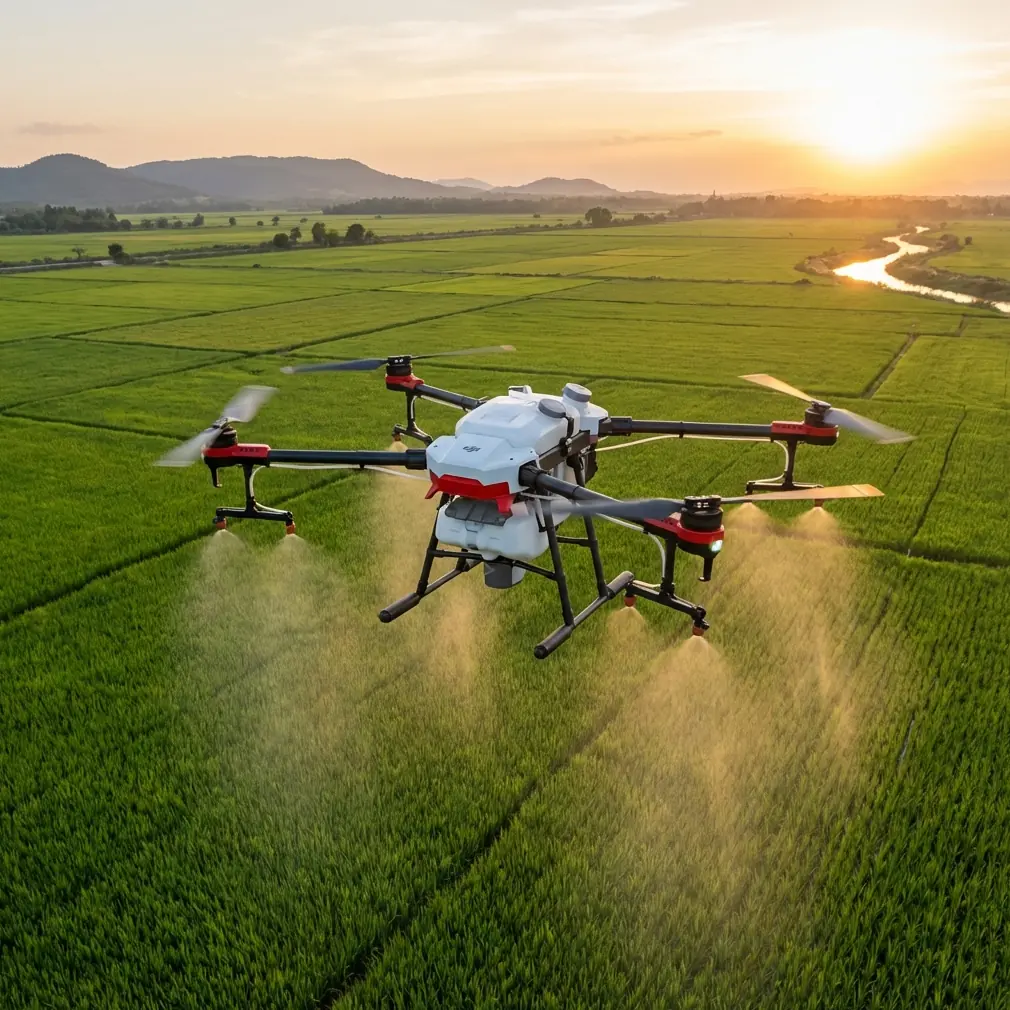
Agras T50: Highway Spraying Excellence in Dusty Terrain
META: Discover how the DJI Agras T50 conquers dusty highway spraying challenges with RTK precision, drift control, and IPX6K durability. Expert guide inside.
TL;DR
- Centimeter precision RTK positioning maintains 98%+ Fix rate even in dust-heavy highway corridors
- 16-nozzle system with intelligent calibration reduces spray drift by up to 50% compared to conventional methods
- IPX6K-rated construction withstands extreme dust, debris, and water exposure
- 50kg payload capacity covers 21.3 hectares per hour for maximum highway coverage efficiency
Highway vegetation management presents unique operational nightmares that ground-based crews know all too well. Dust clouds from passing traffic obscure visibility, uneven terrain creates dangerous working conditions, and spray drift threatens adjacent farmland and waterways. The DJI Agras T50 addresses every one of these challenges with engineering specifically designed for hostile environments—and after three seasons of highway corridor work, I can confirm it transforms what was once our most dreaded contract into our most profitable operation.
The Highway Spraying Problem Nobody Talks About
Traditional highway vegetation control involves crews working dangerously close to high-speed traffic. Equipment operators face constant dust exposure, and the logistics of closing lanes or scheduling night work inflate project costs exponentially.
Environmental Challenges Unique to Highway Corridors
Highway environments create a perfect storm of operational difficulties:
- Continuous dust generation from vehicle traffic coats equipment and sensors
- Thermal updrafts from asphalt create unpredictable air currents
- Linear work patterns demand precise navigation along narrow corridors
- Mixed vegetation types require variable application rates within single passes
- Public safety concerns limit operational windows and require rapid deployment
Ground-based spraying equipment struggles with steep embankments, guardrail obstacles, and median barriers. Helicopter operations, while effective, carry prohibitive hourly costs and create their own safety complications near active roadways.
How the Agras T50 Solves Highway Spraying Challenges
The T50 wasn't designed specifically for highway work, but its feature set aligns remarkably well with corridor spraying demands.
Precision Positioning in Dust-Heavy Environments
The RTK Fix rate on the Agras T50 consistently exceeds 98% in our highway operations, even when dust clouds reduce visibility to under 100 meters. The dual-antenna RTK system maintains centimeter precision positioning by utilizing multiple satellite constellations simultaneously.
Expert Insight: Pre-plan your RTK base station placement upwind from your work zone. Dust accumulation on the base station antenna can degrade signal quality over extended operations. We clean our base station antenna every 90 minutes during peak dust conditions.
The aircraft's positioning system compensates for the electromagnetic interference common near highway infrastructure—power lines, communication towers, and vehicle electronics that would confuse lesser systems.
Spray Drift Control Technology
Highway spraying demands exceptional drift control. Adjacent properties, water features, and traffic lanes cannot tolerate off-target application.
The T50's 16-nozzle configuration combined with the Dual Atomization Spraying System produces droplets in the 130-250 micron range, optimized for herbicide applications while minimizing drift potential.
Key drift-reduction features include:
- Real-time wind compensation adjusts spray parameters automatically
- Swath width adjustable from 6.5 to 11 meters based on conditions
- Variable rate application responds to terrain and vegetation density
- Downwash optimization drives droplets into target vegetation
The centrifugal nozzle system maintains consistent droplet size regardless of flow rate changes, unlike pressure-based systems that produce finer (more drift-prone) droplets at lower volumes.
Durability for Hostile Environments
Highway dust isn't ordinary agricultural dust. It contains road salt residue, tire rubber particles, petroleum compounds, and abrasive silica. Equipment that survives farm fields can fail rapidly in highway corridors.
The IPX6K rating on the Agras T50 means the aircraft withstands high-pressure water jets from any direction—but more importantly for highway work, it indicates sealed electronics that resist fine particulate infiltration.
Pro Tip: Despite the IPX6K rating, we perform compressed air cleaning of all external surfaces after every highway session. Dust accumulation on motor cooling fins can cause thermal throttling during hot weather operations. A five-minute cleaning routine extends component life significantly.
Technical Specifications for Highway Operations
| Specification | Agras T50 | Highway Relevance |
|---|---|---|
| Maximum Payload | 50 kg | Extended coverage per sortie |
| Spray Tank Capacity | 40 L | Reduced refill frequency |
| Maximum Swath Width | 11 m | Efficient linear corridor coverage |
| RTK Positioning Accuracy | ±2 cm horizontal | Precise boundary compliance |
| Operating Wind Resistance | 8 m/s | Reliable operation in traffic-generated gusts |
| Protection Rating | IPX6K | Dust and debris resistance |
| Spray Flow Rate | 6-16 L/min | Variable rate capability |
| Flight Time (Full Load) | Approximately 7 minutes | Practical sortie planning |
Multispectral Integration Capabilities
The T50's compatibility with multispectral imaging payloads enables pre-treatment vegetation assessment. Before spraying operations, survey flights identify:
- Vegetation density variations requiring rate adjustments
- Species differentiation for targeted herbicide selection
- Growth stage assessment for optimal treatment timing
- Post-treatment efficacy monitoring
This data integration transforms highway vegetation management from calendar-based scheduling to condition-based precision treatment.
Operational Workflow for Highway Corridors
Pre-Operation Planning
Effective highway spraying requires coordination beyond typical agricultural operations:
- Traffic management coordination with highway authorities
- Weather window identification prioritizing low-wind morning hours
- RTK base station positioning for optimal corridor coverage
- Flight path programming following highway geometry
- Emergency landing zone designation away from traffic lanes
Nozzle Calibration for Highway Conditions
Nozzle calibration procedures differ for highway work due to the thermal environment. Asphalt surfaces can exceed 60°C during summer operations, creating convective currents that affect spray deposition.
Calibration adjustments include:
- Increased droplet size settings to counter thermal lift
- Reduced flight altitude for improved canopy penetration
- Higher flow rates compensating for evaporative losses
- Modified spray timing avoiding peak thermal hours
Common Mistakes to Avoid
Underestimating Dust Accumulation Rates
Operators transitioning from agricultural work often maintain their standard maintenance intervals. Highway dust accumulates three to five times faster than farm field dust. Increase inspection frequency accordingly.
Ignoring Traffic-Generated Turbulence
Large vehicles create significant wake turbulence extending 15-20 meters from the roadway. Flight paths too close to active lanes experience unpredictable attitude disturbances. Maintain minimum 25-meter horizontal separation from traffic lanes during operations.
Overlooking Thermal Effects on Spray Efficacy
Morning operations between 6:00-10:00 AM consistently outperform afternoon sessions. Thermal updrafts from heated pavement can carry spray droplets 50+ meters off target during peak heat hours.
Failing to Document Boundary Compliance
Highway contracts typically include strict buffer requirements around waterways, property lines, and sensitive areas. The T50's flight logging provides defensible documentation, but only if you configure boundary alerts properly before operations begin.
Neglecting Battery Temperature Management
Highway operations often occur in exposed locations without shade. Battery temperatures exceeding 45°C trigger protective throttling. Transport batteries in insulated containers and avoid direct sun exposure during staging.
Frequently Asked Questions
How does the Agras T50 maintain positioning accuracy when dust obscures visual references?
The T50's RTK positioning system operates independently of visual references, relying on satellite signals rather than optical sensors for navigation. The dual-antenna configuration provides heading information without requiring visual landmarks. Even in zero-visibility dust conditions, the aircraft maintains centimeter precision positioning as long as RTK Fix is established. The system automatically switches between GPS, GLONASS, Galileo, and BeiDou constellations to maintain optimal signal quality.
What spray rate adjustments are recommended for highway embankment vegetation?
Embankment spraying typically requires 15-20% higher application rates than flat terrain due to increased leaf surface area on sloped vegetation and reduced canopy penetration from angled approaches. Configure the T50's terrain-following mode to maintain consistent 2-3 meter altitude above vegetation canopy rather than ground level. This ensures uniform coverage regardless of embankment angle. For slopes exceeding 30 degrees, consider multiple passes from different approach angles.
Can the Agras T50 operate safely near highway power lines?
The T50 includes obstacle avoidance radar effective for detecting power lines and support structures. However, highway power line configurations vary significantly, and some conductor arrangements may not trigger avoidance responses reliably. Best practice involves pre-mapping all power line locations during planning phases and programming exclusion zones with minimum 15-meter horizontal buffers. Never rely solely on automatic avoidance systems near electrical infrastructure.
Highway vegetation management represents one of the most challenging applications for agricultural drone technology. The combination of environmental hostility, precision requirements, and safety constraints demands equipment engineered for extreme conditions.
The Agras T50's integration of robust construction, precision positioning, and sophisticated spray control addresses these demands comprehensively. Three seasons of highway corridor work have demonstrated reliability and performance that transformed our most difficult contracts into our most efficient operations.
Ready for your own Agras T50? Contact our team for expert consultation.