
Agras T50 for Coastal Forest Spraying: A Practical Field
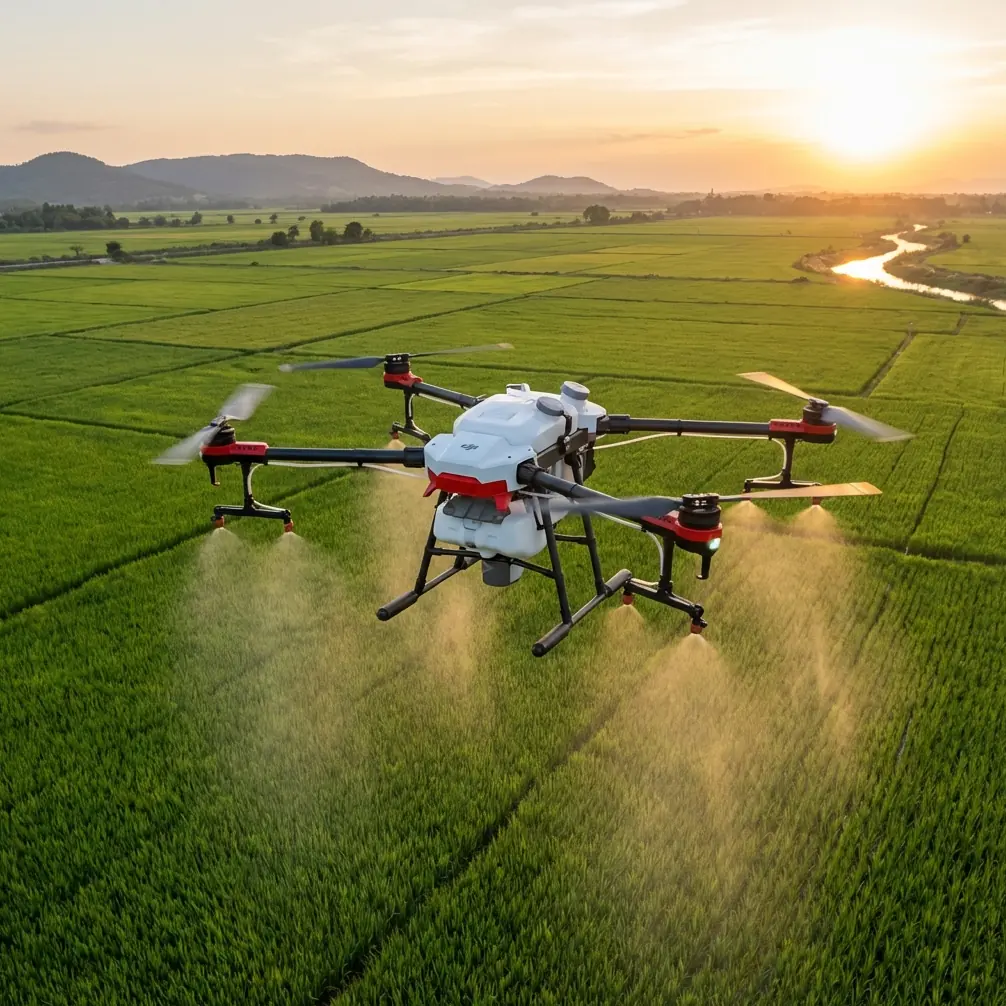
Agras T50 for Coastal Forest Spraying: A Practical Field Method That Prioritizes Drift Control and Coverage
META: Learn how to use the DJI Agras T50 for coastal forest spraying with practical guidance on drift control, nozzle calibration, RTK fix stability, swath width, and wet-weather durability.
Coastal forest spraying is where a drone’s spec sheet stops being marketing copy and starts becoming operational reality. Salt-laden air, shifting crosswinds, uneven canopy density, narrow launch zones, and frequent moisture exposure all punish weak platforms and sloppy workflow. If the mission is to protect timber, shelterbelts, mangroves, or mixed coastal woodland with the Agras T50, the real question is not whether the aircraft can spray. It is whether it can spray accurately enough, repeatedly enough, and predictably enough to justify the sortie.
That is where the Agras T50 separates itself.
I am writing this from the perspective of a field-method problem, not a brochure. In coastal forestry, the best aircraft is the one that holds a stable line at low altitude, maintains consistent droplet delivery across irregular vegetation, and gives the pilot enough positioning confidence to keep overlap tight without inviting spray drift into waterways or non-target habitat. The T50 is particularly well suited to that environment because several of its core traits align with the constraints of coastal work: high payload productivity, robust wet-environment tolerance, and positioning architecture built around centimeter precision when RTK conditions are healthy.
This article lays out a practical how-to framework for spraying coastal forests with the Agras T50, with emphasis on spray drift, nozzle calibration, RTK fix rate, swath management, and weather-hardened operations.
Why coastal forest spraying is different
Most agricultural drone advice assumes broadacre fields with clear edges, predictable row geometry, and easier access. Coastal forests are messier. Wind direction can pivot around dunes, cliffs, drainage corridors, and tree lines. The air close to the canopy often behaves differently from the air reported by a nearby weather station. Salt and moisture increase maintenance pressure. In many coastal areas, the penalty for drift is also higher because streams, marshes, conservation buffers, and neighboring vegetation sit close to the treatment zone.
That changes how you should evaluate the Agras T50.
The obvious headline feature is its large-capacity spraying role. For a forestry operator, that matters because each refill cycle consumes time, battery rotation, and crew attention. A larger tank reduces dead time and increases the share of each mission spent actually treating trees rather than shuttling back for replenishment. In fragmented coastal blocks, that operational gain is often more valuable than raw top speed. The T50’s 40 kg spray tank gives crews enough volume to work meaningful sections of forest without turning every small stand into a logistics bottleneck.
The second critical detail is environmental durability. Coastal spraying is a damp, abrasive, dirty job. Equipment gets misted, splashed, and exposed to airborne salt. The T50’s IPX6K protection rating is not a decorative feature in this setting. It means the platform is better prepared for heavy washdown-style water exposure than lighter-duty systems, which matters after chemical handling and in humid marine environments where corrosion prevention depends on disciplined cleaning. That protection level does not remove the need for maintenance, but it does make the aircraft a stronger fit for coastal deployment than competitors that feel more comfortable in ideal inland conditions than near the surf line.
Why the T50 often outperforms lighter competitors in coastal woodland
Many competing spray drones do acceptable work in open orchard blocks or flat fields, but coastal forests amplify the disadvantages of smaller, lighter-capacity aircraft. Two issues stand out.
First, smaller platforms force more refill interruptions. In forest margins where access roads are poor and launch points are limited, those interruptions break rhythm and increase the chance of inconsistent overlap between passes. A larger-capacity system like the T50 gives the crew more room to maintain a deliberate pattern.
Second, lighter aircraft can become less convincing when wind starts to push across broken canopy. This is not just a matter of whether the drone can remain airborne. It is about whether it can hold a clean route, stable speed, and repeatable release profile over variable vegetation height. The Agras T50’s class of platform is designed for heavier-duty application work, and that tends to show up where the atmosphere is untidy. Coastal forest operations are rarely tidy.
If you are planning treatment over wind-sheared shelterbelts or irregular wooded strips near the shoreline, the T50’s bigger-platform confidence is often the difference between a mission you can standardize and one you constantly nurse.
Step 1: Build the mission around drift, not around throughput
The first mistake in coastal spraying is chasing hectares per hour before you have controlled droplet behavior. In forests near the coast, off-target movement is the operational risk that drives everything else.
Start with the treatment objective. Are you targeting upper canopy pests, mid-canopy disease pressure, or edge vegetation where penetration is less critical than uniform surface coverage? Once that is defined, establish a flight height and swath width that support deposition rather than simply maximizing area covered.
With the Agras T50, you have enough capacity to resist the temptation to overextend each pass. That should push your planning toward conservative swath design. A narrower effective swath with better overlap is usually the right answer when wind shifts are likely. In coastal woodland, wide swath claims can look efficient on paper and still leave untreated pockets or drift losses at the edges.
A useful rule in practice: treat the published or nominal swath as a starting point, then tighten it after field observation. Canopy density, droplet size, nozzle setup, and crosswind all change the real working width. The T50 gives you the productivity margin to do this without collapsing mission efficiency.
Step 2: Protect your RTK fix rate before takeoff
In coastal forests, positioning quality determines whether your application map is trustworthy. Centimeter precision is not just a navigation luxury. It directly affects overlap control, edge adherence, and repeatability on follow-up treatments.
Before launch, verify that the T50 has a stable RTK solution and that the operating area does not contain obvious obstruction zones from steep terrain, dense tall canopy, or nearby structures. In forests, pilots sometimes focus on the aircraft and forget the geometry of the sky view. That is a mistake. A degraded RTK fix rate can quietly widen your treatment pattern, reduce pass-to-pass consistency, and complicate work near sensitive boundaries.
Operationally, a strong RTK fix matters most in three situations common to coastal forestry:
- Treating narrow wooded corridors beside drainage channels
- Returning for a second application where the same block geometry must be repeated
- Flying irregular boundaries where every meter of edge control matters
The T50’s ability to support centimeter-precision operations is one of its strongest advantages in this use case, but only if the crew treats RTK reliability as a preflight metric rather than an afterthought. If fix stability is poor, adjust the mission plan, reposition equipment, or delay the sortie.
Step 3: Calibrate nozzles for canopy reality, not textbook uniformity
Nozzle calibration is where many otherwise competent operations lose accuracy. Coastal forest canopy is not a flat target. It is layered, porous in some sections and dense in others, with turbulence generated by the trees themselves.
For the Agras T50, calibration should be treated as site-specific and formulation-specific. Confirm actual flow performance before the mission and check whether both sides of the spray system are delivering evenly under operating conditions. Small deviations matter more in forestry because there is less visual feedback than in row crops. The aircraft can appear to be working smoothly while the canopy receives uneven dosage.
Pay special attention to droplet size strategy. In open coastal exposure, very fine droplets increase drift risk. Larger droplets reduce drift but may limit coverage if canopy penetration is required. The right answer is usually a balanced setup that reflects actual wind, target location in the canopy, and vegetation structure. The T50’s application capability is strong, but no aircraft can rescue a poor nozzle decision.
This is also the point where disciplined operators stand apart from casual users. Do not rely on default assumptions. Run a calibration routine. Verify discharge consistency. Reassess after changing formulation or flow target. In salt-heavy environments, inspect nozzles frequently because residue and corrosion pressure can degrade performance over time.
Step 4: Use multispectral data carefully, not romantically
Multispectral workflows are often discussed as if they automatically produce better spray outcomes. In coastal forests, the truth is narrower. Multispectral data can be useful for identifying stress zones, canopy variation, and treatment priority areas, but it only adds value if it changes the spray plan in a measurable way.
For the Agras T50 operator, multispectral mapping can help distinguish where canopy density justifies altered pass spacing, where disease or pest pressure appears concentrated, and where environmental buffers should be handled more conservatively. It is less useful if you collect imagery and then fly the same blanket application pattern you would have flown anyway.
The best workflow is to let mapping inform operational decisions such as:
- tighter overlap in denser sections
- reduced aggression near water-adjacent vegetation
- segmented treatment blocks based on canopy condition
- follow-up verification after an initial application
That is where remote sensing becomes practical instead of ornamental. If your team wants to compare treatment patterns, a quick field planning discussion can save more money than a long slide deck. If you need a sounding board on workflow choices, you can message a UAV application specialist here and pressure-test the plan before deployment.
Step 5: Adjust flight behavior to the coastline, not the map
A mission map can look elegant and still be wrong for the day’s air movement. Coastal wind is dynamic. That means the Agras T50 should be flown with enough operational flexibility to adapt route order, pass direction, and treatment windows.
Whenever possible, align spray runs to reduce crosswind exposure rather than blindly following the easiest geometric pattern. In many coastal forest blocks, treating the windward edge first can create cleaner containment than starting deep in the interior. In other cases, waiting for a shorter weather window produces a better result than forcing completion under deteriorating conditions.
The T50’s capacity helps here again. Because the aircraft can carry substantial spray volume, the pilot is less dependent on aggressive scheduling to maintain output. That allows more disciplined decisions on when not to fly.
If the canopy is tall and irregular, keep a close eye on height control and speed stability. Uneven terrain and vegetation height can create inconsistency in deposition if the aircraft rides too high over some sections and too low over others. A steady profile usually beats a fast one.
Step 6: Treat post-flight cleaning as part of application accuracy
This sounds mundane until your nozzles start drifting out of spec.
Coastal environments accelerate wear. Salt exposure, moisture, and chemical residue are a rough combination. One reason the Agras T50 is a strong platform here is the IPX6K-rated protection, which supports more robust cleaning and suits demanding field conditions. But durability is only useful if the operator follows through with maintenance.
After each coastal mission:
- rinse and clean spray-contact components thoroughly
- inspect nozzles and lines for residue or partial blockage
- check seals and connectors for moisture intrusion signs
- remove salt deposits before storage
- review logs for any positioning or flow anomalies
This is not just asset care. It is application quality control. A poorly maintained drone becomes an unpredictable sprayer long before it becomes an obviously broken one.
A realistic operating standard for the Agras T50 in coastal forests
If I had to define a sensible benchmark for the T50 in this environment, it would be this: stable RTK performance, conservative swath width, verified nozzle calibration, and a drift-first weather threshold.
That may sound less exciting than headline performance figures, but it is exactly why the T50 works so well in coastal forest spraying. Its strength is not merely that it can lift and spray a lot. It is that the aircraft gives a professional crew enough payload, enough environmental toughness, and enough positioning accuracy to execute a careful plan without sacrificing operational tempo.
The 40 kg spray tank matters because it reduces interruptions in fragmented forest operations. The IPX6K rating matters because coastal work punishes underprotected equipment. Strong RTK fix behavior matters because centimeter precision is the difference between clean boundaries and cumulative overlap error. Those details are not abstract. They are the mechanics of getting useful chemical onto the intended target while keeping drift and rework under control.
For coastal forestry teams, that is the real value of the Agras T50. Not hype. Not generic capability. Repeatable field performance where conditions are rarely forgiving.
Ready for your own Agras T50? Contact our team for expert consultation.