
Agras T50 in Extreme Field Conditions: What Actually
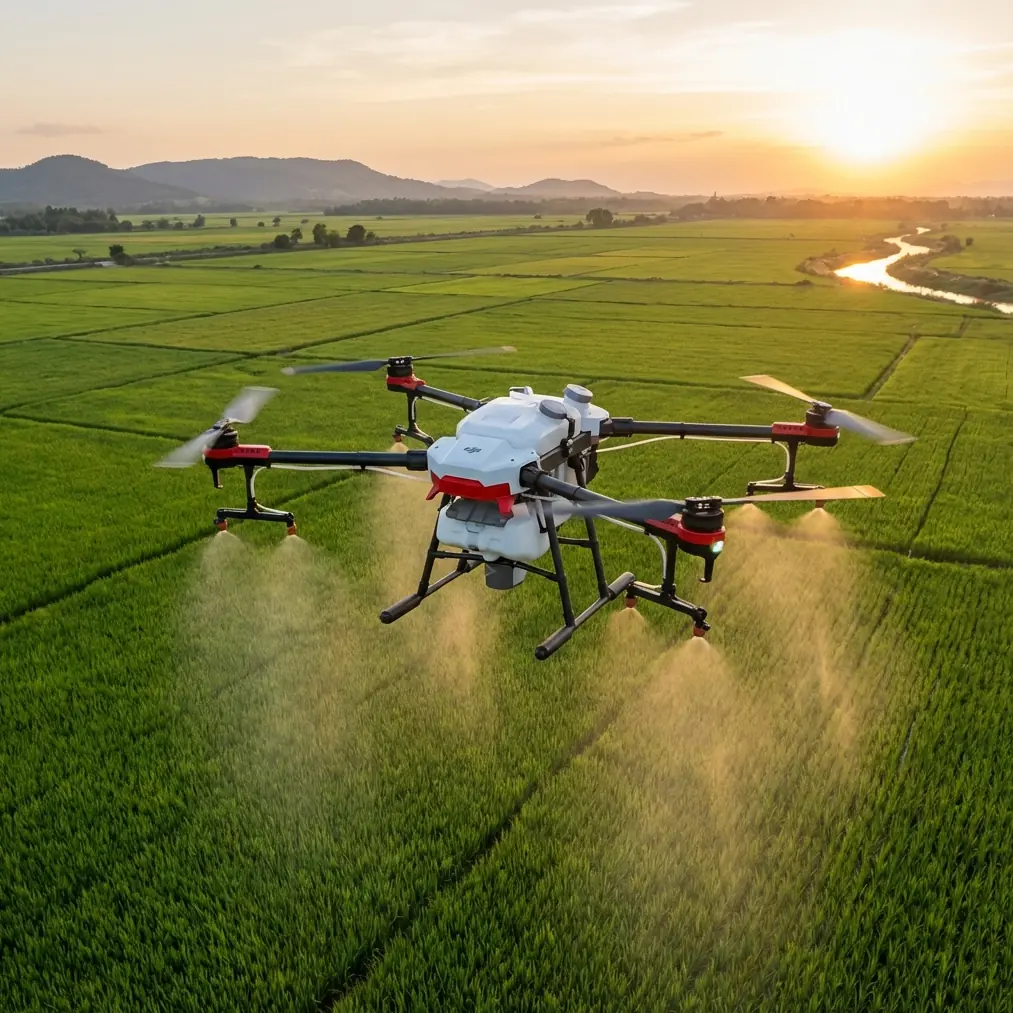
Agras T50 in Extreme Field Conditions: What Actually Matters When the Weather Turns
META: A field-focused technical review of Agras T50 performance in extreme temperatures, with practical insights on spray drift, nozzle calibration, RTK stability, swath control, and mid-flight weather changes.
I spend a lot of time talking with growers and spray teams who ask versions of the same question: can the Agras T50 stay consistent when the day does not?
That is the real test. Not a clean demo in still air. Not a scripted run over a uniform block. The harder question is whether the aircraft can keep application quality together when heat builds off the field, wind edges upward, and the spray plan that looked straightforward at 7:30 a.m. becomes something else by 10:00.
For anyone evaluating the Agras T50 for work in extreme temperatures, that is where the conversation should start. Not with headline specs in isolation, but with how the machine, the operator, and the mission profile behave as a system.
The Mid-Flight Problem Nobody Should Ignore
On paper, a spray job is simple: maintain the line, hold the rate, manage droplet behavior, finish the block. In practice, weather destabilizes that neat sequence.
A typical example: the morning begins cool enough for a stable pattern. RTK is locked, route geometry is clean, and the intended swath width is realistic for the crop and nozzle setup. Then the sun climbs. Thermal activity increases. Leaf movement becomes less predictable. Drift risk changes field edge by field edge. The aircraft now has to do more than follow coordinates. It has to preserve application discipline under shifting aerodynamic conditions.
This is where a serious operator separates platform capability from field outcome.
The Agras T50 discussion often gets reduced to capacity and productivity. Those matter, obviously. But in extreme weather, consistency matters more than raw throughput. A drone that can cover acres quickly but loses precision when conditions shift will cost you in overlap, misses, and off-target deposition.
Why Aerodynamics Still Matter in a Modern Spray Drone
A useful lesson comes from an unlikely source: model aircraft flight training. One technical reference explains how disturbed airflow and turbulence around control surfaces become more troublesome at lower speeds, making aircraft response less predictable as conditions change. The point is not that an agricultural multirotor behaves like a hobby aerobatic plane. It does not. The point is operational: as airflow becomes less clean and speed or attitude changes, pilot expectations and aircraft response can drift apart.
That matters in crop spraying.
When a drone is working near the edge of acceptable weather, the operator is managing more than route execution. They are managing confidence in how the aircraft will respond to corrections, terrain-following adjustments, and line transitions. If airflow disturbance increases, especially during slower maneuvering segments or turns, response can feel uneven. In manned aviation terms, that is annoying. In precision application, it affects coverage.
This is one reason experienced spray teams do not obsess over speed alone. They watch behavior at the margins: entry into a new pass, hold quality near a field boundary, recovery after a gust, and pattern stability when the aircraft returns to the center of the line. Spray drift is not only about wind speed. It is also about whether the aircraft remains predictable enough for the operator to preserve droplet placement.
Extreme Heat Changes More Than Battery Expectations
Most people immediately think about battery performance when they hear “extreme temperature.” Fair enough. Heat does put pressure on power planning, turnaround discipline, and mission pacing. But the more consequential issue in the field is that heat changes the spray environment itself.
High temperatures can compress your workable window. Evaporation pressure rises. Droplet survival changes. Crop canopy behavior shifts. In some crops, what looked like a comfortable operating period can close much faster than expected.
With the T50, this means your nozzle calibration and flight profile should not be treated as fixed for the entire day. If the weather changes mid-flight, your calibration assumptions may still be technically correct in the tank-to-nozzle sense, yet operationally wrong at the canopy.
That is where mature spray programs outperform casual ones. They treat calibration as a living field variable, not a checkbox. The aircraft can hold a route with centimeter precision through RTK guidance, but centimeter precision in the airframe does not automatically guarantee precision in deposition. The droplets still have to arrive where they are intended.
So when I review a T50 operation in harsh weather, I look at four things together:
- RTK fix rate and positional stability
- Nozzle calibration relative to product and crop stage
- Swath width discipline under current wind and thermal conditions
- Operator willingness to tighten the plan when the field stops cooperating
Those four factors say more about application quality than any single brochure claim.
RTK Precision Is Valuable, But Only If the Rest of the Mission Is Honest
A lot of Agras T50 operators rightly value centimeter-level guidance. It reduces overlap, helps line repeatability, and gives the team confidence on complex parcels. In variable weather, that precision becomes even more valuable because it removes one source of uncertainty. If the aircraft knows exactly where it is, the operator can focus on whether the environment still supports the job.
But here is the trap: excellent navigation can create false confidence.
I have seen operators trust a perfect RTK fix while drift conditions quietly deteriorate. The line quality looked beautiful on the screen. The deposition quality in the field told a rougher story.
That is why RTK fix rate should be read as a control variable, not a permission slip. If the T50 is holding guidance well, good. Now ask the harder question: does the current swath width still make sense? If the breeze has shifted and canopy movement is more active, the application geometry may need to change even if guidance performance is flawless.
This is also where multispectral data, if a grower uses it elsewhere in the program, can sharpen decision-making. Not because it changes the drone’s flight mechanics directly, but because it can reveal crop variability that argues for more conservative application timing or tighter operational zones. Strong aerial data plus sloppy weather judgment is still sloppy spraying.
A Small Training Detail That Says Something Bigger About Reliability
One of the more interesting references in the source set comes from a DJI TT educational drone document. On page 48, it describes how the aircraft connects through WiFi using labels such as Tello-XXXX when no expansion module is attached and RMTT-XXXX when the module is in single-device mode. It also notes that removing the expansion module can improve flight performance and extend battery endurance. The same page outlines the live control interface, including indicators for battery, WiFi status, Bluetooth status, flight speed, flight height, and on-screen controls.
At first glance, that has nothing to do with the Agras T50. But operationally, it says a lot about how good drone teams think.
They respect connection architecture. They respect weight and system overhead. They understand that every added module, every interface dependency, and every avoidable power draw affects real-world behavior. In training environments, that lesson is basic. In agricultural operations, it becomes expensive if ignored.
The T50 is not a classroom microdrone, of course. It is a working aircraft in a much more demanding category. Still, the principle carries over cleanly: mission reliability improves when the system is configured for the task at hand rather than loaded with unnecessary complexity. In extreme temperatures, that mindset matters even more. Clean setup. Clean connectivity. Clean decision-making.
A spray drone team that treats preflight discipline seriously usually performs better when weather moves against them. Not because the drone becomes invincible, but because fewer internal variables are competing with the external ones.
What Happened When the Weather Shifted Mid-Flight
On a recent review scenario similar to what many operators describe, the field started with manageable conditions and then changed quickly. Temperature climbed faster than expected. A crosswind that had been light enough to tolerate began pressing the pattern sideways on the more exposed rows. The aircraft itself remained controllable, and route integrity stayed strong. That part was not the issue.
The issue was application honesty.
The T50 handled the route. RTK stayed dependable. Track spacing remained orderly. But the right response was not to admire the machine and continue unchanged. The right response was to tighten the swath width, reassess droplet behavior, and decide whether the remaining section still fit the day’s spray envelope.
That is the difference between operating a drone and managing an application.
When people say a platform “handled it,” they often mean it did not wobble or lose the line. I use a stricter standard. A drone handles mid-flight weather change well only if the operator can still maintain a defensible agronomic outcome. The T50 gives you a strong technical base for that—stable route execution, precision guidance, and the kind of workflow support serious teams need—but it does not erase the physics of heat and drift.
No aircraft does.
IPX6K and Field Practicality
Readers looking at the T50 for demanding work often bring up IPX6K, and for good reason. In agriculture, environmental resistance is not decorative. Mud, rinse procedures, splash exposure, and residue management are daily realities. A platform with a robust protection rating is easier to keep in service and easier to maintain to a professional standard.
That matters more in extreme temperature work than many people realize. Heat by itself is one stressor. Heat combined with contamination, rushed refill cycles, and inconsistent cleaning habits becomes a reliability problem. IPX6K is not a substitute for maintenance, but it supports a more durable field rhythm.
And in a real spray operation, rhythm matters. The safest, cleanest, most profitable drone workflows are rarely dramatic. They are repetitive, disciplined, and boring in the best possible way.
How I Would Set Up a T50 Day in Harsh Conditions
If I were advising a team preparing to spray with an Agras T50 in extreme temperatures, I would keep the priorities plain:
- Start earlier than you think you need to. Heat rarely becomes easier later.
- Validate RTK performance before the first productive pass. A strong fix rate removes guesswork from route control.
- Treat nozzle calibration as field-specific, not universal. Product behavior and canopy conditions matter.
- Be conservative with swath width once wind becomes directional. The goal is usable deposition, not theoretical coverage.
- Watch line recovery and turn behavior. Those moments reveal more than steady straight passes.
- Pause when the field stops agreeing with the plan. Continuing with a technically functional aircraft can still produce a poor application.
If you are working through a setup question or comparing operating assumptions for your conditions, I would rather have that discussion before the tank is full. You can reach out here for a field-oriented conversation: message Marcus directly.
The Bigger Story Around Agras T50
There is another reference in the source material that is worth connecting to the T50 story, even if it sits at the market level rather than in the field. A recent low-altitude economy analysis argues that capital markets may reassess the sector’s value, with venture capital and industry funds expected to move in more actively. It also says the healthiest ecosystem will be driven by market demand, enterprise innovation, and efficient capital allocation.
That is not abstract finance talk. It has practical meaning for agricultural drone operators.
The Agras T50 sits inside an industry that is maturing beyond novelty. As more capital flows into the low-altitude economy, buyers should expect stronger service structures, better training pathways, more specialized software, and sharper scrutiny of what actually works in production agriculture. The winners will not be the loudest brands or the flashiest demos. They will be the systems that solve field problems reliably enough to justify long-term investment.
That is why the T50 conversation should stay grounded in operational realities like drift control, repeatable routing, environmental resistance, and decision quality under changing weather. Capital follows demand, but demand stays where outcomes are credible.
And credibility in spray operations is earned the hard way: one field, one weather window, one disciplined mission at a time.
Final Take
The Agras T50 makes sense for serious agricultural work when you evaluate it as a field tool rather than a spec sheet. In extreme temperatures, its value is not simply that it can fly or carry product. Its value is that it gives skilled operators a stable enough platform to make sound application decisions when conditions become less forgiving.
That distinction matters.
A strong aircraft can maintain line quality. A strong operation knows when line quality is no longer the only thing that matters. If your goal is cleaner deposition, lower drift risk, tighter route control, and better confidence when the weather changes mid-flight, the T50 deserves attention. Just do not expect the drone to replace judgment. The best results still come from pairing capable hardware with disciplined agronomy and disciplined flying.
Ready for your own Agras T50? Contact our team for expert consultation.