
Agras T50 in Extreme Temperatures: A Practical Field Guide
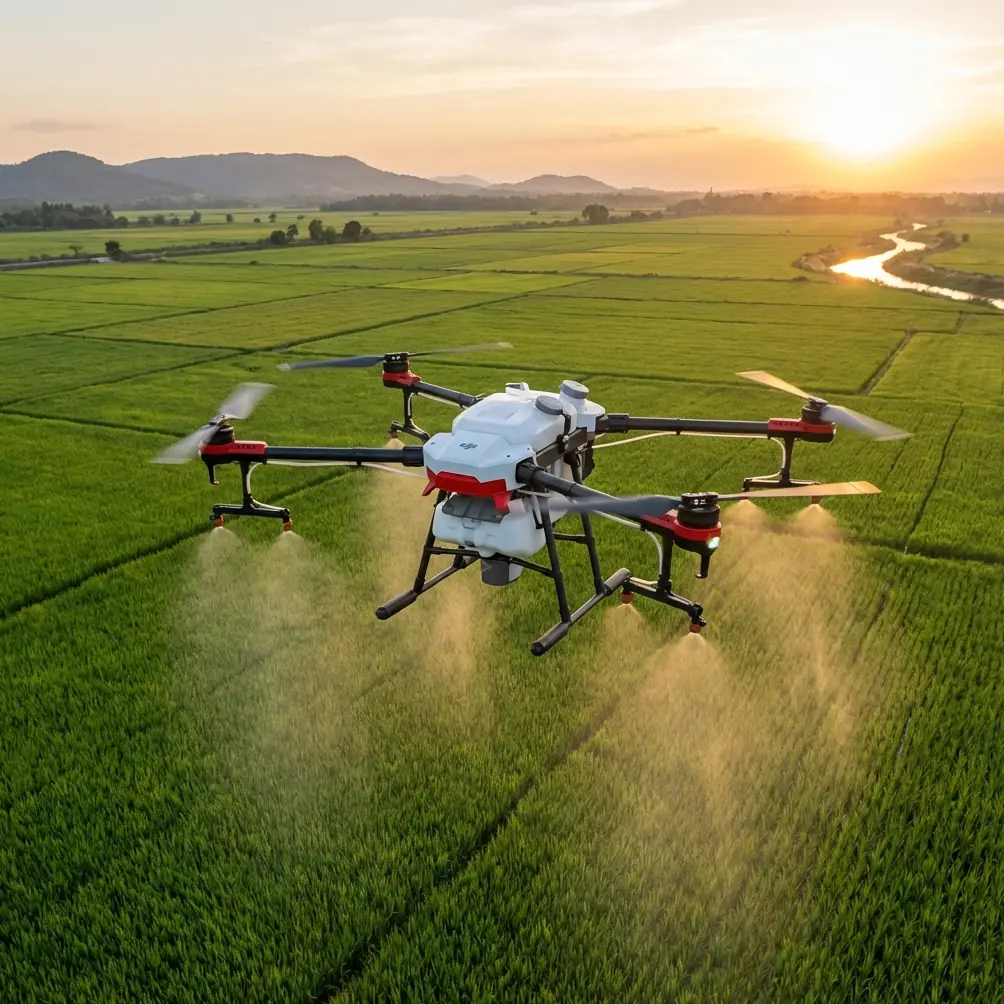
Agras T50 in Extreme Temperatures: A Practical Field Guide to Drift Control, RTK Stability, and Reliable Coverage
META: A field-focused Agras T50 guide for spraying in extreme temperatures, covering drift control, nozzle calibration, RTK fix stability, antenna adjustment, swath width, and weather-driven workflow decisions.
Extreme-temperature spraying exposes every weak point in a drone operation. Fluids behave differently. Batteries lose confidence. RTK can get erratic around interference. Drift risk climbs fast. And on a busy day, the difference between a clean pass and a costly miss often comes down to setup discipline rather than aircraft size or brochure specs.
That is the lens I use when discussing the Agras T50 with growers and spray teams. Not as a generic “big agriculture drone,” but as a field tool that has to perform when the weather is working against you. If you are spraying at the edge of a heat wave, in cold dawn conditions, or in a block with patchy signal and metal structures nearby, success depends on how you configure the aircraft, validate the spray system, and protect positioning accuracy before the first tank goes out.
This guide focuses on that exact scenario.
Start with the two variables that matter most: liquid behavior and aircraft certainty
When temperatures swing hard, operators usually worry first about the drone. Fair enough. But the spray liquid itself is often the first thing that changes in a way that affects coverage.
In high heat, evaporation accelerates. Smaller droplets can disappear or shrink before reaching the target zone, and what remains is more vulnerable to spray drift. In cold conditions, viscosity can increase depending on the mix, which changes nozzle performance and pressure behavior. That directly affects droplet spectrum, flow consistency, and practical swath width.
At the same time, positioning quality becomes less forgiving. If your RTK fix rate is unstable, the T50 may still fly, but repeatability across rows and edges becomes harder to trust. In real operations, that means one of two expensive outcomes: overlap that wastes chemical, or gaps that leave crop pressure untreated.
So before looking at acres per hour or route planning, ask two questions:
- Is the liquid coming out of the nozzles the way I think it is?
- Is the aircraft holding centimeter precision reliably enough to place every pass where it belongs?
Everything else sits on top of those answers.
Nozzle calibration is not a checkbox in extreme weather
A surprising number of spraying issues blamed on wind or route design are actually nozzle calibration failures that became obvious only because the temperature was extreme.
On the Agras T50, calibration should be treated as a live operational step, not a one-time commissioning task. If the day is significantly hotter or colder than your previous job, recalibrate and verify output. The reason is straightforward: even if the pump system is functioning correctly, nozzle flow and atomization response can shift enough to change your expected application result.
Here is the practical routine I recommend:
1. Verify actual flow, not assumed flow
Measure output from the spray system under the same operating conditions you will use in the field. Do this with your intended liquid mix if feasible. Water-only checks are useful, but they do not always reflect the viscosity or behavior of the real solution.
2. Inspect for pattern uniformity
A nozzle that is partially obstructed may still appear to be working. In extreme temperatures, that slight imbalance can become a major coverage problem because droplet behavior is already less stable. Look for uneven fan shape, inconsistent discharge, or one side of the boom pattern carrying visibly different density.
3. Match calibration to real flight speed
Application rate only makes sense when tied to actual travel speed and swath width. If speed rises to compensate for weather windows, the nozzles must still deliver the intended deposition. Otherwise, the aircraft may cover ground efficiently while underapplying.
4. Reassess after the first treatment block
The first tank is not just work; it is data. Check deposition quality, edge behavior, and whether your expected swath width holds up under current conditions.
This matters because spray drift rarely begins as a dramatic failure. Usually it starts with a setup that was “close enough” in mild weather and becomes unacceptable when heat, low humidity, or cold-thickened liquid narrow the margin for error.
Swath width should be earned, not assumed
Many operators approach swath width as a productivity number. In practice, it is a confidence number.
A wide swath only helps if the droplets are reaching the target consistently across that full span. In extreme temperatures, the usable swath can shrink even if the aircraft is technically capable of more. Heat and dry air may reduce effective deposition at the edges. Cold conditions may produce different droplet behavior than the target crop or canopy really needs.
That means the smart operator often trims swath width to preserve uniformity.
This is one of those decisions that separates efficient field work from superficial efficiency. Covering more meters per pass sounds good until you realize the outer bands were underdosed and a second treatment becomes necessary. A slightly narrower, proven swath is often the higher-output strategy over the full season because it protects consistency.
If your route planning assumes ideal conditions, rewrite it on hard days. The T50 is a capable platform, but no platform can repeal fluid physics.
Handling electromagnetic interference: antenna adjustment can save the job
This is the issue operators tend to discover mid-mission, usually near pumps, metal sheds, power infrastructure, or edge areas with mixed obstructions. The aircraft may show unstable RTK behavior, sluggish correction acquisition, or intermittent positioning confidence. On paper, the site looked fine. In reality, electromagnetic interference is degrading your navigation quality.
When that happens, one of the most useful corrective steps is antenna adjustment.
I do not mean random repositioning. I mean deliberate adjustment to improve line-of-sight, reduce local interference exposure, and stabilize the signal environment around your RTK system. Small changes in placement and orientation can materially improve fix reliability. That matters because the whole promise of centimeter precision depends on maintaining a robust RTK fix rate during actual field movement, not just while standing still at setup.
Operationally, this has three direct benefits:
Cleaner boundary tracking
Stable RTK reduces creeping off-line behavior around field edges and irregular shapes.More reliable pass-to-pass repeatability
When the aircraft can hold position accurately, overlap and skip risk both decline.Better route confidence near infrastructure
Interference is often localized. If you identify it early and adjust your antenna setup, you can keep working without compromising placement quality.
A good rule is to evaluate the field perimeter before loading into full operations. If you have known interference sources nearby, test RTK stability in those zones first. Watch fix behavior, not just general signal bars. An aircraft that appears connected is not necessarily locked well enough for high-confidence spraying.
If you need help troubleshooting an RTK setup issue in a live agricultural workflow, this direct field support line is a practical place to start.
Why RTK fix rate matters more in hard weather
Under ideal conditions, operators can get comfortable. The route executes, coverage looks normal, and positioning appears stable enough. Extreme temperatures remove that comfort quickly.
In heat, operators often compress workflows to avoid the worst part of the day. That pushes faster decision-making and tighter timing. In cold windows, there may be pressure to fly during a brief workable period. In both cases, if the RTK fix rate is inconsistent, the team has less time and fewer chances to catch placement errors before they spread across the field.
That is why I treat RTK reliability as a production factor, not just a technical metric.
A high-confidence fix supports:
- accurate lane spacing
- repeatable edge control
- dependable spot treatment alignment
- cleaner work around obstacles and irregular terrain
If the fix rate is unstable, the quality of every downstream decision drops. You cannot optimize spray drift, canopy penetration, or route efficiency if the aircraft’s spatial certainty is fluctuating.
For the Agras T50, the value is not abstract. Centimeter precision becomes operationally significant when it prevents overapplication in overlap zones and protects untreated strips from being missed. Those are agronomic and financial outcomes, not just navigation statistics.
Extreme heat: what usually goes wrong first
Hot-weather spraying punishes impatience.
The most common failure sequence is familiar:
- Conditions warm faster than expected.
- Operators keep the same nozzle assumptions and swath plan.
- Droplet behavior shifts.
- Spray drift risk increases.
- Coverage quality falls off at the margins.
The fix is rarely dramatic. It is disciplined.
Adjust the spray plan before the aircraft leaves the ground
If the day is hotter than forecast, reassess droplet size strategy, route timing, and edge sensitivity. Fields beside roads, water, sensitive crops, or exposed perimeters deserve tighter controls.
Watch for evaporation-driven false confidence
A flight can look neat and still produce weak deposition if droplets are shrinking too aggressively in transit. Visual impressions from the aircraft path are not enough.
Reduce the temptation to stretch productivity
The T50 can move productively, but heat is exactly when operators should be skeptical of maximum theoretical swath width. Uniformity first.
Monitor batteries and pace intelligently
Extreme temperatures affect the whole operation cycle, including staging time and battery behavior. Efficient rotation matters, but rushed rotations create setup mistakes. Slow down just enough to preserve consistency.
Cold-weather spraying has different traps
Cold conditions often feel calmer, so operators can underestimate the spray-system side of the equation.
The biggest cold-weather issue is assuming that because drift seems less dramatic, calibration matters less. Usually the opposite is true. If liquid properties change with temperature, your nozzles may not atomize as expected. That can alter deposition, runoff tendency, and actual coverage density.
In cold field windows:
- warm-up discipline matters
- calibration should reflect actual liquid conditions
- the first pass should be treated as validation, not routine
- RTK checks still matter, especially in low-light starts where setup errors are easier to miss
One more point: cold mornings often coincide with dew, canopy moisture, or changing air layers. Even when wind appears manageable, spray performance can still diverge from plan. The aircraft may be stable while the agronomic result is not.
IPX6K matters in the real world because cleanup and weather do not wait
For agricultural operators, durability ratings are easy to dismiss until the machine has to live through actual farm handling. The T50’s IPX6K-grade protection matters less as a spec-sheet trophy and more as a practical asset for dirty, wet, repetitive work.
Why is that relevant to extreme-temperature spraying?
Because those conditions tend to create harsher cleanup cycles and more demanding operating environments. Residue management, washdown discipline, and exposure to wet conditions become part of the normal workflow. A platform designed to tolerate aggressive water ingress resistance at that level is better suited to sustained agricultural use than a system that needs delicate treatment after every job.
That does not eliminate maintenance discipline. It simply means the aircraft is built with the realities of farm operations in mind: muddy staging areas, rinse-down routines, and weather that does not politely pause for equipment handling.
Where multispectral fits—and where it does not
Multispectral data can be useful in a broader crop management program, especially for identifying variability zones and refining treatment strategy. But in the specific case of extreme-temperature spraying with the T50, I would not let the discussion drift too far into imagery if the basics are not nailed down.
First get:
- nozzle calibration right
- RTK fix stability verified
- antenna placement optimized for interference zones
- swath width matched to actual conditions
- drift risk controlled
Once those are stable, then multispectral-informed treatment planning can add value by helping target where and when applications matter most. But diagnostics do not rescue poor execution. The field rewards fundamentals first.
A working checklist before every hard-weather sortie
Here is the short version I give crews:
- Confirm actual weather at canopy level, not just app forecast.
- Recheck nozzle calibration if temperatures have shifted significantly.
- Validate effective swath width with current conditions, not yesterday’s.
- Test RTK fix rate near likely interference sources.
- Adjust antenna setup if electromagnetic interference appears.
- Watch first-pass deposition and edge behavior before committing to full pace.
- Prioritize uniformity over maximum area per hour.
That sounds simple because it is. But simple is not the same as easy. The pressure to keep moving is what causes most preventable errors.
The real advantage of the Agras T50 is not brute output
Used well, the T50 earns its place through controllable repeatability under messy real-world conditions. That is the difference that matters in extreme temperatures. Not whether it can fly a route in theory, but whether it can place product accurately when fluid behavior is changing, interference is present, and field time is limited.
When operators respect the relationship between spray drift, nozzle calibration, RTK fix rate, and swath width, the aircraft becomes far more than a tank in the sky. It becomes a precise application tool. And when electromagnetic interference shows up—as it often does near real farm infrastructure—knowing how to respond with antenna adjustment can be the difference between a compromised job and a professional one.
That is the standard worth aiming for: not just flying the Agras T50, but managing it like a serious agricultural system in conditions that expose every shortcut.
Ready for your own Agras T50? Contact our team for expert consultation.