
Agras T50 in Coastal Field Operations: What Doha’s 8
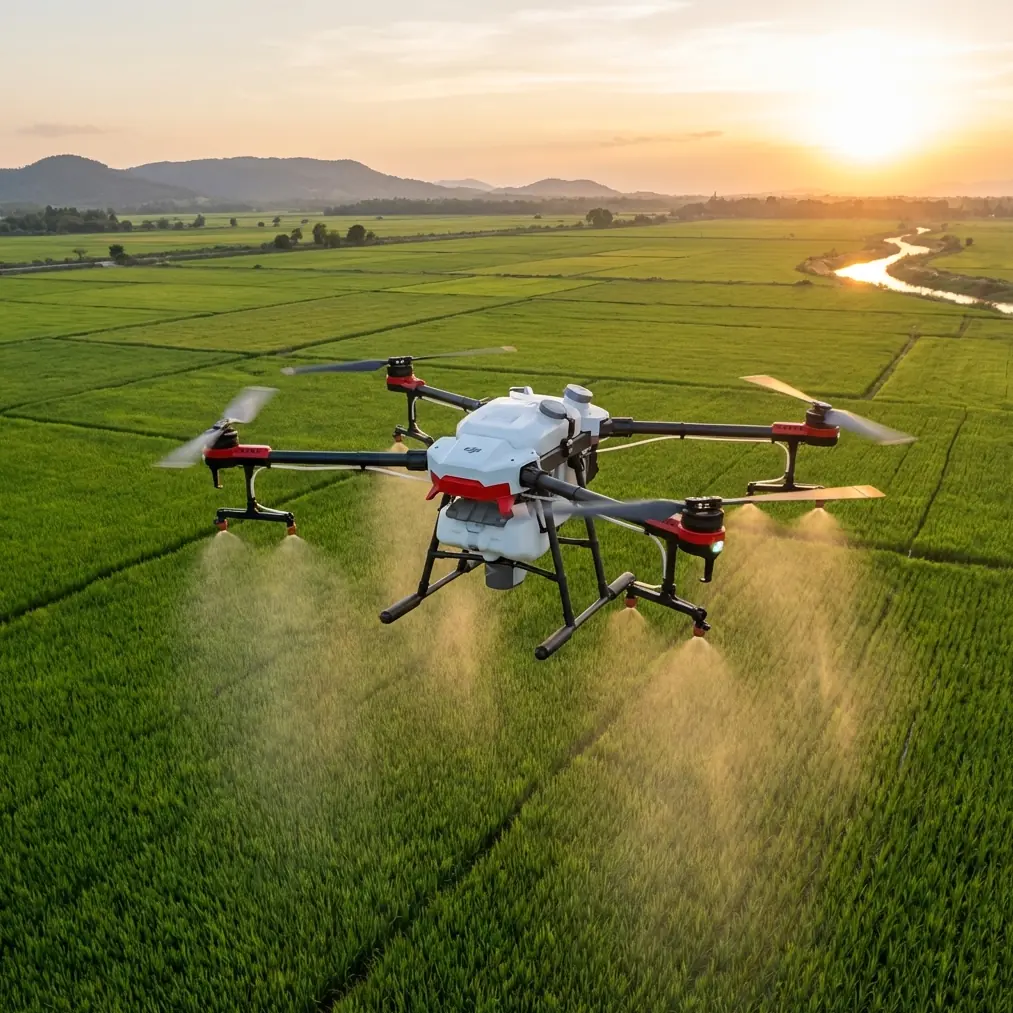
Agras T50 in Coastal Field Operations: What Doha’s 8-Minute Urban eVTOL Flight Really Tells Us About Precision UAV Reliability
META: A case-study style expert analysis connecting EHang’s Doha urban autonomous flight milestone to real-world DJI Agras T50 performance in coastal spraying, with practical guidance on drift control, antenna positioning, RTK stability, and nozzle calibration.
The most useful drone stories are not always about the same aircraft you fly.
At first glance, EHang’s recent EH216-S passenger flight in central Doha has little to do with an Agras T50 working over coastal farmland. One is an autonomous passenger eVTOL in an urban corridor. The other is a heavy-duty agricultural spray platform earning its keep in salt-laden wind, uneven GNSS conditions, and long repetitive passes over crops that do not forgive inconsistency.
But when a new aviation milestone happens in a demanding operating environment, professionals should pay attention to what it signals about systems maturity, regulatory confidence, and route-level reliability. That is exactly why the Doha flight matters to Agras T50 operators.
The headline fact is straightforward: EHang completed the Middle East’s first crewed urban eVTOL demonstration in Doha using the EH216-S, operating under authorization from the Qatar Civil Aviation Authority and with support from the country’s transport ministry. The route linked Doha Port and Katara Cultural Village, took about 8 minutes, and reportedly cut travel time by around 70% compared with similar ground transport. Those are not just ceremonial details. They point to something deeper: autonomous aviation is being tested where signal complexity, public visibility, and operational scrutiny are all high.
For coastal agricultural drone operators, that matters more than it may seem.
Why an Urban Passenger Flight Matters to an Agras T50 Pilot
When an aircraft completes a city-center route between two major landmarks, the achievement is not merely “it flew.” The real proof is that the aircraft, its control architecture, and the support ecosystem all worked together in a constrained environment where there is little room for ambiguity. In Doha, the EH216-S did not fly in an isolated desert strip. It operated in a real urban setting between Doha Port and Katara Cultural Village, under formal operating authorization. That combination of route discipline and regulatory oversight is what makes the event relevant to anyone managing unmanned operations near coastlines.
Coastal spraying presents its own version of that complexity.
You have reflected signals from water. You have wind shears that change quickly with shoreline heating. You often have open exposure, which sounds good for link quality until sea breeze pushes the aircraft broadside during a pass and increases drift risk at the exact moment your application accuracy matters most. Add corrosion pressure from salt air and the operational challenge becomes less about headline payload and more about whether the aircraft can hold a stable, repeatable mission envelope.
This is where the Doha demonstration becomes a useful analogy. A successful 8-minute autonomous route between high-profile urban points tells us the industry is pushing beyond basic flight capability and toward dependable mission execution under scrutiny. In agriculture, the equivalent is not carrying passengers. It is holding swath consistency, preserving droplet placement, maintaining an RTK fix rate, and avoiding variable deposition across the field edge.
The machine may be different. The lesson is the same.
Case Study Lens: Coastal Spraying Is a Systems Problem
Let’s frame this the way I would with a grower or spray contractor evaluating Agras T50 operations near the coast.
The common mistake is to treat spraying quality as a nozzle-only issue. In reality, coastal application quality is a chain. Break one link and your field results degrade fast.
That chain includes:
- antenna positioning for control and video range
- RTK stability for centimeter-level path repeatability
- nozzle calibration for actual output, not assumed output
- swath width selection based on wind reality, not brochure optimism
- airspeed discipline to prevent under- or over-application
- drift management at field boundaries
- rinse and maintenance routines that account for salt exposure
The Doha EH216-S story is relevant because it highlights the value of route integrity. The aircraft linked two urban landmarks and completed the mission in a time window that demonstrated practical utility, not just technical possibility. For an Agras T50 operator, route integrity means every pass starts and ends where it should, overlaps stay controlled, and the aircraft does not “hunt” laterally because the positioning solution is marginal.
That starts before takeoff.
Antenna Positioning Advice for Maximum Range in Coastal Fields
If you spray large coastal blocks, antenna setup deserves more attention than it usually gets.
Most range complaints are not really range complaints. They are geometry problems.
The field crew often stands where vehicle access is convenient rather than where signal geometry is best. In coastal terrain, that can mean parking low beside a berm, near metal equipment, or too close to irrigation structures. Even with a capable platform, poor controller placement reduces effective link margin and can create dropouts exactly when the drone is at the far edge of the block.
My rule is simple: put the operator where line-of-sight works hardest for you, not where walking is easiest.
For the Agras T50, that means:
- choose a slightly elevated position if available
- avoid standing directly beside trucks, tanks, or steel fencing
- keep the controller antenna faces oriented toward the aircraft’s work zone, not angled randomly across the field
- reposition as the mission shifts if a drainage canal, tree line, or coastal embankment starts blocking the far half of the route
- do not let the pilot station sit with the sea directly behind reflective infrastructure if you are seeing unstable signal behavior
In broad coastal fields, I also advise crews to think in sectors. If one launch point gives poor geometry for the final third of the job, split the mission and move. Too many operators try to force one station setup for the entire block and then blame the aircraft for intermittent link confidence.
Maximum range is not about chasing the farthest possible distance. It is about preserving a strong, predictable control link at the exact edge of your intended working area.
That mindset is much closer to aviation operations discipline, and that is exactly why the Doha event is worth studying. A route connecting Doha Port and Katara was only meaningful because the flight profile was practical and intentional. Field operations deserve the same discipline.
RTK Fix Rate: The Quiet Factor Behind Uniform Coverage
When operators talk about precision, they often jump straight to “centimeter precision.” That phrase is fine as shorthand, but the real operational question is whether your RTK fix rate stays stable enough to support repeatable path tracking across the full mission.
Near the coast, fix stability can be less forgiving than inland operators expect. Open sky is helpful, but water reflection, temporary obstructions near packing areas, and hurried setup around buildings or equipment yards can all introduce inconsistency.
Why does that matter on an Agras T50?
Because if your positioning solution degrades during turns, restarts, or edge passes, you begin to see subtle field defects:
- skipped strips
- uneven overlap
- excess application on correction passes
- irregular boundaries near roads or drainage lines
Those issues are expensive not because they are dramatic, but because they are cumulative. A weak RTK environment erodes the one thing large-scale spray operations depend on: repeatability.
The Doha flight offers a useful benchmark in principle. An 8-minute city route under aviation authority authorization implies confidence in route execution, not just airworthiness. In field terms, your equivalent benchmark is whether the T50 can fly the map you built and keep the spray where the plan says it belongs.
If your fix rate drops regularly in the same corner of a field, treat that as an operational design issue. Adjust base setup, relocate your team position, review local obstructions, and do not assume software alone will save a poor deployment geometry.
Nozzle Calibration Is Where Agronomy Meets Reality
I still see experienced teams rush this part.
They trust that yesterday’s output is today’s output, even though nozzle wear, formulation changes, ambient temperature, and pump behavior all shift real-world flow. In coastal work, where wind can rise mid-morning and force tighter operational windows, calibration discipline matters even more because crews are tempted to make up time by increasing speed without confirming the application still holds.
The Agras T50 can cover ground quickly, but speed is not accuracy.
Start with actual nozzle output verification. Then check pressure behavior across your intended operating band, not just at one comfortable setting. If the mission is near sensitive boundaries, reduce your dependence on wide assumptions about swath width. Real swath width in a coastal breeze is often narrower than crews want to admit.
That matters because the economics of a spray job can look fine on paper while the biological performance slips in the field. The crop does not care what your planning sheet expected. It only responds to what landed on target.
If you want a second pair of eyes on your field setup, spray pattern, or controller placement strategy, you can message our drone operations desk on WhatsApp and compare notes before the next window opens.
Spray Drift in Coastal Conditions: The Error That Hides in “Almost Good Enough”
Drift is usually discussed as a weather problem. In practice, it is also a planning problem.
Coastal operators know the pattern: calm enough at first light, then a directional shift as the day develops. The dangerous period is not always obvious high wind. It is the moderate cross-breeze that looks manageable while quietly carrying fine droplets off the intended deposition zone.
Here is the operational significance: a small drift error repeated over a long block becomes a measurable coverage problem. This is especially true at field edges bordering waterways, roads, neighboring crops, or protected zones.
The T50’s productivity can be an advantage here, but only if the operator respects boundary strategy. That means:
- shorten runs when crosswind increases
- tighten swath assumptions instead of stretching them
- avoid chasing capacity at the expense of droplet placement
- review edge-pass direction so any minor drift moves away from the most sensitive boundary where possible
Again, this is where the Doha news resonates. The reported 70% time reduction versus similar ground travel is impressive, but the deeper lesson is that efficiency matters only when the route remains dependable and purposeful. Speed without control is just faster error.
The same rule governs coastal spraying.
IPX6K Matters More Near Salt Air Than Many Buyers Realize
Agras T50 discussions often center on spray volume, spreading capability, and acreage per hour. Fair enough. But in coastal conditions, durability and washdown resilience can have just as much impact on uptime.
This is where protection ratings such as IPX6K become operational, not marketing language. A machine working near salt air needs disciplined cleaning and inspection routines. Salt accumulation does not wait for obvious failure. It degrades connectors, hardware surfaces, and confidence. If you run repeated coastal missions and then delay post-job rinse procedures, you are quietly borrowing reliability from future weeks.
The professional approach is boring and effective:
- rinse on schedule
- inspect exposed points after coastal missions
- watch for residue around connectors and mounting interfaces
- document recurring wear patterns by field and by weather condition
That is the kind of systems thinking mature aviation operations already understand. The Doha EH216-S demonstration happened under civil aviation oversight for a reason. Regulators and serious operators both know that dependable outcomes come from procedures, not enthusiasm.
What the Doha Flight Suggests About the Broader UAV Future
The Middle East’s first urban crewed eVTOL flight in Doha is not an agriculture story on the surface. Yet it marks a step the farm drone sector should welcome. When autonomous aviation proves itself in visible, regulated, real-world routes, the entire unmanned ecosystem benefits. Standards tighten. Operational confidence improves. Public and institutional familiarity grows.
For Agras T50 operators, that does not mean passenger drones are coming to the farm. It means the wider UAV field is maturing around the same core disciplines that separate average spray teams from elite ones: route integrity, reliability, environmental awareness, and repeatable performance.
And that is the real takeaway from this news.
An 8-minute flight between Doha Port and Katara Cultural Village may seem distant from a coastal field spraying operation. It is not. It is another proof point that unmanned aviation is moving beyond isolated demos and toward routine mission trust. In your world, that trust is earned one pass at a time—through stable RTK, careful nozzle calibration, controlled swath width, disciplined antenna placement, and constant respect for drift.
The best Agras T50 crews do not just fly a powerful drone.
They run an aviation-grade process in an agricultural environment.
Ready for your own Agras T50? Contact our team for expert consultation.