
Agras T50 in Windy Construction-Site Spraying
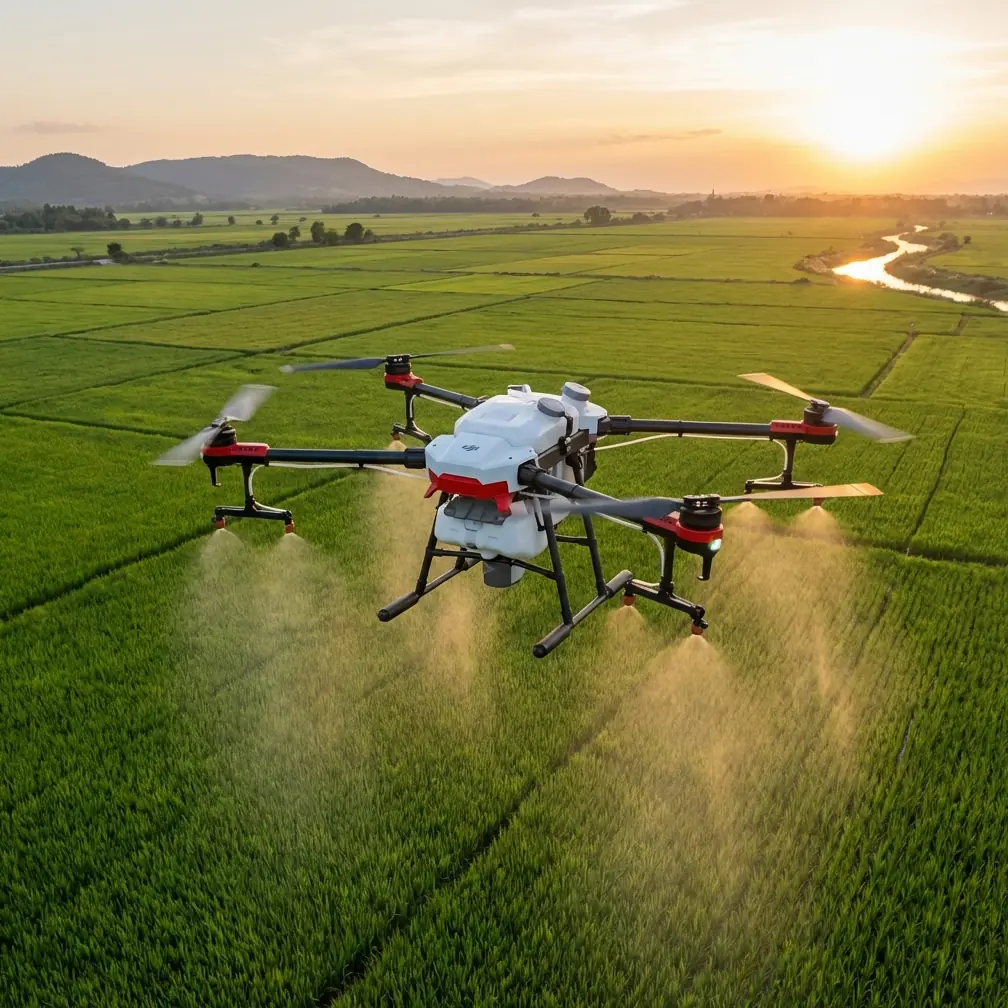
Agras T50 in Windy Construction-Site Spraying: What Actually Matters in the Field
META: A field-driven look at using the Agras T50 for windy construction-site spraying, with practical insight on drift control, nozzle calibration, RTK stability, battery management, and why training rhythm matters.
Wind changes everything on a construction site.
Not in theory. In practice.
A spray plan that looks tidy on paper can fall apart once open edges between structures start funneling air, dust rises off hard ground, and gusts begin shifting droplets off line. That is exactly where operators start separating brochure knowledge from operational knowledge. If your focus is the Agras T50 for construction-site spraying in windy conditions, the real question is not whether the aircraft is capable. It is whether the team flying it understands how to control drift, maintain line discipline, and keep the machine working predictably over a long day.
The Agras T50 is often discussed through agriculture. Yet many of the same fundamentals become even more unforgiving on construction sites. You are not just treating crop canopy across relatively forgiving ground texture. You are dealing with mixed surfaces, exposed concrete, partial vertical obstructions, equipment movement, and turbulent airflow that can change every few seconds. The aircraft may be advanced, but physics remains stubborn.
That is why the most useful way to think about the T50 in wind is as a precision workflow, not just a spray drone.
The first problem is not wind speed. It is wind behavior.
Operators often ask for a safe wind number, as if one threshold solves the issue. On active sites, the harder part is directional inconsistency. Air bounces off retaining walls, temporary structures, stacked materials, and unfinished facades. One pass may look stable, and the next may push the spray pattern sideways.
This is where spray drift stops being an abstract compliance concern and becomes a job-quality issue. If you are applying dust suppression agents, curing compounds, or site-specified liquid treatments, drift can mean uneven coverage, wasted chemical, contamination of adjacent surfaces, or rework.
The Agras T50 gives you the platform to manage this, but the operator has to build the discipline around it. In field terms, that means slower decision-making before takeoff and faster correction once airborne.
The basic checklist sounds simple: watch the wind, adjust altitude, review droplet behavior, confirm nozzle calibration, and verify positioning. The challenge is that these variables interact. Raise altitude slightly to clear a site obstacle and your droplets stay aloft longer. Increase forward speed to finish a zone before conditions worsen and the swath width you expected may no longer be the swath width you are actually delivering. Lose positional confidence and overlap errors start compounding.
Centimeter precision only matters if you can hold it
A lot of people mention RTK as if having it switched on solves precision by itself. It does not. What matters is fix stability across the actual mission window.
On a windy construction site, RTK fix rate has operational significance because drift control is not only about droplet movement. It is also about aircraft path consistency. If the T50 can repeatedly hold a clean line with centimeter precision, your overlap and edge control become more predictable. That matters when spraying along trenches, retaining boundaries, perimeter roads, or partially finished slab sections where treatment zones are narrow and mistakes are obvious.
If the fix quality becomes intermittent, the aircraft may still fly, but your confidence in exact placement drops. That is when minor crosswind effects become more expensive because the system is no longer pairing good spray behavior with clean path repetition.
In other words, centimeter precision is not a marketing feature on this type of job. It is one of the tools that keeps your swath width honest.
Nozzle calibration is where experienced operators save the day
Most spray quality problems blamed on wind are not purely wind problems.
Some are setup problems wearing a weather mask.
Nozzle calibration deserves more attention than it usually gets, especially on hardscape or mixed-surface work. If the output is uneven, if a nozzle is partially compromised, or if pressure behavior is not matching your intended application profile, the wind does not need to be strong to create visible inconsistency. The site will reveal it quickly.
On crops, slight nonuniformity may hide in canopy. On construction surfaces, it often shows up immediately.
My practical advice: calibrate when the aircraft is cool, then recheck after the first working block once the system has been operating under load. Field experience teaches this fast. A setup that looked perfect at the van can behave differently after repeated takeoffs, tank cycles, and environmental exposure. Dust and residue are part of the story on construction sites, and they affect more than aesthetics.
The T50 is built for demanding work, but no airframe can compensate for operator laziness at the nozzle level.
The battery tip that prevents half your afternoon problems
Here is the field habit I wish more crews adopted: do not wait for performance decline to start rotating your best batteries.
Instead, assign batteries by job phase.
Use your strongest, coolest packs for the most exposure-sensitive sections of the site, especially edge work and the first passes made during the narrowest weather window. Save lower-priority interior zones for later rotations. Why? Because windy jobs are often won or lost in the moments when conditions are most manageable. That is where you want the sharpest response, the most stable power delivery, and the least temptation to rush.
Heat matters. So does consistency between packs.
On long spray days, one weak battery can distort operator judgment. You start seeing earlier return decisions, more aggressive pacing, and subtle compromises in route execution. None of that helps drift control. The aircraft may still complete the mission, but the quality margin shrinks.
My rule is simple: if a battery has shown noticeably different behavior under load, I do not put it into a precision edge sequence on a windy site. I reserve those sections for the packs I trust most. It is not glamorous advice, but it protects real work.
Why training rhythm matters more than people expect
There is an interesting lesson hidden in model-aircraft instruction that applies surprisingly well here.
One reference on aerobatic training describes a 4-point intermittent roll, marked in ARESTI notation as 4/4, where the pilot pauses every 90 degrees. The document explains that these pauses stretch the time needed to return to normal flight and require a slightly steeper initial climb than a standard aileron roll. It also stresses something more valuable than the maneuver itself: rhythm, timing, and the importance of controlling the aircraft proactively rather than reacting after the aircraft has already moved.
That is not about spraying, but the operational lesson transfers cleanly.
Windy-site spraying with an Agras T50 also punishes reactive flying. If you are constantly correcting after the aircraft or the spray cloud has already shown you a problem, you are behind. The best operators work with rhythm. They anticipate the gust channel near the stacked materials. They expect turbulence when crossing the opening between two unfinished structures. They build a slightly different entry line for a pass where airflow always distorts near the exit.
The number that matters from that training reference is 90 degrees. Not because your T50 will perform aerobatics, but because it reminds us that disciplined flight often comes from breaking motion into precise control points. In spray work, those control points are entry, settle, application, edge hold, exit, and turn. Teams that fly with rhythm make fewer dramatic corrections, and fewer dramatic corrections usually mean less drift.
Route planning should reflect turbulence, not just geometry
Another reference document, despite its OCR noise, clearly points toward educational drone functions like route planning and triangular flight paths. That matters more than it first appears.
On a windy construction site, route planning should not simply mirror the shape of the area to be sprayed. It should reflect the way air moves through the area. A perfect rectangle on the map may be a terrible spraying block if one side is fully exposed and another side is shielded by temporary structures. In those cases, triangular or segmented routing can outperform neat parallel logic because it allows the operator to treat stable zones first and revisit turbulent edges with different headings if needed.
That is operational significance, not software trivia.
A team that understands route planning as an environmental decision can use the T50 much more effectively. Sometimes the right move is not “finish row by row.” Sometimes it is “finish the leeward sections while the air is still usable, then assess whether the exposed perimeter is still worth treating.”
That decision saves material, battery cycles, and arguments later.
IPX6K durability helps, but contamination control still matters
For construction work, ruggedness is not optional. Dust, residue, splash, and general grime are routine. An aircraft with strong environmental protection such as IPX6K is well suited to these conditions because it is built to handle harsh washdown-oriented environments better than consumer-grade systems ever could.
Still, there is a difference between a durable airframe and a clean spray system.
A rugged shell does not excuse poor post-job maintenance. If you are switching liquids, dealing with suspended fine particles, or operating in a site environment where debris is constantly airborne, contamination can slowly degrade application quality. The T50’s durability buys you resilience. It does not remove the need for disciplined flushing, inspection, and filter attention.
That distinction matters because windy jobs expose weak maintenance habits fast. When coverage quality starts looking inconsistent, crews often blame the weather first. Sometimes the weather is guilty. Sometimes the machine is telling you it was not reset properly after the last shift.
Multispectral is not the point here, but data thinking still is
Construction-site spraying rarely centers on multispectral workflows in the same way crop stress analysis does. Even so, the mindset behind data-driven operations still applies. You should be capturing enough job intelligence to improve the next sortie: where drift was observed, which headings produced the cleanest pattern, what altitude held best at the target swath width, and whether one corner of the site consistently degraded RTK confidence.
That is how experienced operators get sharper. They do not trust memory alone.
A windy job flown well today should make the next windy job easier.
When to stop is part of professional skill
This is where many teams go wrong. They assume professionalism means finishing the task no matter what. On windy construction sites, professionalism often means aborting a section before quality collapses.
The Agras T50 can carry serious operational capability, but capability does not cancel judgment. If drift becomes visible beyond your acceptable tolerance, if line holding degrades, or if gusts repeatedly distort the spray pattern at the same site feature, pausing is not weakness. It is quality control.
That choice protects reputation more than forcing the last few passes.
If you want to compare field setups or discuss how crews are handling windy-site T50 work, this operator chat line is a practical place to continue the conversation.
What separates average T50 crews from strong ones
It is rarely the aircraft alone.
The strongest crews do four things well:
They respect drift as a performance issue, not just a safety note.
They treat nozzle calibration as a live variable, not a one-time setup step.
They monitor RTK fix quality because path repeatability matters as much as spray output.
They manage batteries strategically so the best power performance is reserved for the hardest work.
And one more thing. They fly with intention.
That lesson echoes the training reference about the 4/4 roll and those pauses every 90 degrees. Precision is not just about having controls. It is about having structure. Windy spraying on a construction site rewards the same mindset. Break the mission into controllable moments. Plan the line. Anticipate the disturbance. Make the aircraft do what you decided, rather than spending the whole flight reacting to what the air decided.
That is the difference between merely using an Agras T50 and actually operating it well.
Ready for your own Agras T50? Contact our team for expert consultation.