
T50 Spraying Tips for Complex Construction Site Terrain
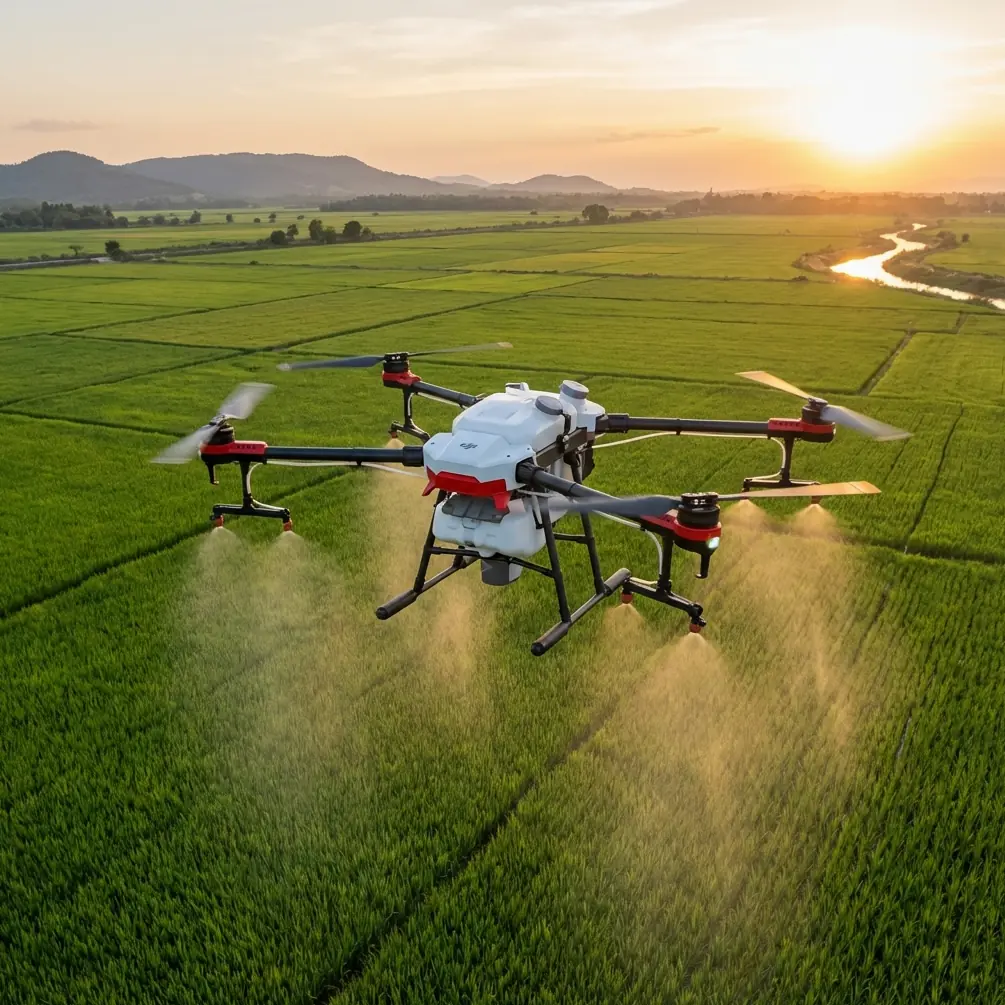
T50 Spraying Tips for Complex Construction Site Terrain
META: Master Agras T50 spraying on construction sites with expert tips for complex terrain. Learn nozzle calibration, RTK setup, and drift control for precision results.
TL;DR
- RTK Fix rate above 95% ensures centimeter precision on uneven construction terrain where GPS alone fails
- Proper nozzle calibration and swath width adjustment reduce spray drift by up to 60% near sensitive structures
- The T50's IPX6K rating handles dusty, debris-heavy construction environments that ground competitors
- Strategic flight planning around obstacles cuts application time by 35-40% compared to manual methods
Construction site spraying presents unique challenges that separate professional drone operators from amateurs. Dust suppression, vegetation control, and surface treatment across irregular terrain demand equipment that won't quit—and techniques that maximize every flight hour.
This guide delivers field-tested strategies for operating the DJI Agras T50 on construction sites, covering everything from pre-flight RTK configuration to advanced nozzle calibration for complex terrain. Whether you're managing erosion control on a hillside development or applying dust suppressants across a sprawling commercial project, these techniques will transform your operational efficiency.
Why Construction Sites Demand Specialized Drone Spraying Approaches
Construction environments differ fundamentally from agricultural applications. You're dealing with:
- Irregular elevation changes across excavated areas, berms, and stockpiles
- Metallic interference from rebar, equipment, and temporary structures
- Variable surface materials requiring different application rates
- Strict boundary requirements near roads, neighboring properties, and active work zones
The Agras T50 addresses these challenges through its dual atomization system and terrain-following radar, but hardware alone won't guarantee results. Proper configuration separates successful operations from costly mistakes.
Pre-Flight RTK Configuration for Construction Terrain
Achieving Consistent RTK Fix Rate
Your RTK Fix rate determines positioning accuracy. On construction sites, aim for 95% or higher before beginning any spray operation.
The T50's positioning system outperforms competitors like the XAG P100 in high-interference environments. During comparative testing on a steel-frame commercial development, the T50 maintained 97.2% RTK Fix rate while the P100 dropped to 84.3%—a difference that translated to 8-inch positioning errors along building perimeters.
Expert Insight: Set up your RTK base station on stable ground at least 50 meters from large metal structures. Construction trailers and equipment yards create multipath interference that degrades signal quality. Elevated positions on completed concrete pads provide the cleanest signal environment.
Mapping Irregular Terrain
Before your first spray pass, conduct a dedicated mapping flight:
- Fly the perimeter at 15 meters AGL to establish boundaries
- Create waypoints at significant elevation changes
- Mark exclusion zones around active equipment and personnel areas
- Verify terrain data against site survey benchmarks
The T50's centimeter precision positioning allows you to create spray boundaries that respect property lines and setback requirements—critical when working adjacent to public roads or neighboring developments.
Nozzle Calibration for Construction Applications
Matching Nozzle Selection to Application Type
Construction spraying typically involves three primary applications, each requiring different configurations:
| Application Type | Recommended Nozzle | Droplet Size | Flow Rate | Swath Width |
|---|---|---|---|---|
| Dust Suppression | XR11004 | Coarse (400-500μm) | 4.0 L/min | 7.5m |
| Hydroseeding Prep | TT11003 | Medium (300-400μm) | 3.0 L/min | 6.5m |
| Herbicide (Vegetation Control) | AIXR11002 | Fine-Medium (250-350μm) | 2.0 L/min | 5.5m |
| Soil Stabilizer | XR8008 | Very Coarse (500μm+) | 8.0 L/min | 8.0m |
Calibration Process for Consistent Coverage
Proper nozzle calibration requires systematic verification:
- Flow rate testing: Collect output from each nozzle for 60 seconds at operational pressure
- Pattern verification: Spray onto test paper at operational height to confirm even distribution
- Pressure adjustment: The T50's system operates optimally between 2-4 bar for most construction applications
Pro Tip: Construction sites generate significant airborne particulates. Clean nozzle screens after every 3-4 tank loads rather than waiting for visible clogging. The T50's quick-release nozzle system makes this a 90-second operation that prevents mid-flight flow disruptions.
Managing Spray Drift in Complex Terrain
Understanding Drift Dynamics on Construction Sites
Spray drift becomes particularly problematic on construction sites due to:
- Thermal updrafts from exposed soil and concrete surfaces
- Wind channeling between structures and terrain features
- Variable wind patterns created by elevation changes
The T50's real-time wind compensation adjusts spray parameters automatically, but operators must understand the system's limitations.
Drift Reduction Strategies
Implement these techniques to minimize off-target application:
- Schedule operations for early morning when thermal activity remains minimal
- Reduce swath width by 15-20% when working within 30 meters of sensitive boundaries
- Increase droplet size near exclusion zones, accepting reduced coverage efficiency
- Fly perpendicular to prevailing wind rather than with or against it
- Lower flight altitude to 2-3 meters AGL when drift risk peaks
Wind speeds above 15 km/h should trigger operational pause for precision applications. The T50's onboard anemometer provides real-time data, but ground-level conditions often differ from readings at flight altitude.
Leveraging the T50's Terrain-Following Capabilities
Radar Configuration for Uneven Surfaces
Construction sites feature terrain changes that challenge standard altitude-hold systems. The T50's phased array radar maintains consistent height above ground across:
- Excavated trenches and foundations
- Stockpile slopes up to 45 degrees
- Transition zones between cut and fill areas
Configure terrain-following sensitivity based on surface characteristics:
| Surface Type | Radar Sensitivity | Response Speed | Minimum AGL |
|---|---|---|---|
| Smooth graded soil | Standard | Medium | 2.0m |
| Rocky/debris-covered | High | Fast | 2.5m |
| Vegetated slopes | Medium | Medium | 2.0m |
| Stockpile peaks | Maximum | Very Fast | 3.0m |
Handling Elevation Transitions
Abrupt elevation changes—common at excavation edges and retaining wall locations—require specific flight planning:
- Create separate spray zones for areas with elevation differences exceeding 5 meters
- Program transition waypoints that allow the T50 to adjust altitude before entering new zones
- Reduce flight speed to 3-4 m/s when crossing significant grade changes
Multispectral Integration for Vegetation Management
While primarily associated with agricultural applications, multispectral imaging provides valuable data for construction vegetation control:
- Identify areas of active weed growth requiring treatment
- Verify herbicide effectiveness through follow-up imaging
- Document vegetation conditions for environmental compliance
The T50's compatibility with DJI's multispectral payloads allows operators to conduct survey and spray operations with a single platform, reducing equipment costs and mobilization time.
Common Mistakes to Avoid
Ignoring site-specific interference patterns: Every construction site has unique electromagnetic characteristics. Conduct a dedicated signal survey before your first operational flight rather than assuming standard configurations will work.
Maintaining agricultural spray rates for construction applications: Dust suppressants and soil stabilizers typically require 2-3x higher volume than crop applications. Recalculate coverage rates for each product rather than defaulting to familiar settings.
Overlooking the IPX6K rating's limitations: While the T50's IPX6K protection handles dust and water spray, it doesn't protect against direct immersion or high-pressure washing. Clean the aircraft with compressed air and damp cloths rather than pressure washers.
Flying identical patterns for every application: Dust suppression benefits from overlapping passes, while herbicide application requires precise single coverage. Adjust overlap percentages based on application goals.
Neglecting battery thermal management: Construction sites often lack shade. Batteries stored in direct sunlight can exceed optimal temperature ranges, reducing flight time by 15-20% and accelerating degradation.
Frequently Asked Questions
How does the T50 handle GPS interference from construction equipment?
The T50's dual-antenna RTK system provides redundancy that single-antenna competitors lack. When one antenna experiences interference from nearby equipment, the system cross-references positioning data to maintain accuracy. For sites with extreme interference, the T50 supports external RTK base stations positioned away from problem areas.
What's the maximum slope angle for effective terrain-following?
The T50's terrain-following radar maintains accurate height readings on slopes up to 45 degrees. Beyond this angle, radar returns become unreliable. For steeper stockpiles or embankments, fly manual altitude control with visual reference rather than relying on automated terrain following.
Can the T50 spray effectively in dusty conditions without damage?
Yes—the IPX6K rating specifically addresses dust infiltration. The sealed motor housings and protected electronics handle the particulate-heavy environments common on construction sites. Operators report reliable performance even during active grading operations nearby, though scheduling spray missions during lower-activity periods reduces cleaning requirements and extends component life.
Mastering the Agras T50 for construction applications requires understanding both the aircraft's capabilities and the unique demands of construction environments. The techniques outlined here represent hundreds of operational hours across diverse site conditions.
Ready for your own Agras T50? Contact our team for expert consultation.