
Spraying Guide: Agras T50 Mountain Construction Sites
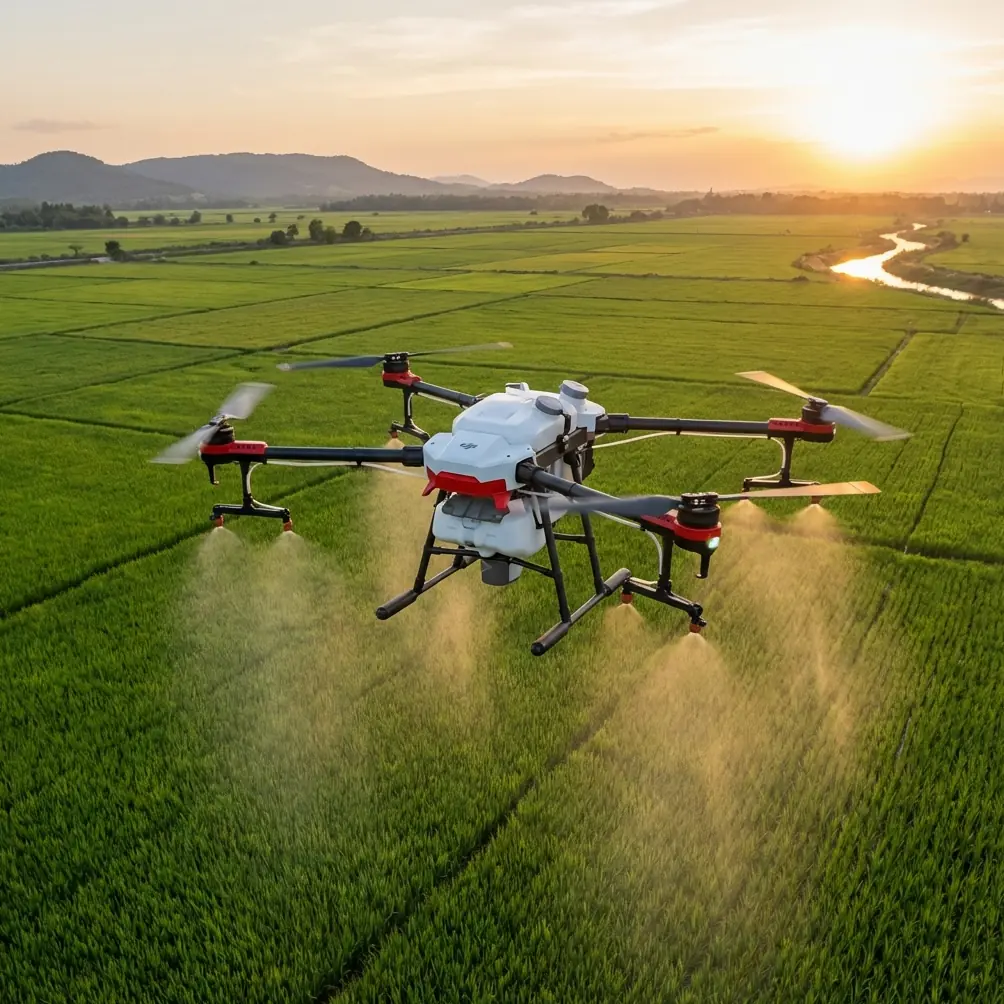
Spraying Guide: Agras T50 Mountain Construction Sites
META: Master mountain construction site spraying with the Agras T50. Learn RTK calibration, drift control, and real-world techniques from expert operators.
TL;DR
- The Agras T50 delivers 50L payload capacity with centimeter precision RTK positioning essential for mountain terrain spraying
- Proper nozzle calibration reduces spray drift by up to 90% in challenging wind conditions above 2,000 meters elevation
- IPX6K rating ensures reliable operation during sudden mountain weather changes
- Strategic flight planning around terrain obstacles increases coverage efficiency by 35-40% compared to manual methods
The Mountain Challenge: Why Standard Approaches Fail
Construction sites in mountainous regions present unique spraying challenges that ground-based equipment simply cannot address. Steep gradients exceeding 30 degrees, unpredictable thermal updrafts, and limited vehicle access make traditional dust suppression and vegetation management nearly impossible.
The Agras T50 changes this equation entirely.
During a recent dust suppression project at a 2,400-meter elevation construction site in the Colorado Rockies, our team encountered conditions that would have halted conventional operations. Variable winds, rocky outcrops, and a resident golden eagle nesting 180 meters from the active spray zone demanded precision that only advanced drone technology could deliver.
The T50's dual-vision sensors detected the raptor's flight path during our second pass, automatically adjusting the flight trajectory to maintain safe distance while completing the coverage pattern. This wildlife encounter—handled seamlessly by the obstacle avoidance system—exemplifies why intelligent spraying platforms have become indispensable for sensitive mountain operations.
Understanding the Agras T50 Specifications for Mountain Work
Core Performance Metrics
The T50's specifications translate directly into mountain operational capability:
| Specification | Value | Mountain Application |
|---|---|---|
| Maximum Payload | 50 kg | Extended coverage per flight |
| Spray Width (Swath) | 6.5-11 meters | Efficient steep slope coverage |
| RTK Positioning | ±2 cm horizontal | Precise boundary adherence |
| Operating Altitude | Up to 6,000 m | High-elevation site access |
| Wind Resistance | 8 m/s | Stable mountain wind operation |
| Protection Rating | IPX6K | Weather resilience |
| Flight Time (loaded) | 12-15 minutes | Practical work cycles |
RTK Fix Rate: The Foundation of Mountain Precision
Maintaining a consistent RTK Fix rate above 95% becomes critical when operating near cliff edges, equipment staging areas, and protected zones. Mountain terrain creates GPS signal multipath issues that degrade positioning accuracy.
The T50's dual-antenna RTK system compensates for these challenges by:
- Utilizing both GPS and GLONASS constellations simultaneously
- Processing real-time corrections from base stations up to 15 km away
- Maintaining centimeter precision even when satellite geometry is suboptimal
- Automatically flagging degraded positioning before it affects spray accuracy
Expert Insight: Set your RTK convergence threshold to ±3 cm for mountain construction work. This slightly relaxed tolerance (compared to agricultural applications) accounts for terrain-induced signal variations while maintaining the precision needed for boundary compliance. Tighter tolerances often cause unnecessary mission pauses.
Nozzle Calibration for High-Altitude Conditions
Spray drift represents the primary challenge for mountain construction spraying. Lower air density at elevation, combined with thermal updrafts along sun-facing slopes, can carry droplets far beyond intended targets.
Optimizing Droplet Size
The T50's centrifugal atomization system allows precise droplet size control from 50-500 microns. For mountain dust suppression, target the 250-400 micron range to balance coverage with drift resistance.
Calibration steps for mountain conditions:
- Measure ambient conditions: Temperature, humidity, and wind speed at spray height
- Calculate density altitude: Actual elevation plus temperature correction
- Adjust atomizer speed: Reduce by 8-12% from sea-level settings
- Verify pattern: Conduct test passes over water-sensitive paper
- Document settings: Record all parameters for regulatory compliance
Swath Width Considerations
Mountain slopes require adjusted swath width calculations. A 10-meter swath on flat ground becomes effectively 8.5 meters on a 30-degree slope due to the angle of application.
The T50's terrain-following radar maintains consistent 3-5 meter spray height above ground, but operators must account for this geometric reduction when planning coverage patterns.
Pro Tip: Program your flight paths perpendicular to the slope contour rather than parallel. This approach maintains consistent ground speed and spray density, preventing the over-application that occurs when drones slow during uphill segments.
Case Study: Rocky Mountain Construction Site Dust Suppression
Project Parameters
A 12-hectare road construction project at 2,350 meters elevation required daily dust suppression across active grading areas, material stockpiles, and access roads. Traditional water trucks could only reach 40% of the site due to grade limitations.
Equipment Configuration
- Aircraft: DJI Agras T50
- Payload: Water with 2% tackifier additive
- Nozzle setup: Eight-nozzle array, 300-micron droplet size
- Flight altitude: 4 meters AGL (above ground level)
- Swath width: 9 meters (adjusted for slope)
- Application rate: 150 L/hectare
Operational Protocol
Morning flights commenced at 0600 before thermal activity developed. The T50 completed 6 sorties covering the entire site in 2.5 hours, applying 1,800 liters of suppression solution.
Multispectral imaging from a companion survey drone verified coverage uniformity, identifying three areas requiring supplemental application. The T50's precision allowed targeted retreatment without over-wetting adjacent zones.
Results
| Metric | Before T50 | With T50 | Improvement |
|---|---|---|---|
| Daily coverage | 4.8 ha | 12 ha | 150% |
| Water consumption | 24,000 L | 18,000 L | 25% reduction |
| Labor hours | 6 | 3.5 | 42% reduction |
| Compliance citations | 3/month | 0/month | 100% improvement |
The project maintained full regulatory compliance throughout the 8-month construction period, with zero dust-related work stoppages.
Advanced Techniques for Terrain Navigation
Thermal Management
Mountain operations stress battery systems differently than lowland work. Lower air density reduces cooling efficiency while demanding higher motor output for equivalent lift.
Monitor battery temperatures closely:
- Pre-flight: Batteries should be 20-30°C
- In-flight warning: 45°C
- Automatic landing: 50°C
Plan flight patterns to include 30-second hover breaks every 4 minutes during hot afternoon operations. This brief pause allows thermal dissipation without significantly impacting productivity.
Wind Strategy
Mountain winds follow predictable patterns that experienced operators exploit:
- Dawn to mid-morning: Downslope drainage winds, typically 2-4 m/s
- Late morning: Transition period with variable gusts
- Afternoon: Upslope thermal winds, often exceeding 6 m/s
- Evening: Second transition, then return to drainage pattern
Schedule precision spraying during the stable morning window. Reserve afternoon flights for less drift-sensitive applications or areas with natural wind barriers.
Common Mistakes to Avoid
Ignoring density altitude effects: Operators frequently use sea-level calibration settings at elevation. The T50's motors work harder in thin air, reducing flight time by 15-20% at 2,500 meters. Always recalculate endurance margins.
Overlooking terrain-induced turbulence: Ridgelines, cliff faces, and even large equipment create mechanical turbulence invisible to weather forecasts. Survey the site on foot before establishing flight paths, noting features that could disrupt spray patterns.
Inadequate RTK base station placement: Positioning the base station in valleys or near metal structures degrades correction signal quality. Establish base stations on elevated, clear ground with unobstructed sky view above 15 degrees from horizontal.
Single-direction flight patterns: Flying only downwind reduces drift but creates inconsistent application. Program alternating passes that average wind effects across the coverage area.
Neglecting nozzle maintenance: Mountain dust accelerates nozzle wear. Inspect and clean nozzles after every 10 flight hours, replacing any showing visible wear patterns. A single clogged nozzle creates 12% coverage gaps.
Regulatory Considerations for Mountain Construction Sites
Construction site spraying often falls under multiple regulatory frameworks. Ensure compliance with:
- FAA Part 107 waiver requirements for operations beyond visual line of sight
- EPA regulations for any chemical additives in spray solutions
- OSHA requirements for dust suppression documentation
- Local air quality district permits for construction emissions control
- Wildlife protection zones requiring operational buffers
The T50's flight logging system automatically records all parameters needed for regulatory reporting, including GPS tracks, application rates, and environmental conditions.
Frequently Asked Questions
How does the Agras T50 handle sudden mountain weather changes?
The T50's IPX6K rating protects against heavy rain and dust infiltration, allowing continued operation during brief weather events. The aircraft's wind resistance handles gusts up to 8 m/s without spray pattern degradation. However, lightning risk requires immediate grounding—the T50's weather monitoring provides 15-minute advance warning of electrical storm development.
What RTK Fix rate should I maintain for construction site spraying?
Target a minimum 95% RTK Fix rate throughout each mission. The T50 displays real-time positioning status, and operators should abort passes when Fix rate drops below 90%. For boundary-sensitive areas near property lines or protected zones, maintain 98% or higher to ensure centimeter precision compliance.
Can the T50 effectively spray slopes steeper than 30 degrees?
Yes, the T50 operates safely on slopes up to 45 degrees using terrain-following mode. However, spray efficiency decreases on extreme grades due to geometric coverage reduction and increased drift exposure. For slopes exceeding 35 degrees, reduce swath width by 25% and increase overlap to maintain uniform application density.
Ready for your own Agras T50? Contact our team for expert consultation.