
Spraying Coastlines in Windy Conditions with the Agras T50
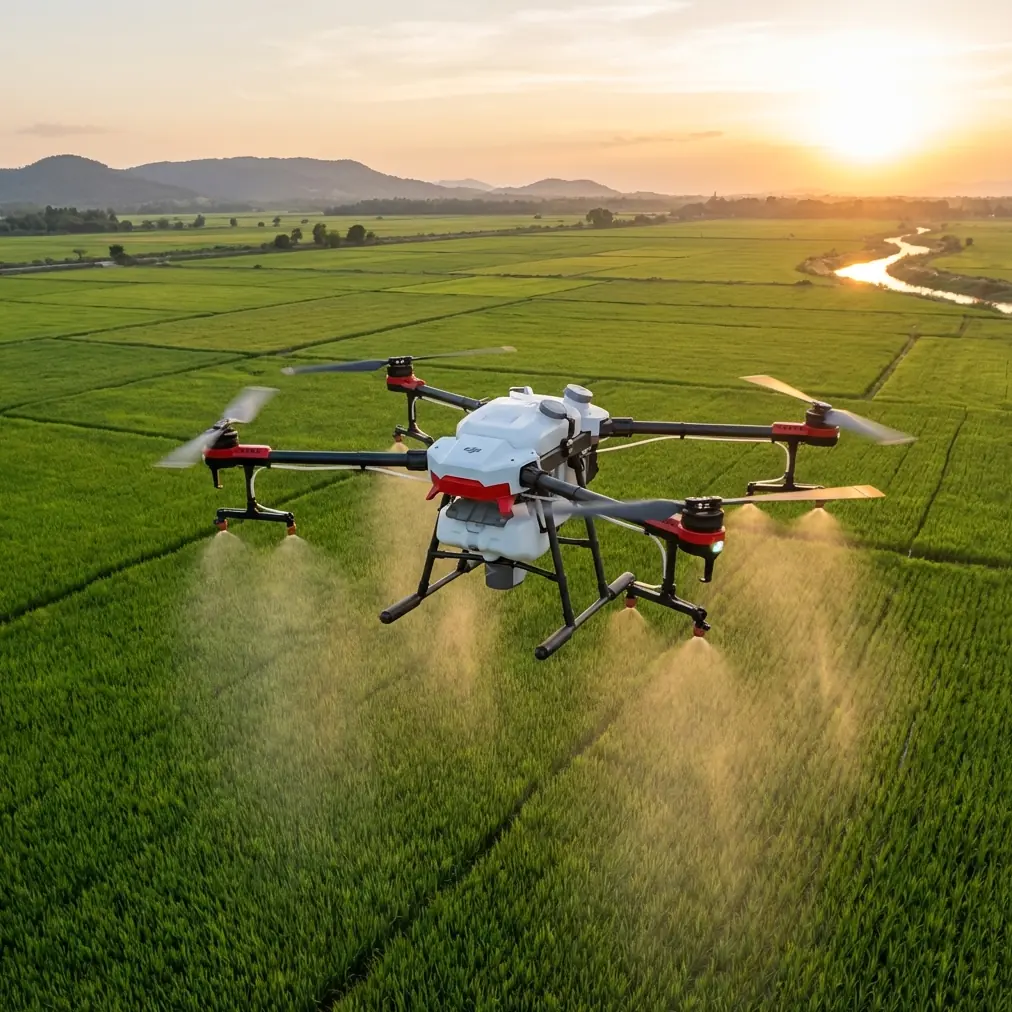
Spraying Coastlines in Windy Conditions with the Agras T50: Practical Field Tips That Actually Matter
META: A field-focused guide to using the Agras T50 for coastal spraying in windy conditions, with practical advice on drift control, nozzle calibration, RTK discipline, pre-flight cleaning, and sensor-aware workflow planning.
Coastal spraying exposes every weak habit in a drone operation.
Wind shifts faster. Salt hangs in the air. Moisture gets into places you do not think about until a sensor starts behaving strangely or a connection turns intermittent. If you are planning to use the Agras T50 along coastlines, the conversation should not start with headline specs. It should start with control: drift control, altitude control, route control, and maintenance discipline between flights.
I have seen strong operators get caught out by coastal conditions not because the aircraft was incapable, but because their workflow was built for inland fields. The T50 can be an excellent platform in this environment, but only if you tighten the details that windy coastal work punishes first.
This article walks through a practical way to prepare and spray with the Agras T50 near the coast, with special attention to drift, nozzle calibration, RTK consistency, and a pre-flight cleaning step many teams rush through.
Why coastline work is different
An inland orchard and a shoreline block may look similar on a mission planning screen. In the air, they are not remotely the same job.
Near the coast, wind direction can pivot around dunes, embankments, roads, and drainage lines. Salt residue can also accumulate on exposed surfaces and around sensing components. That matters because precise low-altitude spraying depends on good distance awareness and stable positional behavior. If either degrades, your application uniformity starts to unravel.
This is where one reference detail is more useful than it first appears: a TOF distance sensor range of 20 mm to 1280 mm, with out-of-range returns showing 8190 mm or 8191 mm. That number comes from an educational UAV document, not a T50 manual, but the operational lesson carries over cleanly. Close-range sensing is powerful, but it has limits. In the field, you should never assume a proximity or height-related sensing system can compensate for poor route planning, contamination, or aggressive flying in gusts. If a sensor is dealing with spray residue, glare, or unstable airflow, it may not give you the clean confidence you expect.
For coastal spraying, that means one thing: build a workflow that reduces the burden on onboard sensing instead of assuming sensors will rescue a sloppy setup.
Start with a cleaning step, not a battery step
Most pre-flight routines begin with battery status. In coastal work, I would argue the first serious step is cleaning.
Salt film and dried chemical residue can distort what the aircraft “sees,” especially around exposed sensing zones, landing gear areas, spray system surfaces, and connectors. The goal is not cosmetic. It is functional. A clean aircraft is easier to inspect, easier to calibrate, and less likely to give you false confidence.
My preferred sequence before the first flight of the day is simple:
- Wipe down the frame and exposed spray system surfaces.
- Check nozzles for partial blockage, crusting, and uneven wear.
- Inspect sensor windows and surrounding housings for residue.
- Confirm arms, mounts, and landing structure are free from sand and salt deposits.
- Only then move into power-up, calibration checks, and mission loading.
This is also the right moment to inspect protective seals and washdown-sensitive areas. Coastal work is unforgiving even for rugged platforms. An aircraft with an IPX6K-class protection mindset is still not invincible if operators let saline residue sit on the machine after repeated sorties. Protection ratings help. Maintenance discipline is what keeps that protection meaningful.
Drift control begins before takeoff
Pilots often talk about spray drift as if it starts at the nozzle. It starts in planning.
A useful lesson comes from a mobile lidar road-survey reference. In that project, crews could not safely measure key road markings directly in the middle of traffic lanes, so they placed 44 target points to support trajectory correction, and in some sections placed points roughly every 200 units along both sides of the road. The broader significance is not about roads. It is about respecting field constraints instead of pretending ideal conditions exist.
That is the mindset to bring to coastline spraying with the T50.
Do not build your route as though the whole coastal block is one uniform spray zone. Break it into control-friendly segments based on:
- wind exposure
- buffer sensitivity
- changes in vegetation height
- obstacles that alter airflow
- adjacency to water, roads, footpaths, or dunes
In practice, that often means narrower working blocks, more conservative turn planning, and deliberate staging points for reassessment. If one section has cleaner wind and another has cross-gusts rolling off a dune face, those are not the same mission just because they sit inside one polygon.
The best operators create route structure that limits drift risk before a nozzle ever opens.
RTK discipline matters more near the coast than many teams admit
When operators say a spray job “went a little sideways,” they often mean one of two things: the aircraft drifted physically, or the route geometry drifted operationally.
Coastal spraying benefits from strong RTK habits because wind already adds enough uncertainty. You do not want avoidable positional slop stacked on top of atmospheric variability.
Another useful survey reference here: teams prepared at least 4–5 known coordinate points in two coordinate sets to support transformation accuracy, and one base station had an effective control range of 25 km. Again, this is not an agriculture prescription. It is a precision mindset. Reliable geospatial work depends on reference integrity, not just software confidence.
Applied to the T50, that means:
- verify RTK fix quality before entering the work area
- avoid launching into marginal correction conditions just because the aircraft can still fly
- be skeptical of edge-of-coverage operations
- confirm that terrain, coastal structures, and vegetation are not degrading link stability
- recheck fix rate after repositioning the operation vehicle or base setup
If your fix quality is fluctuating, windy coastline work is the wrong place to “see how it goes.” Consistent swath placement depends on centimeter-level repeatability. In practical terms, good RTK behavior reduces misses, overlap waste, and inconsistent boundary treatment.
Nozzle calibration is not optional in salt-air operations
Nozzle calibration gets treated as a one-time setup too often. Near the coast, that is a mistake.
Salt-laden air and fine particulate contamination can accelerate uneven flow behavior, especially when combined with repeated wet-dry cycles. Even minor asymmetry in output becomes more obvious when wind is already pushing droplets off center.
With the T50, nozzle calibration should be tied to mission conditions, not just calendar intervals. I recommend checking:
- left-right output symmetry
- droplet consistency across the planned application rate
- line pressure stability
- visual spray pattern before first productive pass
- nozzle condition again after a mid-shift rinse if residue buildup is visible
This is also where swath width judgment has to stay realistic. The widest possible swath on paper is rarely the smartest swath in gusty coastal air. Narrowing the effective swath width can improve deposition consistency and reduce edge drift, even if it costs some productivity. That trade is often worth making when the alternative is rework, complaints, or poor coverage on target vegetation.
Use altitude intelligently, not aggressively
The educational TOF reference mentioned a practical behavior that deserves attention: after takeoff, the UAV can automatically hover and collect repeated height data, with a sample structure showing 10 loops and 20 groups of displayed height readings. That is a teaching exercise, but the field lesson is strong: repeated altitude observation tells you more than a single glance.
For the T50 on coastal jobs, do a short stabilization check after takeoff before moving into the first spray line. Watch how the aircraft holds height and position in the actual wind at working altitude, not at launch height alone. If it is moving more than expected, that is your warning to adjust:
- flight direction relative to wind
- speed
- working height
- swath width
- application timing for exposed sections
The key is to avoid treating height control as static. Coastal air can produce very different behavior a few meters above ground compared with the launch point, especially near dunes or embankments.
Plan your run direction around airflow, not convenience
This sounds obvious, but it gets violated constantly.
If the easiest launch setup produces the worst line direction for drift, change the setup. A longer walk to a better staging point is cheaper than off-target application.
When possible:
- run parallel to the most stable airflow pattern
- avoid spray release on the most exposed boundary edge if gusts are pushing outward
- handle sensitive edges in separate passes with tighter parameters
- reserve the center of the block for more efficient production settings
That segmented approach resembles the survey logic of placing correction targets where direct measurement was unsafe or unreliable. In both cases, the real professional move is to adapt the workflow to the environment rather than insisting the environment behave like a clean demo plot.
Watch the thermal side during repeated sorties
One detail from the drone education reference stands out because it reflects an operational truth many spray teams learn the hard way: when board temperature exceeds 80°C, a cooling-oriented logic can be triggered to avoid shutdown. The exact implementation there is instructional, but the field significance is broader.
Coastal work may feel cooler because of sea breeze, yet repeated short-cycle operations, high payload turnover, and frequent ground idling can still load the system thermally. Add residue accumulation and reduced airflow around components, and thermal stress can creep up quietly.
For T50 operators, that means:
- avoid unnecessary powered idle time between loads
- inspect vents and exposed cooling paths during cleaning
- do not stack battery swaps so aggressively that the aircraft never gets a practical inspection pause
- monitor operating behavior across the full work window, not just on the first sortie
A machine that performs perfectly in sortie one may tell a different story by sortie eight.
A practical coastline workflow for the Agras T50
If I were setting a baseline procedure for a windy coastal spray day, it would look like this:
1. Site segmentation
Divide the coastline block into smaller operational zones based on exposure, obstacles, and sensitive boundaries.
2. Pre-flight cleaning
Remove salt, sand, and residue from the airframe, nozzles, and sensing surfaces before power-up.
3. RTK verification
Confirm stable fix quality and reference integrity before loading the productive route.
4. Nozzle calibration check
Validate even output and adjust for the actual liquid and weather conditions of the day.
5. Short hover assessment
After takeoff, observe stability at working height rather than assuming ground conditions represent flight conditions.
6. Conservative opening passes
Use tighter swath width and more cautious speed on the first exposed lines, then widen only if deposition and drift behavior support it.
7. Mid-shift rinse and inspection
Do not wait until the end of the day if salt or spray residue is accumulating visibly.
8. Post-flight washdown
Clean properly before storage or transit. Coastal residue left overnight is an invitation for corrosion and sensor trouble.
If you are refining that workflow for a specific site, a quick field discussion can save a lot of trial and error. Here is a direct line for coastal T50 setup questions.
What separates a clean coastal operation from a messy one
It is rarely the aircraft alone.
The difference usually comes down to whether the crew understands how precision systems behave when the environment stops cooperating. The survey team that laid out 44 correction targets did not do it because they loved extra work. They did it because the real-world site would not allow ideal measurement. The UAV training reference that documented a 20 mm to 1280 mm TOF measuring window was making the same point from another angle: sensors are useful within conditions and limits, not beyond them.
That is the right way to think about the Agras T50 near the coast.
Use the aircraft’s precision, but do not lean on it blindly. Clean before you fly. Verify your fix. Recheck your nozzles. Reduce the problem into manageable route segments. Respect airflow at working height, not just at launch. If the conditions push you toward narrower swaths and slower passes, that is not lost efficiency. That is professional control.
Coastal spraying rewards operators who manage the details others skip.
Ready for your own Agras T50? Contact our team for expert consultation.