
Agras T50 for Remote Coastline Spraying: A Field
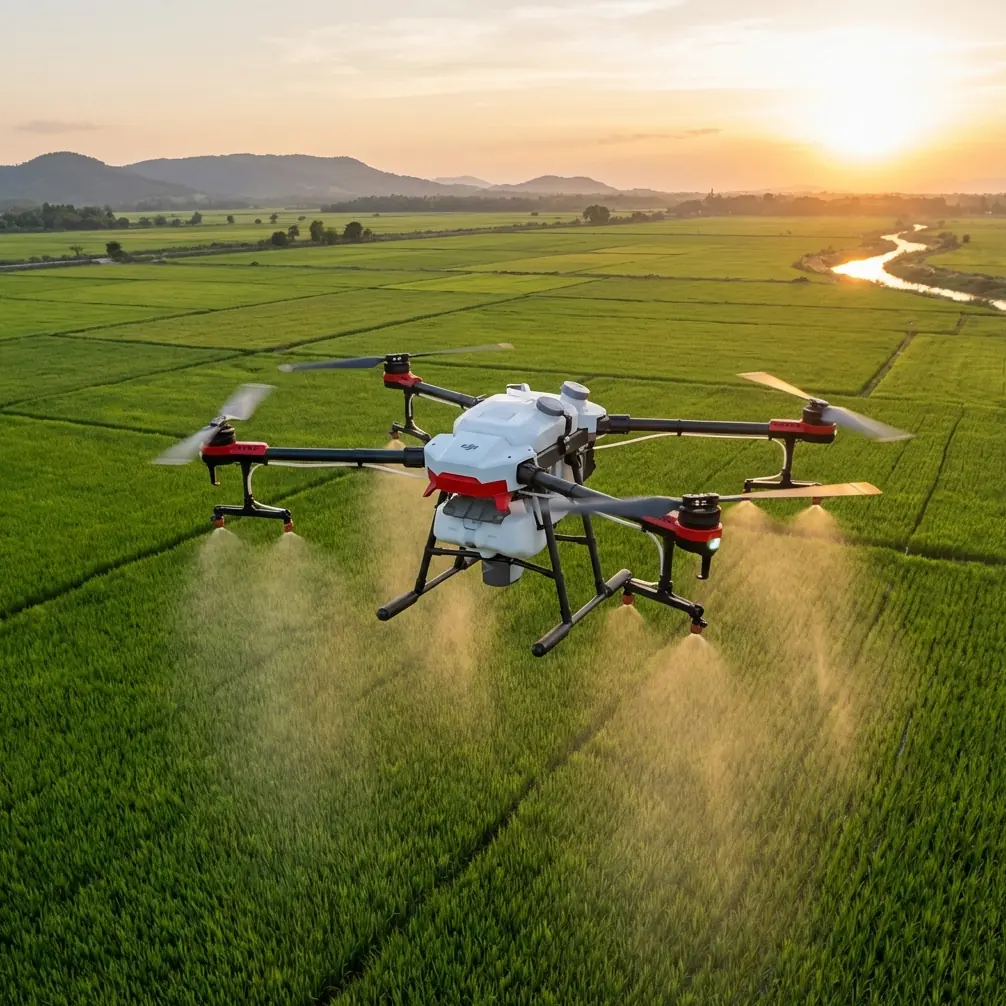
Agras T50 for Remote Coastline Spraying: A Field Consultant’s Case Study
META: A practical expert analysis of how the DJI Agras T50 fits remote coastline spraying, with lessons drawn from UAV photogrammetry and forest survey workflows, including precision, drift control, data handling, and harsh-environment operations.
Remote coastline spraying is where drone spec sheets stop being abstract.
Salt hangs in the air. Access roads disappear. Wind shifts faster than a farm manager would like. Ground crews waste time simply reaching the work zone, let alone treating it evenly. If you are evaluating the Agras T50 for this kind of work, the right question is not “Can it spray?” Almost any serious agricultural platform can do that. The real question is whether it can keep application quality high when terrain, access, and environmental exposure are working against you.
That is where the T50 becomes interesting.
I want to frame this through a use case rather than a feature dump: a remote coastal treatment program where the operator must cover fragmented strips of land, vegetated embankments, and hard-to-reach margins without turning every mission into a logistics problem. The strongest case for the Agras T50 is not raw capacity alone. It is how a modern heavy-lift spraying platform benefits from lessons the UAV industry learned years ago in mapping and forest resource work.
Those older references matter more than they may first appear.
Back in China’s maturing low-altitude photogrammetry sector, agencies were already deploying UAV systems for professional surveying from 2009 onward. One example cited a platform with a 5 kg payload and 1.5 hours of endurance, often paired with a Canon 5D Mark II camera for large-scale mapping tasks. That sounds modest beside a current spraying aircraft, but the operational lesson still holds: once UAVs became reliable enough for serious field production, value shifted from “it flies” to “it produces usable results under workflow pressure.”
That same shift is exactly what coastline spraying demands from the T50 today.
Why remote coastlines punish weak workflows
Coastal spraying is usually less forgiving than broad-acre inland work. The treatment area may be narrow, discontinuous, and bordered by sensitive water, exposed rock, public access paths, or protected vegetation. You cannot hide poor nozzle calibration behind brute-force volume. You cannot afford sloppy overlaps. And if the route to the target area is rough or partially inaccessible, every refill cycle becomes more expensive in labor and time.
Older UAV forest survey research captured a similar access problem in a different industry. In one 2011 study on forest resource investigation, the authors pointed out that ground surveys in densely grown southern collective forest areas could demand huge manpower and material input. In many places, farmers rarely entered the hills, vegetation had grown rapidly, and former footpaths had gradually disappeared. That detail is operationally significant for coastline work because the challenge is the same in spirit: when the site resists ground access, aerial systems stop being a convenience and become the practical way to maintain consistency.
An Agras T50 deployed along remote shoreline corridors benefits from this same aerial advantage. The aircraft reduces repeated human movement through difficult terrain and shifts the labor burden toward planning, refill logistics, and application verification instead of physical access.
The T50’s real edge: precision under ugly conditions
Agras buyers often focus first on output. That matters, but on coastlines, precision protects the mission.
This is where the discussion should include RTK fix rate, swath width discipline, and spray drift management. A remote coastal strip can look simple from above, yet small positional errors compound quickly when the area is long and irregular. Centimeter precision is not just a nice line in a brochure. It is the difference between clean edge tracking and repeated correction passes.
The photogrammetry literature offers a useful parallel. In one workflow, UAV imagery and ground control results were processed in a fully digital photogrammetry workstation, with aerial triangulation outputs imported into a stereo mapping environment to restore the model and collect terrain and feature elements according to specification. In plain language, the industry learned long ago that the aircraft is only one part of an accuracy chain. Data capture, positional integrity, and downstream interpretation all determine whether field output is trustworthy.
For T50 operators, that translates directly into practice. A strong RTK fix rate supports repeatable path following along narrow coastal treatment bands. That improves overlap control, keeps swath width more predictable, and helps the operator maintain uniform deposition where shoreline geometry changes every few meters.
Compared with lighter competitors that may be easier to transport but less stable in variable wind, the T50’s bigger-frame working profile can be a real advantage if the operator manages speed, altitude, and droplet settings correctly. On exposed coastlines, you do not want a platform that becomes nervous every time air rolls off a dune or sea wall. You want one that holds its line.
Spray drift is the issue that decides whether a mission is professional
On remote coastlines, everyone talks about access. The more serious problem is drift.
A treatment zone near open water or ecologically sensitive margins leaves little room for lazy setup. Nozzle calibration becomes non-negotiable. You need a droplet strategy matched to wind, vegetation structure, and target surface. The T50 gives you a professional platform, but it does not absolve the crew from making agronomic decisions.
This is where experienced operators separate themselves from casual adopters. A wide swath is only useful when the deposition pattern remains controlled. If drift risk rises, shrinking the effective swath and adjusting application parameters is often the smarter move. On paper, that can look less productive. In reality, it prevents retreatment, off-target loss, and complaints from land managers.
The older mapping references reinforce this point from another angle. Those projects did not stop at image capture; they examined the production methods for DEM, DLG, and DOM outputs and checked DLG and DOM accuracy against field-measured data. That habit of verification is exactly what coastline spraying programs need. You should not assume performance because the aircraft completed the route. You should verify application quality in the field.
If you are running T50 missions in a remote marine environment, that means:
- checking nozzle calibration before deployment, not after a poor result,
- validating deposition consistency across representative sections,
- monitoring drift windows rather than merely wind averages,
- and adjusting route geometry to match real shoreline boundaries.
That is how the T50 earns its reputation. Not by flying harder, but by being run with discipline.
Harsh-environment resilience matters more near salt air
Remote coastlines are hard on equipment. Fine saline moisture, blown grit, and splash exposure turn minor design weaknesses into maintenance events.
This is one reason ruggedness features such as IPX6K-level protection carry real operational weight. In an inland orchard, weather sealing is useful. On a coastline, it can be the difference between sustained uptime and a maintenance cycle that interrupts the treatment window. Competitors may claim similar agricultural suitability, but not all aircraft handle repeated exposure to wet, corrosive, debris-laden conditions equally well over time.
The T50 fits this environment better than many lighter or more consumer-adjacent spraying platforms because it is built for industrial field work rather than occasional use. That distinction becomes obvious after repeated transport, rinse-down, and redeployment cycles.
Still, resilience is not invincibility. Salt management protocols matter. Coastal operators should treat post-mission cleaning as part of the application workflow, not an afterthought. If you ignore that, the environment will collect its debt later.
What mapping and forest survey teach us about T50 mission planning
It may seem odd to borrow insight from photogrammetry and forest inventory for a spraying article, but the connection is tight.
The 2011 forest remote sensing paper emphasized combining UAV work with GIS and GPS in order to deal with difficult survey conditions. That integrated approach is exactly how coastline spraying should be planned with the T50. The aircraft is not a standalone answer. It performs best inside a system:
- map the treatment corridor,
- mark sensitive exclusion areas,
- evaluate refill logistics,
- define swath strategy by vegetation and exposure,
- and verify route repeatability through positioning quality.
In some coastal jobs, multispectral scouting can add another layer of value before any liquid goes airborne. Not every remote strip needs it, but where vegetation stress or invasive spread is patchy, pre-treatment imaging can help avoid blanket application. That reduces chemical waste and gives the T50 a more targeted workload. The result is not just efficiency. It is cleaner stewardship.
This is also where the T50 tends to outclass weaker alternatives. Some competitor platforms can technically operate in similar spaces, but they often become compromise machines: enough payload for small jobs, enough precision for easy jobs, enough ruggedness for short-term jobs. Remote coastline work is cumulative. The operator needs a platform that remains accurate, stable, and serviceable across repeated difficult deployments.
The T50 is better understood as a professional operations tool than as a mere crop sprayer.
A practical coastline deployment scenario
Imagine a contractor responsible for treating invasive growth along a broken coastal edge with steep access points and intermittent service tracks. The land manager wants coverage on vegetated margins without sending crews repeatedly through unstable ground. Drift tolerance is low because water and non-target vegetation sit just meters away in places.
A weaker workflow would attack this as a throughput problem.
A stronger T50 workflow starts with route segmentation. Long continuous shoreline sections are divided into treatment blocks based on refill access, wind exposure, and margin sensitivity. The operator confirms RTK reliability before committing to the narrowest sections. Nozzle calibration is checked against the intended droplet profile. Swath width is set conservatively where airflow becomes turbulent. A verification pass is built into the program, just as earlier UAV mapping teams verified output quality against field-measured references.
Now the aircraft is not just covering land. It is executing a controlled, auditable operation.
That is the difference clients and land managers notice.
If your team is still deciding how to configure a remote coastal operation around the T50, it helps to talk through mission architecture before the first drum is loaded. For field-specific planning, message a specialist here: https://wa.me/85255379740
What the Agras T50 is really good at
The T50 is at its best when the job combines three pressures at once:
- difficult access,
- strict placement accuracy,
- and environmental exposure.
Those are exactly the pressures common to remote coastline spraying.
The historical UAV references supplied here point toward the same conclusion from different sectors. In photogrammetry, Chinese UAV programs matured because they could reliably produce useful survey outputs with disciplined processing and accuracy checks. In forest investigation, UAV remote sensing stood out because it reduced the burden of ground work in places where paths had disappeared and manual access had become punishing. The T50 sits at the intersection of those lessons. It is valuable not only because it carries and sprays, but because it allows skilled operators to execute precise work where the ground itself is the problem.
That is why I would rate it ahead of many competing agricultural drones for this niche. Not because every mission needs maximum capacity, and not because bigger always means better. It is because remote coastline work rewards aircraft that can combine stable application, centimeter-level route confidence, durable construction, and repeatable field workflows.
If you are treating open, simple, forgiving terrain, you have options.
If you are treating remote coastal margins where drift, access, and reliability all matter at once, the Agras T50 makes a stronger case.
Ready for your own Agras T50? Contact our team for expert consultation.