
Field Report: What a 1,600-Drone Dubai Order Really Signals
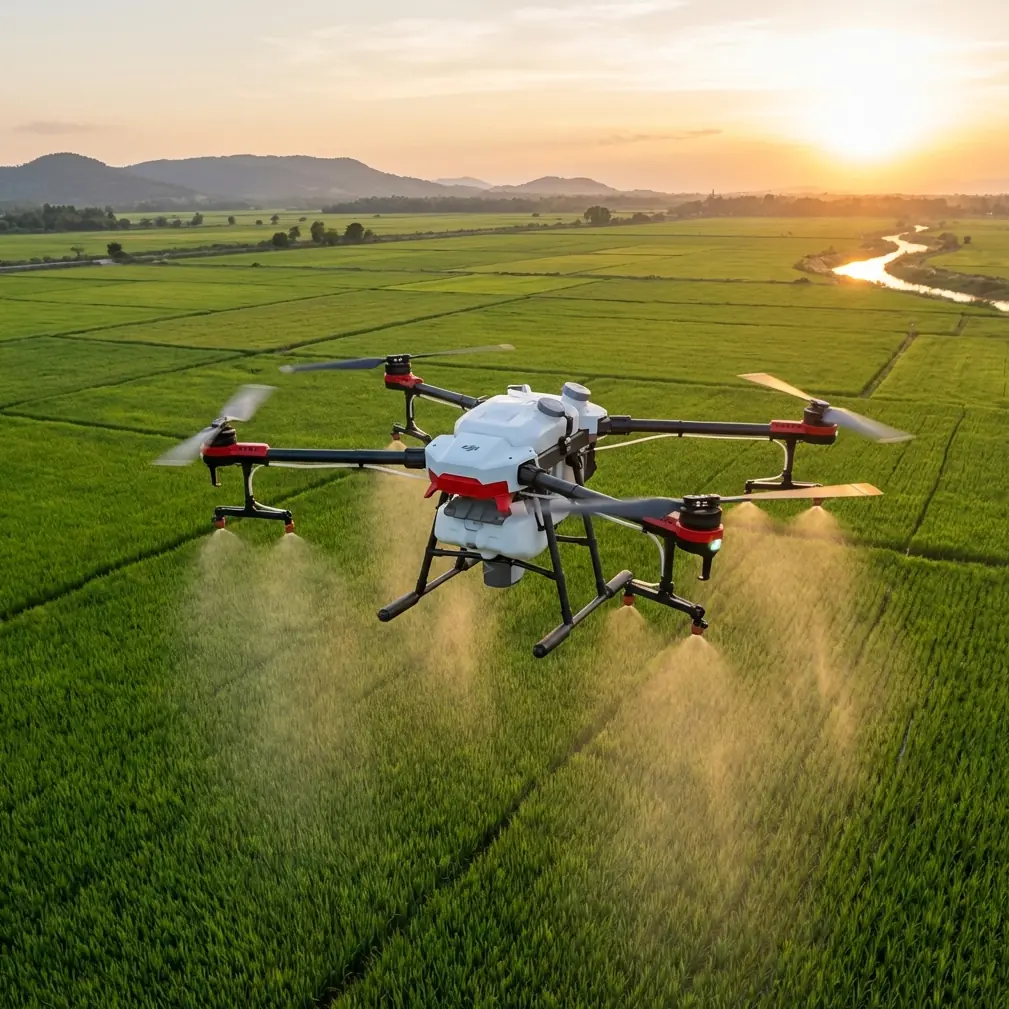
Field Report: What a 1,600-Drone Dubai Order Really Signals for Agras T50 Operators in Remote Wildlife Landscapes
META: A field report for Agras T50 readers explaining what a 1,600-unit industrial drone order in Dubai means for remote scouting, precision agriculture, wildlife-safe operations, and mission planning.
By Dr. Sarah Chen
The most useful drone news is not always about the drone you already fly. Sometimes the sharper signal comes from the neighboring segment.
That is exactly how I read the recent Dubai Airshow announcement that United Aircraft secured orders for 1,600 heavy-duty industrial drones across low-altitude logistics, medical delivery, and agricultural plant protection markets in the UAE, South Korea, and beyond. On the surface, this is a story about another manufacturer and another platform mix. Look closer, though, and it becomes highly relevant to anyone evaluating or operating the DJI Agras T50 in remote environments where agriculture, terrain complexity, and wildlife pressure overlap.
For Agras T50 users, especially those scouting remote land with active animal movement, this is not just industry noise. It is evidence that the operational logic behind industrial UAV deployment is maturing fast. Large buyers are no longer thinking in single-use terms. They are buying for mixed mission sets: logistics one hour, inspection the next, crop protection after that. That shift matters because the T50 now enters a market where expectations are rising. Payload alone is not enough. Precision, survivability, flight discipline, and mission adaptability now define credibility.
The Dubai order is substantial by any standard. A 1,600-aircraft deal is not merely a procurement headline; it signals confidence in low-altitude drone infrastructure at scale. One detail stands out: the order spans agriculture, medical distribution, and logistics rather than concentrating on a single vertical. Operationally, that tells us decision-makers are prioritizing aircraft ecosystems that can function under real field constraints, not ideal demonstrations.
That same standard increasingly applies to the Agras T50.
Why this matters to an Agras T50 reader
If your actual use case is scouting wildlife in remote terrain before spraying, seeding, or transport operations, you are working in the hardest corner of the drone economy. Distances are long. Terrain distorts signal and wind. Animals introduce unpredictable movement. Ground teams may be sparse. You need a platform that can do more than follow a clean route on a map.
In that context, the Dubai news reveals two important trends.
First, industrial buyers are rewarding aircraft that can survive complicated missions. The reported order includes the TD550, described as the country’s first coaxial dual-rotor unmanned helicopter to receive a type certificate. That certification point is more than a bureaucratic milestone. It suggests regulators and enterprise customers are putting more weight on airworthiness discipline and mission reliability in complex scenarios. For an Agras T50 operator, the practical takeaway is simple: the market is moving toward platforms and workflows that can demonstrate repeatable precision under operational stress.
Second, the order also includes a platform with a stated endurance of 73 minutes for inspection and delivery missions. Even though that figure belongs to a different aircraft category, it highlights what customers now expect from industrial UAV programs: fewer compromises between coverage, accuracy, and mission continuity. The Agras T50 does not compete by mimicking a long-endurance logistics aircraft. It competes by doing heavy fieldwork with exceptional control over application quality, route execution, and turnaround efficiency. That distinction becomes more valuable, not less, as the broader industrial drone market professionalizes.
A remote wildlife scouting scenario
Last month, during a dry-season field evaluation on mixed grazing and orchard land near a riparian corridor, our team used a scouting pattern ahead of a treatment plan intended to suppress late weed pressure along the perimeter. It was the sort of place where wildlife and farm operations collide quietly: reeds, broken fence lines, shallow water, and thick brush pockets that hide movement until the last second.
On the second pass, thermal irregularities along a shaded embankment prompted a hold and reroute. The area turned out to contain a doe and two young deer bedded close to the treatment boundary. Without early aerial awareness, a routine mission could have pushed unnecessary stress into the corridor or forced an abrupt in-field shutdown after launch. Instead, the route was redrawn, the swath width reduced along the edge zone, and the operation resumed only after the animals moved clear.
This is where the Agras T50 earns its place in serious field programs. Not because it is marketed for wildlife observation, but because its precision workflow can support wildlife-aware decision-making when operators build scouting discipline into the mission. In remote areas, that means using route planning, terrain awareness, and carefully controlled application geometry rather than assuming the field is empty because the map looks empty.
The real bridge between Dubai and the T50
The strongest connection between the Dubai order and Agras T50 operations is not brand rivalry. It is mission convergence.
United Aircraft reportedly launched drone food delivery in the Middle East just before the airshow, positioning unmanned systems directly inside the region’s emerging low-altitude logistics market. That is significant because it shows drone deployment moving from exhibition value to routine service value. The same transition is underway in agriculture. Buyers and operators no longer ask whether drones can spray, spread, or scout. They ask whether those missions can be carried out safely, repeatedly, and with measurable field outcomes.
For the T50, this changes the performance conversation.
Agras operators should now expect more scrutiny around spray drift, nozzle calibration, route verification, and environmental margins. In remote wildlife zones, those variables are not technical trivia. They are what separate responsible use from avoidable mistakes.
Spray drift, in particular, deserves blunt treatment. In open or semi-open habitat, drift is not just a crop efficacy problem. It is a boundary control problem with ecological implications. If you are working near nesting cover, grazing lanes, wetlands, or game trails, every variable matters: droplet size, release height, wind direction shifts, and forward speed. The T50’s value in these conditions comes from the operator’s ability to pair stable route execution with disciplined nozzle calibration. A poorly calibrated system can waste product, reduce target coverage, and create off-target exposure in exactly the areas you meant to protect.
That is also where centimeter precision becomes more than brochure language. With a strong RTK fix rate, the aircraft’s ability to hold intended paths and repeat them across subsequent missions directly influences edge management. Tight boundary adherence helps when you need to leave a buffer around wildlife activity, maintain exclusion strips near water, or revisit a zone without overlap. In rough terrain, that consistency protects both the crop plan and the landscape around it.
What industrial buyers are teaching the farm sector
A 1,600-unit order across agriculture, logistics, and medical delivery tells us industrial customers are valuing systems thinking. Aircraft are now judged as parts of an operational chain: planning, execution, risk control, maintenance, and field adaptability.
Agras T50 operators should adopt the same mindset.
In remote scouting work, the aircraft is only one part of the mission. You also need a preflight wildlife scan, a wind window decision, a terrain-informed route plan, and a post-mission verification process. If you are assessing whether your current setup is strong enough for that kind of work, I often recommend starting with a practical mission review rather than a spec-sheet debate. A short field checklist or operator briefing can reveal more than hours of online comparison, and if you want a second set of eyes on that workflow, this field operations chat is a straightforward place to start.
The Dubai order also underlines another reality: agricultural drones are increasingly being evaluated against broader industrial standards. That should motivate better operating habits in the field. If a logistics operator is expected to document route integrity and mission reliability, an ag drone team working near sensitive habitat should be no less disciplined.
How the Agras T50 fits this new standard
The T50 is best understood as a precision work platform for operators who need throughput without surrendering control. In wildlife-adjacent remote use, that means four things matter most.
First is route accuracy. If your RTK fix rate is inconsistent, every downstream promise becomes weaker. Your swath width assumptions start to wobble. Overlap grows. Buffer zones become harder to trust. In remote country where visual references are sparse, positioning confidence is not optional.
Second is application consistency. Nozzle calibration has to be treated as an operational ritual, not a maintenance afterthought. In areas where vegetation structure changes rapidly from one zone to the next, calibration affects droplet behavior, canopy penetration, and drift risk. The T50’s productivity only helps if the application pattern remains defensible.
Third is environmental resilience. When readers mention IPX6K in relation to field aircraft, they are usually thinking about washdown convenience or weather exposure. Both matter, but the bigger operational point is continuity. Remote missions often involve dust, residue, damp vegetation, and repeated cycles of loading and cleaning. A ruggedized platform supports more reliable turnaround in imperfect field conditions, which is exactly where many wildlife-adjacent operations happen.
Fourth is sensor-informed judgment. Even when a spraying platform is not a dedicated wildlife survey drone, operators can still integrate scouting intelligence before and between missions. Multispectral data, when available elsewhere in the operation, can identify stress patterns that deserve targeted treatment rather than blanket application. That reduces unnecessary passes over areas where wildlife may be sheltering. Better data narrows the mission. Narrower missions reduce disturbance.
The operational significance of the Dubai details
Two facts from the Dubai story deserve special attention.
The first is the inclusion of agriculture alongside medical delivery and logistics in the same order mix. That tells us agriculture is no longer being treated as a niche add-on for drones. It is part of the serious industrial deployment conversation. For T50 operators, that raises the bar. Buyers, partners, and regulators will increasingly expect agricultural UAV missions to show the same professionalism seen in other industrial sectors.
The second is the presence of the certificated TD550 and the 73-minute endurance Q20 within the broader portfolio. Those details matter because they show customers are selecting aircraft families based on task fit, certification confidence, and mission-specific strengths. The lesson for an Agras T50 user is not to chase every capability in one airframe. It is to understand the T50’s strongest lane and operate it there with discipline. The strongest ag drone program is usually not the one claiming to do everything. It is the one that knows exactly where precision application, route repeatability, and field safety create real value.
Final read from the field
The Dubai Airshow order is a market signal disguised as a headline. It shows industrial drone adoption moving deeper into real services, larger fleets, and more demanding expectations. For Agras T50 readers, especially those working remote properties with active wildlife presence, the message is clear: the future belongs to operators who can combine productivity with restraint.
That means flying with clean RTK integrity, verifying nozzle calibration before each serious application window, respecting spray drift as an ecological issue rather than just a technical one, and adjusting swath width when the landscape tells you to. It also means treating wildlife encounters not as interruptions, but as mission-defining data.
The drone sector is getting bigger. The smarter lesson is that it is also getting stricter.
And that is good news for professionals who want the Agras T50 to be judged by what actually matters in the field.
Ready for your own Agras T50? Contact our team for expert consultation.