
Agras T50 for Vineyard Scouting in Low Light
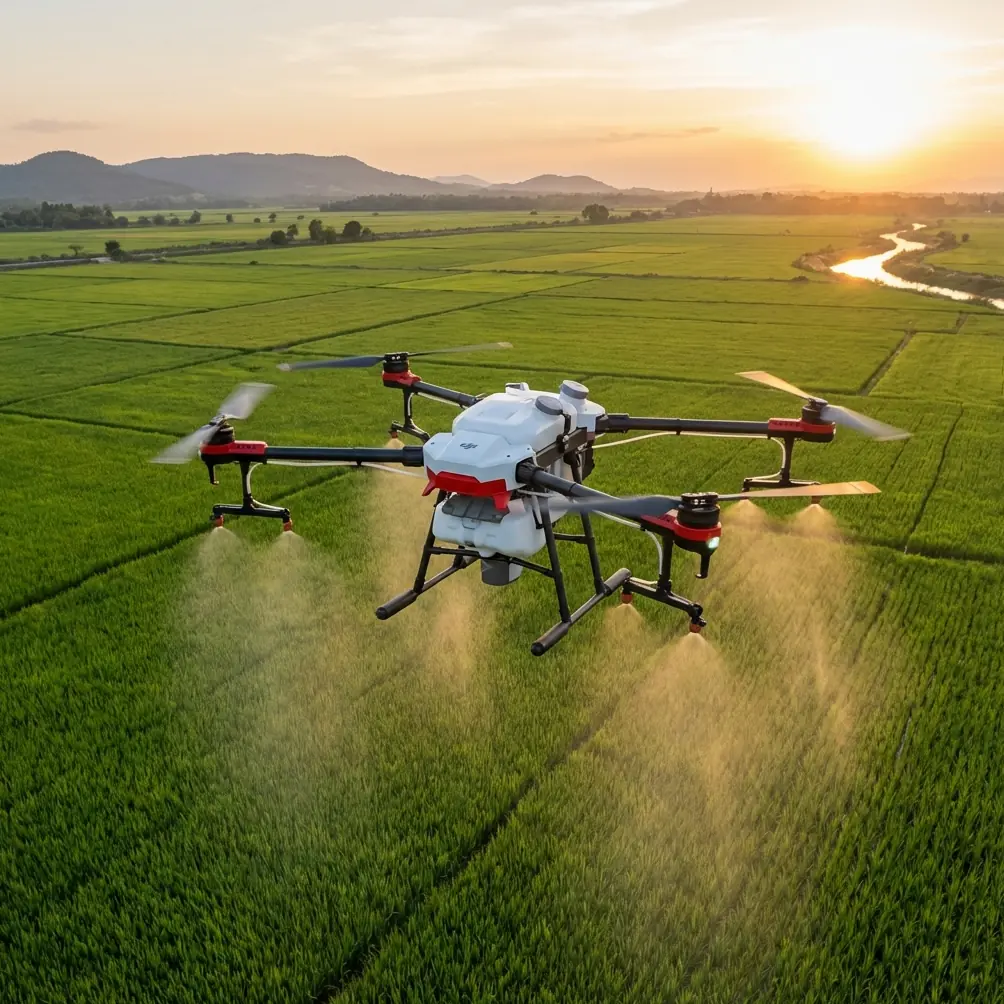
Agras T50 for Vineyard Scouting in Low Light: Why the Raw Image Is Never the Final Answer
META: A field-focused look at using the Agras T50 for vineyard scouting in low light, with practical insight on image workflow, precision flying, and how post-processing turns raw captures into usable crop decisions.
Low-light vineyard scouting creates a strange kind of confidence. The vines look calmer at dusk. Shadows flatten visual clutter. Stress patterns sometimes appear easier to isolate than they do under harsh midday sun. Then you get back to the screen, open the files, and realize the flight captured data, not answers.
That distinction matters more than most operators admit.
A recent photography piece made the point bluntly: the camera’s direct output is not a finished image. It is a digital negative. In the same scene, with the same subject, the gap between a straight-out-of-camera file and a professionally refined image can be enormous. For vineyard managers using an Agras T50 to scout blocks in low light, that is not an artistic debate. It is operational reality. If you treat raw captures as decision-ready, you can miss canopy variability, misread leaf tone, and overreact to what is really just flat, unoptimized light.
The Agras T50 sits in an unusual place in the market conversation because many people approach it primarily as an application platform. That is fair. But in real vineyard work, especially during early morning or evening passes, it also becomes an intelligence platform. Not because every image it helps collect looks dramatic on first review, but because a disciplined workflow can turn rough visual material into actionable field judgment.
The real problem in low-light scouting
Vineyards are visually dense. Trellis wire, posts, overlapping canopy, ground cover, rows disappearing into shadow, reflective leaves, patchy humidity, and slope-driven light variation all pile into the frame. In low light, the camera may preserve the scene faithfully, yet still produce something visually weak. The photography source describes this perfectly: raw output can retain all the original information while leaving light, color, and contrast in an unoptimized state. That file may be a solid record, but not a finished product.
For a consultant walking growers through Agras T50 deployment, this is where scouting often breaks down. The aircraft does its job. Positioning is stable. Coverage is efficient. RTK fix rate is strong enough to maintain repeatable passes with centimeter precision. But the human on the back end expects immediate clarity from the imagery and gets a dull file with muted separation between healthy and stressed canopy zones.
The mistake is assuming the flight failed.
Usually, it did not. Usually, the workflow did.
Why “digital negative” thinking changes Agras T50 scouting
The best way to use an Agras T50 for vineyard scouting in low light is to think like both an agronomy operator and an image technician. The raw file is your field evidence. It is not your final scouting report.
That idea may sound basic, but it changes several important decisions:
- how you expose the scene in dim conditions
- whether you prioritize repeatability over immediate visual punch
- how you compare one row or block against another
- how you handle multispectral or enhanced imaging inputs
- how you build a record that supports spray planning later
In practice, low-light scouting is often less about making a beautiful image and more about preserving enough tonal information to reveal what the eye could not reliably distinguish in the field. The source article’s point that straight camera output can feel flat, with clutter remaining too visible and visual focus poorly defined, maps surprisingly well to vineyard drone work. A canopy image can be technically complete and still be bad for interpretation.
That is why post-processing is not cosmetic. It is agronomic filtration.
What the Agras T50 brings to the vineyard side of the equation
The Agras T50 is not usually discussed in the same breath as dedicated survey aircraft, but in vineyard operations it can still support a strong scouting role when used intelligently. Its value is not just in flight endurance or spraying architecture. It is in platform discipline.
In vineyards, discipline means repeatability. If your RTK fix rate is dependable, you can revisit the same rows and compare imagery over time with much tighter alignment. That matters when trying to confirm whether a darker patch near the mid-slope is disease pressure, irrigation inconsistency, compaction, or simply a transient lighting artifact. Without consistent positioning, low-light imagery becomes harder to trust because the comparison itself is unstable.
Centimeter precision also matters for another reason: it narrows the gap between scouting and treatment. Once you identify a problematic zone, you can connect that observation to later application planning, nozzle calibration choices, and efforts to reduce spray drift in narrow vineyard geometry. In other words, good scouting is not separate from spray performance. It is upstream of it.
That connection is too often ignored.
A third-party accessory can make the T50 more useful than the stock workflow
One of the more practical upgrades I have seen in vineyard scouting is the addition of a third-party lighting or imaging accessory designed to improve low-light capture consistency. Not every vineyard wants to build a full remote sensing stack, and not every consultant needs to. Sometimes a well-chosen accessory that improves illumination balance, sensor stability, or image contrast gives the T50 a much more usable scouting envelope during dawn and dusk windows.
That is especially relevant in vineyards where daytime operations are restricted by labor movement, wind, or heat stress on the crop. Extending the useful scouting window by even a small margin can improve decision timing significantly.
If you are evaluating which accessory combinations make the most sense for your block layout and canopy density, one practical way to discuss setup options is through this direct field-support chat: https://wa.me/85255379740
The key point is not the accessory itself. It is what the accessory solves. In low light, the limiting factor is often not flight capability. It is the quality of interpretable data after capture.
Why vineyard operators should care about a 2015 plant-protection research thread
A 2015 paper on unmanned rotary-wing plant protection aircraft may seem distant from a current Agras T50 scouting workflow, but the underlying message still holds. The paper sits inside a broader research chain that included studies on UAV spraying technology and the development strategy of agricultural aviation plant protection in China. That lineage matters because it reflects a long-standing truth: aerial agricultural platforms succeed only when aircraft capability, treatment quality, and field interpretation evolve together.
That matters for T50 users because scouting should not be treated as a standalone media exercise. If the drone identifies weak canopy segments in low light, the next questions are practical:
- Is this area likely to need a different spray approach?
- Does canopy density suggest drift risk at current settings?
- Should swath width be adjusted in the follow-up operation?
- Do nozzles need recalibration before treatment in this block?
- Is the observed pattern worth validating with multispectral data?
The T50 earns its place when it helps close that loop.
Low-light scouting is where visual interpretation and spray planning meet
Take a vineyard block with variable row vigor. A dusk sortie shows one section reading darker and flatter than the rest. On a rushed review, the operator might assume nutrient stress, disease pressure, or irrigation shortfall. But if the files are treated as finished images rather than digital negatives, that conclusion may be premature.
A stronger workflow looks like this:
First, capture with repeatable flight lines and stable positioning.
Second, preserve image information instead of trying to force contrast in the field.
Third, process the imagery so tonal separation reflects agronomic reality rather than ambient lighting weakness.
Fourth, compare against prior passes using the T50’s repeatability.
Fifth, decide whether the finding should influence spray settings, scouting follow-up, or tissue sampling.
This is where low-light imagery becomes valuable. Not because it looks perfect straight away, but because it can reveal transitional stress patterns without the glare and harshness that often complicate midday review.
Lessons from an unrelated drone training document that still apply
One reference document in the source set focused on educational drone formation flying. At first glance, that seems unrelated to an Agras T50 in vineyards. But one detail is worth pulling forward because it highlights something bigger: multi-aircraft coordination depended on structured connectivity, including a 5G-capable router and standardized WiFi credentials such as “RMTT-AP” with the password “123456789.” The lesson is not about copying that exact setup into farm operations. It is about respecting system architecture.
Drone performance in the field is rarely limited to motors and batteries alone. Workflow design matters. Network reliability matters. Device-to-platform communication matters. The formation-flying material also notes that the programming environment for multiple aircraft remains broadly similar to single-aircraft control, but requires explicit search, confirmation, and numbering of connected units before coordinated action.
The vineyard parallel is obvious. As operations scale, the operator who manages one drone casually often struggles when adding accessories, imaging payloads, RTK infrastructure, data review protocols, and treatment planning. Scouting quality improves when the system is designed deliberately, not when features are stacked ad hoc.
Even though the TT document described creative outcomes like light-painting and drone choreography, the real transferable insight is procedural discipline. The aircraft can only produce consistent results when the operator builds a reliable chain from connection to command to output. The same principle governs Agras T50 scouting.
What good scouting output actually looks like
A good low-light scouting result from an Agras T50 is not necessarily a dramatic image. It is a file set that helps answer field questions with fewer false positives.
That usually means:
- canopy zones are distinguishable enough for confident comparison
- shadow does not erase row-to-row variability
- vine stress cues are not confused with exposure weakness
- repeat passes align closely enough for trend analysis
- imagery can inform downstream spray decisions
If you have multispectral support in the workflow, even better. But standard visual capture still has value when the operator understands that interpretation begins after landing, not at the moment of capture.
This is the core misunderstanding behind many disappointing scouting flights. Operators think they are collecting final pictures. They are actually collecting source material.
The operational significance of post-processing for spray decisions
This is where image workflow directly affects field economics and crop safety.
Suppose processed low-light imagery reveals that the suspected weak zone is concentrated along row edges exposed to crosswind. That may shift the next step away from blanket concern about vine health and toward a discussion about spray drift exposure, coverage loss, or nozzle behavior in that section. Or maybe the refined images show denser canopy on one side of the block, suggesting your planned swath width or droplet strategy deserves another look before application.
That is why nozzle calibration should not be treated as a separate maintenance chore. It belongs in the same conversation as scouting output. The image tells you where variability exists. Calibration and spray setup determine whether your response is precise or wasteful.
The T50 becomes more valuable when these decisions are connected rather than siloed.
Final thought for vineyard teams using the Agras T50
If you scout vineyards in low light with an Agras T50, the biggest upgrade may not be a new route, a new sensor, or a new checklist. It may be a new mindset.
Stop asking whether the first image looks finished. Ask whether the flight collected enough truthful information to support a better agronomic decision after processing.
The photography source in your reference set says it plainly: the direct camera output is not the finished photograph; it is a digital negative. That single idea is surprisingly useful in vineyard drone work. It explains why some flights look disappointing yet prove valuable. It explains why experienced operators do not judge data too early. And it explains why the strongest T50 scouting programs treat image refinement as part of field intelligence, not as an afterthought.
Low-light vineyard scouting rewards patience, repeatability, and technical humility. The vines do not care whether the first image looks impressive. They care whether the operator reads the block correctly and responds well.
Ready for your own Agras T50? Contact our team for expert consultation.