
Agras T50 in Windy Vineyard Scouting: A Field Report
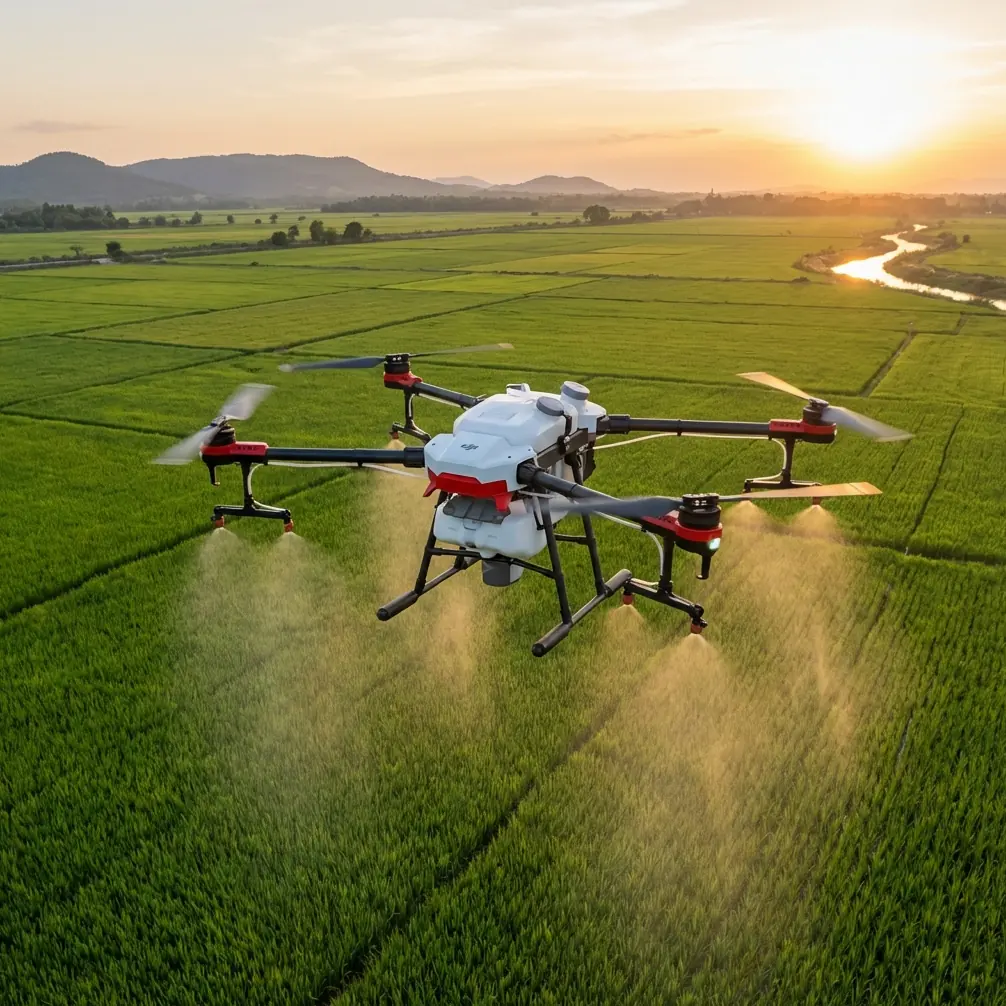
Agras T50 in Windy Vineyard Scouting: A Field Report on Positioning, Precision, and What Actually Matters
META: A consultant’s field report on using the Agras T50 for windy vineyard scouting, with practical insight on antenna positioning, RTK fix stability, spray drift awareness, nozzle calibration, and why light-reading skills still matter in aerial fieldwork.
Wind changes everything in a vineyard.
Not in an abstract way. You feel it row by row. One block looks manageable, the next becomes a lesson in drift, signal discipline, and whether the pilot actually understands the field instead of just the aircraft. When readers ask me about the Agras T50 for vineyard scouting in windy conditions, they usually expect a checklist of specs. That misses the real story.
The T50 earns its place in vineyards because it sits at the intersection of coverage, repeatability, and decision speed. But those advantages only show up when the operator pays attention to small things that compound: antenna position, RTK fix rate, swath width discipline, nozzle calibration, and even how shadows reveal canopy structure during scouting runs.
That last point deserves more attention than it gets.
I recently revisited a lighting concept from portrait photography called Rembrandt light, also known as triangle lighting. It comes from painting, but the mechanics are highly practical: light strikes from roughly a 45° angle above the subject, creating a distinct inverted triangle of light on the shadow side of the face. The key visual marker is that the nose shadow connects to the cheek shadow, creating strong separation between highlight and shade. In portrait work, photographers use it because it adds depth, softens blemishes, and shapes the face cleanly.
At first glance, that sounds far removed from an Agras T50 in a vineyard. It isn’t.
If you scout vine rows with a camera payload or use visual observation to assess canopy uniformity, disease expression, missed coverage, and terrain variation, directional light becomes operational information. When the sun sits at an oblique angle, close to that same 45° relationship, canopy texture becomes easier to read. Gaps stand out. Trellis inconsistencies show themselves. Uneven vigor often becomes more legible because shadow creates dimensional contrast. Flat overhead light can hide problems that directional light reveals in seconds.
That matters in wind because wind already reduces your margin for clean interpretation. Leaves are moving. Fine detail comes and goes. If you choose the wrong time of day, you stack poor light on top of unstable air. The result is not just worse imagery. It is worse judgment.
Why the Agras T50 makes sense for vineyard scouting when the air is unsettled
The Agras T50 is usually discussed through the lens of application work, but for vineyards, scouting and pre-treatment intelligence are where it often proves its value first. Vineyards are not broad, forgiving fields. They are narrow, repetitive, and full of variables that punish sloppy execution. Wind channels through rows, slopes distort assumptions, and obstacles affect both route planning and communications.
That is where centimeter precision and a stable RTK fix rate stop being brochure terms and start becoming practical tools.
A reliable RTK solution helps the T50 hold predictable lines through narrow row structures. In windy scouting, that precision matters twice over. First, it supports consistent passes so imagery and observations line up block to block. Second, it reduces unnecessary correction behavior. When a drone has to fight both wind and weak positional confidence, small deviations start multiplying. In vineyards, those small deviations can mean incomplete observation zones, uneven altitude relative to canopy, or overcorrection near margins.
For that reason, I tell operators to think of RTK health as a live operational indicator, not a setup item you ignore after takeoff. If the fix rate is unstable, your scouting data quality is unstable too.
The simplest range improvement most operators still mishandle
The best antenna advice is usually the least glamorous: position the controller antennas intentionally, not casually.
Too many operators hold the controller however it feels comfortable, then blame range, interference, or terrain when the link gets inconsistent. In vineyards, especially on rolling ground, that habit becomes expensive. Trellises, vegetation mass, slope transitions, service vehicles, and row direction can all interfere with clean signal geometry.
Here’s the practical rule: keep the antenna faces oriented to maintain the strongest possible relationship with the aircraft’s position, and avoid pointing the tips directly at the drone when the system is designed to radiate broadside. In the field, that means checking your body position and controller angle every time the aircraft shifts to a different block or elevation profile. If the T50 moves beyond a rise, don’t just continue flying as if nothing changed. Re-establish your stance, elevate your line of sight if safe to do so, and keep the controller clear of your torso, truck bodywork, and metal structures.
In wind, this becomes even more critical because you do not want to waste link quality on preventable antenna mistakes while the aircraft is already managing environmental load. One clean adjustment in controller orientation can stabilize the operating window more effectively than many pilots expect.
If you need a second opinion on setup choices in vineyard terrain, I’ve shared field support details here: https://wa.me/85255379740
Spray drift starts before liquid leaves the system
Even when the mission is described as scouting, vineyard teams are usually scouting with treatment decisions in mind. That means drift awareness should start during reconnaissance, not after. I watch whether crews note wind lanes between rows, turbulence near edges, and sections where topography accelerates airflow. Those observations shape safe and efficient application planning later.
The T50 gives operators the platform stability and route control to work methodically, but wind can still magnify errors in nozzle selection, pressure expectations, and pass spacing. That is why nozzle calibration is not just a maintenance chore. It is one of the key bridges between scouting insight and successful field execution.
If you scout a block and identify variable canopy density, the next question is whether your future droplet profile and swath width are truly matched to that canopy under the forecast conditions. If the nozzles are not calibrated accurately, the best route plan in the world won’t save the outcome. Distribution consistency suffers first. Drift risk follows quickly behind.
In practical terms, calibration tells you whether the aircraft is delivering what the mission planner thinks it is delivering. In vineyards, where rows create their own microclimates, that verification matters more than in many open-field scenarios.
Swath width is where theory meets vine reality
One of the most common mistakes I see with larger agricultural platforms in vineyards is overconfidence in swath width. Operators hear a maximum figure, then carry that assumption into conditions where it no longer holds. In wind, swath width is never just a coverage number. It is a risk variable.
For scouting, this translates into overlap logic. If you’re collecting visual intelligence or reviewing crop response patterns, wider isn’t automatically better. A slightly more conservative pass plan often produces cleaner, more comparable data because lateral distortion from wind is reduced. Consistency beats nominal efficiency.
For treatment planning, scouting should inform your swath decisions rather than the other way around. If one side of a vineyard block is sheltered and the other side is exposed, your effective pattern may not be uniform across the whole parcel. The T50 gives you the control and capacity to structure this intelligently, but the operator has to resist the urge to treat every row the same.
That is where experienced vineyard crews separate themselves. They do not ask, “What is the largest swath width I can use?” They ask, “What swath width still holds up when the environment stops cooperating?”
Reading the canopy: why lighting technique belongs in a drone conversation
This is where that photography reference becomes unexpectedly useful.
Rembrandt lighting is recognizable because of a specific geometry: light from about 45° above and to the side, a connected nose-and-cheek shadow, and a triangular patch of light that creates clear dimensional modeling. In portrait work, that contrast can slim the face and reduce the appearance of imperfections. In vineyard scouting, the lesson is not about faces. It is about using angled light to reveal structure.
When I plan a visual scouting session, I often prefer periods when the sun creates enough side-light to emphasize canopy contours without collapsing detail into harsh glare. This helps when comparing vigor across rows, spotting breaks in trellis rhythm, and identifying sections where growth patterns differ from neighboring vines. Under flatter light, especially around midday, the vineyard can look deceptively uniform from above. Under directional light, texture appears. You start seeing the field instead of just looking at it.
That has operational significance. If you can read canopy texture better during scouting, you can make sharper decisions on follow-up missions, whether that means tighter observation, multispectral comparison, or a more cautious application plan in exposed sections.
The point is simple: lighting is not just an aesthetic issue. It changes the value of the information you collect.
Multispectral is useful, but don’t let it replace field sense
There is a tendency to assume that multispectral data automatically outranks visual scouting. In vineyards, that can lead to a blind spot. Multispectral tools are excellent for highlighting variation, stress signatures, and management zones. But windy conditions can complicate capture quality and interpretation, especially when leaf movement is significant.
A strong T50 workflow uses visual passes, positional precision, and sensor strategy together. If the light angle is favorable and the RTK fix is solid, a conventional scouting pass can reveal row-level inconsistencies quickly. Multispectral can then validate or quantify those patterns rather than serving as a substitute for basic observation.
This layered approach also improves decision confidence. When visual cues, positional consistency, and sensor outputs align, vineyard managers can act faster and with less second-guessing.
Weather resistance and the working day
Vineyard work is rarely done in ideal conditions. Dust, residue, moisture, and abrupt weather shifts are part of the operating environment. That is why build protection, including an IPX6K-class design conversation, matters in practical terms. It does not make the aircraft invulnerable, and it should never be treated that way. What it does mean is that the machine is better suited to repeated exposure in demanding agricultural settings where cleaning discipline and environmental resilience are part of daily operations.
For scouting, that translates into less hesitation about deploying in variable field conditions, provided the mission remains within safe operational limits. Over a season, that reliability matters. The best aircraft is not the one with the most attractive specification on paper. It is the one that still supports disciplined work after repeated exposure to actual agricultural reality.
A vineyard workflow that respects the wind
If I were setting up an Agras T50 scouting routine for a windy vineyard week, it would look something like this:
Start with the weather, but read the site, not just the forecast. Vineyards create their own wind behavior. Walk the exposed edges. Note the corridors where air accelerates. Watch tree lines and slope breaks.
Then verify RTK conditions before you let route confidence build on bad assumptions. A weak fix rate undermines everything that follows.
Next, set your antenna position deliberately. Do not wait for the first warning to think about signal path. In uneven terrain, proactive orientation is part of mission planning.
After that, choose your scouting window with light in mind. Directional light can give you better canopy legibility than a technically brighter but flatter midday slot. The photography world learned long ago that a 45° light angle can create depth and hide flaws. In vineyards, that same principle helps reveal shape, density changes, and irregularity.
Finally, carry scouting intelligence forward into nozzle calibration and swath planning. Drift risk is not a switch that turns on at spray time. It is built into how well you observed the field beforehand.
The real value of the T50 in vineyards
The Agras T50 is not valuable because it promises perfection in wind. No aircraft should be judged that way. Its value is that it gives capable operators the control, precision, and workflow stability to make better decisions in less-than-perfect conditions.
In vineyards, that is the whole job.
You are trying to see clearly in a place where air moves unpredictably, terrain changes the rules every few rows, and small errors become visible very quickly. The T50 supports that mission well, especially when the operator understands that good results are usually the product of several disciplined habits rather than one impressive feature.
And sometimes the most useful insight does not come from agriculture at all. A photographer’s understanding of shadow and angle can improve how a drone pilot reads a vineyard. A 45° light source that shapes a human face can also expose the structure of a vine canopy. That is the kind of crossover knowledge that actually helps in the field.
Ready for your own Agras T50? Contact our team for expert consultation.