
How to Scout Vineyards in Extreme Temps with T50
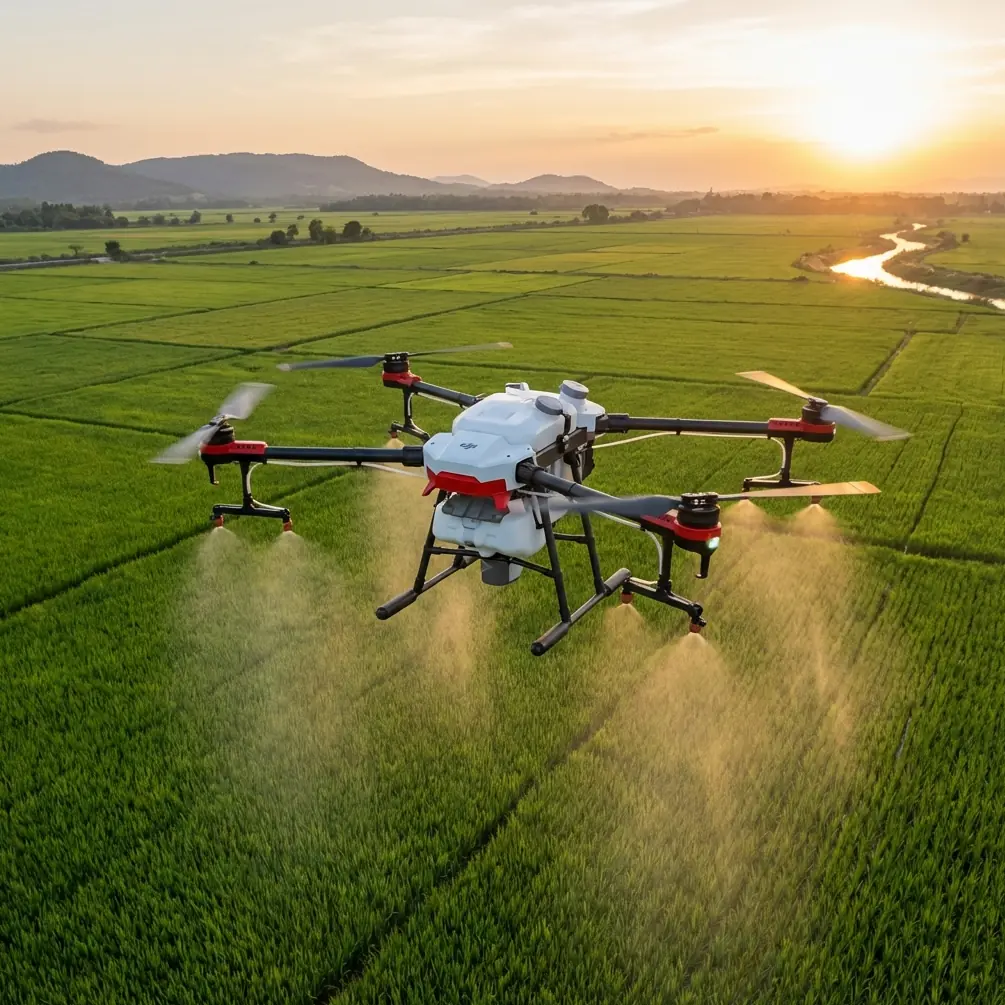
How to Scout Vineyards in Extreme Temps with T50
META: Learn how the Agras T50 enables vineyard scouting in extreme temperatures with multispectral imaging, RTK precision, and IPX6K durability. Step-by-step guide.
By Dr. Sarah Chen, Ph.D. — Agricultural Drone Systems Researcher
Vineyard scouting in extreme heat or freezing conditions destroys equipment and delivers unreliable data. The Agras T50 changes that equation entirely. This how-to guide walks you through every step—from a critical pre-flight cleaning routine most operators skip, to capturing centimeter-precision multispectral maps across your vineyard blocks when temperatures push past 50°C or drop below -20°C.
Whether you're tracking vine stress during a heat dome or assessing frost damage at dawn, you'll learn exactly how to configure, launch, and interpret T50 vineyard scouting missions that hold up under the harshest field conditions.
TL;DR
- The Agras T50's IPX6K rating and operating range of -20°C to 50°C make it one of the few platforms reliable enough for extreme-temperature vineyard scouting.
- Pre-flight cleaning of optical sensors and propulsion vents is the single most overlooked safety step—and it directly affects your RTK fix rate and multispectral accuracy.
- Centimeter precision via RTK combined with onboard multispectral imaging lets you detect vine stress 3–5 days before visible symptoms appear.
- Proper nozzle calibration and swath width planning prevent spray drift and ensure targeted treatment after scouting identifies problem zones.
Step 1: The Pre-Flight Cleaning Routine That Protects Your Safety Systems
Here's the step most operators skip—and the one that matters most.
Before every extreme-temperature mission, you must clean the T50's obstacle avoidance sensors, cooling vents, and camera lenses. Vineyard environments coat equipment in a film of dust, pollen, sulfur residue from fungicide applications, and fine soil particles. In extreme heat, these residues bake onto sensor surfaces. In freezing conditions, they trap moisture that turns to ice.
A dirty binocular vision sensor cannot detect trellis wires. That's not a data quality problem—it's a collision risk.
Pre-Flight Cleaning Checklist
- Binocular vision sensors (all directions): Wipe with a lint-free microfiber cloth dampened with isopropyl alcohol. Check for scratches or haze.
- Phased-array radar dome: Brush away any caked material. Even a thin layer of vineyard dust degrades radar return accuracy.
- Propulsion motor vents: Use compressed air to clear debris. In extreme heat, blocked vents cause thermal shutdowns mid-flight.
- Multispectral lens array: Clean with lens-specific solution. A single smudge skews NDVI calculations across an entire flight block.
- Battery contact terminals: Wipe with a dry cloth. Corrosion from temperature cycling increases resistance and reduces flight time.
Pro Tip: Carry a sealed cleaning kit in a temperature-controlled case. In 50°C heat, isopropyl alcohol evaporates before you finish wiping. In freezing temps, standard lens wipes become rigid and can scratch coatings. Pre-warm wipes inside your vehicle.
This routine takes 4–6 minutes. It has prevented more accidents in vineyard operations than any firmware update.
Step 2: Configure RTK for Centimeter Precision in Vineyard Rows
Vineyard scouting demands more spatial precision than broadacre agriculture. Rows are typically spaced 1.5–3 meters apart, and individual vine positions matter when tracking disease progression or irrigation stress over time.
The Agras T50 supports RTK positioning with centimeter precision, but achieving a stable RTK fix rate in vineyard terrain requires deliberate configuration.
How to Maximize Your RTK Fix Rate
- Set up your RTK base station on high ground at the vineyard's perimeter—never between rows, where trellis structures and canopy block satellite signals.
- Verify a minimum of 16 satellites are acquired before launch. The T50's multi-constellation receiver (GPS, GLONASS, Galileo, BeiDou) helps, but canopy cover in mature vineyards can reduce visibility.
- Monitor RTK fix rate in the DJI Agras app during the first pass. A sustained fix rate above 95% means your positional data is reliable for multi-temporal comparison.
- If the fix rate drops below 90%, increase flight altitude by 2–3 meters to improve satellite geometry above the canopy.
Why This Matters for Extreme-Temperature Scouting
Temperature extremes cause atmospheric refraction that degrades GNSS signal quality. Hot air rising from sun-baked vineyard soils creates turbulence in signal propagation. Freezing conditions can cause receiver oscillator drift.
With a properly configured RTK system, your vine-level maps from a July heat event align perfectly with your January frost assessment—enabling true temporal analysis of stress patterns.
Step 3: Plan Your Multispectral Flight Mission
The T50's multispectral imaging capability transforms scouting from a visual exercise into a quantitative diagnostic process. You're capturing data in bands that reveal chlorophyll concentration, water content, and canopy temperature—information invisible to the naked eye.
Mission Planning Parameters for Vineyard Scouting
| Parameter | Hot Conditions (>40°C) | Cold Conditions (<0°C) | Reasoning |
|---|---|---|---|
| Flight altitude | 15–20 m AGL | 12–15 m AGL | Heat haze reduces resolution at higher altitudes; cold air is denser and clearer |
| Overlap (front/side) | 80% / 75% | 80% / 70% | Higher side overlap in heat compensates for thermal distortion in stitching |
| Flight speed | 5 m/s | 4 m/s | Slower in cold to reduce battery drain from increased power demand |
| Swath width | 8–10 m | 6–8 m | Narrower in cold for sharper image capture with reduced battery capacity |
| Estimated flight time | 18–20 min per battery | 12–15 min per battery | Cold reduces lithium polymer output by 15–25% |
| Optimal scouting window | 6:00–8:00 AM | 10:00 AM–1:00 PM | Avoid peak thermal distortion in heat; wait for ice melt in cold |
Expert Insight: Many operators assume you should scout at the same time of day regardless of conditions. In extreme heat, flying after 10:00 AM introduces so much thermal convection that your multispectral stitching software produces artifacts that mimic vine stress. You'll chase false positives across entire blocks. Early morning flights in hot conditions yield data that's significantly more reliable for NDVI analysis.
Key Multispectral Indices for Vineyard Stress
- NDVI (Normalized Difference Vegetation Index): Detects reduced chlorophyll from heat or frost damage.
- NDRE (Red Edge Index): More sensitive than NDVI for mid-to-late season canopy assessment under heat stress.
- CWSI (Crop Water Stress Index): Derived from thermal data, critical during heat events to prioritize irrigation blocks.
Step 4: Execute the Flight in Extreme Conditions
With your T50 cleaned, RTK locked, and mission planned, execution requires discipline around the platform's environmental tolerances.
The T50's IPX6K ingress protection rating means it handles high-pressure water jets from any direction—so morning dew, unexpected rain, or irrigation spray during a vineyard flyover won't compromise the electronics. But extreme temperatures introduce other risks.
Hot Condition Protocols (Above 40°C)
- Pre-cool batteries in an insulated cooler before loading. A battery at 25°C outperforms one at 45°C by roughly 10% in usable capacity.
- Monitor motor temperature via telemetry. If any motor exceeds the warning threshold, land immediately and allow a 10-minute cooldown.
- Keep the ground station tablet shaded. Touchscreen responsiveness degrades above 45°C, and automatic brightness reduction makes the screen unreadable in direct sun.
Cold Condition Protocols (Below 0°C)
- Pre-warm batteries to 20–25°C using DJI battery warming pads or vehicle heating. Never launch with battery temperature below 15°C.
- Hover at 2 m for 60 seconds after takeoff. This allows the propulsion system to reach operating temperature before aggressive maneuvering through vineyard corridors.
- Reduce maximum pitch angle in the flight settings. Cold air is denser, generating more lift per unit of speed—sharp maneuvers overshoot in cold conditions.
- Carry 30% more batteries than you would for a warm-weather mission of the same acreage.
Step 5: From Scouting Data to Targeted Treatment
Scouting is only valuable if it drives action. The T50's dual role as both a scouting and spraying platform closes the loop between diagnosis and treatment.
After processing your multispectral maps, you can generate variable-rate prescription maps and load them directly into the T50's spraying mission planner.
Nozzle Calibration for Post-Scouting Treatment
- Select nozzle type based on your prescription: fine droplets (100–200 µm) for fungicides targeting canopy interior, coarser droplets (300–400 µm) for herbicide applications between rows.
- Calibrate flow rate against your planned flight speed and swath width. The T50's dual atomization spraying system allows independent left/right nozzle adjustment for variable-rate application.
- Account for spray drift risk. In heat, rising thermals carry fine droplets upward and away from targets. In cold, temperature inversions trap spray drift at ground level, moving it horizontally into non-target areas.
Spray Drift Mitigation by Temperature
- Hot conditions: Use coarser droplets, fly lower (2–3 m AGL), and spray during early morning calm windows. Monitor wind speed—abort if gusts exceed 3 m/s.
- Cold conditions: Use medium droplets, fly at standard height (3–5 m AGL), and watch for temperature inversions indicated by fog or ground-level haze.
Common Mistakes to Avoid
- Skipping pre-flight sensor cleaning. This is the number one cause of obstacle avoidance failure in vineyard operations, where trellis wires are thin and hard to detect.
- Launching with cold batteries. Flying lithium polymer cells below 15°C causes voltage sag that triggers emergency landings mid-mission.
- Using the same flight plan in heat and cold. Battery performance, air density, and image quality all shift dramatically—your swath width, speed, and overlap must adapt.
- Ignoring spray drift conditions after scouting. Identifying a problem zone and then applying treatment without checking wind and thermal conditions causes off-target chemical movement and potential regulatory violations.
- Flying at midday in extreme heat for "better lighting." Thermal distortion and convection currents ruin multispectral data quality. Early morning flights produce vastly superior diagnostic maps.
Frequently Asked Questions
Can the Agras T50 really operate at 50°C without overheating?
Yes. The T50 is rated for an operating temperature range of -20°C to 50°C. However, "operate" and "operate optimally" are different things. At the upper end of that range, you should expect reduced flight times, implement battery pre-cooling, and monitor motor thermals closely. Following the hot condition protocols outlined above keeps the platform within safe margins while still delivering usable scouting data.
How does RTK precision help with vineyard scouting specifically?
Centimeter precision allows you to geolocate stress signatures to individual vines or row segments. Without RTK, GPS drift of 1–3 meters means your stress map might indicate the wrong row entirely. Over time, RTK-locked data lets you compare the same vine positions across multiple scouting dates—revealing whether a stress pattern is progressing, stable, or recovering. This temporal tracking capability is what separates drone scouting from simple aerial photography.
What's the advantage of using the T50 for both scouting and spraying?
Using a single platform eliminates the registration error that occurs when you scout with one drone and spray with another. The T50's scouting mission generates a coordinate-locked prescription map. When you load that map into a spraying mission on the same T50, the nozzle calibration and swath width align precisely with the scouted data. Every treated zone matches the diagnosed zone—no offset, no guesswork, no wasted chemistry on healthy vines.
Ready for your own Agras T50? Contact our team for expert consultation.